
Opinion
Towards Restructuring Education In Rivers


That restructuring of
the education sector had been one that never went unmentioned by successive governments as a must-do if the standard of education in Nigeria should be anything to write home about.
In October, 2010, many Nigerians watched a live transmission where the immediate past President, Dr Goodluck Ebele Jonathan, personally chaired a Presidential Stakeholders Summit on Education, which came up with some resolutions that led to the formation of a presidential taskforce on education.
The taskforce, which was inaugurated by the then president was made up of 30 seasoned academics under the leadership of Professor Pai Obanya, with a mandate to specifically propose the best arrangement for the management, regulation and coordination of education at all levels.
The taskforce was to examine all laws militating against the delivery of qualitative education and propose necessary changes and amendments; propose a sustainable funding arrangement and transparent management of resources for education.
It was also to examine the ethical issues in education with a view to proffering steps necessary to restore ethics and values in education at all levels, develop programmes and projects that will attract good brains to the teaching profession and at the same time retaining and motivating existing teachers.
Also inclusive in their mandate was to propose ways necessary for the improvement of the teaching and learning environment, to create greater access to education while enhancing intellectual achievement across the board and to propose any other relevant step that will reposition the education sector in Nigeria.
Even though the task was enormous, the taskforce members, like every. other duely constituted committee, came up eventually with a report which they submitted to the federal government. Only you have the right to your assessment of the impact of such a report, even though it was not made public.
Perhaps, it is in this light that a former Minister of Education in Jonathan’s administration Prof. Raqoyyatu Ahmed Rufai, said that, “our problem in this country has always been implementation of strategies developed in reports”.
Be that as it may, my solace is in the fact that the present governor of Rivers State, Chief Nyesom Wike, while he served as the Minister of States for Education, realised the need to enhance education through increasing access to schools, mass mobilisation, public enlightenment as well as making schools more attractive, affordable and conducive for learning.
In his inaugural speech on May 29, 2015, Wike, acknowledged that public education continues to fall below desirable outcomes in Rivers State. He, however, said his administration envisages a state that should be the knowledge base of the nation.
To this end, he promised to give serious attention to the provision of quality education to all at all levels by improving budgetary allocation to the education sector. He promised to effectively implement the Universal Basic Education scheme and demand total devotion and accountability from teachers through effective monitoring and supervision.
He affirmed that the era of throwing money at public education without the desired results is over.
“We intend to reintroduce a functional boarding system in public secondary schools and increase funding for research and innovation in our tertiary institutions”, he said, revealing that his administration will fund a competitive local and foreign scholarship scheme for brilliant students of Rivers origin to enhance manpower development in critical areas of local and national needs.
Again, in his first state broadcast to mark his 100 days in office, Governor Wike listed education top on his priority of area of interest, reaffirming his stand on making Rivers State the knowledge base of the nation.
While his high spirit and passion for quality education is appreciated and applauded, I want to implore His Excellency to look inward with a view to unravelling the composition of the teaching stock of the Universal Basic Education in terms of competence, so that more avenues could be explored in human capital development as one sure way of boosting productivity.
This has become necessary because staff development goes hand in hand with teachers performance, which of course is considered as an issue in educational assessment and evaluation. This is why curriculum developers and other governmental agencies evaluate schools in line with developmental impacts; viz a viz educational qualifications and on work training.
Public schools in Rivers State can actualise their educational goals when staff development is given its right of place in the scheme of things.
Sylvia ThankGod-Amadi



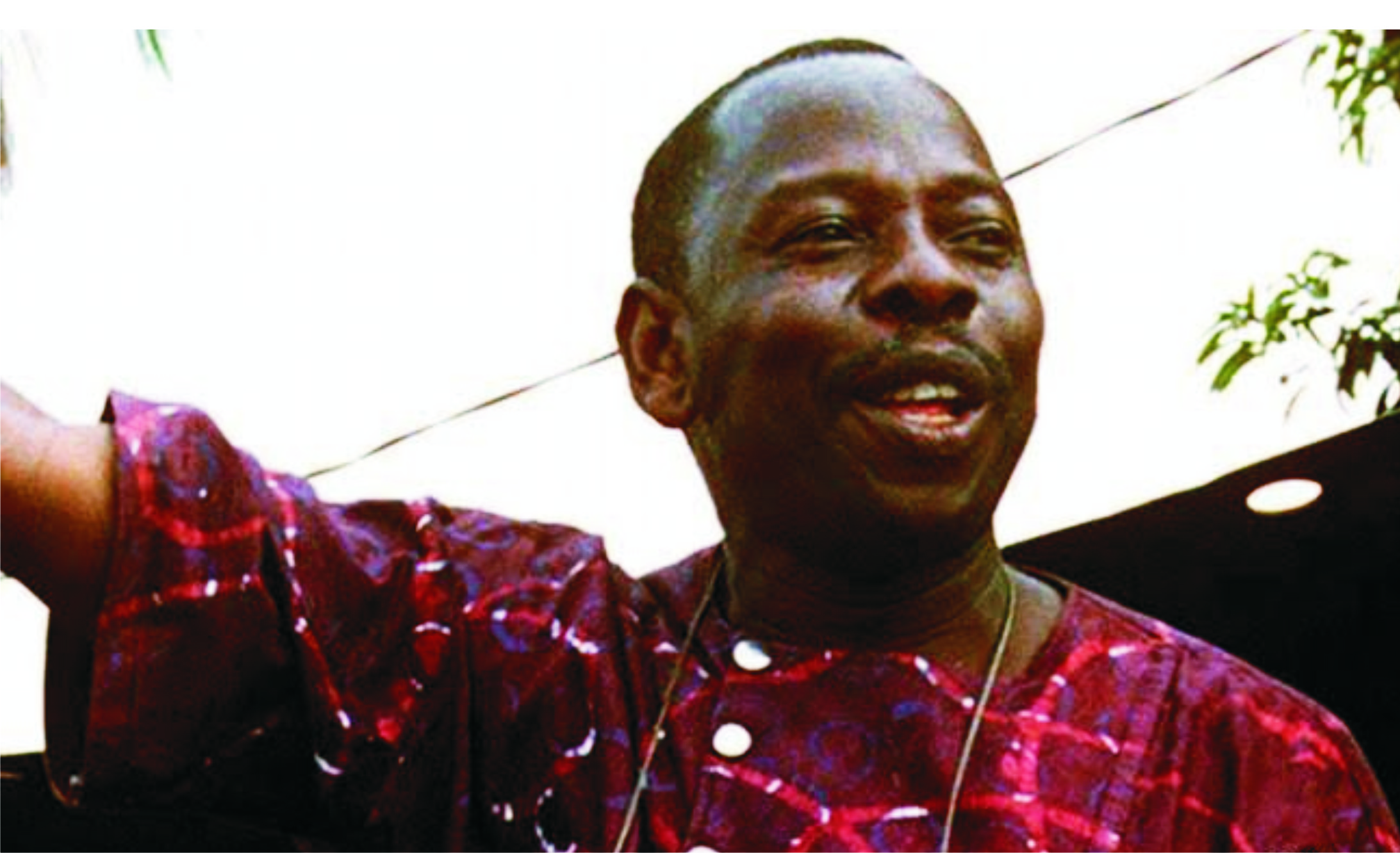
On November 10, 1995, the Nigerian military government of General Sani Abacha executed Ken Saro-Wiwa and eight other Ogoni leaders after a deeply controversial trial. Their deaths marked one of the darkest chapters in Nigeria’s history. At a time when fear silenced citizens and sycophancy flourished around military power, Saro-Wiwa chose to confront tyranny. Many Nigerians retreated into silence, while others praised the regime to secure favour. He knew the risks, yet refused to abandon a people whose land had been devastated by oil exploration and whose lives remained trapped in poverty. His courage arose from the conviction that public responsibility sometimes demands resistance to authority. Saro-Wiwa understood that speaking against a military government could lead to imprisonment or death.
Nonetheless, he believed the suffering of the Ogoni people demanded a courageous response. While oil was extracted from their land, they were left with polluted rivers, damaged farmland, declining livelihoods and an environment hostile to human survival. Fishing grounds and sources of livelihood were threatened, while the people struggled to secure basic amenities. The wealth beneath their soil brought neither adequate development nor a fair share of national resources. For him, silence in the face of injustice would have amounted to complicity. Through the Movement for the Survival of the Ogoni People (MOSOP), he organised a peaceful campaign that took the Ogoni question to the international community. MOSOP gave ordinary people an organised platform through which to express their grievances and insist on recognition.
The Ogoni Bill of Rights, presented to the Federal Government in 1990, demanded political autonomy, economic justice, environmental protection and control over the people’s resources. The campaign exposed the human and ecological costs of oil operations, particularly those associated with Shell, and challenged the apparent alliance between corporate interests and an unresponsive State. The Ogoni struggle became a defining expression of minority rights and environmental justice in Nigeria and Africa. Saro-Wiwa’s writings and mobilisation drew attention to communities treated as expendable because of their limited population and political influence. He argued that numerical strength should never determine a people’s value or rights.
A minority community does not become less deserving of justice because it cannot command electoral numbers or political power. In Nigeria, every ethnic group deserves dignity, protection and a fair opportunity to benefit from the commonwealth. Rather than respond to peaceful agitation with dialogue, the Abacha regime resorted to repression. Ogoni leaders were harassed, detained and killed; others fled into exile. The crisis intensified after four Ogoni chiefs were killed in May 1994. Saro-Wiwa and other MOSOP leaders were arrested, tried by a special tribunal and executed despite international appeals for clemency and serious concerns about the trial’s fairness. The executions drew worldwide condemnation and intensified scrutiny of Nigeria’s human-rights record and oil companies in the Niger Delta.
They demonstrated the danger of using State institutions to suppress peaceful demands. The proceedings remain a reminder of the need for judicial independence and due process. Saro-Wiwa’s courage rested on the conviction that justice must be pursued despite the cost. His method combined non-violent resistance, public education and grassroots organisation. His struggle recalled the civil-rights campaign of Martin Luther King Jr. and the power of peaceful mobilisation against injustice. Saro-Wiwa linked environmental degradation to political exclusion, economic exploitation and the denial of democratic rights. Oil-producing communities, he insisted, should not remain zones from which wealth is removed to develop other parts of the country.
Their people must benefit through roads, schools, healthcare, jobs and clean water. Resource extraction carries a duty to protect host communities. His argument extended to the structure of the Nigerian federation. He challenged a revenue-allocation system that made oil-producing communities bear the environmental and social costs of extraction without commensurate benefits. Like advocates of fiscal federalism, he believed resources should be managed and shared equitably. He envisaged a society in which no community would be disadvantaged by its size, ethnicity, political affiliation, culture or religion. His vision was a country bound together by justice and equal citizenship. Saro-Wiwa was also a gifted writer, dramatist and public intellectual.
Through books, essays, plays and television, he documented Nigerian society’s contradictions and challenged abuses of power. His popular television series, Basi and Company, demonstrated his creative range, while his leadership of the Association of Nigerian Authors encouraged writers to engage national questions. He believed literature should not be detached from society’s struggles. His pen exposed environmental injustice, political repression and the dangers of silencing courageous voices. He used storytelling, satire and drama to shape public consciousness and expose social contradictions. His literary achievements gave his activism wider reach and made the Ogoni experience part of national conversation. His commitment to the Ogoni people extended beyond the oil question.
During the Civil War, he worked to protect his vulnerable community. He urged younger generations to reject subservience and complacency and pursue change through lawful, peaceful means. Citizens, he believed, must not surrender their responsibility to challenge wrong doing. An injury to one community threatens the rights and security of all. The return to democratic government in 1999 and the establishment of the Niger Delta Development Commission, the Ministry of Niger Delta Affairs and the Hydrocarbon Pollution Remediation Project (HYPREP) are among developments that have kept the region’s demands in public view. Saro-Wiwa did not create these institutions, but his movement helped expose the urgency of intervention and sustain pressure for redress.
His death made it harder to ignore the Niger Delta’s environmental and political grievances. Yet, interventionist institutions do not prove that the original demands have been met. Their effectiveness depends on competent leadership, transparent spending, measurable outcomes and community participation. Yet, thirty-one years after his execution, the central concerns of the Ogoni struggle remain unresolved. The HYPREP-led clean-up has offered hope, but many residents await meaningful improvements. Questions persist about the programme’s pace, quality and transparency, and whether its benefits reach ordinary people. A clean-up should be judged not by ceremonies or contracts, but by restored land and waterways, safe drinking water, improved livelihoods and better public health.
It must include long-term monitoring to ensure treated sites remain safe. Residents deserve information about contamination, remediation methods and completion timelines. Reports that water projects in Gwara and Ebubu Communities, in Khana and Eleme Local Government Areas respectively, failed weeks after commissioning have raised further concerns. If confirmed, the failures would indicate weaknesses in supervision, procurement and quality control.
To be continued in our next edition.
Taneh Beemene

The National Youth Service Corps (NYSC) was established in 1973, after the Nigerian Civil War, to promote national unity, reconciliation and integration. By deploying graduates beyond their States of origin, its founders hoped to encourage understanding among Nigeria’s diverse peoples and help rebuild a divided country. However, the difficulties confronting corps members and their families now demand a comprehensive review. For many graduates, national service has become a period of uncertainty, financial pressure and exposure to risks. Parents who have spent years financing their children’s education must still find money for transportation, camp necessities, accommodation, feeding and other expenses. The monthly allowance may provide some relief, but often cannot meet the cost of living, especially where the place of primary assignment offers no accommodation or support.
Security is another serious concern. Corps members may be posted to communities affected by kidnapping, communal violence, insurgency or other threats. Government cannot eliminate every danger, but it must assess locations, provide reliable security information and avoid deployments where safety cannot reasonably be assured. National service should promote patriotism, not expose graduates to preventable harm. There is also the problem of securing meaningful places of primary assignment. A graduate trained in engineering may perform duties unrelated to engineering; a journalist may spend the year in an office with no opportunity to practise journalism. Graduates in agriculture, health, education and other specialised fields may likewise be assigned routine tasks that contribute little or nothing to their professional growth. Some depend on personal contacts or incur expenses to obtain suitable placements.
A year is significant for a young graduate entering a competitive labour market. National service should not be merely a compulsory waiting period before the search for employment begins. It should help bridge the gap between academic learning and practical work. The time has therefore come to review the structure of NYSC, not necessarily abolish it. I propose that the one-year programme should become vocational and professionally oriented. Graduates should, as far as practicable, be posted to institutions where they can gain supervised experience in their fields of study. Teachers should serve in schools; health graduates in suitable health facilities; engineers in technical organisations and public works departments; agricultural graduates in farms and extension services; and communication graduates in media and public information establishments.
NYSC should partner with ministries, state and local governments, private companies, professional bodies, universities, hospitals, schools and credible organisations to identify genuine training opportunities. Each member should have defined duties, a supervisor and clear learning objectives. At the end of the year, each should receive a record of duties performed and competencies acquired. The reform must also address remuneration and welfare. Corps members should receive fair pay that reflects the demands of their placements, while host organisations should provide reasonable support where possible. Government must establish transparent funding arrangements so that the new system does not become another burden imposed on employers or parents. Transport or accommodation assistance should be considered for difficult postings.
Graduates seeking jobs after service would have more than a discharge certificate: they would possess practical experience, workplace discipline and demonstrable skills. Employers would gain access to young people who have received supervised preparation. However, professional relevance should not erase the scheme’s founding objective of national integration. Inter-State deployment can remain, provided it is balanced with security, suitable placements and the availability of basic facilities. Where a safe and meaningful placement cannot be guaranteed outside a graduate’s State, an alternative should be considered. Orientation and community development activities can continue to promote cultural exchange, citizenship and service.
The Federal Government and NYSC management should convene consultations involving corps members, parents, universities, employers, security agencies and State Governments. Decisions should be based on evidence and the experiences of serving and former corps members. NYSC was created to help rebuild a nation divided by war. Its ideals remain important, but institutions must adapt to changing realities. Success should not be measured only by the number of graduates mobilised or certificates issued. It should also be measured by the skills acquired, the contribution made and whether young Nigerians complete their service safely and with dignity. It can better preserve the scheme’s founding ideals while meeting today’s economic and professional needs. A vocationally driven; adequately remunerated NYSC would turn national service from a costly obligation into a bridge between education, employment and national development. The purpose should not simply be to occupy graduates for twelve months, but to prepare them to work, serve and contribute meaningfully to Nigeria’s future.
Sylvia ThankGod-Amadi
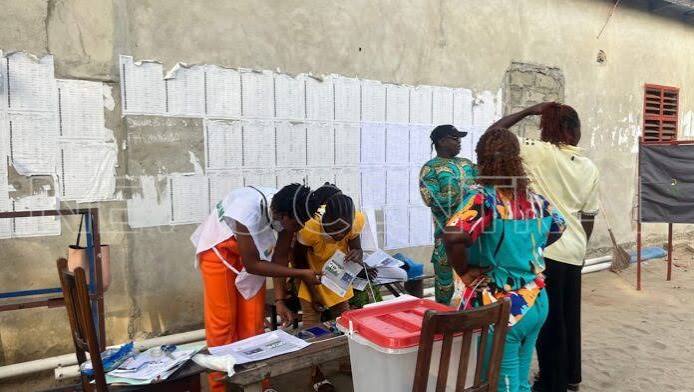
Quote: “Democracy is not
As the 2027 general elections
Organisers said they had
Police intervention
In Kaduna, the ADC accused
These claims require prompt
These rights apply equally to
No ambition, party or
By: Sylvia ThankGod-Amadi
-
News2 days ago
RSG Reaffirms Commitment To STEM Education, Technological Advancement
-
Business2 days ago
‘NUJ, NPA’s Partnership Would Boost Port Producrivity, Economic Growth’
-
 News2 days ago
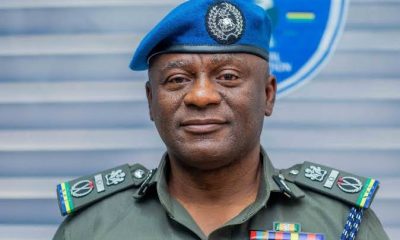
IGP Warns Police Officers Against Partisanship …Directs Regular Engagement With Journalists
-
Business2 days ago
Fire Threat Interrupts Asaba Air Peace Flight
-
 News2 days ago
Customs To Deploy AI, Scanners Against Snuggling
-
Business2 days ago
Fish Production Deficit, A Major Investment Opportunity – Minister
-
Business2 days ago
NCDMB, NLNG Unveil $9m For Professorial Endowment Research Chairs In Six Varsities
-
 Politics2 days ago
2027: INEC Begins Deployment Of Non-Sensitive Materials