
Opinion
Any Arms In Rivers Mosques?

Roya Rad once said
that rumours are mostly a projection of the individual who started them, meaning that rumours are basically the concept of those who originate them for whatever reason that is best known to them. Apart from the very idle minds who feed fat on rumours, many people welcome rumour simply because it reveals so much about what they didn’t know about the object or subject.
Although Ziad K. Abdelnour had said that rumours are carried by haters, spread by fools and accepted by idiots, Christopher Morleyi in his Adventures on the Sunny Side of Street; advised that we show hospitality to rumours, pointing out that no matter how grotesque rumours may be, they always have some reason for existence.
The words of Christopher may have propelled Herbert Spencer to say that even the absurdist report may, in nearly every instance, be traced to an actual occurrence. For Spencer, had there been no such actual occurrence, a preposterous misrepresentation of it would never have existed.
Though the distorted or magnified image transmitted to the public through the refracting medium of rumour, is utterly unlike the reality; it is quite obvious that in the absence of the reality, there would have been no distorted or magnified image. This is probably why it is popularly said that behind every rumour, there is an iota of truth.
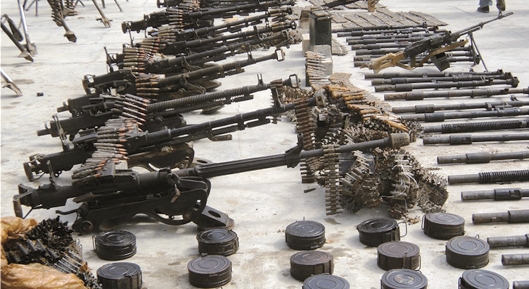
The recent allegation by the Christian Association of Nigeria that some Islamic faithfuls here in Rivers State, are stock-piling arms in mosques, is one that should not just be seen as one of those flying rumours and as such suffocated on the alter of religious bigotry.
Although, this writer may not be at the best position to know the source of CAN’s allegation, it is expedient that such allegation be considered weighty enough for investigation, even where it is superficially adjudged unfounded in the first instance, until otherwise proven.
In fairness to the country’s unity, though in diversity, it will not be out of place for the government, through its security apparatus, to carry out thorough investigation into the allegation so made, with a view to establishing the fact; rather than wave it off as an idle talk, conceived by haters and peddled by fools.
It needs to be stated, however, that the Rivers State Islamic Council has promptly debunked the allegation as false and lacking in substance. The chairman of the Islamic Council, Alhaji Ahwelebe Nasir Uhor, wondered why Christian leaders in Rivers State did not consider it reasonable enough to bring such ‘exclusive’ information first to the knowledge of their Muslim counterparts, or to the security department instead of rushing to the press. This stand was corroborated by the Deputy Imam of Mile 1 Central Mosque, Port Harcourt, Murtala Suleiman Bamidele.
Apart from the steps taken by the apex Christian body in the state to bring what anybody could consider a sensitive issue to the public, it is an allegation that should be subjected to further proof.
Like the proverbial monkey that has vowed to vouch for only the child in her womb, and not the one strapped on her back who could perpetrate any evil outside her knowledge, Nigeria has grown to a level where adults and leaders be in a hurry to defend issues they have no knowledge of.
The need for a timely investigation is imperative, given the security situation of the nation at the moment. Yes, in its face value, any person, especially of the non-Christian sect, may view such allegation as a serous indictment on members of the Islamic sect, and by extension, a threat to their right of movement and freedom of worship especially when placed concurrently with the influx of Muslim youth into Rivers State, a coincidental situation I guess. Yet, the safety of lives and property of every person resident in Rivers State should be a matter of utmost priority that should bother all well-meaning individuals in the state irrespective of their religious persuasion.
Having experienced terror in the hands of terrorists who hide themselves in Islamic clothing, we can do better to join force together to fish them out to save the image of Islam. Otherwise, the image of Islam may further be dragged in the mud should we continue to protect and defend everyone in Islamic thawb,
On the other hand, the Christian Association of Nigeria (CAN), Rivers State, in conjunction with the Directorate of Religious Freedom and Church collaboration of Christian Lawyers Fellowship (CLASFON) in the State, will be reducing to the lowest ebb, their worth and credibility in the Nigerian society and the world at large, if they would succumb to the temptation of using their respected umbrella bodies, to demean in the eyes of the rest of the world, the credibility of their sister religious body, by merely giving the dog a bad name just to justify the call for its death by hanging.
Wisdom must be employed.
Sylvia ThankGod-Amadi




Quote: “The Flamingos have conquered the world; Nigeria must now rise to its responsibility of nurturing the next generation of champions.”
Sometimes, sporting victories
More significantly, they
Umejiaku deserves special
Umejiaku received the award
Nigeria has now broken into
For too long, young girls in
But beyond the reward, this
As Nigerians celebrate this
By; Calista Ezeaku
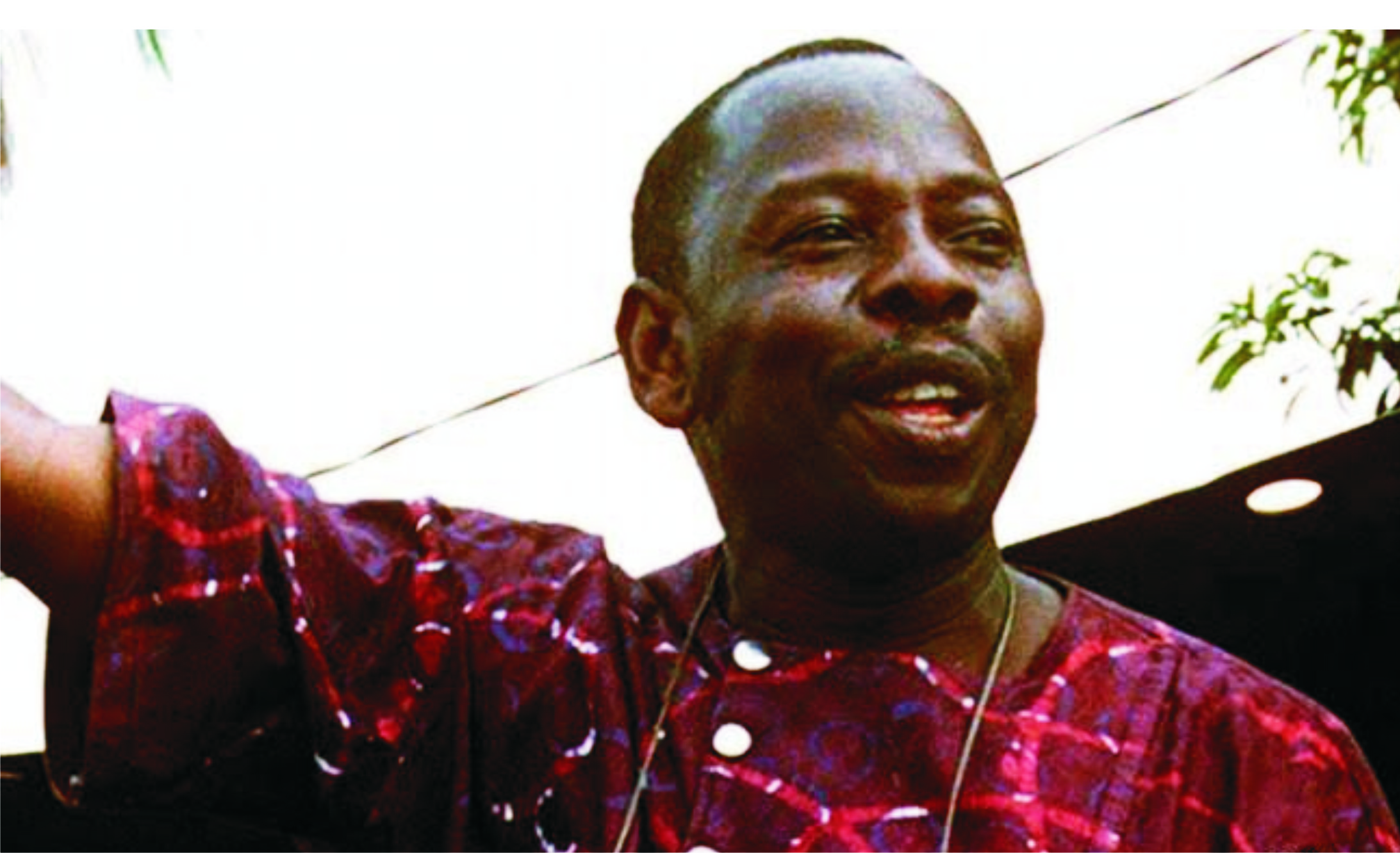
On November 10, 1995, the Nigerian military government of General Sani Abacha executed Ken Saro-Wiwa and eight other Ogoni leaders after a deeply controversial trial. Their deaths marked one of the darkest chapters in Nigeria’s history. At a time when fear silenced citizens and sycophancy flourished around military power, Saro-Wiwa chose to confront tyranny. Many Nigerians retreated into silence, while others praised the regime to secure favour. He knew the risks, yet refused to abandon a people whose land had been devastated by oil exploration and whose lives remained trapped in poverty. His courage arose from the conviction that public responsibility sometimes demands resistance to authority. Saro-Wiwa understood that speaking against a military government could lead to imprisonment or death.
Nonetheless, he believed the suffering of the Ogoni people demanded a courageous response. While oil was extracted from their land, they were left with polluted rivers, damaged farmland, declining livelihoods and an environment hostile to human survival. Fishing grounds and sources of livelihood were threatened, while the people struggled to secure basic amenities. The wealth beneath their soil brought neither adequate development nor a fair share of national resources. For him, silence in the face of injustice would have amounted to complicity. Through the Movement for the Survival of the Ogoni People (MOSOP), he organised a peaceful campaign that took the Ogoni question to the international community. MOSOP gave ordinary people an organised platform through which to express their grievances and insist on recognition.
The Ogoni Bill of Rights, presented to the Federal Government in 1990, demanded political autonomy, economic justice, environmental protection and control over the people’s resources. The campaign exposed the human and ecological costs of oil operations, particularly those associated with Shell, and challenged the apparent alliance between corporate interests and an unresponsive State. The Ogoni struggle became a defining expression of minority rights and environmental justice in Nigeria and Africa. Saro-Wiwa’s writings and mobilisation drew attention to communities treated as expendable because of their limited population and political influence. He argued that numerical strength should never determine a people’s value or rights.
A minority community does not become less deserving of justice because it cannot command electoral numbers or political power. In Nigeria, every ethnic group deserves dignity, protection and a fair opportunity to benefit from the commonwealth. Rather than respond to peaceful agitation with dialogue, the Abacha regime resorted to repression. Ogoni leaders were harassed, detained and killed; others fled into exile. The crisis intensified after four Ogoni chiefs were killed in May 1994. Saro-Wiwa and other MOSOP leaders were arrested, tried by a special tribunal and executed despite international appeals for clemency and serious concerns about the trial’s fairness. The executions drew worldwide condemnation and intensified scrutiny of Nigeria’s human-rights record and oil companies in the Niger Delta.
They demonstrated the danger of using State institutions to suppress peaceful demands. The proceedings remain a reminder of the need for judicial independence and due process. Saro-Wiwa’s courage rested on the conviction that justice must be pursued despite the cost. His method combined non-violent resistance, public education and grassroots organisation. His struggle recalled the civil-rights campaign of Martin Luther King Jr. and the power of peaceful mobilisation against injustice. Saro-Wiwa linked environmental degradation to political exclusion, economic exploitation and the denial of democratic rights. Oil-producing communities, he insisted, should not remain zones from which wealth is removed to develop other parts of the country.
Their people must benefit through roads, schools, healthcare, jobs and clean water. Resource extraction carries a duty to protect host communities. His argument extended to the structure of the Nigerian federation. He challenged a revenue-allocation system that made oil-producing communities bear the environmental and social costs of extraction without commensurate benefits. Like advocates of fiscal federalism, he believed resources should be managed and shared equitably. He envisaged a society in which no community would be disadvantaged by its size, ethnicity, political affiliation, culture or religion. His vision was a country bound together by justice and equal citizenship. Saro-Wiwa was also a gifted writer, dramatist and public intellectual.
Through books, essays, plays and television, he documented Nigerian society’s contradictions and challenged abuses of power. His popular television series, Basi and Company, demonstrated his creative range, while his leadership of the Association of Nigerian Authors encouraged writers to engage national questions. He believed literature should not be detached from society’s struggles. His pen exposed environmental injustice, political repression and the dangers of silencing courageous voices. He used storytelling, satire and drama to shape public consciousness and expose social contradictions. His literary achievements gave his activism wider reach and made the Ogoni experience part of national conversation. His commitment to the Ogoni people extended beyond the oil question.
During the Civil War, he worked to protect his vulnerable community. He urged younger generations to reject subservience and complacency and pursue change through lawful, peaceful means. Citizens, he believed, must not surrender their responsibility to challenge wrong doing. An injury to one community threatens the rights and security of all. The return to democratic government in 1999 and the establishment of the Niger Delta Development Commission, the Ministry of Niger Delta Affairs and the Hydrocarbon Pollution Remediation Project (HYPREP) are among developments that have kept the region’s demands in public view. Saro-Wiwa did not create these institutions, but his movement helped expose the urgency of intervention and sustain pressure for redress.
His death made it harder to ignore the Niger Delta’s environmental and political grievances. Yet, interventionist institutions do not prove that the original demands have been met. Their effectiveness depends on competent leadership, transparent spending, measurable outcomes and community participation. Yet, thirty-one years after his execution, the central concerns of the Ogoni struggle remain unresolved. The HYPREP-led clean-up has offered hope, but many residents await meaningful improvements. Questions persist about the programme’s pace, quality and transparency, and whether its benefits reach ordinary people. A clean-up should be judged not by ceremonies or contracts, but by restored land and waterways, safe drinking water, improved livelihoods and better public health.
It must include long-term monitoring to ensure treated sites remain safe. Residents deserve information about contamination, remediation methods and completion timelines. Reports that water projects in Gwara and Ebubu Communities, in Khana and Eleme Local Government Areas respectively, failed weeks after commissioning have raised further concerns. If confirmed, the failures would indicate weaknesses in supervision, procurement and quality control.
To be continued in our next edition.
Taneh Beemene
-
Business2 days ago
BSG Partiner American Coy To Invest $100m In Gas Processing
-
 Oil & Energy2 days ago
FG To Double Oil, Gas Reserves, Moves To Intensified fresh Exploration
-
Business2 days ago
Seme Customs Intercepts Live Pacific Ridley Sea Turtle
-
Sports2 days ago
Fernandes Turns Down Man Utd Offer
-
Business2 days ago
159m small businesses registered on database in three years – SMEDAN boss
-
Sports2 days ago
Rivers To Host National Table Tennis Championship
-
Maritime2 days ago
Nimasa,China MSA Sign Bilateral Maritime Agreement
-

 Sports2 days ago
Kenyans Win PH International Marathon, Cart Home $10,000