
Business
NDDC Releases $12m For Agric In N’Delta

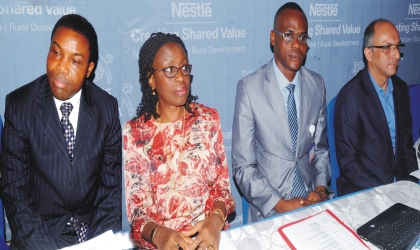
L-R: Corporate Affairs Manager, Nestle Nigeria Plc, Dr Samuel Adenekan, Marketing Service Director, Mrs Iquo Ikoh, Head of Nutrition Division, Federal Ministry of Health, Dr Chris Isokpuninu and Managing Director, Nestle Nigeria Plc, Mr Dharnesh Gordhon, at the Nestle’s Creating Shared Value Media Workshop in Lagos last Wednesday. Photo: NAN
The Niger Delta Development Commission (NDDC) has released the sum of $12 million to the International Fund for Agricultural Development (IFAD) to support agricultural development in Niger Delta.
The Director, Agriculture and Fisheries in NDDC, Mr. Godspower Amadi, who disclosed this at the 15th IFAD/NDDC/FGN Supervision Mission, organised by IFAD in Port Harcourt said that IFAD designed a Community-Based Natural Resource Management Programme (CBNRMP) to empower at least 400,000 households in the rural communities through agriculture.
He said the Commission, as partners in the project, was expected to release a total of $15 million to support the programme.
Amadi said “NDDC is to release $15 million for the programme, so far we have released more than $12 million, so we are almost through with our payment.
“By my assessment, IFAD has achieved 75 per cent of its target and most rural dwellers are now integrated into agricultural entrepreneurship”.
National Coordinator of IFAD, Dr. Irene Ibeakuzie, urged state governments and other stakeholders to pay their counterpart funds to make the programme a success.
She said the programme recorded huge success in the various states, as agricultural investments ranging from crop farming to animal husbandry were done using best improved varieties and global practice.
Ibeakuzie called on the Youths to be part of the Initiative to ensure food security and employment generation through agriculture.
On her part, the national Programme Manager of IFAD, Mrs Atsupo Toda, urged more women and youths to engage in agriculture to achieve food security in the country
Corlins Walter



Business
Jonathan, Diri, Others Laud Firm’s Milestone in Bayelsa …Says Project Will Drive Industrialisation, Create Jobs



-

 News3 days ago
RSG Targets Nine Million Residents in Mosquito Net Distribution Campaign
-

 Oil & Energy3 days ago
Aiyedatiwa Signs New Electricity Bill
-

 Oil & Energy3 days ago
NLNG Commissions Research And Innovation Centre In RSU
-

 Maritime3 days ago
Marine Minister Commends President Tinubu On NPERA Bill Assent
-

 News3 days ago
KenPoly Holds Eight Convocations, August 29
-

 News3 days ago
RSG Begins Another Phase of Projects Commissioning Today
-

 News3 days ago
RMAFC Completes Revenue Sharing Review, Proposes New Pay
-

 Maritime3 days ago
NAGAFF Petitions IGP Over Alleged Maritime Police Harassment