
Politics
Between Constitutional Review And Nationhood

“Tonight, more than 200 years after a former colony won the right to determine its own destiny, the task of perfecting our union moves forward.
It moves forward because of you. It moves forward because you reaffirmed the spirit that has triumphed over war and depression, the spirit that has lifted this country from the depths of despair to the great heights of hope, the belief that while each of us will pursue our own individual dreams, we are an American family and we rise or fall together as one nation and as one people”.
This excerpt from President Barack Obama’s re-election speech last Tuesday night aptly captures the aura that surrounded proceedings in last weekend’s Degema/Bonny Federal Constituency Peoples’ Public Session on the Review of the 1999 Constitution.
Last Saturday, Nigerians, no doubt, got the opportunity they had long craved for. Divided into the 360 Federal Constituencies, they came together in their clusters to be able to contribute to the constitution that binds the country together, to be in a position to attempt to right the numerous perceived wrongs warranted by what many a Nigerian term as ill-written constitution.
It was the first time in the life of the 52 years old country, with ten Constitutional reviews, that the people have been given this opportunity, and none, going by what transpired in the Degema/Bonny Federal Constituency, was ready to let the opportunity slip by.
In the task of moving the country forward, all the participants showed eagerness to correct those areas of the constitution considered to be the cloak under which various ills are executed in the body polity of Nigeria.
In all 43 items of the tentative template provided as guide for voting on key issues by the House of Representatives, participants at the Degema/Bonny Federal Constituency exhibited such unbridled candour that is reminiscent of the American spirit.
All 170 participants, including those representing key segments of the country and volunteers in the constituency, exhibited such maturity that left no one in doubt that Nigerians are ready to determine their own destiny and move forward as a nation.
Going by what transpired at the Degema/Bonny Federal Constituency, all 360 constituencies have their mindset on what they want in the constitution, and what to expect given the exigencies of the moment, based on the interests of their peculiar constituency.
Currently, though, the determination to move forward at the end of last Saturday’s proceedings is just at the level of the 360 Federal Constituencies. The real determination to work and reason as a nation, however, is in terms of merging all the determinations of the various constituencies into one indivisible work plan accepted by all segments of the country.
This, in fact, is where the true determination of Nigerians to coexist as a nation will be tested most. Areas likely to cause disagreement among the constituencies and States may include state creation, indigenship, zoning of the Presidency, immunity for the President and Governors, State Police, true federalism and revenue allocation.
The reason is that in all of such matters, each State has special interests that would be difficult to compromise. One way or another, each State or geo-political zone feels either sidelined or victimized in at least one of these issues. They are therefore likely to seek redress by way of compensation in agreement to their stand to be recognized in the constitution.
This is where another of Obama’s post-election speech comes to bear. Realizing the enormity of the divergent group and personal interests in politics generally, he said, “I know that political campaigns can sometimes seem small, even silly. And that provides plenty of fodder for the cynics that tell us that politics is nothing more than a contest of egos or the domain of special interests”.
He explained that beyond this stance, a knowledge and understanding of what politics should be and how it should be viewed can only be appreciated in the context of peoples’ willingness to make certain commitments.
“You’ll hear the determination in the voice of a young field organizer who’s working his way through college and wants to make sure every child has that same opportunity. You’ll hear the pride in the voice of a volunteer who’s going door to door because her brother was finally hired when the local auto plant added another shift.
“You’ll hear the deep patriotism in the voice of a military spouse who’s working the phones late at night to make sure that no one who fights for this country ever have to fight for a job or a roof over their head when they come home.
“That’s why we do this. That’s what politics can be. That’s why elections matter. It’s not small, it’s big. It’s important. Democracy in a nation of 300 million can be noisy and messy and complicated.
“We have our own opinions. Each of us has deeply held beliefs. And when we go through tough times, when we make big decisions as a country, it necessarily stirs passions, stirs up controversy”, Obama said.
Nigeria may not be a country of 300 million people, but going by the rate of the country’s increasing population, it might not be too far before it attains that status. However, what the country currently lacks in population, comparatively, it makes up in multi-lingual and ethnic dichotomy. These twin phenomena have been the remote causes of most disagreements in post-colonial Nigeria.
For the final stretch of the constitution review to record the same success as it did at the constituencies, therefore, the interests of Nigerians as a people with peculiar geographical needs and problems must be foremost in the hearts of those we have elected to represent us. No matter the fora they find themselves.
As Obama puts it, “but despite all our differences, most of us share certain hopes for America’s future: We want our kids to grow up in a country where they have access to the best schools and the best teachers; A country that lives up to its legacy as the global leader in technology and discovery and innovation, with all the good jobs and new businesses that follow.
“We want our children to live in an America that isn’t burdened by debt, that isn’t weakened by inequality, that isn’t threatened by the destructive power of a warming planet. We want to pass on a country that’s safe and respected and admired around the world, a nation that is defended by the strongest military on earth and the best troops this world has ever known.
“But also a country that moves with confidence beyond this time of war, to shape a peace that is built on the promise of freedom and dignity for every human being.
“We believe in a generous America, in a compassionate America, in a tolerant America, open to the dreams of an immigrant’s daughter who studies in our schools and pledges to our flag. To the young boy on the south side of Chicago who sees a life beyond the nearest street corner. To the furniture worker’s child in North Carolina who wants to become a doctor or a scientist, an engineer or an entrepreneur, a diplomat or even a president — that’s the future we hope for. That’s the vision we share. That’s where we need to go — forward. That’s where we need to go”.
Even in his conviction, Obama acknowledges that “Now, we will disagree, sometimes fiercely, about how to get there. As it has for more than two centuries, progress will come in fits and starts. It’s not always a straight line. It’s not always a smooth path.
“By itself, the recognition that we have common hopes and dreams won’t end all the gridlock or solve all our problems or substitute for the painstaking work of building consensus and making the difficult compromises needed to move this country forward. But that common bond is where we must begin”.
One point to begin is to set eyes on developing our homes, streets, communities and States both as individuals and as a government so that we will always feel comfortable in them any day. We need to develop an innate love for our roots to genuinely be able to claim love for other parts of the country.
If for nothing else, to encourage others to also feel free to visit or reside in them, just as we seek to improve other areas to our comfort. Every State in Nigeria has what it takes to develop and attract people to it. It’s the determination to do it that’s lacking.
In Obama’s words, what makes America exceptional are the bonds that hold them together as the most diverse nation on earth: “The belief that our destiny is shared, that this country only works when we accept certain obligations to one another, and to future generations.
“The freedom which so many Americans have fought for and died for comes with responsibilities as well as rights. And among those are love and charity and duty and patriotism. That’s what makes America great”, according to Obama.
We can develop the same mindset. If we begin it from this point, we know in our hearts that the best is yet to come.



Prof. Amupitan gave the warning on Saturday, in Port Harcourt, Rivers State, during the South-South Zonal Readiness Assessment and Interactive Staff Engagement organised ahead of the 2027 general elections.
He said insecurity remained a potential challenge to the electoral process but stressed that the Commission would not allow threats against its personnel to undermine its constitutional responsibilities.
“Insecurity may pose a challenge, but our collective constitutional resolve is far stronger. Let me again send a clear message from Port Harcourt: anyone who attempts to threaten, intimidate, or harm our ad-hoc staff, NYSC members, or permanent personnel will be brought to justice under the full weight of the law,” he said.
The INEC Chairman, who was accompanied by National Commissioners, directors and technical aides, disclosed that the South-South engagement was the fifth in a series of zonal assessments, following similar exercises in the South-West, North-West, South-East and North-East.
He explained that his physical presence across the geopolitical zones reflected the Commission’s field-first approach, emphasising that electoral integrity must be established through effective operations at the grassroots.
According to him, the assessment would cover operational preparedness across the 123 Local Government Areas in the six South-South states.
On election security, Prof. Amupitan said INEC had moved away from reactive security arrangements traditionally activated around election day to a proactive, intelligence-driven framework known as the “ICCES Tentacle”.
He explained that the framework was designed to extend inter-agency security coordination from national and state headquarters to local government areas and Registration Area Centres, including remote communities.
He identified three critical pillars of the framework as mapping and mitigating security threats, protecting electoral personnel and infrastructure, and guaranteeing safe access to polling units.
The INEC boss said the security arrangement would provide comprehensive protection for electoral personnel, technological infrastructure, including Bimodal Voter Accreditation System (BVAS) devices and server infrastructure, as well as voters.
He added that the framework was intended to ensure that every polling unit, irrespective of its geographical location or history of security challenges, remained safe and accessible for the exercise of democratic rights.
Prof. Amupitan disclosed that the South-South security architecture comprised approximately 60 major operational formations, headquarters and state commands operating under the Inter-Agency Consultative Committee on Election Security (ICCES).
The network, he said, brings together military, naval, air, police and other security and intelligence agencies across the six states.
“Together, this integrated multi-agency network represents the operational backbone that guarantees intelligence-led protection across every riverine creek, coastal axis, and land-based polling unit in the Niger Delta,” he stated.
Providing an overview of the region’s electoral significance, the INEC Chairman said the South-South had the fourth-largest voting bloc in the country, with 15,823,550 registered voters, representing 15.30 per cent of the national register.
Rivers State alone, he said, accounts for 3,736,434 registered voters spread across the 23 local government areas.
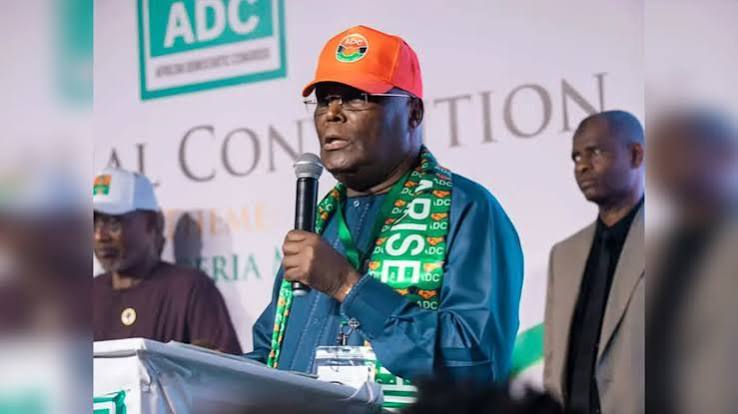
Alhaji Abubakar made the demand following revelations that some INEC registration officers allegedly abused their access to the voter registration system to introduce irregular records into the database.
In a statement issued by his Director of Strategic Communications, Mr Phrank Shaibu, the former vice-president described the development as a serious breach of the Commission’s internal safeguards and raised concerns about the integrity of the electoral process.
He urged INEC to identify the officials implicated in the alleged misconduct and explain what disciplinary or legal measures had been taken against them.
Alhaji Abubakar also called for an independent forensic audit of the preliminary voters’ register to establish the scale of the alleged manipulation, identify affected records and determine how the questionable entries were introduced into the system.
He further insisted that INEC preserve all relevant voter records, image files, system access logs and electronic audit trails to prevent the destruction or alteration of evidence before an independent examination could be conducted.
The former vice-president also demanded that the Commission disclose the identities of companies contracted to produce sensitive election materials ahead of the 2027 polls, arguing that transparency was essential to building public confidence in the electoral process.
INEC’s Director of Information and Communication Technology, Dr Lawrence Bayode, had earlier disclosed during a television interview that some registration officers across the country allegedly used their official login credentials to introduce irregularities into the voters’ database.
Dr Bayode explained that the Commission’s Automated Biometric Identification System helped identify questionable records and establish how some irregularities entered the system.
He, however, clarified that not all suspicious photographs were AI-generated, as some resulted from poor registration procedures.
The development followed public concerns over suspected AI-generated photographs, alleged duplicate entries and other inconsistencies discovered in the preliminary voters’ register published online on October 26, 2026.
INEC has maintained that the published document is a preliminary register and that it is reviewing questionable records ahead of the certification of the final Register of Voters.
The controversy has intensified calls for greater transparency and accountability in the management of the voters’ register as preparations gather momentum for the 2027 general elections.
-
Rivers2 days ago
Don Seeks Repositioning Of Tech Education For Dev
-

 Education2 days ago
PAMO MEDICAL UNIVERSITY -Nullifies Arrest warrant on VC
-
Niger Delta2 days ago
PANDEF Seeks 50% Oil Derivation Allocation Increase
-

 Education2 days ago
IAUE MOVES TO END GHOST WORKERS SYNDROME AS 400 NEW NON-TEACHING STAFF UNDERGO MANDATORY ETHICS TRAINING
-

 News2 days ago
Fresh Ebola Scare As NCDC Records Two Cases
-
News2 days ago
Customs Partners EFCC, NDLEA, Others To Tackle Money Laundering, Terrorism Financing
-
 Politics2 days ago
2027: South-East Govs Insist On Tinubu’s Re-election
-
 Politics2 days ago
2027: RIVERS GUBER CANDIDATES SIGN CHARTER TO PRIORITIZE CITIZENS’ DEMANDS