
News
Fuel Scarcity Hits PH, Other States

In spite of claims that there is enough fuel in supply to meet demand of Nigerians, fuel scarcity has continued to hit harder on Port Harcourt residents as marketers and filling station owners have refused to sell products to customers.
This is coming barely a week after the Independent Petroleum Marketers Association of Nigeria (IPMAN), said that the observed scarcity in Port Harcourt and its environs was as a result of hoarding by some of its members.
At virtually all filling stations visited by The Tide between Monday and yesterday in Port Harcourt and Obio/Akpor local government areas of Rivers State, only the Nigerian National Petroleum Corporation’s mega station at Lagos Bus Stop in Port Harcourt main town was seen dispensing products to customers, who queued long hours to procure the essential commodity.
All other filling stations, either owned by the major or independent marketers, showed no visible sign of activities as their stations remained under lock and key.
However, black market operators were seen making brisk business as motorists and other residents who desperately require petroleum products for domestic and commercial activities and brought to buy from them at the roadsides, no matter how much the products cost.
The Tide gathered that some customers paid as much as N6,000 for 25 litres of fuel while others paid N4,000 for just 20 litres of fuel against the normal N2,800 for 25 litres and N2,000 for 20 litres previously.
In an exclusive interview yesterday, Chairman, IPMAN, Rivers State, Comrade Samuel Onura Osaroejor, attributed the scarcity to the dispute between indicted oil marketers whose petroleum subsidy claims have not been paid and the Federal Government.
Osaroejor stated that all the private tank farm owners were affected by the fuel subsidy dispute, saying that their refusal to import more fuel has mounted pressure on the Port Harcourt depot, which is owned by the government.
He explained that the private tank farms usually cushion the shortfall in supply from the government’s depot, thus closing the gap between demand and supply. According to him, the dispute has resulted to a surge in demand from the government depot while supply remains low, adding that some marketers have cashed in on the situation to hike the pump price of the product well above the N97 per litre official price, where available.
Meanwhile, the Ministry of Finance, while reacting to claims by the marketers that the Sovereign Debt Notes issued to them as reimbursement for petroleum products imported were not backed by cash, has confirmed that a whopping sum of N259.34billion was paid the marketers as subsidy arrears for 2011 while about N78.9billion has so far been paid for 2012 verified claims.
The Minister of Finance, Dr Ngozi Okonjo-Iweala, who gave the figure last Monday, said that “of the total amount of N78.9billion paid so far under this category, N34.6billion was paid on Wednesday, August 22, 2012, following a thorough process of claims verification.”
According to her, “this is in line with the commitment of the Federal Ministry of Finance to continue the payment of marketers whose papers have been processed and cleared,” adding that some claims had been paid before the substantive implementation of the Aig-Imoukuede committee report which led to the suspension of payments of all 2012 claims to oil marketers under investigation for serious infractions.
Meanwhile, vehicular queues for petrol in many states across the country continue to lengthen in most filling stations amidst reported scarcity of the commodity.
Our correspondents report across the states show that the scarcity has caused severe inconveniences to not only motorists but commuters and consumers of the product.
Affected motorists and commuters attributed the situation to various factors, including alleged greed on the part of motorists and a break in the fuel supply chain.
But in states such as Lagos, Kwara and some towns, there were no reports of scarcity as motorists bought fuel with ease.
In Port Harcourt, car owners and other motorists expressed dismay at the fuel scarcity in the city.
Residents of the city had witnessed fuel queues in some areas since last week.
A resident, Mr Chidi Amadi, said that he suddenly saw cars queuing to buy fuel last Friday.
‘’ I thought it was a joke. To my amazement, the queues are still there till today. The surprising thing is that nobody knows the reason for this scarcity.’’
A commercial bus driver, Mr James Udoh who plies Mile 3 to Lagos bus stop in Port Harcourt, said he and other drivers have been buying fuel from the black market since Aug. 31.
‘’Honestly, as we speak, nobody knows the cause of this scarcity. If you have the patience, you can queue and buy from petrol stations selling fuel.’’
Udoh urged the independent petroleum marketers to look into the cause of the scarcity before it becomes very serious.
A housewife and teacher, Mrs Kate Edeh, said the situation rattled her last weekend as she suddenly saw fuel queues in her neighborhood in Rumumasi,Port Harcourt.
‘’ The major marketers like Oando, NNPC sub-stations and Agip stations had long queues and I started wondering what was happening.
“I have asked questions on the cause of this sudden queues but nobody seems to have an answer.’’
But, chairman of the Independent Petroleum Marketers Association, Port Harcourt refinery branch, Mr Sonny Ikpe, told newsmen in Port Harcourt on Tuesday there was no problem .
He assured that members would lift enough products that would satisfy the needs of motorists effective yesterday.
Motorists, however, complained that some stations were selling at N120 per litre while the major marketers with long queues, sold at N97 per litre.
Residents also said the stations had enough kerosene and diesel while fuel remained scarce.
Long Queues of vehicles have also resurfaced in most petrol stations in Bauchi metropolis and its environs.
Our checks revealed that the queues were noticed earlier last week when most of the stations were either without fuel while a few that had the commodity sold at higher prices.
Most of the stations sold the commodity at between N110 per litre and N120 per litre in spite of the long queues.
All the stations on Murtala Mohammed Way, Bauchi, had no fuel while the only station owned by an Independent Marketer discharged the commodity at N120 per litre.
The NNPC Mega Stations within the metropolis which could have doused the scarcity lacked supply while the commodity sold for between N700 and N800 per litre at the black market.
Long queues on Tuesday resurfaced at petrol stations in Dutse, Jigawa, due to fuel scarcity.
In Dutse, only NNPC retail station and Oando filling stations were dispensing the commodity. A litre of petrol was sold at N97 at the stations.
A motorist, Ahmad Salihu,said he had spent about 40 minutes on a queue at the Oando service station.
He said he could not comprehend the reason why most of the filling stations in town were locked up, which compounded the situation.
Nuru Kaugama, a cab driver, also expressed surprise on the long queues at the filling stations in Dutse.
Kaugama commended the management of the NNPC retail station over adequate supply of fuel in the area.
“The line has been moving fast because of many pumps dispensing the fuel at the mega stations.
In Lagos, some petrol dealers on Tuesday assured residents that they had enough stock of petroleum products to sell to customers.
The operators said that scarcity of petroleum products would not arise for now.
The Station Manager at Conoil Filling Station at Orile Iganmu, Mr Ganiyu Raheem, said that he had observed some “panic buying” of petroleum products since the beginning of the week.
“Since Monday morning, we have observed panic buying of the products by motorists.
“But there is no problem as regards likely scarcity of the product in this station; you can see that vehicles are coming in to buy without hitches.
“What we have in stock now can last for more than a week and I assure you that if we order for new supplies, we will be given.”
ASupervisor at the Mobil Filling station at Ojuelegba, Mr Tayo Odeleke, said the station had not witnessed any panic buying this week.
“I have not observed any panic buying and I can assure you that this station has enough stock.
“We have not observed anything that will make us to think that the product will scarce.
“The issue of scarcity of fuel in Abuja does not relate to Lagos here.
“About three weeks ago, petrol was scarce in Abuja and it did not affect Lagos.”
Odeleke said there was no cause for alarm as trucks were loading petroleum products at the depots.
The station manager at Total Filling station in Mushin said he had enough petroleum products to last for this week.
“As you can see, I am selling and I have enough stock to last for the week.”
The Manager of MRS station in Ojuelegba, Mr Femi Balogun, also said that he had enough stock of petroleum products.
He said that customers’ demand for petrol, kerosene and diesel would be met without hassles.
“We have made arrangement for enough products and I believe that our customers cannot even finish our stock.”
The Tide reports that there were no queues in all the filling stations visited in Abulegba, Mushin, Oshodi, Lagos Island and Ajao Estate in Lagos.
In Yola, fuel queues have started emerging as motorists filed to take available petrol at few filling stations.
All the filling stations belong to major marketers, including two NNPC mega stations. They are all selling at the normal pump price.
Some queues at fuel stations on Monday night in Okitipupa, Ondo state, first gave the indication of the beginning of fuel scarcity
The scarcity fully hit the environs of Okitipupa Local Government Area on Tuesday.
As at Tuesday morning, only two fuel stations were open and selling fuel in spite of queues at the stations.
Speaking, a commercial bus driver, Seun Akintuyi said the fuel prices wouldn’t go up but the commodity was scarce at the depots.
“The prices have not really gone up but I just believe the depots have run out of fuel or the fuel stations are purposely hoarding the fuel.” .
Also speaking a fuel attendant at one of the closed fuel stations, said they were open yesterday night until their fuel supply finished around 10 p.m.
“We haven’t sold fuel this morning, but we were told to resume in the afternoon, so there is hope that fuel should be available then,”
“I think the product is just scarce at the depots because until we closed yesterday night, we were selling at the normal rate of N97 per liter; it is not as if the price wants to go up.”
However, an Okada man who spoke on condition of anonymity claimed the scarcity was the beginning of a systematic fuel price hike.
“This is what happens when fuel prices want to go up, the fuel stations introduce artificial scarcity and then gradually increase the price.”
As at the time of this report, only two of the 10 fuel stations in Okitipupa were selling at N100 per liter amidst queues.
Also in Onitsha, Anambra, motorists and entrepreneurs have continued to buy petrol and diesel with ease..
This is particularly noticeable in filling stations belonging to independent marketers and NNPC joint venture fuel stations within Onitsha and its environ.
Our correspondent, who went round fuel stations in Onitsha, observed that there was slight increase in price of fuel products for over three months now.
It was also observed that petrol was sold for N105 per litre, while diesel went for between N150 and N160 per litre in almost all the fuel stations visited.
However, kerosene (DPK), which is a household cooking fuel, had remained relatively scarce in most of the fuel stations.
The household fuel price had sky-rocketed to between N120 and N130 per litre in stations owned by independent marketers, where the stock was available.
The black market price for kerosene ranged from between N150 and N155 per litre at Onitsha.
Reacting, Manager of Dwell Oil Fuelling Station along Oguta Road, Onitsha Pastor Agara Jarvis, noted that the station had not experienced any sort of panic buying between yesterday and today.
Jarvis attributed the slight increase in price to what the independent marketers wanted them (station managers and pump attendants) to sell.
“It is the instruction from the directors. If they say sell at N20 we sell. If they say sell at N50, we will sell because whatever we sell is accounted for.’’
Also in Ilorin, the residents are enjoying stable supply of fuel, contrary to report of long queues being experienced in some parts of the country.
All the three NNPC Mega-stations in the metropolis and major marketers were selling the product at normal pump price with no noticeable queue.
The motorists and other users were seen buying the product in little quantity without fear of imminent scarcity.
The petrol attendants in some stations were idle, waiting for customers to come.
A taxi driver, Malam Ibrahim Olarewaju said he was not aware of any looming scarcity of the fuel because all filling stations in the metropolis were selling at normal price.
“Besides, there is no queue at any of the petrol stations’’.
In Maiduguri, long queues have emerged in petrol stations as most sellers closed shops.
The queues began to build up on Monday evening when rumours of an impending strike spread.
Our correspondent who went round the metropolis reports that only a few major marketers were selling the products while others remained closed.
At the NNPC Mega station on Dikwa-Ngala road, large number of motorists were waiting endlessly even as the fuel attendants kept mute.
“We came here hoping to get fuel since morning but they refused to say a word.
“We are hoping that somehow they will start selling because they still have fuel in their tanks,” Malam Mala Modu a motorist said.
However, some independent marketers have taken advantage of the situation by hiking the price.
Some motorists said that most of the private stations sold a liter of petrol at between N120 and N150.
“They keep their gates closed to indicate that they are out of supply. But they open later in the evening to sell at exorbitant price,” Mr Solomon Ngamdu, a motorist said.
Reacting, the management of NNPC said it had 30 days stock of petrol and cautioned against panic buying by consumers.
General Manager, Media Relations of NNPC, Mr Omar Ibrahim,said this on Monday in Abuja and debunked insinuations that the Federal Government had increased the price of fuel.
Ibrahim told newsmen that the artificial scarcity might have been instigated by some oil marketers.
“I can tell you that the Federal Government has not increased the price of fuel. This scarcity might have been instigated by this oil marketers who have disagreement with government.
“The NNPC through the PPMC has ample supply to last 30 days to the whole country,” he said.
Our investigations showed that most of the oil marketers have run out of stock of the product and consequently increased the pump price of the product.
Ibrahim said it was only the NNPC that had been importing fuel into the country since the beginning of the year as the marketers had stopped over their subsidy payment.
He said the NNPC was fast-tracking the process of supply of the product to its various depots in Lagos, Calabar, Warri and Port Harcourt.
Ibrahim expressed optimism that the situation would soon be resolved so that the marketers could complement imports by NNPC.
Vivian Peace-Nwinaene, with agency reports


News
Rivers DPOs Receive Awards For Outstanding Performance In Crime Prevention …As Students, Media Group Honour CSP Worgu, CSP Yusuf


Two Divisional Police Officers (DPOs) in Rivers State have been honoured by separate groups for their contributions to security, crime prevention and improved community-police relations in their respective areas of responsibility.
The beneficiaries are the DPO of Afam Police Division, CSP Endurance Worgu and his counterpart at Oyigbo Police Division, CSP Bello Yusuf.
CSP Worgu was honoured by a group of students under the aegis of Rivers State Graduate Students Associations for what they described as his commitment and outstanding performance in the discharge of his duties.
The students, led by Chidi John Enyie, Esq. said CSP Worgu was selected based on his track record and status as one of the longest-serving young DPOs of Rivers State origin.
According to the group, CSP Worgu has made significant contributions to the protection of lives and property in the area since assuming office following the #EndSARS period.
The students said they were particularly impressed by the improvement in community-police relations under his leadership, noting that professionalism had remained a key feature of his service.
Enyie represented by Comrade Briggs Soku, said the students community was pleased to identify with a Rivers indigene who had distinguished himself in the police force.
He said the students considered it necessary to encourage and celebrate CSP Worgu because of his achievements as a young Rivers man excelling in a profession that many people from the state were often reluctant to join.
Receiving the award at his office in Afam, CSP Worgu expressed gratitude to God and the students for finding him worthy of the honour.
The DPO said the recognition had boosted his morale and encouraged him to sustain his efforts towards maintaining peace and security in the area.
He said he least expected the honour, particularly because it came from the students, adding that the recognition would further motivate him to serve the people better.
CSP Worgu assured residents of Afam that the police would sustain the existing peace in the area.
He appealed to members of the public to support the police by providing credible and timely information, stressing that useful information from residents would make the job of security personnel easier.
Meanwhile, the Ikwerre/Etche Media Association has also honoured the DPO of Oyigbo Police Division, CSP Bello Yusuf, for his efforts in tackling criminal activities in the area.
The media group presented the award following the swift tracking and arrest of five suspected kidnappers who had allegedly terrorised residents of the Kom-Kom axis and other parts of Oyigbo.
The group commended CSP Bello for what it described as his determined efforts to restore confidence and security in the affected communities, particularly Kom-Kom and Obeama.
According to the group, the arrest of the suspects demonstrated the DPO’s commitment to tackling criminality and safeguarding residents.
The media association said residents had received the development with relief, noting that the police action had sent a strong message to criminal elements operating in the area.
Responding, CSP Yusuf appreciated the group for the recognition and reaffirmed that there would be no room for criminality in Oyigbo.
He also commended the media for its role in disseminating credible information to the public, saying the media had remained supportive of the police in the fight against crime.
CSP Yusuf warned criminal elements operating in Oyigbo to leave the area or be prepared to face the full weight of the law.
He assured residents that the police would continue to pursue criminals and work to dismantle their hideouts, regardless of where they might be operating.
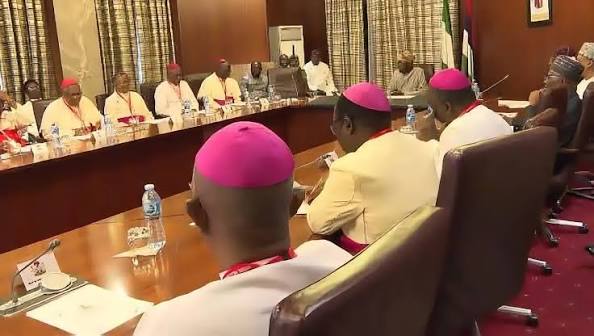
The 5000 Achievers Christian Forum and Colleges of Bishops, Archbishops and Apostles, a Christian interdenominational organisation, has endorsed President Bola Ahmed Tinubu and all candidates of the All Progressives Congress (APC) in Rivers State for the 2027 general elections.
International President of the forum, Archbishop Lucky Aroh, disclosed this during the ordination and consecration of three new Bishops, as well as an award ceremony held in Port Harcourt.
Aroh said the performance of the APC-led Federal Government had endeared the party to the organisation, prompting the forum to declare its support for President Tinubu and other APC candidates in Rivers State.
He said the forum would support all APC candidates in the state during the 2027 elections and urged Nigerians to vote for the party.
Aroh, who is also the General Overseer of Caring Peoples Church, Port Harcourt, charged the newly consecrated Bishops to see their new positions as a great responsibility and dedicate themselves to the advancement of the kingdom of God.
He cautioned them against conduct capable of bringing their offices into disrepute, stressing that their activities would be closely watched by members of the public.
“As Bishops, the eyes of the public are on your activities. You must therefore conduct yourselves in a manner worthy of your calling,” he said.
Also speaking, the International Coordinator of the forum, Bishop Saint Robinson, urged the newly consecrated Bishops to work diligently towards winning souls for the kingdom of God.
Robinson, who was the guest speaker at the event, stressed that the activities of Bishops must at all times be guided by godly principles.
He also called on members of the church to support and cooperate with the newly consecrated Bishops in the discharge of their responsibilities.
The Secretary of the College, Apostle Elizabeth Ayadi Abaye, said the organisation was established to advance the kingdom of God and promote spiritual development.
According to her, the forum has organised several crusades, conferences, prayer meetings, ordinations, consecrations, enthronements, empowerment programmes and other spiritual development activities across the country as part of efforts to win souls for Christ.
Abaye said the organisation has members across the world and disclosed that more programmes had been scheduled to promote the spiritual development and wellbeing of humanity.
The three Bishops consecrated at the ceremony were Prince Alban Chike, Testimony Omenihu Shedrach and Prince Ifemena.
Among those honoured at the event were the Chairman of the Community Development Committee (CDC), Abali Community, Port Harcourt City Local Government Area, Manuchimso Prince Lemmy Wopara, and Clifford Oko Jaja, Coordinator of the 5,000 House-to-House for President Tinubu.
By: John Bibor
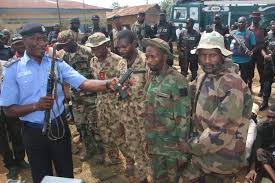
The Rivers State Police Command has arrested a 49-year-old suspected fake soldier, Andrew Atausi, and several other suspects in connection with various criminal activities, including kidnapping, armed robbery, cultism, one-chance robbery and the alleged murder of police officers.
The State Commissioner of Police, CP Olugbenga Adepoju, disclosed this in Port Harcourt, recently during a press briefing at the Command Headquarters, where he said the arrests formed part of the operational achievements recorded by the Command between June and August 2026.
Adepoju said Atausi was arrested on August 10 by police operatives along Ada George, Port Harcourt, while dressed in military uniform and driving a Toyota Hilux painted in Army colours.
The Commissioner said investigation revealed that Atausi was not a member of the Armed Forces, adding that he was suspected to be a serial car snatcher, with three suspected stolen vehicles recovered from him.
He said the recovered vehicles included three Toyota Hilux vehicles without registration numbers and a Toyota Corona Premio with registration number BNY 380 ES, noting that the chassis and engine numbers of the vehicles had allegedly been tampered with.
Adepoju added that an axe and military accoutrements were also recovered from Atausi, as investigation continued into the circumstances surrounding the vehicles and other items recovered from him.
On the June 29 attack on police officers at Aluu Division, the Commissioner said three members of the gang allegedly responsible for the incident had been arrested by operatives of the Violent Crime Response Unit, VCRU-AKU.
The suspects, identified as Maduabuchi Emeka, 34, alleged gang leader; Doctor Chinedu Owhor, 42, and Kamachi Joe, 28, alleged armourer, reportedly led operatives to their hideout at Omagwa where two AK-47 rifles stolen during the attack were recovered.
Adepoju recalled that two police officers were killed during the Aluu attack, while others were wounded and one officer had his leg amputated, stressing that efforts were ongoing to apprehend the fourth suspect.
On kidnapping, the Commissioner said five members of a suspected kidnapping syndicate were arrested in Oyigbo Local Government Area, adding that they allegedly confessed to operations in Kom-Kom, Railway, Obeama and Afam communities.
He said two other suspects from the same network, Anele Ogbogu, 35, alleged to be the gang’s armourer, and Kenneth Eke, 38, were arrested on July 27, with one AK-47 rifle and one SMG rifle recovered.
The Commissioner further disclosed the arrest of suspects in connection with alleged firearm offences, armed robbery, cultism and one-chance robbery, with firearms, ammunition and other exhibits recovered during the operations.
Adepoju assured residents that the Command would sustain intelligence-led, proactive and community-oriented policing in collaboration with other security agencies, while urging members of the public to continue providing credible information that would assist the police in combating crime across Rivers State.
By; King Onunwor
-

 News5 days ago
RSG Targets Nine Million Residents in Mosquito Net Distribution Campaign
-

 Oil & Energy5 days ago
Aiyedatiwa Signs New Electricity Bill
-

 Oil & Energy5 days ago
NLNG Commissions Research And Innovation Centre In RSU
-

 Maritime5 days ago
Marine Minister Commends President Tinubu On NPERA Bill Assent
-

 News5 days ago
KenPoly Holds Eight Convocations, August 29
-

 News5 days ago
RSG Begins Another Phase of Projects Commissioning Today
-

 News5 days ago
RMAFC Completes Revenue Sharing Review, Proposes New Pay
-

 Maritime5 days ago
NAGAFF Petitions IGP Over Alleged Maritime Police Harassment