
Niger Delta
Expert Urges Intensive Fish Farming In N’Delta

A veterinary doctor, Dr Kingsley Umeayor, has called on Niger Delta people to embark on intensive fish farming so as to become the largest fish producers in the country.
Umeayor told newsmen in Warri that governments of the Niger Delta states should assist their youths in efforts to transform the region into a fish-producing region.
He said that the region was richly blessed with human and natural resources. “Apart from crude oil, agriculture is another viable resource given to them by God and if properly developed, the region will be the food basket of the nation,’’ he said.
Umeayor said that the fish farming would thrive in the region because of the nearness of its soil to underground water.
“If you want to construct an earthen pond, you will not go far into the ground before you strike water; unlike in the East, where water is hard to find,’’ he said.Umeayor said that fish farming was one of the stable farming systems that would not disappoint the farmer if well taken care of.
He said that once the pond, whether earthen, concrete or surface systems, were put in place, the fishery itself would not be an expensive venture, depending on the scale.
The veterinary doctor said that in the region, the pond system was prevalent due to the nature of the soil, adding, however, that there were some rules to observe so as to stem fish mortality.
He said that the most dangerous time for the fishes after hatching was at their tender age, particularly when transferring them from the brooding point to the pond.
Umeayor said that this was because the fishes were very tender and a change of environment would affect them, adding that those that survived that stage stood the chances growing to maturity. “Fish are not like birds that you must give all the necessary immunisation and vitamins as they are growing up and producing since their main sickness was viral infections.“
For fish, once you uphold the standard feeding regime and start them well, none of the fish will die and you will harvest all of them.
“The fishery rules include not overcrowding fishes in the pond because of their carnivorous nature as the bigger ones would eat up the small ones.
“Overcrowding also induces some kind of stress syndrome and their immunity will go down. Fishes have their own diseases but the mortality rate is not high.
“As long as you start them well with good feeds at their tender age, you may not need to give them any drug before harvesting, unlike poultry,’’ he said.
Umeayor, however, said that fishery was a good, viable business because it had a ready market with appreciable profits.
He said that poultry was equally good, adding, however, that it required more attention although one could start it with smaller capital.
Umeayor said that starting a small-scale fishery would cost about N500, 000, while a large-scale one could cost up to N1 million.He said that fish harvesting ranged from four months to six months.


Niger Delta
Fubara Delivers Three Legacy Projects At Elechi Amadi Poly …Advocates Shift To Vocational Education

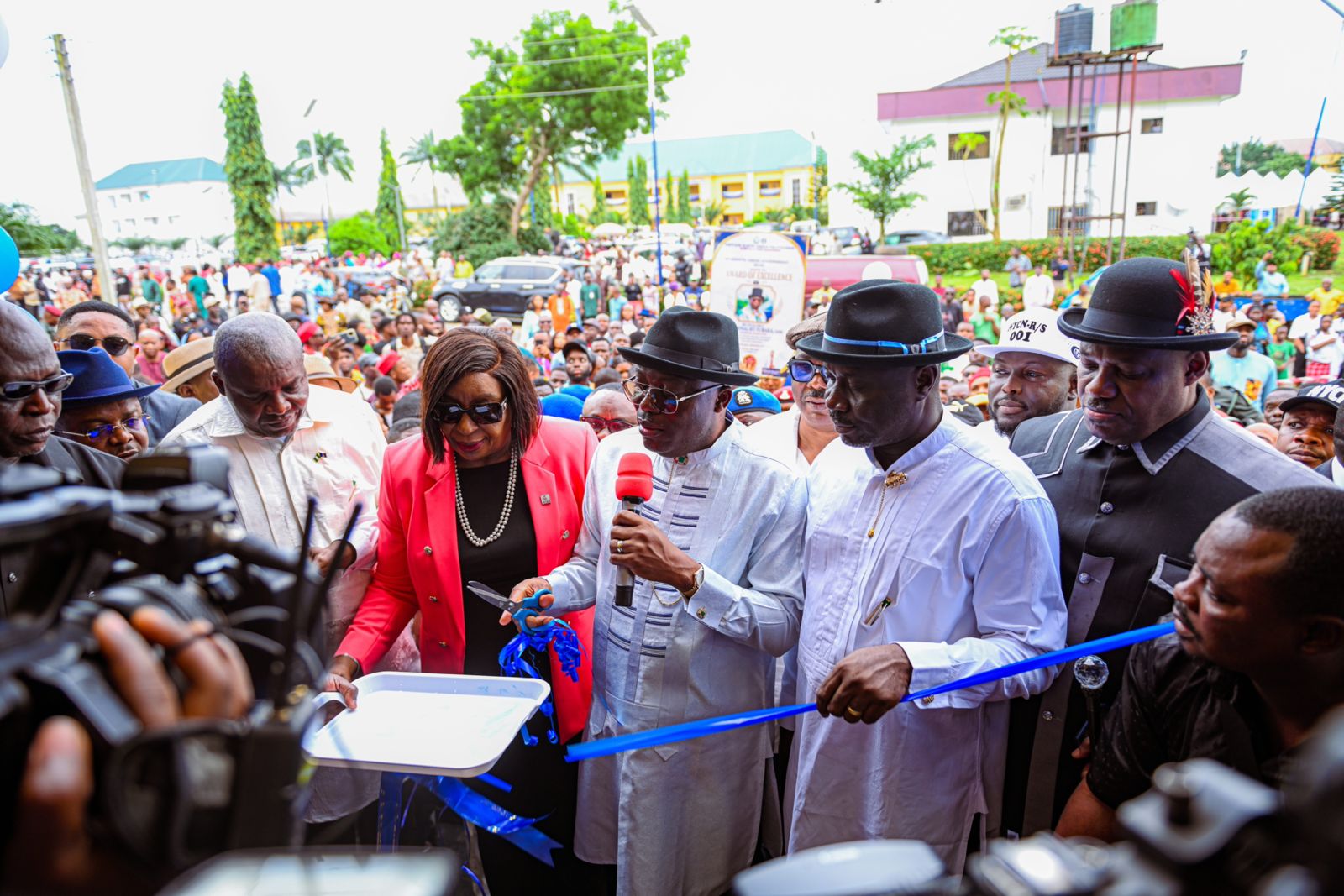
Rivers State Governor, Sir Siminalayi Fubara, has advocated a strategic shift to Vocational and Technical Education (VTE) in Nigeria’s educational curriculum, berating the current emphasis on paper qualifications over technical expertise and practical skills.
The governor noted that emphasis on paper qualifications over technical expertise and practical skills was the major driver of unemployment and economic stagnation in the country.
Fubara, according to a statement by his Chief Press Secretary, Onwuka Nzeshi, made the remark last Wednesday during the commissioning of three major infrastructure projects at the Captain Elechi Amadi Polytechnic, Rumuola, in Obio-Akpor Local Government Area of the State.
He said that if Rivers State and by extension, Nigeria, must prepare her youths for the challenges of the 21st Century, deliberate and consistent efforts must be made to realign the curriculum with vocational and technical education focused on practical skills for self employment and job creation.
He recalled that the 6-3-3-4 Educational System which Nigeria adopted in the 1980s was designed to prepare young Nigerians for the future through VTE at the secondary school level.
The governor said that under the programme, students were expected to advance their educational pursuits to either the Polytechnics or Universities depending on their capacities, talents and skills at a young age.
According to him, at the completion of the first three years of secondary school, a student should have acquired a skill, trade or craft and could become self employed.
He lamented that over the years, the country appears to have deviated from that noble vision and young people have become so obsessed with acquiring certificates and degrees without skills and competencies relevant to the present day labour market.
“The Polytechnic system was designed in such a way that if you’re gifted with your hands; if you’re a technical person, you can go there and learn more, build your skills so that you can add value to our society. But you know that somehow, our society don’t attach much importance to those level of people. So even when you know that you can’t survive the rigours of academic works, you put your head, struggle to make sure you complete the six years, jump into one university, and come out with one degree that is not useful. That is part of the problem we are having in our society,” he said.
The Governor explained that the idea behind the Entrepreneurship Center project at Elechi Amadi Polytechnic was to have a place where young people can be groomed with relevant skills that could lead them to become employers of labour, on graduation, instead of job seekers.
Fubara reaffirmed his administration’s focus on developmental projects that will create opportunities and solve problems of the society.
“So for us as a government, what is important to us is not just about embarking on projects but executing projects that will touch the lives of the people; projects that will solve problems and projects that will bring advancement to our lives.
“Today, technology has taken over everything. So, if we have to prepare our youths; if we have to prepare our dear State for the challenge ahead, our educational programmes have to be very strategic,” he said.
The governor charged the school authorities, students and the entire community to safeguard the facilities and equipment against theft and vandalism, adding that they should take ownership of the infrastructure instead of treating them as ‘government property’.
He emphasised the need for the people of Obio/Akpor Local Government Area to embrace the new wave of peace in the State, stressing that political stability remains a primary condition for development.
The Rivers State Commissioner for Education, Dr. Peter Nwagor, who gave a brief presentation on the projects, said one aspect entailed the construction and complete furnishing of two units of one-story buildings housing classrooms, workshops, staff quarters, and administrative wings for the School of Engineering and the Entrepreneurship Center.
Each building spans approximately 1,940 square meters, featuring eight halls, 14 staff offices, 22 toilet facilities, and fully air-conditioned spaces equipped for practical training.
He said the third project, the Governing Council Building, was started by the Nyesom Wike administration but completed and fully furnished by the Fubara-led administration.
The Rector of the Polytechnic, Dr. Moses Neebee, hailed the legacy projects describing them as historic landmarks on the school’s landscape.
According to him, the Entrepreneurship Centre and other projects were major developments on the campus in nearly two decades.
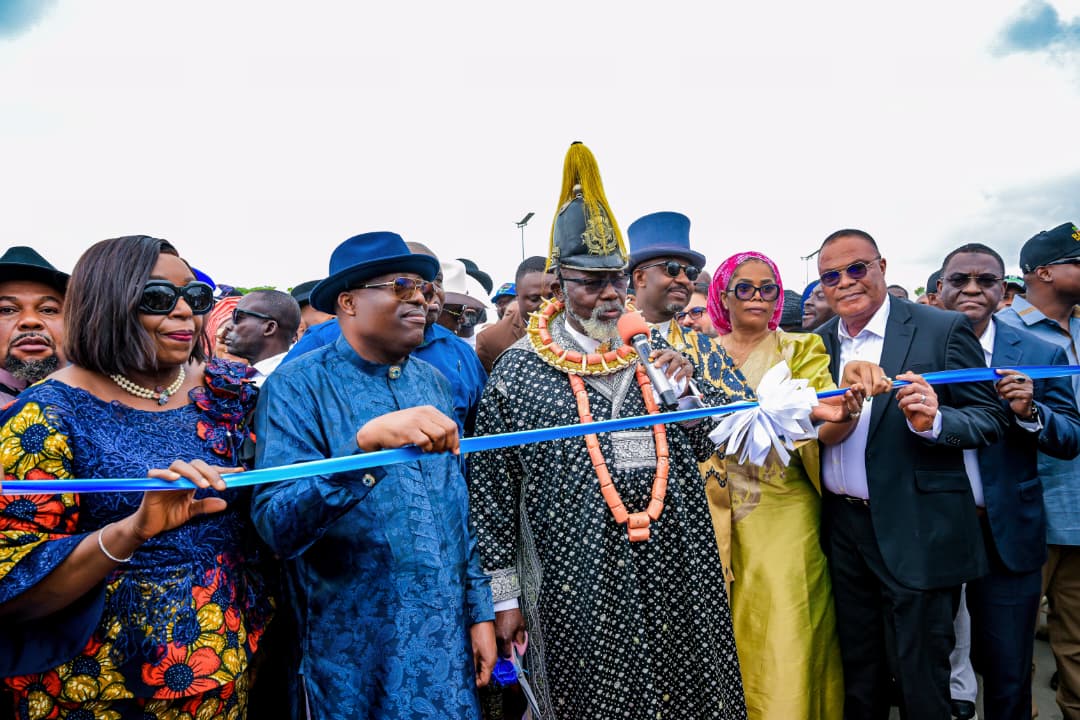
Rivers State Governor, Sir Siminalayi Fubara, has unveiled the reconstructed Buguma-Degema-Abonnema Road, a major transport corridor linking communities across the Asari-Toru, Degema, and Akuku-Toru Local Government Areas of the State.
The project, a 19.79 kilometre road was executed by Julius Berger Nigeria PLC, brings to an end the nightmares of man-hour losses and insecurity associated with the route.
The long stretch of the road was in a very deplorable condition before the Fubara administration awarded the contract for its rehabilitation in September 2024.
Fubara disclosed that the completion of the project in record time was a fulfillment of a personal commitment made after witnessing the severe degradation of the road during a previous visit to the area.
“It is a road that you must pass if you’re going to Abonnema. It is a road that because of its state, a lot of evil activities was taking place there. But to the glory of God today, I don’t think those negative acts can even be imagined or be carried out along that corridor again.
“I made a promise to myself that day that even if it is remaining one week, we must make sure that we fix this road. Today, to the glory of God, the road has been fixed.
“I am happy that today, we are all here gathered happily that this particular dream has come to reality,” he said.
The governor reiterated that his desire for the State is not just about embarking on projects but in doing those things that will touch the lives of the people positively.
He reaffirmed the commitment of his administration to complete the Trans-Kalabari Highway, another major road project linking several coastal communities in the State.
He expressed appreciation to the people for their love and cooperation especially for allowing the contractors to do their jobs without hitches.
“You have shown me so much love. Nobody can take that away. One particular project that cannot be denied is the Trans- Kalabari Road that we are doing. I want to beg you that if I cannot meet all you requests today, don’t worry, my successor will continue from where I will stop,” he said.
Special Guest of Honour, the Amanyanabo of Abonnema Kingdom, King Desrael Gbobo Bob-Manuel, who officially commissioned the project, commended the state government for its rapid infrastructure development, noted that the rehabilitation of the roa has drastically improved travel time, safety and the living conditions of the people.
“In the past, for you to leave any of our communities to Port Harcourt, you must, as a matter of fact, go into a one-day fasting and prayers the previous day. Otherwise, you are not sure you will get to your destination.
“Today, I can leave my palace in Abonnema by 10:00 AM, and I will be wherever I want to be in Port Harcourt before 11:00 AM,” the royal father said.
King Bob-Manuel stated that the reconstructed road would not only enable the local fishermen to transport their catch directly to urban markets in Port Harcourt for better profit margins, but will open the riverine communities to new investments.
Bayelsa State Governor, Senator Douye Diri, will on September 1, 2026 host Ijaw leaders as part of the effort to consolidate the reconciliation process in the Ijaw National Congress (INC).
The event tagged “Mega Unity Reception” is scheduled for the Ijaw House in Yenagoa and will also be attended by the major INC stakeholders.
It would be recalled that on May 26, 2026, the Bayelsa governor, socially addressed as ‘Governor-General of the Ijaw Nation’, constituted a reconciliation committee chaired by Dr. Mathew Seiyefa, a former Director-General of the Department of State Services (DSS).
Other prominent Ijaw leaders on the panel were a former Rivers State Deputy Governor, Sir Gabriel Toby, a former Minister of Police Affairs, Alaowei Brodrick Bozimo, former INC president, Chief Joshua Fumudoh, National Chairman of the Pan Niger Delta Forum (PANDEF), Dr. Boladei Igali, and King Goddy Idaminabo.
Dr. Kingsley Kuku and Chief Patrick Erasmus headed the secretariat.
A month later, the committee submitted its report after engaging with aggrieved parties and other stakeholders.
The Tide learnt that forthcoming programme which is billed to gather Ijaw leaders and INC stakeholders aims to reset the ethnic nationality’s foremost socio-cultural organisation and engender greater unity in Ijaw nation.
By: Ariwera Ibibo-Howells, Yenagoa
-
Politics14 hours ago
Yari Emerges DG As Tinubu Unveils 2027 Presidential Campaign Council
-
Politics15 hours ago
2027: ADC Candidate Tasks INEC On Integrity, Intensifies Consultations
-
 News12 hours ago
Tinubu Appoints Enitan As New Head Of Federal Civil Service
-
Sports15 hours ago
NSC Celebrates Historic Beach Volleyball Olympic Qualification
-
Sports14 hours ago
Arsenal Want Osimhen To Take Pay Cut
-
Sports15 hours ago
Nnadozie, Osimhen Lead Highest-Rated Nigerian Players
-
Politics15 hours ago
Duke Attacks Tinubu’s Economic Policies, Says Subsidy Removal Impoverishes Masses
-
 News10 hours ago
Fubara Hails Team Rivers For Winning Tinubu Inter-Schools Debate Championship …Describes Victory As Great Feat For Rivers