
Opinion
ASUU’s Demands, Nigeria’s Future

It goes without saying that why poor countries remain poor is that they lack knowledge and pay little attention to the education sector. As stated by professor Frederick Harbison in his book Human Resources as the Wealth of Nations: “Human resources … constitute the ultimate basis for the wealth of nations. Capital and natural resources are passive factors of production: human beings are the active agents who accumulate capital, exploit natural resources, build social, economic, and political organisations, and carry forward national development. Clearly, a country which is unable to develop the skills and knowledge of its people and to utilise them effectively in the national economy will be unable to develop anything else”.
The protracted dialogue between the federal government and the Academic Staff Union of Universities (ASUU) without a definite resolution of the dispute speaks for itself. To many, it shows the ever lack of momentum and propulsion in the nation’s handling of issues of growth and development of education in the country. And it brings to question the sincerity of our dream to join the elite club of the top 20 economies in the year 2020, 11 years away.
By 2020, we expect Nigeria to be like, at least, Turkey, Sweden, Belgium, Switzerland, and Russia. And we hope that, perhaps, the Nigerian economy will come close to those of Canada, Spain, France, and United Kingdom. Better still, by 2020, we look forward to enjoying the good life that attracts us to Germany, Japan, and the United States. This is to say that by 2020”, the income of Nigerians will rise to levels where basic food, shelter, and clothing will no longer be the main consumption objectives of the labour force. Rather, automobiles, TV sets, refrigerators, and so on will become the items that will catch the interest of consumers.
Now let us face the fact. How possible is it for Nigeria to realise this lofty dream in a situation where, paradoxically, the sector – the education sector- the nation is contingent upon to perform the magic is treated with levity.
What are the demands of ASUU? The striking university lecturers are asking for autonomy for the ivory towers, increased funding of the universities, 70 years as the retirement age for lecturers, and a 109 per cent rise in their pay.
Apparently ASUU’s demands are aimed at strengthening the education sector and ensuring federal government implementation of the standards recommended by the United Nations Education, Scientific, and Cultural Organisation, UNESCO, which include allocation of 26 per cent of national budget to education.
While the Minister of Information and Communications, Dora Akunyili says that the federal government has granted three of the four demands made by ASUU, the union has been spitting fire, accusing the government of trivialising the critical issues that provoked the strike.
So in spite of Dora Akunyili’s statement that government has accepted autonomy for the universities, increased funding and approved 70 years as the retirement age for lecturers, and the chairman of the re-negotiating Federal Government/ASUU team, Gamaliel Onosode’s announcement of a 40 per cent increase in the salaries of the ASUU members, the union says that there is no going back on their demand for better funding of the country’s universities.
It will be recalled that the nation’s former president, Olusegun Obasanjo, had in 2006 set up a committee headed by Onosode to review an earlier agreement reached between Federal Government and ASSU in 2001. It is believed that if the agreement was properly formalised, the strike would have been avoided.
In the words of the National President of the union, Prof. Ukachukwu Awuzie: “Enough is enough. The union had to resort to the avoidable option of strike action when continued negligence, failure, and refusal of government to sign an agreement had reached an intolerable point.
The public, our students, patriotic groups and individuals should appeal to government to sign and implement the agreement reached by the negotiating teams for progress of the system”.
Strictly speaking the ASUU strike has highlighted many issues and raised several questions about the determination of our governing elite to build a strong and self-reliant nation, and a great and dynamic economy. For decades now ASUU has been doing real battle with the Nigerian government over issues of funding of Nigerian universities. If government is therefore committed to the fulfillment of our human capital needs; if it really desires to prepare our children as spiritually guided, self-propelled and technically- equipped citizens who can serve our nation through academic excellence; and if it is sincere in its efforts to put the country on the path of socio-economic progress, this is the time for it to yield to ASUU’s demands.



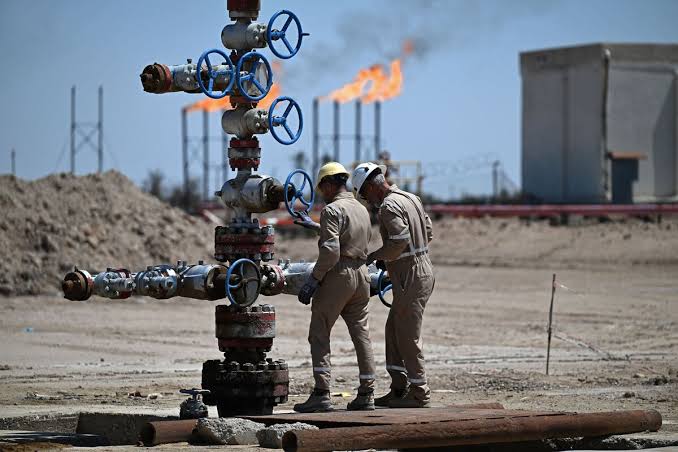
Quote: “No oil vessel, commercial contract or operational deadline is worth the loss of innocent lives; where environmental grievances are ignored and dialogue gives way to confrontation, the entire society pays a price that no compensation can adequately erase.”

Quote:”The value of wealth is
Will and gifts are subjects
A Will is an important legal
Where documentation is
This does not mean every
Properly completed lifetime
Property owners must also
My appeal is simple: let us
-
 Education2 days ago
FCE Yola Graduates 3,555 Teachers , Seeks Upgrade to University
-

 Sports2 days ago
Nigerian Trio Target Titles At PFL Africa Finals
-
 Niger Delta2 days ago
Diri Restates Stance On Lagos-Calabar Coastal Highway
-

 Niger Delta2 days ago
C’River, NUJ Pay Tribute To Late Guardian Editor
-
 News2 days ago
NDLEA Recovers Tons Of Illicit Drug Consignments In Nine States
-
 Opinion2 days ago
Checking Voter Apathy In Nigeria’s Electoral Process
-
 Politics2 days ago
2027: DICKSON’S EX-ALLY VOWS TO WORK AGAINST NDC INTEREST IN BAYELSA
-
 Politics2 days ago
2027: GROUP PLEDGES 40,000 SUPPORTERS FOR COALITION CANDIDATES IN RIVERS