
Featured
Black Sunday: Lagos Blast Kills Scores, Destroys 70 Buildings …NNPC Says Explosion Came From Gas Pipeline …Buhari, Lawan, Gbajabiamila, Others Condole Families Of Victims

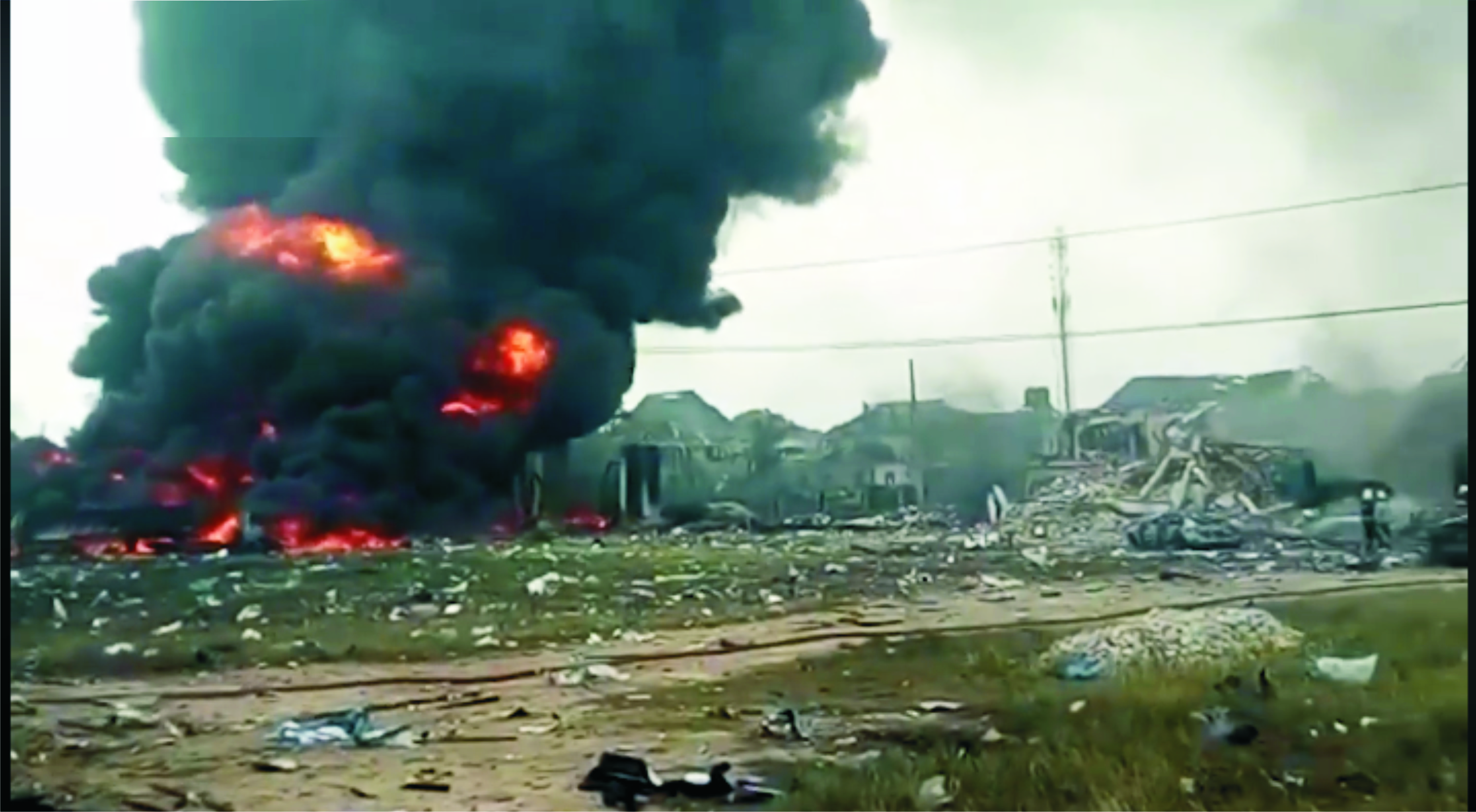
No fewer than 18 people were confirmed dead, including a family of four and over 70 houses destroyed in yesterday’s pipeline explosion which rocked Abule Ado area of FESTAC Town in Amuwo Odofin Local Government Area of Lagos State.
The Acting Coordinator of NEMA in Lagos, Ibrahim Farinloye, who disclosed this to journalists, said the victims, a couple and their two sons, were caught by the explosion on their way to church at about 9:00 a.m. yesterday.
A massive explosion was heard, yesterday morning, accompanied with thick smokes and balls of fire.
The explosion shook several houses miles away from the scene.
The explosion reverberated and shook houses several miles away.
Farinloye said: “The resulting fire later spread to the Nigerian National Petroleum Corporation (NNPC) oil pipeline passing through the area even though the pipeline has been shut down as a precautionary measure.
“The fire was eventually extinguished at 3:30 p.m. through the combined efforts of officials of the Lagos State Fire Service, Federal Fire Service, and Nigerian Navy Fire Tender.”
He said; “From the information given by officials of the Lagos State Fire Service who are currently on the ground, the implosion is not connected to pipeline but might have occurred in a factory located in the Abule Ado area.
“Emergency responders are on ground while others are still on their way to the scene. The situation is under control and we hope to get more information soon to ascertain its cause,” he said.
Farinloye said the NNPC had shut down the pipeline passing through the area as a precautionary measure after the oil company was notified of the incident.
He also confirmed that several buildings were affected by the explosion.
Also, a Staff Officer of the Western Naval Command, Rear Admiral Oladele Daji, told journalists that the students were stabilised at the Navy Hospital, adding that those who have fully recovered would be discharged soon.
Daji said although the cause of the incident was still unknown, some residents of the area told security operatives that there were several industrial gas cylinders close to where the explosion occurred.
The Lagos State Emergency Management Agency (LASEMA) spokesman, Nosa Okunbor said the explosion might be from the pipeline.
“We were debating in my house where the sound came from, and then, my sister called some friends in Satellite Town who confirmed it happened in their area and Abule Ado,” said Precious, who lived close to the area.
An Army, personnel who craved anonymity, said the explosion occurred behind Oando Gas Station at Abule Ado.
Emergency management officials were seen evacuating the remains of several dead victims.
The headquarters of the Lagos Province 3 of the Redeemed Christian Church of God (RCCG) located on 24 Road, FESTAC Town, Lagos was burnt along with over 70 buildings.
The explosion, which occurred more than a kilometre away from the church premises, shattered its glass windows, injuring worshippers.
A parish of the First Baptist Church near the RCCG parish also lost a part of its roof to the explosion.
The roof of a parish of the Living Faith Church (Winners Chapel) located at 7th Avenue, FESTAC Town, was also blown off by the explosion which equally shattered the roof of the Ark Parish of the RCCG at 1st Avenue, many kilometres away from the explosion scene.
The Bethel Secondary School, a boarding school owned by the Catholic Church in Abule Ado, was brought down by the explosion, with many of its students injured and some feared dead.
The agency said, at least, 60 injured students of Bethlehem Girls College had been taken to the Nigerian Navy Hospital in Ojo Cantonment for treatment.
Many other buildings very far from the explosion scene in Abule Ado, Festac Extension in Amuwo Odofin LGA, were also brought down while many others shook during the explosion that threw thousands of residents in panic and confusion.
The Odic Plaza, a motor parts mall and warehouse, Bush Bar Hotel, Green Horse Plaza which houses tyres, Arch Angel Catholic Church, Chino Plaza with many goods in it, and a mechanic village, all located inside the Trade Fair Complex, Ojo, were all hit by the explosion.
The cause of the explosion has yet to be ascertained according to the National Emergency Management Agency, which is yet to confirm the death toll.
A witness, Mrs Patience Erebogaya, said that she was preparing to go to work in a nearby hotel when the Bethel School was scattered by the explosion and injured her.
The victim said that mass celebration was going on in the catholic school when the explosion reduced the school to rubbles, trapping many students.
The state Commandant of the Security and Civil Defence Corps, Mr F. A. Adeyinka, said hat security personnel and other emergency responders were working hard to bring the situation under control.
The Chairman of Amuwo Odofin LGA, HonValetine Buriamoh, who was at the scene, ruled out pipeline vandalism as the cause of the explosion.
He said that the magnitude of the damage was beyond pipeline vandalism.
He appealed to the residents to give access to security operatives and emergency responders to do their jobs.
The fire which started at 9.00p.m was still on as at 3.00.p.m.
Reacting, the Nigerian National Petroleum Corporation (NNPC0, yesterday, blamed the explosion that occurred at the Abule-Ado Area of Lagos State, in the early hours of yesterday, on a gas explosion which occurred after a truck hit some gas cylinders stacked in a gas processing plant located near the corporation’s system 2B Pipeline Right of Way.
In a statement in Abuja, the Group General Manager, Group Public Affairs Division of the NNPC, Dr. Kennie Obateru, stated that following the report of the explosion, the corporation quickly halted ongoing pumping operations on the Atlas Cove-Mosimi pipeline which was active at the time.
He noted that the temporary shutdown of the critical System 2B pipeline, would not affect the supply of Premium Motor Spirit (PMS), also known as petrol, across the country.
Obateru explained that the NNPC had already mobilized its in-house combined team consisting of Health, Safety, Environment experts, medical and security personnel from its nearby Satellite Depot in Lagos, even as Lagos State Fire Service was also rallied to extinguish the fire.
He added that more fire fire-fighting personnel and equipment were mobilised from the NNPC Mosimi Area Office to provide extra fillip to the ongoing operation.
The newly appointed spokesperson of the NNPC explained that preliminary findings indicated that the impact of the explosion was so huge that it led to the collapse of nearby houses and damage to NNPC pipeline on which efforts are being made to curtail the resultant fire.
He added that the Group Managing Director of NNPC, Mallam Mele Kyari, and other top management of the corporation departed to Lagos this evening for an on-the-spot assessment at the scene of the incident.
While assuring members of the public and residents of the affected communities to remain calm, the NNPC’s spokesman assured that the temporary shutdown of the petroleum products pipeline would not affect the normal supply of products to the Lagos and its environs.
He said the fire, currently burring at controlled condition, was being fought headlong, saying a detail assessment of the incident was underway to establish the extent of damage to the pipeline.
“The NNPC Group Managing Director, Mallam Mele Kyari, commiserated with the victims of the incident, praying that God provides them succour at this hour,” he said.
Also, President Muhammadu Buhari, yesterday night, commiserated with families of victims of a pipeline explosion in Abule Ado, Amuwo Odofin local government area of Lagos State.
The President also condoled with the Lagos State government and all residents affected by the unfortunate incident that killed, at least, 15 people and injured several others.
Buhari, in a statement signed by his Senior Special Assistant on Media and Publicity, Garba Shehu, described the incident as a national tragedy.
He said: “I have received with sadness the news of this unfortunate incident which caused the loss of lives and property.
“A misfortune of whatever scale anywhere is a tragedy to the country, and while the NNPC makes efforts to determine the cause of the incident, I send my deepest and profound sympathises to the victims, their families, government and people of Lagos State.”
Similarly, President of the Senate, Dr Ahmad Lawan commiserated with victims of the explosion that occurred, yesterday morning at Abule Ado, Amuwo Odofin Local Government Area of Lagos State.
Lawan condoled with all those who lost loved ones in the incident.
In a statement by his Special Adviser, Ola Awoniyi, Lawan also sympathised with those who are injured and those who lost property to the inferno.
The Senate President commiserated with the Lagos State Government over the tragic incident and prayed to God to comfort all those who are affected.
Lawan called on the relevant authorities and agencies to get to the root of the incident with a view to forestalling a recurrence.
In his condolence, the Speaker of the House of Representatives, Hon Femi Gbajabiamila expressed sadness over the pipeline explosion in Abule Ado, Amuwo Odofin Local Government Area of Lagos State.
Gbajabiamila, who sympathised with the victims of the explosion, called for calm as the state government makes frantic efforts to ascertain the cause of the incident.
The Speaker commended the Lagos State Government as well as relevant agencies for taking action following the explosion.
In a statement by his Special Adviser on Media and Publicity, Lanre Lasisi, the Speaker said everything should be done to avert the re-occurrence of such incidents in future.
“My heart goes out to the people of Abule Ado, especially the victims of the explosion, in Amuwo Odofin Local Government Area. I also sympathise with the people and Government of Lagos State over the incident
“May I call on all the agencies of government to do diligent work to ascertain the cause of the explosion to avert a reoccurrence,” Gbajabiamila said.
In a swift reaction hours after the fire explosion at the Abule Ado area of Lagos, the state Governor, Mr. Babajide Sanwo-Olu, advised residents in the affected area to make safety their priority, urging them to maintain a safe distance from the scene of the explosion and fire as the site is still live.
The governor also instructed the Lagos State Environmental Protection Agency (LASEPA) to immediately release personal safety equipment such as face and nose protection masks to be distributed to first responders, residents of the affected area and all safety workers at the ground zero.
The safety equipment had been delivered.
An explosion rocked the Western part of the state in the early hours of Sunday morning, leading to fire incident with attendant effects on the atmosphere.
Safety agencies in the state were immediately mobilised to the scene of the incident to contain the fire and keep the residents safe.
The perimeter of the fire incident is under control.
A statement by the governor’s Chief Press Secretary, Mr. Gboyega Akosile, said the governor sent the protective equipment to the affected site to prevent any form of medical hazard such as respiratory infections by the residents who may unknowingly inhale toxic substances from the explosion.
The governor noted that in a situation like this, there would be a lot of unhealthy substances, gas particulate matters that can affect people’s lungs.
Sanwo-Olu, however, reiterated the need for the residents to maintain a safe distance as practicable to avoid breathing in polluted air.
Meanwhile, combined safety teams of the Lagos State Emergency Authority (LASEMA); the Lagos Environmental Protection Agency (LASEPA); the State Safety Commission; the Lagos State Fire Service; the Lagos State Ambulance Services (LASAMBUS), as well as the Nigerian Civil Defence (NSCDC), the Nigerian Navy and the military are among the state and federal agencies currently at the scene of the incident to ensure the safety of residents.















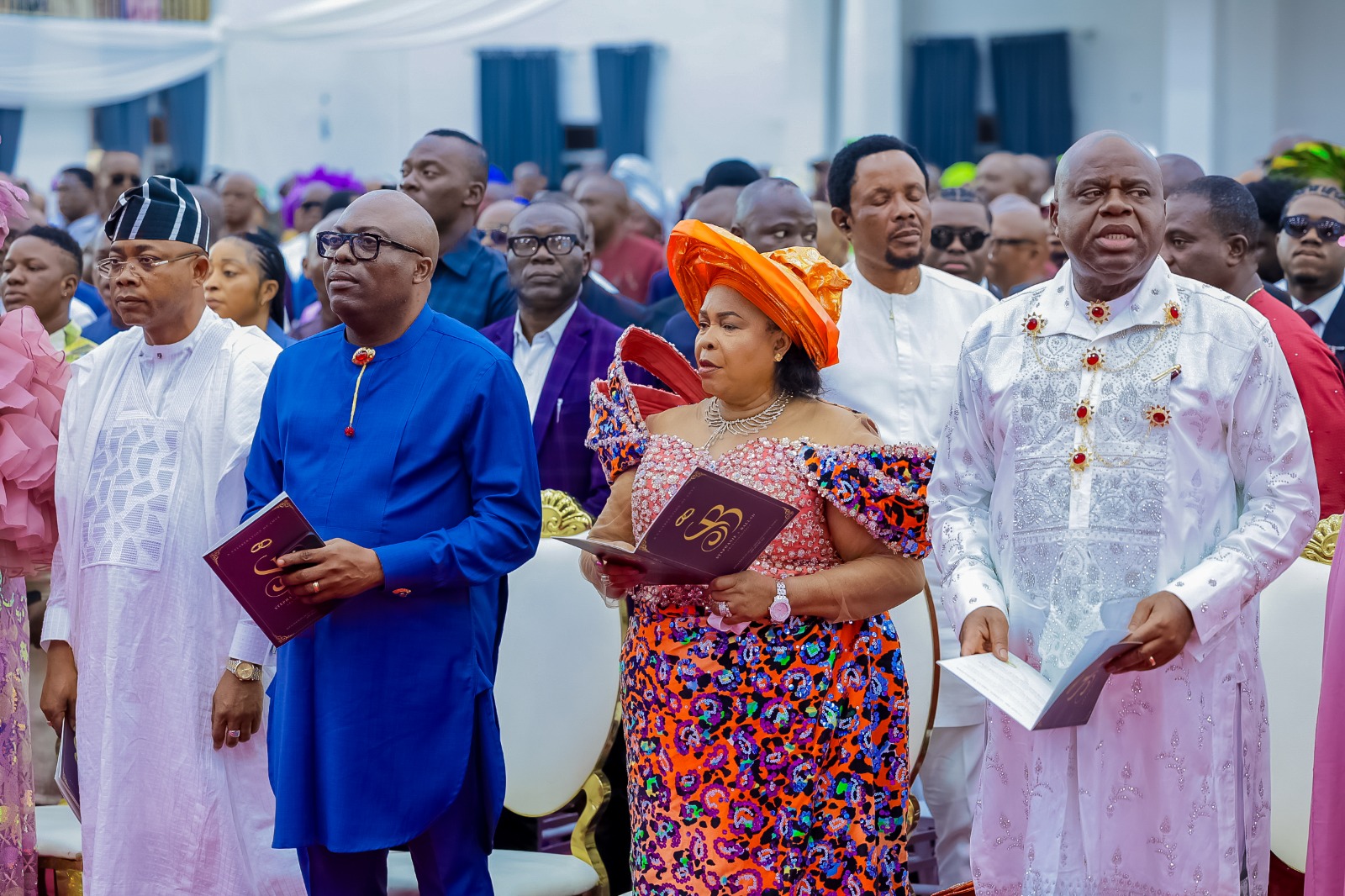
Rivers State, Sir Siminalayi Fubara, has assured members of the National Youth Service Corps (NYSC) of his administration’s commitment to supporting and strengthening the scheme in the State.
Fubara gave the assurance last Friday at the NYSC permanent orientation camp, Nonwa-Gbam, Tai Local Government Area in the State, during the swearing-in ceremony of 2026 Batch B Stream II orientation course.
Represented by the Permanent Secretary, Cabinet Bureau, Office of the Secretary to the State Government, Dr. Promise Oguzie, the governor said the State Government would remain intentional in providing the necessary support to improve the NYSC scheme and enhance the experiences of corps members deployed to the state.
He charged the corps members to be role models and quality nation-builders in their service to the good people of Rivers State in particular, and Nigeria at large.
“I charge you to be exemplary, dedicated and committed in all you do. Take full advantage of all the camp programmes and activities to enrich yourselves”, he said.
In his welcome address, the State Coordinator of NYSC in Rivers State, Mr. Moses Oleghe, urged corps members to see their deployment to Rivers State as a “veritable opportunity to make meaningful contribution to the growth of the State in particular and Nigeria at large.”
He further charged them to serve with all sense of “integrity, discipline, and the fear of God, especially when they will be engaged as INEC ad-hoc staff that will conduct the 2027 general elections.”
A total of 3,584 corps members composed of 1,421 males and 2,163 females were sworn in by the Chief Judge of Rivers State, who was represented by Justice Godspower Aguma.

Governor of Rivers State, Sir Siminalayi Fubara, says Nigeria needs God-fearing leaders for the nation to move in the right direction and make meaningful progress.
The Governor stated this yesterday when he received in audience, the World President of the Seventh Day Adventist Church, Pastor Erton Kohler; his wife, Andriene Marques Kohler; daughter Mariana Marques Kohler and a retinue of ministers of the church at Government House, Port Harcourt.
Fubara who hailed the Seventh Day Adventist Church for its contributions to education and the grooming of future leaders in Nigeria, expressed delight that the Church had over the years, been investing in education at various levels and currently runs two universities in the country.
He commended the church for not only using its institutions to spread the gospel of Christianity but to groom future leaders for the country.
According to him, religion should not be just about defending one’s faith, but also making meaningful impact on the lives of the people.
He said that by floating these educational institutions, the church has demonstrated capacity to support Nigeria in the task of producing not only educated people but a breed of God-fearing leaders.
“Our country is where it is today because we lack the fear of God. If you have the fear of God, there should be a limit to what you can do because you understand the supremacy of God. But when God is not in your equation, you’ll go beyond the line and that is what has brought us to where we are today.
“So, I feel very happy that you are contributing to the development of our future leaders in this country. We need the right people being in the right place; prepared properly with good minds; that is what we need, not just in Nigeria but round the whole world.,” he said.
Governor Fubara further observed that the absence of God-fearing people in high places to take the right decisions that could impact positively on the society, has also given rise to other problems such as social inequality, poverty, corruption and criminality. According to him, Nigeria needs a system where the average parent could afford quality education for their children and a guarantee that upon graduation, the average child will have the capacity to compete favourably with anybody, anywhere in the world.
“If we have a situation where the little money that you’re being paid as wage can also afford you quality healthcare and after working at least for 15-20 years, you have a roof over your head, tell me why you should be involved in any kind of crime? At that point, you’ll feel secured and this attitude of insecurity about the future that leads to all the social vices we have today won’t be there,” he said.
Governor Fubara expressed appreciation to the delegation for the visit and for their prayers for Rivers State, assuring them of his continued support for their programmes in the state.
Leader of the delegation and World President of the Seventh Day Adventist Church, Pastor Erton Kohler said he was in Nigeria for a special conference of the church during which thousands of the church’s ministers will be undergoing an empowerment programme to further equip them for the task of herding their flocks and serving the society.
He expressed gratitude to the Governor for the warm reception accorded his entourage, saying the memory of the visit will linger in his mind for a lifetime.
Kohler disclosed that the Church has over twenty -four million (24,000,000) members and more than 182,000 places of worship, spread across 212 countries of the world.

The Rivers State House of Assembly has approved the 2026–2028 Medium Term Expenditure Framework (MTEF) submitted by Governor Siminalayi Fubara.
This reaffirms the lawmakers’ commitment to enacting laws and taking legislative actions geared towards the overall development of the State.
The Assembly gave the approval during its Second Legislative Sitting of the Fourth Session held last Friday.
Speaking on the MTEF document during plenary, the House Speaker, Rt. Hon. Martin Amaewhule, noted that by the provision of Section 10(1)(b) of the Rivers State Fiscal Responsibility Law No. 8 of 2010, the MTEF ought to have been laid before the House in September 2025.
Amaewhule explained that traditionally, the document is expected to be presented four months before the commencement of the next financial year and immediately after the expiration of every three-year fiscal cycle.
He, however, stated that in the interest of the State and its people, the House considered it necessary to deliberate on the document, describing it as a precursor to the 2026 Budget Estimates.
The Speaker expressed concern that the year had already progressed significantly before the presentation of the framework.
During deliberations on the document, members examined the assumptions and projections contained in the MTEF and observed that strict adherence to the outlined fiscal parameters would ultimately serve the interest of Rivers people.
The lawmakers maintained that effective implementation of the framework would promote prudent financial management and enhance developmental planning across the State.
Following the debate and positive consideration by members, the Speaker put the question to the House and members voted overwhelmingly in support of the approval of the MTEF.
Meanwhile, during the same sitting last Friday, the House also received a petition from the Chairman of Obio/Akpor Local Government Council, Dr. Gift Worlu.
The petition was presented by the member representing Obio/Akpor Constituency II, Hon. Emilia Amadi.
According to the petition, concerns were raised over an imminent security breach, threats to lives, destruction of property and alleged forceful takeover of property by some lawless persons within parts of the Local Government Area.
Presenting the petition before the House, Hon. Amadi appealed to the lawmakers to revisit the matter and take necessary steps aimed at safeguarding lives and property in the affected communities.
The House is expected to further deliberate on the petition and consider measures to address the concerns raised in order to sustain peace and security in the area.
King Onunwor
-

 News2 days ago
RSG Targets Nine Million Residents in Mosquito Net Distribution Campaign
-

 Oil & Energy2 days ago
Aiyedatiwa Signs New Electricity Bill
-

 Oil & Energy2 days ago
NLNG Commissions Research And Innovation Centre In RSU
-

 Maritime2 days ago
Marine Minister Commends President Tinubu On NPERA Bill Assent
-

 News2 days ago
KenPoly Holds Eight Convocations, August 29
-

 News2 days ago
RSG Begins Another Phase of Projects Commissioning Today
-

 News2 days ago
RMAFC Completes Revenue Sharing Review, Proposes New Pay
-

 Maritime2 days ago
NAGAFF Petitions IGP Over Alleged Maritime Police Harassment