
Aviation
Aviation Agency Moves To Reduce Carbon Emissions

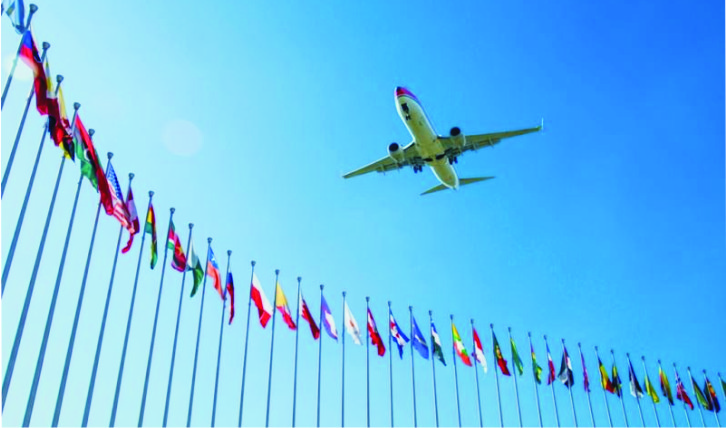
The global civil aviation community has made progress in the effort to reduce carbon emission, with new guidelines to halt the current level by 2050.
Emerging from the 40th Assembly of the International Civil Aviation Organisation (ICAO) in Montreal, Canada, inter-governments’ robust discussions arrived at two critical outcomes.
First, the ICAO council was mandated to report to the next Assembly on options for the adoption of a long-term aspirational goal for reducing carbon emissions from international aviation.
Second, the Assembly passed a resolution that reaffirmed and strengthened its support for the successful implementation of the Carbon Offsetting and Reduction Scheme for International Aviation (CORSIA)—the world’s first global carbon offsetting scheme.
Apparently impressed by the agreements, the International Air Transport Association (IATA) commended the “significant progress” made by governments.
Recall that a decade ago, the aviation industry agreed on a long-term goal to cut aviation emissions to half the levels of 2005 by 2050 and is working on a pathway to achieve that goal.
This Assembly marks the first time that ICAO member states have agreed to consider a long-term goal for governments to reduce aviation emissions—a move that is strongly welcomed by airlines.
IATA’s Director General and Chief Executive Officer (CEO), Alexandre de Juniac, said sustainability was critical to earning aviation’s license to grow and spread its many economic and social benefits, though decarbonising the sector was a major challenge.
“Our focus is on cutting emissions to half 2005 levels by 2050 and we are making consistent progress. Flying today is 17.3 per cent more fuel-efficient than a decade ago. From 2020—with the help of CORSIA—the sector’s growth will be carbon neutral.
“The strong support of governments for developing a UN-backed long-term goal for reducing emissions would support us in those efforts and take us to the next step. National policy measures aligned to a global long-term emissions reduction goal will enable the industry to work even more effectively on crucial opportunities like commercialising sustainable aviation fuels and more efficient air traffic management,” de Juniac said.
Meanwhile, the enhanced and strong support for CORSIA will shore-up the important step of capping aviation emissions from 2020. CORSIA will offset the growth of international flight emissions from 2021, generating some $40 billion of aviation-funded climate finance by 2035.
“We need to implement CORSIA successfully. It’s essential to our promise of carbon-neutral growth. This Assembly has sent a clear message that governments are committed to CORSIA and want to broaden participation from the voluntary stage. We look forward to seeing these commitments delivered as CORSIA begins—particularly by those states that are undermining CORSIA with additional taxes or charges,” said de Juniac.



-

 Niger Delta3 days ago
Warri Airport Manager Disputes Air Peace Bird Strike Claim
-

 News3 days ago
Nigeria Won’t Surrender Any Territory To Criminals -Tinubu
-

 News3 days ago
FG Begins Trial Of Over 600 Terrorism Suspects
-

 Rivers3 days ago
79th IAUE Inaugural Lecture: Prof Anero Advoctes Tuition-Free Education For Children
-

 Politics3 days ago
Parties’ Deregistration: How Justice Lifu Overruled Appeal Court Justices
-

 Politics3 days ago
ADC: Okonkwo Rejects Amaechi As Presidential Running Mate, Withdraws Support
-

 Politics3 days ago
2027: Tinubu’s Projects Give APC Edge In South East – Yilwatda
-
News3 days ago
Forum Expresses Confidence In APC Candidates’ Performance In Rivers