
Editorial
2017: The Expectations

It would be exactly 17 years by May 29, 2017
that a democratically elected government at
all levels was inaugurated. It becomes imperative, ipso facto, to speak only in general terms of the impact of democracy on our lives, the determined effort by government to make democracy meaningful for Nigerians, and the increasing expectations to civic society about the need for those in authority to make democracy dividends real in their lives.
Even as it is only five months away to May 29, 2017, economic hardship and squalor reminiscent of the Biblical seven-year lean period of the Egyptians and the prevailing economic recession in Nigeria, have given impetus to national discontent and concern over how the anguish of beleaguered Nigerians can be ameliorated in the shortest possible time.
Thus, when it is remembered that President Muhammadu Buhari who, by May 29,201‘7, would have spent a two years of his four-year term as President, assumed office on the crest of public optimism, he would certainly be placed on the crucible of history as we usher in the New Year when expectations are high.
President Buhari, upon assumption of office after a historic defeat of an incumbent President, had promised change. He spoke of fresh possibilities and of a responsible government that would lead Nigerians towards a new dawn and new realization and create a new country where everyone would live happily once again. Nigerians took his word for it, based on his antecedents.
So far, nothing remarkably positive along those lines has happened. There is virtually nothing on the credit side of his balance sheet to warrant giving the present government a pat on the back. The government has not even succeeded in re-directing the focus of civil society towards properly defined objectives and principles about state governance.
So bad and so sad are the state of affairs now in the country that even the poor folks (talakawas in Hausa) who rejoiced the most at his election – one man walked from Yola to Abuja and another from Lagos to Abuja in celebration – are feeling let down. They are rattled by the persistence of the same old problems – economic hardship, job losses, growing unemployment, unstable power supply, insecurity, infrastructural deficit, high cost of living among others.
Buhari’s rating and popularity have shrinked to the level that in many cities nationwide, change is dubbed a negative word. While ‘change’ has become a mere propaganda gimmick to remind All Progressives Congress (APC) sympathizers that they made a wrong choice, some are even saying that APC meant ‘chain’ which was misinterpreted as ‘change’.
Nevertheless, whatever may be the tension and stress occasioned by Buhari’s rule, Nigerians may have so far by their conduct and choices, resolved that democracy is the surest guarantee for individual and collective freedoms and happiness in the society. Thus, it is expected that President Buhari would have gone beyond rhetorics and act speedily at re-jiging the nation’s ailing economy.
Nigerians and indeed, the global community expect Buhari and his cabinet to stop the blame game and buck-passing by evolving concrete policies and programmes that would re-invent the economy and bail out Nigeria from economic recession. Infact, the Federal Government should have used 2015 and 2016 to evolve a template and roadmap for economic prosperity, stable polity, security of lives and property and other national challenges.
As it is, Nigerians expect that 2017 would bring forth solutions and results, not mere talks or promises that are never kept. Hence, the Federal Government must be focused and consistent in policy execution. The anti-graft campaign must be vigorously pursued rather than being made a lop sided war against perceived political enemies as presently is the case.
In other words, the ‘Change Mantra’ of the present government must begin with our political leaders. Politicians in Buhari’s cabinet that were found wanting or indicted should be prosecuted to serve as a deterrent to others.
Even as The Tide expects the 2017 Federal Budget not to be left unimplemented like others before it, Nigeria must go beyond oil and gas and diversify her economy in line with present realities. The agricultural and non-oil sectors (solid minerals) that are still untapped could be the ultimate elixir to get Nigeria out of the woods.
Restructuring of the polity, the strengthening of democratic and political institutions and purging the electoral process of the culture of impunity are just some of the other ways of making 2017 a year to remember for good.
By the time these steps are taken, we would have fully realised the symbolism of democratic rule and the socio-economic wellbeing it offers.



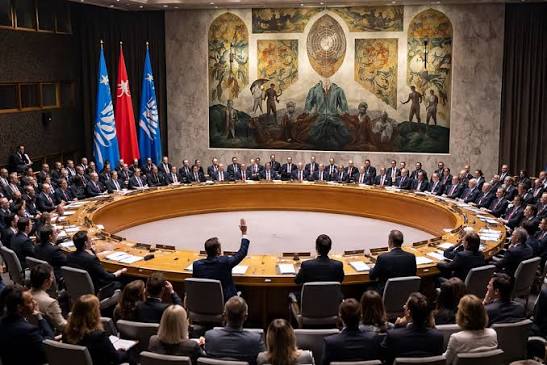

The prolonged suffering of Rivers State pensioners who have remained unpaid since retiring in July 2025 demands urgent executive and legislative intervention. The Nigeria Labour Congress (NLC) has rightly put its finger on the Contributory Pension Scheme (CPS) as the root cause of this crisis. The state government must now bite the bullet, dismantle this failed experiment, and bring the pensioners’ protracted ordeal to an end.
Since July 2025, the affected retirees have been left high and dry, their monthly pensions unpaid, and their dignity worn away. The NLC, under the leadership of Comrade Alex Agwuanwon, has also linked this deplorable situation to the political storm that engulfed the state, while expressing cautious optimism that the prevailing calm will pave the way for the payment of outstanding arrears. The Tide shares that optimism. However, optimism alone will not put food on the table for men and women who gave the best years of their lives to the service of the state.
The genesis of this crisis is not shrouded in mystery. The CPS was introduced in Rivers State in 2012 under the administration of former Governor Chibuike Rotimi Amaechi, pursuant to the Rivers State Pension Reform Law of that year. The scheme was ostensibly designed to bring the state into line with the federal Pension Reform Act of 2004, which had established a contributory framework for retirement benefits across the country. What was sold as a progressive reform has, in truth, become a millstone round the neck of the very workers it was meant to protect.
The CPS has failed in the state, and it has failed spectacularly. Its fundamental flaw lies in the government’s chronic inability, or unwillingness, to honour its counterpart funding obligations. The arrangement was meant to be a joint endeavour: employees contribute a portion of their salaries, and the employer matches it. But the state has consistently failed to keep its side of the bargain, leaving the pension fund anaemic and unable to meet its obligations. The result is as predictable as it is unconscionable. Retirees are left with only their own contributions to fall back on, a mere pittance that cannot see them through their twilight years.
The human cost of this institutional failure is staggering. Men and women who devoted decades to the civil service now find themselves cast adrift, their legitimate expectation of a secure retirement shattered. The psychological toll of such betrayal is beyond measure. A pension is not an act of charity. It is a contractual obligation, a deferred wage for services already rendered. To withhold it is to break a sacred trust. The authorities must understand that every delay in resolving this crisis costs lives, both in the literal sense as elderly retirees struggle to pay for healthcare and sustenance, and in the figurative sense as the social contract between the state and its workforce wears thinner with each passing month.
This development does not show the government in a favourable light. For a state to allow people who served it with dedication and integrity to languish in penury after retirement is morally indefensible. It sends a chilling message to serving civil servants that loyalty will be repaid with abandonment. This is precisely why organised labour must not rest on its oars. The NLC’s call for the termination of the CPS is not mere grandstanding. It is a necessary corrective. The scheme, as presently administered, is irredeemably broken and must be done away with.
The most damning indictment of the CPS since its inception is its one-sidedness. The government has failed to pay its counterpart funding, reducing the scheme to a hollow shell. Of what use is a contributory arrangement when only one party contributes? Retirees cannot be expected to live on the meagre sums they themselves set aside, sums which have been steadily eroded by inflation and administrative charges. Workers have been short-changed, left to carry the can while the government looked the other way. It is a quiet expropriation of their future.
The time to put this right is now in the interest of justice, equity, and fairness. The NLC should push harder for the swift implementation of its committee’s report to Governor Siminalayi Fubara. That report contains a sensible and pragmatic recommendation: that the CPS should apply only to those employed in the year it was enacted, thereby allowing existing civil servants to remain under the Defined Benefit Scheme (DBS) to which they were originally entitled. This is not a radical proposal. It is a reasonable compromise that recognises the legitimate expectations of long-serving workers and rights the wrongs of the past.
The authorities must act with dispatch. Governor Fubara should, without further ado, send a draft amendment of the Pension Law to the House of Assembly for passage into law. With such legislative intervention, those who retired from July 2025 to date would be returned to the DBS, receiving pensions calculated on their terminal salaries and years of service rather than the paltry sums available under the failed contributory arrangement. The NLC, for its part, should keep its foot on the pedal through dialogue, advocacy, and, if necessary, peaceful protest. Pensioners deserve not just fine words but concrete action.
Rivers State cannot lay claim to be progressive while its retirees are forced to go cap in hand for their rightful entitlements. The measure of any civilised society is how it treats its elderly. By that yardstick, the present situation is a blot on the state’s escutcheon. The government must clear the backlog of arrears, scrap the CPS for the category of workers it should never have applied to, and restore the DBS in full. Nothing less will suffice.
The recent public health disaster in Ondo State, which claimed 48 lives and left 182 people severely ill, is a gloomy reminder of the dangers posed by unregulated beverages. According to NAFDAC Director-General, Prof. Mojisola Adeyeye, the victims consumed contaminated local alcoholic and herbal drinks in communities in Odigbo Local Government Area. The drinks contained high levels of industrial methanol, while 11 of 15 samples also contained Cannabis indica. The substances were linked to organ failure, neurological deterioration, and permanent blindness. The tragedy should serve as a warning to the entire country.
The incident underscores the wider problem of unregulated and adulterated drinks across Nigeria. From roadside kiosks and motor parks to informal markets, unverified alcoholic and herbal products are readily available, often marketed as cheap alternatives or medicines. The World Health Organisation estimates that about 25 per cent of alcohol consumed globally is unrecorded. Such products operate outside formal regulatory control and may expose consumers to toxic substances and serious health risks.
The problem is compounded by deliberate evasion of regulatory requirements. Products under NAFDAC’s mandate must be registered and subjected to regulatory checks before manufacture, distribution, or sale. Yet some producers ignore these requirements for profit, while others falsify NAFDAC registration numbers and markings and use them on substandard products. Such practices deceive consumers and undermine public confidence in the regulatory system.
The reported arrest of 15 suspects linked to the Ondo distribution network is an important first step. Those found responsible should be prosecuted and, where convicted, appropriately punished. However, enforcement must go beyond responding to tragedies. NAFDAC should strengthen preventive measures through regular post-market surveillance, random testing at transit points, and intelligence-led inspections of informal production centres.
Consumers also have a responsibility to exercise caution. Economic hardship, high inflation, and declining purchasing power have created opportunities for unscrupulous producers to market cheaper but potentially dangerous products. Consumers should, therefore, avoid unlabelled drinks, suspiciously cheap products, and goods sold through unverified outlets. Public education and consumer vigilance can help deny unscrupulous traders the opportunity to put profit before human life.
The danger extends beyond alcoholic and herbal drinks to medicines. Counterfeit and substandard medicines have entered both formal and informal supply chains, causing treatment failure, poisoning, and avoidable deaths. The WHO estimates that at least one in 10 medicines in low and middle-income countries is substandard or falsified, although the prevalence varies. Ensuring the safety and authenticity of medicines is essential to protecting lives and maintaining confidence in the healthcare system.
Food safety is another concern. Poor practices in food handling, processing, and preservation expose consumers to serious health risks, particularly when commercial interests override safety. Concerns over the improper use of chemical agents such as calcium carbide to accelerate the ripening of fruits further demonstrate the need for stronger monitoring throughout the food-supply chain.
These challenges expose weaknesses in Nigeria’s regulatory system and reinforce the need to strengthen it. NAFDAC faces the enormous task of monitoring products across all 774 local government areas. Meeting this challenge requires greater operational capacity, reduced bureaucratic delays, and modern systems capable of tracking regulated products from production to the point of sale.
Inadequate personnel, laboratory facilities, equipment, and logistics remain major obstacles. NAFDAC field offices, especially those serving remote communities, need modern testing equipment, reliable screening tools, and adequate transportation. The Federal Government should provide sustained funding to recruit specialised personnel, upgrade laboratories, and deploy technologies capable of rapidly detecting dangerous substances such as methanol.
Preventing the spread of adulterated products also requires coordinated action by federal and state governments. The Federal Ministry of Health, NAFDAC, and other relevant agencies should intensify operations to remove unregistered alcoholic and herbal products from motor parks, transit centres, and informal markets. The National Assembly should review existing laws and strengthen penalties for deliberately producing, falsifying, or distributing toxic and unregistered food, beverages, and medicines.
NAFDAC should expand its digital verification systems to enable consumers to confirm product registration before purchase. State ministries of health, local government councils, and community institutions should intensify grassroots education on the dangers of unlabelled drinks, unsafe food practices, and counterfeit medicines. Traditional, religious, and community leaders can also help identify and report illegal production and distribution activities.
The Ondo tragedy must not become another statistic that is quickly forgotten. The loss of 48 lives and the permanent blindness suffered by some survivors are devastating and unacceptable. Nigeria must respond by strengthening regulatory institutions, providing adequate funding, enforcing the law, and educating the public. A sustained, coordinated effort is essential to protect the nation’s food, beverage, and medicine supply chains and prevent another tragedy caused by products that should never have reached the market.