
Opinion
The Cost Of Women Emancipation

The clamour for a unisex world by women emancipation apostles all over the world is now a tropical issue. The clamour has gained so much ground. Its popularity was made possible by its patronage by the United Nations and some other countries of the world, especially the developed world.
Considering a unisex world from human angle might be plausible, but what kind of world is it going to bequeath to us? A world in which one has to look very closely before knowing weather human being is a male or female to me, is going to be a strange world full of confusion and negativity.
In those days, the relationship between man and woman was cordial and harmonious. Men were actually the bread winner, while women of the time used to support their husbands in obedience and humility. The warmth of women at home when their husbands returned from their daily toils was always felt.
In a nutshell, a deep exploration of available antecedents proves that public life has not been the lots of women. But today, the case is surprisingly different. Modern women today tend to rise from a sudden realization and have rejected their naturally assistant position. Instead, they opted for public life and have chosen to rub shoulders with men. It is now a popular jingle to hear that whatever a man can do, a woman can do even better
Armed with this belief, women are aggressive demanding for equal space in governance of their various societies. Nigerian women, in order to toe the lines of Western women in their agitation, have degenerated to doing things that were hitherto anathemic considering our ways of life. Nigerian women today are not only involved in politics but want to edge the men out.
It is no longer uncommon to see women attending late night political meetings leaving their husbands at home with children.
For all I know, it is not our culture that a woman becomes a soldier that carries arms, or a policeman that runs night duties. I have also never heard where a woman was a taxi driver in the good olden days. But today, we have a lot of them as taxi drivers and bus conductors. That women want to be like men, talk like men, sit like men, dress like men, work like men, think and behave like men to me portends doom.
Recorded women agitation started in America in the 1840s. In a conference held by women in New York, they called for the amendment of the American constitution to reflect the existence of women. They agued that the then American constitution did not recognize women in national life. During this period, American women were disenfranchised and therefore took no part in the politics of America.
In Europe, the German experience gives the picture of women struggle. The Welma Constitution therefore gave equal political class to both genders. The German women were also granted legal rights to acquire land and own property. Also, in 1970, Britain passed the property act law which gave British women the right to own properties like their American and German counterparts.
In the Fourth international conference held in Beijing, China in 1995, women recorded another milestone in their emancipation struggle. Their request for reservation of 30% of positions in governments all over the world was granted. Nigeria too in 1983 adopted the United Nations Human Rights clause through the African Charter on Human and People’s Rights. And the 1979 constitution subsequently granted equal rights to all.
There is nothing wrong in granting some rights to women. Women are human beings and should not be treated otherwise. But the clamour for equality with men is unacceptable.
From the Christian point of view, man is older than the woman. God gave man charge over everything including woman. This makes sex differences a natural factor that can not be done away with. Unisex world therefore is grossly destructive and shamefully anti-nature.
Aristotle, the great Greek philosopher emphatically stated that “the woman is cut out to be ruled by man. The relationship between the male and the female is naturally that of superior to the inferior, of the ruler to the ruled” (Ibid 1:7). Hegel whose works have helped greatly in shaping the human community said inter alia that the place of the woman is in the home and that the spheres of politics and the State belong to the man.
The intense longing for equality with men by women has grave consequences. We must admit that the moral decadence and chaotic nonsense we are facing today is traceable to this agitation. Today, public social life has taken women out of their family responsibilities as they struggle to gain a good chunk of the economy, and this has created a yawning gap at home with its great consequences on the children. If something is therefore not done fast to check the excesses of our women in public life, Nigeria may suffer the setback of having good leaders tomorrow.
Ordy wrote in from Port Harcourt.
John Ordy




Quote: “The Flamingos have conquered the world; Nigeria must now rise to its responsibility of nurturing the next generation of champions.”
Sometimes, sporting victories
More significantly, they
Umejiaku deserves special
Umejiaku received the award
Nigeria has now broken into
For too long, young girls in
But beyond the reward, this
As Nigerians celebrate this
By; Calista Ezeaku
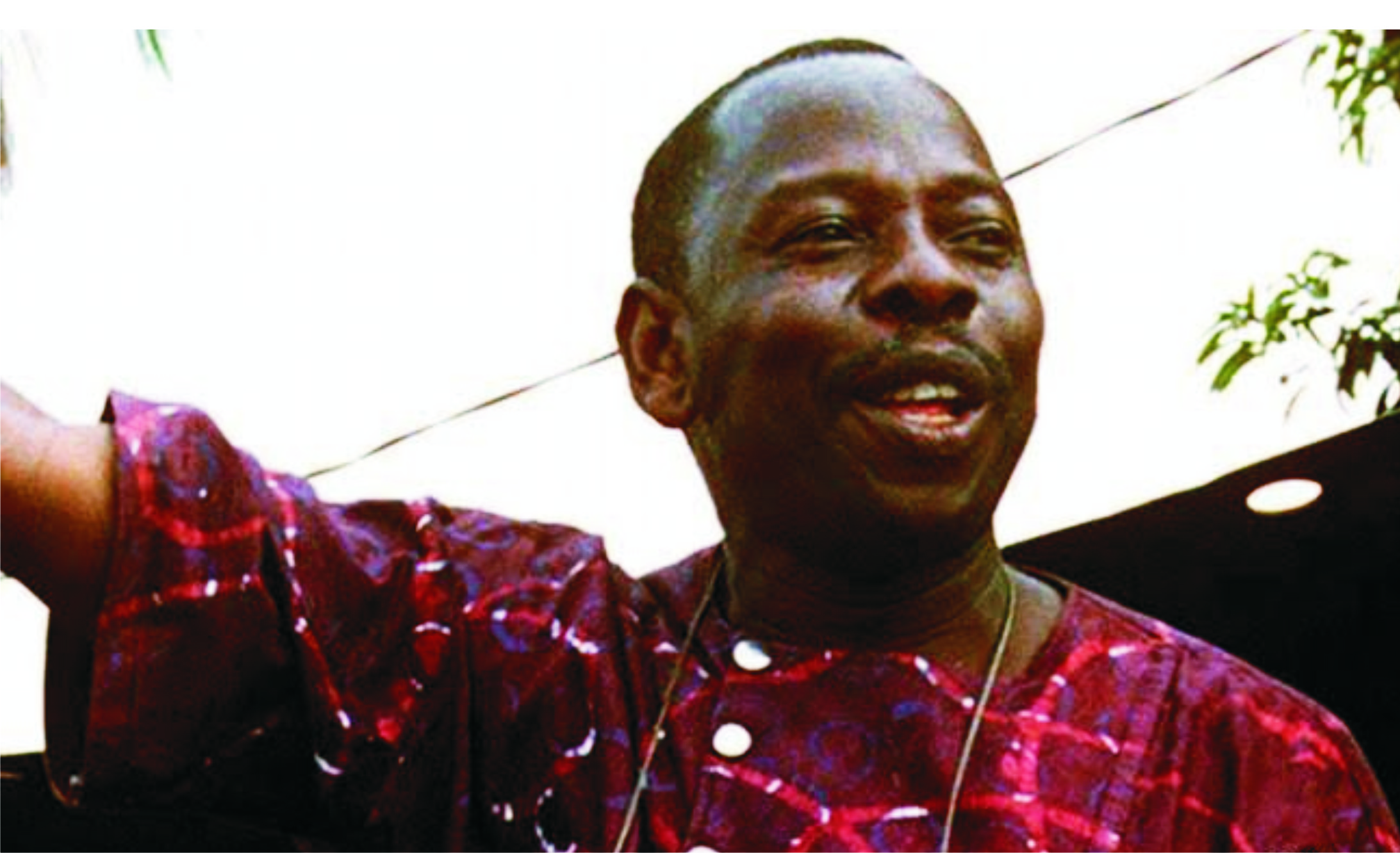
On November 10, 1995, the Nigerian military government of General Sani Abacha executed Ken Saro-Wiwa and eight other Ogoni leaders after a deeply controversial trial. Their deaths marked one of the darkest chapters in Nigeria’s history. At a time when fear silenced citizens and sycophancy flourished around military power, Saro-Wiwa chose to confront tyranny. Many Nigerians retreated into silence, while others praised the regime to secure favour. He knew the risks, yet refused to abandon a people whose land had been devastated by oil exploration and whose lives remained trapped in poverty. His courage arose from the conviction that public responsibility sometimes demands resistance to authority. Saro-Wiwa understood that speaking against a military government could lead to imprisonment or death.
Nonetheless, he believed the suffering of the Ogoni people demanded a courageous response. While oil was extracted from their land, they were left with polluted rivers, damaged farmland, declining livelihoods and an environment hostile to human survival. Fishing grounds and sources of livelihood were threatened, while the people struggled to secure basic amenities. The wealth beneath their soil brought neither adequate development nor a fair share of national resources. For him, silence in the face of injustice would have amounted to complicity. Through the Movement for the Survival of the Ogoni People (MOSOP), he organised a peaceful campaign that took the Ogoni question to the international community. MOSOP gave ordinary people an organised platform through which to express their grievances and insist on recognition.
The Ogoni Bill of Rights, presented to the Federal Government in 1990, demanded political autonomy, economic justice, environmental protection and control over the people’s resources. The campaign exposed the human and ecological costs of oil operations, particularly those associated with Shell, and challenged the apparent alliance between corporate interests and an unresponsive State. The Ogoni struggle became a defining expression of minority rights and environmental justice in Nigeria and Africa. Saro-Wiwa’s writings and mobilisation drew attention to communities treated as expendable because of their limited population and political influence. He argued that numerical strength should never determine a people’s value or rights.
A minority community does not become less deserving of justice because it cannot command electoral numbers or political power. In Nigeria, every ethnic group deserves dignity, protection and a fair opportunity to benefit from the commonwealth. Rather than respond to peaceful agitation with dialogue, the Abacha regime resorted to repression. Ogoni leaders were harassed, detained and killed; others fled into exile. The crisis intensified after four Ogoni chiefs were killed in May 1994. Saro-Wiwa and other MOSOP leaders were arrested, tried by a special tribunal and executed despite international appeals for clemency and serious concerns about the trial’s fairness. The executions drew worldwide condemnation and intensified scrutiny of Nigeria’s human-rights record and oil companies in the Niger Delta.
They demonstrated the danger of using State institutions to suppress peaceful demands. The proceedings remain a reminder of the need for judicial independence and due process. Saro-Wiwa’s courage rested on the conviction that justice must be pursued despite the cost. His method combined non-violent resistance, public education and grassroots organisation. His struggle recalled the civil-rights campaign of Martin Luther King Jr. and the power of peaceful mobilisation against injustice. Saro-Wiwa linked environmental degradation to political exclusion, economic exploitation and the denial of democratic rights. Oil-producing communities, he insisted, should not remain zones from which wealth is removed to develop other parts of the country.
Their people must benefit through roads, schools, healthcare, jobs and clean water. Resource extraction carries a duty to protect host communities. His argument extended to the structure of the Nigerian federation. He challenged a revenue-allocation system that made oil-producing communities bear the environmental and social costs of extraction without commensurate benefits. Like advocates of fiscal federalism, he believed resources should be managed and shared equitably. He envisaged a society in which no community would be disadvantaged by its size, ethnicity, political affiliation, culture or religion. His vision was a country bound together by justice and equal citizenship. Saro-Wiwa was also a gifted writer, dramatist and public intellectual.
Through books, essays, plays and television, he documented Nigerian society’s contradictions and challenged abuses of power. His popular television series, Basi and Company, demonstrated his creative range, while his leadership of the Association of Nigerian Authors encouraged writers to engage national questions. He believed literature should not be detached from society’s struggles. His pen exposed environmental injustice, political repression and the dangers of silencing courageous voices. He used storytelling, satire and drama to shape public consciousness and expose social contradictions. His literary achievements gave his activism wider reach and made the Ogoni experience part of national conversation. His commitment to the Ogoni people extended beyond the oil question.
During the Civil War, he worked to protect his vulnerable community. He urged younger generations to reject subservience and complacency and pursue change through lawful, peaceful means. Citizens, he believed, must not surrender their responsibility to challenge wrong doing. An injury to one community threatens the rights and security of all. The return to democratic government in 1999 and the establishment of the Niger Delta Development Commission, the Ministry of Niger Delta Affairs and the Hydrocarbon Pollution Remediation Project (HYPREP) are among developments that have kept the region’s demands in public view. Saro-Wiwa did not create these institutions, but his movement helped expose the urgency of intervention and sustain pressure for redress.
His death made it harder to ignore the Niger Delta’s environmental and political grievances. Yet, interventionist institutions do not prove that the original demands have been met. Their effectiveness depends on competent leadership, transparent spending, measurable outcomes and community participation. Yet, thirty-one years after his execution, the central concerns of the Ogoni struggle remain unresolved. The HYPREP-led clean-up has offered hope, but many residents await meaningful improvements. Questions persist about the programme’s pace, quality and transparency, and whether its benefits reach ordinary people. A clean-up should be judged not by ceremonies or contracts, but by restored land and waterways, safe drinking water, improved livelihoods and better public health.
It must include long-term monitoring to ensure treated sites remain safe. Residents deserve information about contamination, remediation methods and completion timelines. Reports that water projects in Gwara and Ebubu Communities, in Khana and Eleme Local Government Areas respectively, failed weeks after commissioning have raised further concerns. If confirmed, the failures would indicate weaknesses in supervision, procurement and quality control.
To be continued in our next edition.
Taneh Beemene
-
News4 days ago
RSG Reaffirms Commitment To STEM Education, Technological Advancement
-
Business5 days ago
‘NUJ, NPA’s Partnership Would Boost Port Producrivity, Economic Growth’
-

 News4 days ago
IGP Warns Police Officers Against Partisanship …Directs Regular Engagement With Journalists
-

 Oil & Energy1 day ago
FG To Double Oil, Gas Reserves, Moves To Intensified fresh Exploration
-
Business5 days ago
Fire Threat Interrupts Asaba Air Peace Flight
-
 News4 days ago
Customs To Deploy AI, Scanners Against Snuggling
-
Business1 day ago
BSG Partiner American Coy To Invest $100m In Gas Processing
-
Business2 days ago
Seme Customs Intercepts Live Pacific Ridley Sea Turtle