Connect with us

Editorial

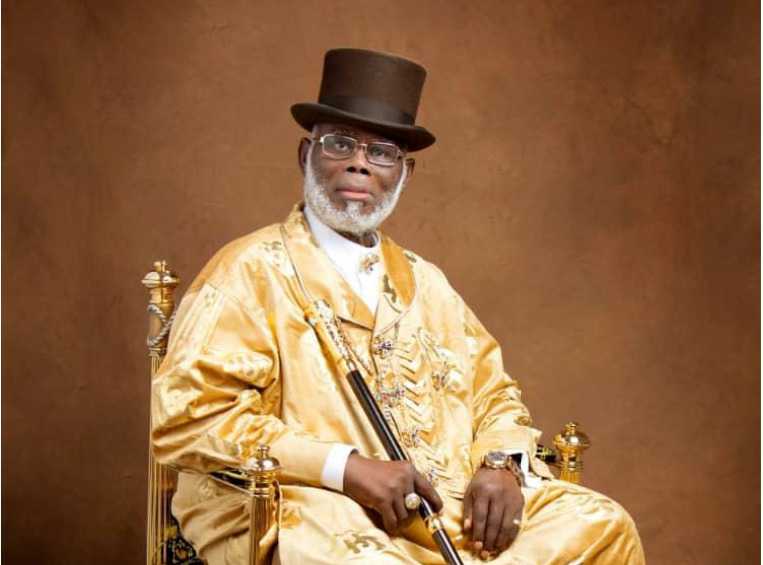
O B Lulu-Briggs (1930 – 2018)

Published

on

Over two years after his death on December 27, 2018, the mortal remains of High Chief Olu Benson Lulu-Briggs (OON, DCF, DSSRS) are set to be interred tomorrow, Saturday, March 13, 2021, at his hometown, Abonnema in Rivers State. However, this ensued after a protracted legal battle initiated by his widow, Seinye Lulu-Briggs, against the family.
Born 85 years ago into the royal lineage of Chief Iniikeiroari Young Briggs to Papa Benson and Madam Rachel Kioba Harrison Briggs in the idyllic, quiet city of Abonnema in the Kalabari Kingdom, his earlier life was interrupted by the early loss of his father. Despite his predicament, he overcame all adversaries. His resilience and hard work rewrote his childhood and ultimately ranked him the 31st richest man in Africa by Forbes magazine.
The life and times of High Chief Lulu-Briggs, the Iniikeiroari the Fifth of the Kalabari Kingdom and Paramount Head of Oruwari Briggs House of Abonnema, evokes the call of genuine humanity. He was benevolent, compassionate and devoted to God. He came, he saw and conquered. He simply had it all.
Opuda, as he was fondly called, meant so many things to so many people. To some, he was the quintessential Kalabari chief, entrepreneur and countrywide statesman. To others, he was a repository of prodigious resources and a philanthropist par excellence. Yet to others, he was a citizen of the world. In all, he epitomised hard work, love and a provider to humanity.
It is commonly said that the measure of a man is not in the setbacks he experiences but how he overcomes these setbacks. The young Olu Benson overcame his setbacks with resolve. After his schooling in Abonnema, Jos and later in the United Kingdom, he plunged into his professional career and worked in the then Mandilas, Karabaris and later in the Nigerian Ports Authority (NPA) in 1955.
At NPA, Lulu-Briggs attained milestones. He was Secretary of the Workers’ Union of the organisation for over seven years during which time a staff canteen was established. He was also the chairman of the Maritime Trade Union Federation of the Eastern Ports from 1968-1971. He was equally a founder of the Rivers State Council of Labour and became its President between 1970 and 1972.
After a stint in the public service, Lulu-Briggs moved into successful entrepreneurship and politics. His hard work, tenacity and integrity stood him out. He established Rachael Hotels Limited and Lubrik Nigeria Limited in the mid-1980s. In 1992, he founded Moni Pulo Limited, an indigenous oil exploration and producing firm, Krakrama Investments Limited in 2003 and Lubrik Construction Limited in 2007.
Moni Pulo Limited eventually became a sustainable institution and a leader in operational excellence, local content and proactive corporate social responsibility. These attracted the best talents to the company and ensured continuous goodwill and support for it by its host communities. Besides his interests in oil and gas exploration and production, the High Chief was into construction, real estate and banking.
His exploits were not limited to entrepreneurship. He similarly made a name in the political arena. His foray into partisan politics was guided by the same principles of integrity and diligence. He was a founding member of the defunct National Party of Nigeria (NPN) in Rivers State and rose to be the National Deputy Chairman of the party from 1980 to 1983. Lulu-Briggs later contested for the post of President under the defunct Social Democratic Party (SDP).
Entirely steered by a desire to positively impact the lives of others, this large-hearted, de-tribalised Nigerian had increasingly poured out his love, time and resources into caring for others; demonstrating care they could not possibly reciprocate.  This is expressed in his corporate scholarships to numerous Nigerian children and youths at the primary, secondary and tertiary school levels within and outside the country.
The High Chief’s imprint on education was equally massive. He endowed a Chair in Petroleum Geosciences in the University of Port Harcourt and built, equipped and renovated many schools in Rivers State. On the global scene, he assisted impoverished students regardless of race or ethnicity in the Department of Petroleum Engineering, the University of Texas at Austin in the USA.
In 2001, Lulu-Briggs and Seinye began the ‘Care for Life Programme’ with the support of the O.B. Lulu-Briggs Foundation. The foundation executed 20 free medical missions in Rivers, Bayelsa, Akwa Ibom and Cross River States. Also, he provided the poor and aged rural dwellers with regular allowances and employed caregivers for the aged without relatives. The Biokpo Recreational Centre was built at Abonnema where the elderly visit daily to socialise, relax and receive medical attention where necessary.
In recognition of his selfless service to humanity, two international service organisations, Rotary International and Lions Club International at various times honoured him. Opuda and his wife humbly wore their pins as Paul Harris Fellows and major donors of Rotary International.
In 2003, the Federal Government of Nigeria decorated him with the national honour of the Officer of the Order of the Niger (OON). He held the Key to the city of Houston, Texas, as an honorary citizen. The University of Port Harcourt and Rivers State University in 2006 and 2011 respectively awarded him the Degrees of Doctor of Science Honoris Causa.
While we strongly think that Lulu-Briggs merits to be memorialised based on the foregoing, his family members are urged to grasp peace and reconciliation as a mark of honour for the late icon. They should emulate his exemplary service. Importantly, Governor Nyesom Wike and others who stepped in to end the family feud are lauded.
In truth, the choicest of words cannot describe Opuda’s legendary fame. No tributes and eulogy can sufficiently capture what the High Chief was to mankind. He was a man who had done great things and had left indelible marks on the sands of time. We commiserate with his family, the people and the Government of Rivers State on the irreparable loss. May God grant him eternal rest.


Continue Reading

Editorial

Getting State Police Right

Published

on

Nigeria appears closer than ever to embracing state police, a transformative reform that has dominated national security discourse for years. Such a move, however, requires constitutional amendment to eliminate existing legal obstacles. The National Assembly deserves commendation for expediting work on the necessary legislation to amend Section 214 of the 1999 Constitution, which currently provides for a single, centralised national police force. Having secured passage in both chambers, the amendment bills should now be transmitted without delay to the state Houses of Assembly for prompt consideration.
The urgency of this reform is indisputable. Nigeria has been grappling with terrorism, banditry, kidnapping, communal violence, and organised crime, all of which have overstretched the existing security architecture. According to the National Bureau of Statistics, Nigerians paid an estimated N2.23 trillion in ransom between May 2023 and April 2024, while about 51.9 million crime incidents affected households during the same period. These disturbing figures underline the necessity of strengthening policing through a more pragmatic and responsive system.
State police could remarkably complement the efforts of the Nigeria Police Force (NPF), bringing law enforcement closer to local communities. Officers recruited from within their areas are often better acquainted with the terrain, languages, and cultural dynamics that shape criminal activity. Such local knowledge could produce a more perspicacious approach to crime prevention, intelligence gathering, and rapid emergency response.
Critics rightly fear that state police could become instruments of political persecution if left unchecked. Unscrupulous governors may be tempted to intimidate opponents, suppress dissent, or influence elections through the misuse of security agencies. Any constitutional amendment must, therefore, establish firm precautions that guarantee operational independence and prevent such capricious abuse of authority.
Another serious concern is finance. Running a modern police organisation requires sustained investment in personnel, equipment, technology, training, and welfare. Many states already struggle to pay salaries and pensions promptly. Without reliable funding, state police could deteriorate into poorly equipped institutions that weaken rather than strengthen public safety. Fiscal prudence must accompany political ambition.
Nigeria’s ethnic and religious diversity also demands careful reflection. Minority communities in several states have legitimate concerns that locally controlled police could be manipulated against them during periods of political or communal tension. Recruitment based on ethnicity, family ties, or political loyalty would further undermine professionalism. Only transparent procedures founded on merit can cultivate an equitable policing culture.
Equally important is the need for a comprehensive legal framework to regulate state police operations. Clear provisions are required to define jurisdiction, disciplinary procedures, civilian complaints, accountability mechanisms, and the limits of operational authority. Without such legal clarity, disputes and uncertainty could quickly overwhelm the new institutions.
The relationship between state police and the Nigeria Police Force also deserves meticulous attention. Cross-border crimes, insurgency, and organised criminal networks rarely respect state boundaries. Unless command structures, operational responsibilities, and emergency coordination are carefully defined, jurisdictional rivalry could produce dangerous ambiguity at critical moments.
A fragmented security system presents another risk. Thirty-six separate police commands operating under different priorities and standards may complicate coordinated national responses to terrorism, banditry, and other transnational threats. Intelligence sharing between federal and state agencies must be seamless, timely, and cohesive, leaving no room for avoidable security gaps.
Human rights protection should occupy a central place in the reform agenda. Nigeria’s experience during the #EndSARS protests exposed deep concerns about police brutality, impunity, and excessive force. Establishing additional police formations may merely multiply opportunities for abuse. Independent complaint commissions, judicial oversight,  and regular human rights training are indispensable guarantees.
Political transitions pose another challenge. Changes in state administrations should never trigger wholesale dismissals of police leadership or politically motivated appointments. Professional continuity, rather than partisan loyalty, must define career progression. Uniform training standards, ethical codes, and promotion procedures will help preserve the integrity of the institution regardless of who occupies government office.
History also offers a critical lesson. Nigeria operated regional police forces before 1966, but their widespread political misuse contributed to their eventual abolition. That experience should not automatically condemn present reforms, yet neither should it be ignored. Policymakers must undertake a judicious assessment of past failures and design institutions capable of preventing their recurrence.
Ultimately, state police represent an opportunity to strengthen security, but only if reform is pursued with wisdom rather than haste. Constitutional amendment alone will not guarantee success. Strong oversight institutions, transparent recruitment, sustainable funding, effective intelligence sharing, respect for human rights, and genuine accountability must accompany decentralisation. If these essential conditions are fulfilled, state police could become a valuable pillar of national security instead of another source of instability.
Continue Reading

Editorial

June 12: The Faltering Democratic Journey

Published

on

Nigeria today marks Democracy Day, an occasion set aside to celebrate the country’s democratic journey and reflect on the sacrifices made by citizens in the struggle for representative government. The day is both a celebration and a reminder that democracy is not merely about periodic elections. It is also about freedom, justice, accountability, security, and the welfare of the people.
June 12 occupies a special place in Nigeria’s political history because it commemorates the presidential election of June 12, 1993, widely regarded as the freest, fairest, and most credible election ever conducted in the country. The election was won by late Chief Moshood Kashimawo Olawale Abiola, but the military government of General Ibrahim Babangida annulled the results, plunging the nation into political turmoil and a prolonged struggle for democratic rule.
For many years, Nigeria celebrated Democracy Day on May 29 because that was the date when military rule ended and power was handed over to a democratically elected government in 1999. However, in 2018, the administration of late President Muhammadu Buhari officially moved Democracy Day from May 29 to June 12. The change was intended to honour the sacrifices of those who fought against military dictatorship and to recognise the importance of the annulled 1993 election.
More than two decades after the return to civilian rule, Nigeria’s democratic record presents a mixture of progress and disappointment. The country has maintained uninterrupted civilian government since 1999, making it the longest democratic period in its post-independence history. Yet, the quality of governance and democratic institutions remains a matter of concern.
On political rights, Nigeria has made modest gains. Citizens have the constitutional right to vote and contest elections, and political parties operate freely. However, concerns have always been about voter apathy, political violence, and the influence of money in politics. In the 2023 general election, fewer than 30 per cent of registered voters cast their ballots, highlighting declining public confidence in the electoral process.
Civil liberties have improved compared with the military era, but challenges persist. Citizens enjoy greater freedom to express opinions, organise groups, and participate in public debates. Nevertheless, reports of unlawful arrests, harassment of activists, and restrictions on peaceful protests raise questions about the full protection of civil freedoms.
Electoral integrity has shown some improvement through the deployment of technology by the Independent National Electoral Commission. Yet disputes over election management, vote buying, rigging, logistical failures, and prolonged litigation undermine public trust. Many Nigerians still believe electoral reforms have not gone far enough to guarantee completely transparent elections.
Freedom of expression and association are relatively vibrant. Traditional and social media platforms provide citizens with avenues to criticise government policies and mobilise public opinion. However, journalists, activists, and media organisations occasionally face intimidation, legal pressures, and threats that create concerns about press freedom and democratic openness.
Security is one of Nigeria’s weakest democratic indicators. Insurgency in the North East, banditry in the North West, farmer-herder conflicts in parts of the Middle Belt, separatist tensions in the South-East, and widespread kidnapping have created a climate of fear. Thousands of lives have been lost in violent attacks over the past decade, while many communities live under constant security threats.
The rule of law and judicial independence present a mixed picture. Nigerian courts have delivered landmark judgments that have strengthened democracy and resolved electoral disputes peacefully. Yet allegations of political interference, delays in the justice system, and concerns over selective application of the law affect public confidence in the judiciary.
Protection of individual rights and checks on executive power are among areas requiring improvement. Although constitutional safeguards exist, enforcement is often inconsistent. Institutions responsible for oversight, including the legislature and anti-corruption agencies, sometimes face accusations of weakness or partisanship. Strong democratic systems require institutions that can operate independently of political influence.
On accountability and transparency, Nigeria has made some progress through public procurement reforms, digital financial systems, and increased access to information. Yet corruption remains a major obstacle. Transparency International’s Corruption Perceptions Index has consistently ranked Nigeria among countries facing serious corruption challenges. The misuse of public resources undermines development and public trust.
Citizen participation in governance has expanded through civil society organisations, community groups, and digital engagement. However, many citizens still feel disconnected from decision-making processes. Economically, democracy has not delivered the level of prosperity many expected. Despite being Africa’s most populous nation, Nigeria has been struggling with high inflation, unemployment, poverty, and a rising cost of living. Effective and responsive government remains a challenge as many Nigerians demand better public services, infrastructure, healthcare, and education.
As Nigeria marks Democracy Day, the path forward is clear. Electoral reforms must be strengthened to improve transparency and public confidence. Security agencies must be better equipped and held accountable. Judicial independence should be protected, while anti-corruption institutions must be empowered to act without fear or favour. Governments at all levels should embrace transparency, respect human rights, and prioritise economic policies that create jobs and improve living standards.
Above all, citizens must actively engage in governance. Democracy flourishes not only through elections but also through continuous participation, vigilance, and accountability. The promise of June 12 will be fully realised only when democratic governance delivers freedom, justice, security, and prosperity to all Nigerians.
Continue Reading

Editorial

Fix Bad Roads, Avert Flooding In PH

Published

on

For many years, residents of Port Harcourt have suffered from deplorable roads and persistent flooding. During the rainy season, movement becomes difficult and business activities are often disrupted. Thankfully, there has been some relief in one major area. Since Governor Siminalayi Fubara addressed the flooding problem along Ikwerre Road by Afikpo Junction, the situation has improved significantly. Even after heavy rainfall, the area no longer experiences the usual flooding, and vehicles can now move freely without difficulty. This intervention deserves accolade and commendation.
Another notable project is the ongoing drainage reconfiguration at NTA Road, opposite the Nigerian Television Authority. The work being carried out there shows that the government recognises the connection between poor drainage and deteriorated roads. Once completed, the project could become a good example of how proper planning and infrastructure maintenance can improve urban roads. The administration should be encouraged to sustain this undertaking.
While the governor continues to carry out development projects across the state, attention should also be given to Obi Wali Road in Obio/Akpor Local Government Area. The road has remained in decrepit condition for years despite its importance as a major economic route. Whenever it rains, flooding stretches from Rumuigbo Junction to Nkpolu Junction, forcing businesses to discontinue operations for the day. According to traders in the area, several shops shut down after every heavy rainfall. This situation cannot continue indefinitely.
Fubara should spend more time scrutinising roads and infrastructure across Port Harcourt personally rather than depending entirely on reports from officials. His intervention at Ikwerre Road was successful because he saw the problem firsthand and understood the extent of the tribulations faced by motorists and residents. The same practical approach should now be replicated on Obi Wali Road.
A visit to the area during rainfall would clearly reveal how quickly the road becomes impenetrable. Vehicles struggle to move through the flooded sections, while pedestrians are forced to walk through unsanitary water. Direct assessment often provides a clearer understanding of problems and can lead to quicker and more efficacious solutions.
The current condition of Obi Wali Road is similar to what Elelenwo Road looked like before it was reconstructed under the administration of former Governor Nyesom Wike. After the road was metamorphosed, the area became more accessible, attractive and serviceable. Today, Elelenwo Road accommodates heavy traffic daily without major flooding issues. There is no reason Obi Wali Road should not receive similar attention. What is required is commitment and political fortitude.
The Airforce and Rumuomasi section of the Port Harcourt–Aba Road, beginning from Shoprite to PAMO, also remains in very poor predicament. During heavy rainfall, flooding affects the stretch from Lagos Bus Stop to Market Junction, covering almost 1.2 kilometres. As a result, motorists are forced to circumnavigate through Old Aba Road before reconnecting at Rumubiakani or Market Junction. This often adds between 20 and 30 minutes to expeditions during the rainy season.
The situation is becoming increasingly disconcerting. Smaller vehicles frequently avoid the route whenever it rains heavily. Reports from local transport operators indicate that many private and commercial vehicles circumvent the area on rainy days. Sadly, this has become a perennial problem every rainy season, despite changes in government over the years. The current administration should focus on providing a permanent solution rather than temporary repairs that fail after a short time.
Flooding is also common along the NTA–Choba Road near Choba Market, opposite Royal House of Grace Church. Although the road itself is in fairly good condition, blocked drainage channels continue to create encumbrances whenever it rains. In addition, potholes are beginning to materialise along Obiri Ikwerre Road leading towards NTA Road. If these faults are ignored, they will eventually develop into major road degeneration.
Other areas in urgent need of attention include Mile 3 Market Road to Wokoma Street, which floods after torrential rainfall, and Gambia Junction at Mile 2 Diobu, where flooding has become ubiquitous. Okporo Road, the stretch from Rumuodara Junction to Artillery, Bereton Junction, and Miniesuku Junction near Halley College are all in dilapidated condition. Altogether, these roads affect the daily movement of hundreds of residents across the city.
To address these challenges effectively, the state government should establish a specialised road maintenance agency responsible for identifying and repairing damaged roads before they deteriorate completely. Regular inspections and preemptive maintenance would help reduce long-term reconstruction costs and improve road safety across Port Harcourt.
Local government councils also have an important role to play. Each council should maintain meticulous records of roads within its jurisdiction and monitor their condition regularly. Responsibility for road maintenance should not rest entirely on the state government. Better synergy between state and local authorities would ensure that no road is overlooked.
Governor Siminalayi Fubara has already shown positive leadership through the improvements at Ikwerre Road. Residents now hope that the same commitment will be cloned across other troubled areas in Port Harcourt so that the city could finally experience safer roads, better drainage and unobstructed movement for everyone.
Continue Reading

Trending