
Editorial
MEND And Okrika Pipeline Explosion

A recent pipeline explosion near the Nige
rian National Petroleum Corporation
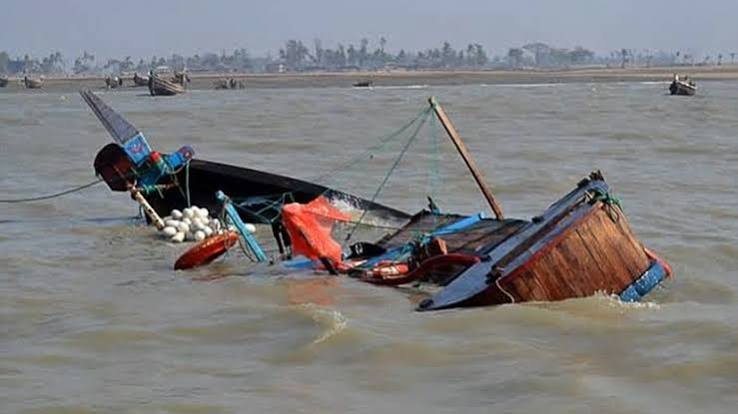
(NNPC) Refinery jetty in Okrika, Rivers State was reported to have claimed 10 lives, among other casualties. The Movement for the Emancipation of the Niger Delta (MEND) said it was responsible.
A statement attributed to spokesman of MEND, Jomo Gbomo states that the attack was part of its ongoing operation ‘Hurricane Exodus’ which is mainly aimed at protesting against the Federal Government’s mismanagement of the Amnesty programme for ex-Niger Delta militants.
Part of the statement reads: “We will persist with our attacks on the Nigerian oil industry due to the inaction of President Goodluck Jonathan who continues to rely on an unsustainable and fraudulent Niger Delta Amnesty programme which is only a guise to line the pockets of some persons whose sudden wealth remains unchallenged …”
MEND was also said to have taken offence over reports from the ongoing National Conference in Abuja to the effect that the principle of resource control had been rejected. This was only a comment at one of the committees and not the recommendation of the National Conference.
Contrary to its claims, some concerned groups including the NNPC, Ijaw Youth Council (IYC), National Union of Petroleum and Natural Gas Workers (NUPENG), Petroleum and Natural Gas Senior Staff Association of Nigeria (PENGASSAN) and the Federal Government’s Amnesty Office discredited MEND’S claim.
While attributing the Okrika pipeline explosion to the activities of pipeline vandals and oil thieves, they accused MEND of trying to take credit for what its militia did not do. Even so, no other group had claimed responsibility yet for the attack, while the reasons given by MEND appear to add up.
Even so, The Tide thinks that all well-meaning persons should condemn the avoidable act and call members of MEND and all youth groups in the Niger Delta to order. They should be law-abiding and careful not to engage in any further killing and maiming of innocent residents of the region.
It is sad that with the calibre of persons behind MEND, we are surprised that they are not able to understand that the National Conference is yet to complete its work nor has the outcome of its dialogue been conclusive as to warrant any person or group to react based on mere suggestions.
Not only has MEND become too hasty, it has disappointed a lot of people who think that the attack on the pipeline was ill-timed. Besides, if its members really love Nigeria and the Niger Delta, they would see how avoidable their actions were.
At a time the country is being confronted with series of Boko Haram attacks in parts of the North is certainly no time to also make the South unsafe. It must be clear that if Nigeria burns, they will get burnt too and have nothing to agitate over.
We believe that there are better ways of expressing anger and resolving differences. MEND or any other youth group for that matter, should be careful not to start what it cannot finish. For every Nigerian, irrespective of their grievances, should be patriotic enough now to rally round the government against external aggression such as the one posed by Boko Haram.
We are unhappy that the persons who died and those injured in the recent pipeline explosion are Niger Deltans, the environment that got polluted is also that of the Niger Delta. The act of inflicting more harm on the region over perceived injustice from the centre should stop.
The fate of the Niger Delta and its people is in the hands of God. The on-going National Conference has a lot of promise for the region, indeed, one of the greatest challenges of the conference is to redress the Niger Delta question, which incidentally accords with the trend across the world.
To love the Niger Delta is to love Nigeria and help her out in times of crisis. The fact remains that if the National Conference fails to take the glory of bringing peace and justice to the region, God will send another. The bottomline is that things cannot continue to be business as usual. Interestingly, no violence would be needed to make the Niger Delta actualise her dreams.



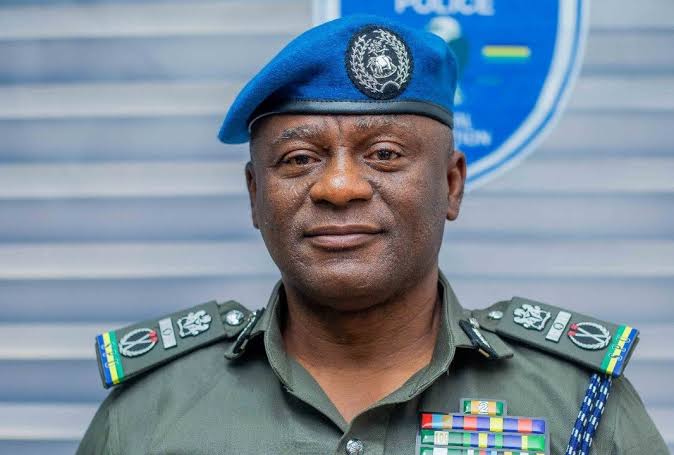
As Nigeria moves toward the 2027 general elections and campaign activities intensify, violence against opposition politicians has become an issue that can no longer be overlooked. What should be a season of competing ideas is increasingly turning into a test of intimidation, and early signs suggest that those challenging the ruling establishment are the primary targets.
It was, therefore, welcome news when the Inspector-General of Police, Olatunji Disu, warned politicians, political thugs and others against destroying, defacing or removing campaign posters, banners and billboards. In a statement issued in Abuja by the Force Public Relations Officer, CSP Ani Iniedu, the police condemned such acts as political intolerance, directed Commissioners of Police in all 36 States and the Federal Capital Territory to take preventive measures, and warned that sponsors would also face prosecution. The police rightly described such vandalism as a criminal act that undermines parties’ and candidates’ freedom to canvass for votes.
But billboards are replaceable; human lives are not. While applauding the IGP’s stance, we urge him to extend the same stern warning and enforcement zeal to thugs who assault opposition members during campaigns. A police force that punishes the tearing of a poster but ignores the breaking of a skull will have its priorities questioned. Allowing such attacks to continue could erode the foundations of our democracy.
Consider the African Democratic Congress (ADC) presidential campaign flag-off in Sokoto State on November 4, 2026. The party alleged that the State Government denied it access to public facilities, sealed its campaign venue and pressured hotels to reject its delegates, forcing it to hold the rally at its secretariat. The Sokoto authorities, however, denied instructing hotels to turn guests away. More seriously, two suspected ADC supporters were reportedly shot along the Sokoto–Wurno Road while travelling to the venue, allegedly by operatives of the Sokoto State Community Guards.
Whatever the truth of these competing accounts, a shooting demands more than press statements. It requires a transparent, independent investigation and prosecution where warranted. Sokoto was not an isolated incident. The following day in Birnin Kebbi, the ADC presidential campaign convoy was reportedly attacked by armed gangs. Amnesty International said vehicles were vandalised, people assaulted with cutlasses and roads blocked, while the party’s Kebbi governorship candidate, Abubakar Malami, alleged that media equipment was destroyed and tear gas deployed. His convoy had suffered a similar attack in the city in September 2025.
The Nigeria Democratic Congress (NDC) has suffered similar attacks. On November 4, hoodlums stoned the motorcade of its presidential candidate, Peter Obi, and running mate, Rabiu Musa Kwankwaso, at Watt Market roundabout in Calabar, Cross River State. Police reported arresting a 27-year-old suspect, Victor Edet, although it remains unclear whether he has been arraigned. The State Government has denied suggestions that ruling-party supporters were responsible. Worse, in Asaba, Delta State, one person was killed and five injured when suspected thugs attacked an NDC rally. A death at a political rally is no longer a warning; it is a damning indictment of the prevailing political climate.
Even critics of the establishment who are not frontrunners have not been spared. Omoyele Sowore, presidential candidate of the African Action Congress (AAC), was attacked by suspected thugs at a restaurant in Ado-Ekiti on October 30. He alleged that the assailants were linked to the Ekiti State Government House and that the Department of State Services leaked his location. Both the State Government and the security service denied involvement, while the police reported a minor injury and a discreet investigation. These conflicting accounts make an independent, publicly reported inquiry indispensable.
What deepens the concern is the Federal Government’s apparent silence. We are unaware of any specific, forceful condemnation of these assaults, even as All Progressives Congress (APC) rallies appear to proceed nationwide without incident. Such silence can easily be misconstrued as complicity, regardless of intent.
According to the Centre for Democracy and Development, 109 election-related deaths were recorded in the build-up to the 2023 polls. The Kimpact Development Initiative separately documented 238 incidents and 24 deaths during the general elections. Beyond Nigeria, Kenya’s 2007–08 post-election violence claimed more than 1,000 lives, according to the Waki Commission. Ghana, by contrast, enacted the Vigilantism and Related Offences Act in 2019 to curb party vigilante groups, a model worth studying.
The remedies are neither exotic nor expensive. The IGP should extend his directive to cover assaults on individuals and disruptions of rallies, while establishing a dedicated investigative unit to probe the Sokoto shooting and the attacks in Kebbi, Calabar, Asaba and Ado-Ekiti. It should publish the status of each case within a fixed period. Suspects must be prosecuted and their sponsors, regardless of party or position, brought to justice. State-backed security outfits, including the Community Guards, should be audited and barred from partisan duties.
The Federal Government must speak and act unequivocally. President Tinubu should specifically condemn attacks on opposition candidates and direct all security agencies to guarantee equal protection for every party. Governors must ensure equal access to public facilities for registered parties. The Independent National Electoral Commission (INEC), which has warned of fines and imprisonment under the Electoral Act 2026 for inflammatory campaign conduct, should enforce the Code of Conduct for Political Parties. Working with the Inter-Agency Consultative Committee on Election Security, it should publish a joint security plan covering campaigns, polling, and collation. Parties must discipline their supporters, courts expedite electoral-violence trials, and civil society and the media maintain a public record of incidents and their outcomes.
The credibility of the 2027 elections is at stake. An election is credible only when every contender can campaign, travel, assemble and speak freely, without fear. Without a free opposition, there can be no meaningful democracy. Nigeria is not a one-party State, and law enforcement agencies must demonstrate their neutrality through action, not communiqués. The campaign atmosphere is too tense to be left to chance. Billboards deserve protection, certainly, but citizens deserve it far more.
-

 Politics5 days ago
LG CITY BOY COORDINATOR HAILS WIKE’S SUPPORT FOR ONYESOH, TINUBU
-
Politics5 days ago
DIRI INAUGURATES APC CAMPAIGN COUNCIL, SETS MILLION VOTES TARGET FOR TINUBU
-

 Politics5 days ago
NDC Candidate Urges Oborevwori To Probe Asaba Political Violence
-

 News5 days ago
Army Recovers X Account After Hack Attempt
-
News17 hours ago
RSG Reaffirms Commitment To STEM Education, Technological Advancement
-
Business20 hours ago
‘NUJ, NPA’s Partnership Would Boost Port Producrivity, Economic Growth’
-

 News17 hours ago
IGP Warns Police Officers Against Partisanship …Directs Regular Engagement With Journalists
-
Politics5 days ago
2027: Oborevwori Tasks Media On Fair, Accurate Reporting