
Opinion
Igburu Clan: A Weeping Child

Igburu clan, situated at North East axis of Ogba/Egbema/Ndoni Local Government Area (aka ONELGA) by the bank of sombreiro river in Orashi region of the Niger Delta. The Ibe clan comprises twelve (12) autonomous communities.
Before the civil war in Nigeria between 1967 through 1970, Igburu clan was like a sheep without shepherd until soon after the civil war when it was deemed necessary to create Eze-Igburu Stool and the incumbent was his blessed memory late Chief S.O. Ogwe, who hails from Obigwe community as the then headquarters of Ali-Ogba, where the founding fathers of Ogbaland first settled before exploration and establishment of other places of abode, which constitutes what is known today, as Ogba Kingdom.
Since 1971 when the Eze Igburu was created, Chief Ogwe was the ‘Eze Igburu of Igburu’ clan until he felt victim to the cold hands of death on April, 2002 after over thirty (30) years on the stool. Of course, Igburu clan mourned for the departed monarch for over 12 calendar months.
However, to fill the vacuum already created, a new course was chanted by Igburu citizens at the autumn of 2004. Searching for the incumbent was politically inclined and contestable.
After normal electoral processes, two personalities emerged from Amah community of Igburu clan in ONELGA. Precisely, on December 18, 2005 election to the Eze Igburu Stool was duly conducted at Omoku, headquarters of Ogba/Egbema/Ndoni Local Government Council between Chief Sunny A. Eleba and Chief Innocent A. Ugada respectively. In fact, the battle was likened to a drama of two giants.
Normally, according to the tenents of election in a democratic system, a winner would emerge. In this circumstance Chief Sunny Eleba emerged and mounted the throne of Eze Igburu as determined by the electorate and designated Eze Igburu 11 after publication of results.
Traditionally, the official coronation was performed at Obigwe, the ancestral headquarters of Igburu clan on February 18, 2006 by the most elderly of Igburu clan vicinity in the person of late Elder (Okniye) Nwobite of Elieta community in the presence of Igburu representatives from the 12 autonomous communities.
Pertinently, the newly installed Eze Igburu lived to pilot Igburu affairs but for a short while. HRH, Eze S.A. Eleba joined his predecessors to the great beyond on Wednesday eve, June 10, 2009 after a protracted illness at the St. Patrick Hospital in Port Harcourt. The demise of the Eze Igburu has plunged Igburu clan into mourning and has equally created another vacuum which may be technically difficult to fill.
Controversially, not too long after the installation of the late Eze Igburu 11, his contemporary at the conducted election of December 18, 2005 was equally installed as Eze-Ali Igburu of same Igburu clan in the Palance of Oba of Ogbaland at Omoku, which was publicly pronounced on December 14, 2007. This was astonishing to well reasoning citizens of the area. Nevertheless, the contradiction created is that the installed Eze-Ali Igburu also hails from Amah community, and was well supported by same Igburu citizens.
In ‘Things fall Apart’ Prof. Chinua Achebe observed that the people of Umuofia could no longer act as one because the Whiteman has set confusion in their midst and things began to fall apart as the centre could not hold firm. This is the true nature of Igburu clan for installation of multiple leaders created by ignorance, socio-economic and political instability.
At this juncture, it behooves one to pose whether Igburu is weeping for its departed monarchs or weeping for inconsistency in leadership nomenclature and dichotomy in a Kingdom or Ethnic Nationalities that has existed as an entity for centuries? If the latter is the focus, then there is urgent need for appropriate and adequate reorientation and education in the light of this thought provoking issue at stake. In the present dispensation, Igburu clan is in a fist soliciting for enhancing solution.
Without mincing words, it has been asserted philosophically that ‘twenty lumps of yam is too much for a pepper soup’. Igburu clan cannot be tossed here and there because of egocentricism and malice to the detriment of the populace.
Conclusively, one wish to beckon the Rivers State Government and particularly the Ministry in Charge of Local Government and chieftaincy Affairs, the Council of traditional rulers to expedite action and set a machinery in motion to streamline these ugly issues ravaging Igburu clan particularly and Ogba Kingdom in general. How long shall Igburu continue to weep for injustices and who will bail the cat from the socio-economic, political and cultural dungeon!
G.N. Ominyanwa, Public Affairs Analyst, resides in Port Harcourt..
G.N. Ominyanwa




Quote: “The Flamingos have conquered the world; Nigeria must now rise to its responsibility of nurturing the next generation of champions.”
Sometimes, sporting victories
More significantly, they
Umejiaku deserves special
Umejiaku received the award
Nigeria has now broken into
For too long, young girls in
But beyond the reward, this
As Nigerians celebrate this
By; Calista Ezeaku
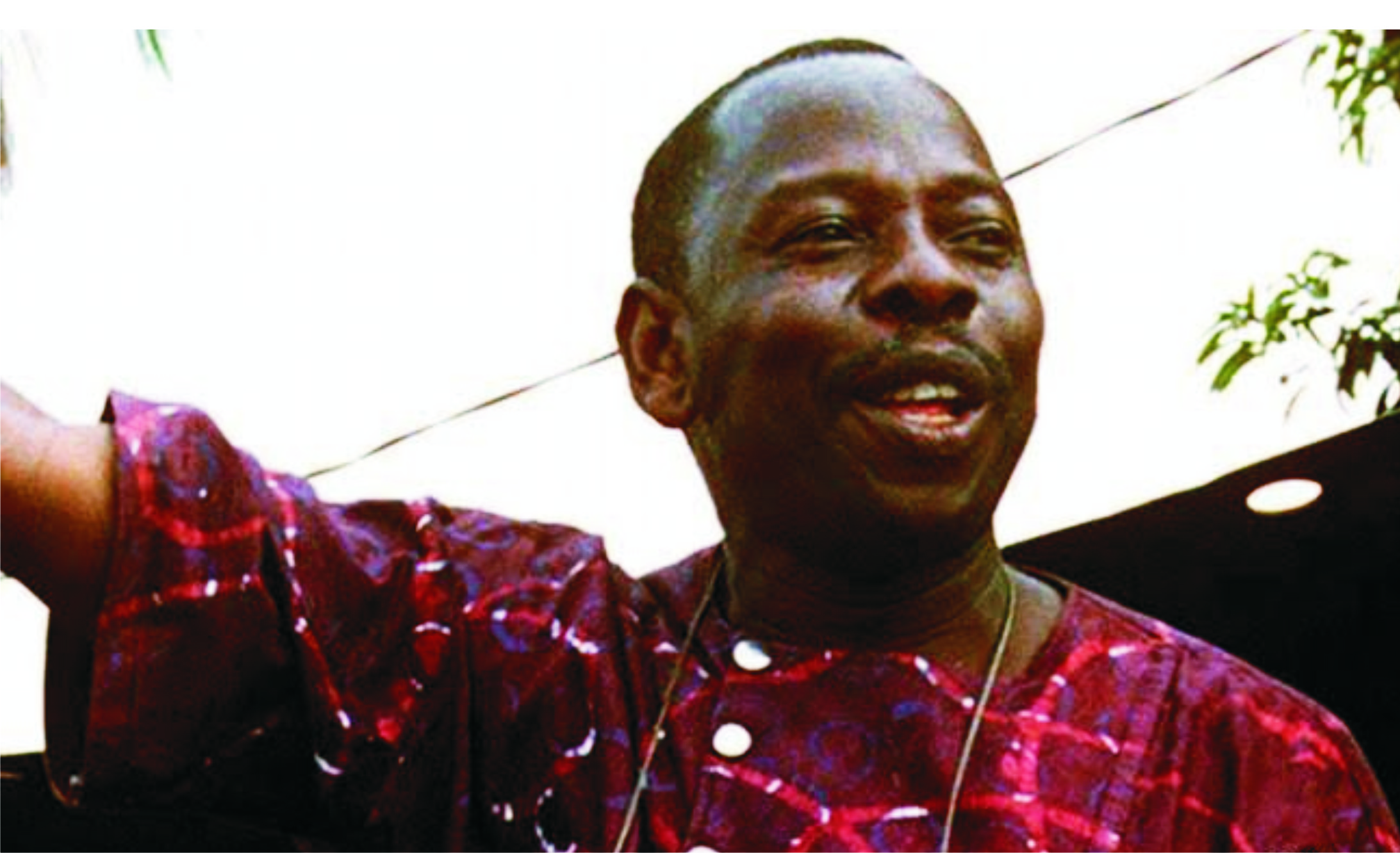
On November 10, 1995, the Nigerian military government of General Sani Abacha executed Ken Saro-Wiwa and eight other Ogoni leaders after a deeply controversial trial. Their deaths marked one of the darkest chapters in Nigeria’s history. At a time when fear silenced citizens and sycophancy flourished around military power, Saro-Wiwa chose to confront tyranny. Many Nigerians retreated into silence, while others praised the regime to secure favour. He knew the risks, yet refused to abandon a people whose land had been devastated by oil exploration and whose lives remained trapped in poverty. His courage arose from the conviction that public responsibility sometimes demands resistance to authority. Saro-Wiwa understood that speaking against a military government could lead to imprisonment or death.
Nonetheless, he believed the suffering of the Ogoni people demanded a courageous response. While oil was extracted from their land, they were left with polluted rivers, damaged farmland, declining livelihoods and an environment hostile to human survival. Fishing grounds and sources of livelihood were threatened, while the people struggled to secure basic amenities. The wealth beneath their soil brought neither adequate development nor a fair share of national resources. For him, silence in the face of injustice would have amounted to complicity. Through the Movement for the Survival of the Ogoni People (MOSOP), he organised a peaceful campaign that took the Ogoni question to the international community. MOSOP gave ordinary people an organised platform through which to express their grievances and insist on recognition.
The Ogoni Bill of Rights, presented to the Federal Government in 1990, demanded political autonomy, economic justice, environmental protection and control over the people’s resources. The campaign exposed the human and ecological costs of oil operations, particularly those associated with Shell, and challenged the apparent alliance between corporate interests and an unresponsive State. The Ogoni struggle became a defining expression of minority rights and environmental justice in Nigeria and Africa. Saro-Wiwa’s writings and mobilisation drew attention to communities treated as expendable because of their limited population and political influence. He argued that numerical strength should never determine a people’s value or rights.
A minority community does not become less deserving of justice because it cannot command electoral numbers or political power. In Nigeria, every ethnic group deserves dignity, protection and a fair opportunity to benefit from the commonwealth. Rather than respond to peaceful agitation with dialogue, the Abacha regime resorted to repression. Ogoni leaders were harassed, detained and killed; others fled into exile. The crisis intensified after four Ogoni chiefs were killed in May 1994. Saro-Wiwa and other MOSOP leaders were arrested, tried by a special tribunal and executed despite international appeals for clemency and serious concerns about the trial’s fairness. The executions drew worldwide condemnation and intensified scrutiny of Nigeria’s human-rights record and oil companies in the Niger Delta.
They demonstrated the danger of using State institutions to suppress peaceful demands. The proceedings remain a reminder of the need for judicial independence and due process. Saro-Wiwa’s courage rested on the conviction that justice must be pursued despite the cost. His method combined non-violent resistance, public education and grassroots organisation. His struggle recalled the civil-rights campaign of Martin Luther King Jr. and the power of peaceful mobilisation against injustice. Saro-Wiwa linked environmental degradation to political exclusion, economic exploitation and the denial of democratic rights. Oil-producing communities, he insisted, should not remain zones from which wealth is removed to develop other parts of the country.
Their people must benefit through roads, schools, healthcare, jobs and clean water. Resource extraction carries a duty to protect host communities. His argument extended to the structure of the Nigerian federation. He challenged a revenue-allocation system that made oil-producing communities bear the environmental and social costs of extraction without commensurate benefits. Like advocates of fiscal federalism, he believed resources should be managed and shared equitably. He envisaged a society in which no community would be disadvantaged by its size, ethnicity, political affiliation, culture or religion. His vision was a country bound together by justice and equal citizenship. Saro-Wiwa was also a gifted writer, dramatist and public intellectual.
Through books, essays, plays and television, he documented Nigerian society’s contradictions and challenged abuses of power. His popular television series, Basi and Company, demonstrated his creative range, while his leadership of the Association of Nigerian Authors encouraged writers to engage national questions. He believed literature should not be detached from society’s struggles. His pen exposed environmental injustice, political repression and the dangers of silencing courageous voices. He used storytelling, satire and drama to shape public consciousness and expose social contradictions. His literary achievements gave his activism wider reach and made the Ogoni experience part of national conversation. His commitment to the Ogoni people extended beyond the oil question.
During the Civil War, he worked to protect his vulnerable community. He urged younger generations to reject subservience and complacency and pursue change through lawful, peaceful means. Citizens, he believed, must not surrender their responsibility to challenge wrong doing. An injury to one community threatens the rights and security of all. The return to democratic government in 1999 and the establishment of the Niger Delta Development Commission, the Ministry of Niger Delta Affairs and the Hydrocarbon Pollution Remediation Project (HYPREP) are among developments that have kept the region’s demands in public view. Saro-Wiwa did not create these institutions, but his movement helped expose the urgency of intervention and sustain pressure for redress.
His death made it harder to ignore the Niger Delta’s environmental and political grievances. Yet, interventionist institutions do not prove that the original demands have been met. Their effectiveness depends on competent leadership, transparent spending, measurable outcomes and community participation. Yet, thirty-one years after his execution, the central concerns of the Ogoni struggle remain unresolved. The HYPREP-led clean-up has offered hope, but many residents await meaningful improvements. Questions persist about the programme’s pace, quality and transparency, and whether its benefits reach ordinary people. A clean-up should be judged not by ceremonies or contracts, but by restored land and waterways, safe drinking water, improved livelihoods and better public health.
It must include long-term monitoring to ensure treated sites remain safe. Residents deserve information about contamination, remediation methods and completion timelines. Reports that water projects in Gwara and Ebubu Communities, in Khana and Eleme Local Government Areas respectively, failed weeks after commissioning have raised further concerns. If confirmed, the failures would indicate weaknesses in supervision, procurement and quality control.
To be continued in our next edition.
Taneh Beemene
-
News4 days ago
RSG Reaffirms Commitment To STEM Education, Technological Advancement
-
Business4 days ago
‘NUJ, NPA’s Partnership Would Boost Port Producrivity, Economic Growth’
-

 News4 days ago
IGP Warns Police Officers Against Partisanship …Directs Regular Engagement With Journalists
-

 Oil & Energy1 day ago
FG To Double Oil, Gas Reserves, Moves To Intensified fresh Exploration
-
Business4 days ago
Fire Threat Interrupts Asaba Air Peace Flight
-
 News4 days ago
Customs To Deploy AI, Scanners Against Snuggling
-
Business4 days ago
Fish Production Deficit, A Major Investment Opportunity – Minister
-
Sports4 days ago
CAF Awards 2026 Gets A New Date