
Opinion
ASUU, FG Impasse: The Way Forward

Dr Felix Igwe, chairman, Rivers State University of Science and Technology (RSUST) ASUU: The strike is simply about implementing an agreement reached since 2009. It beats our imagination that we are in a society where agreements are not being respected, where people sign agreement in such accord and not respect it, to the point that the tenets of human relations, (because we are talking about labour union and the tenets of collective agreement, which is what moves society forward) are not be respected.
So we feel that we have to resort to this situation that we are now asking government to implement what they have willingly agreed to implement.
The implication to our mind, in terms of both positive and negative, the fact that students are at home and the lecturers are also at home is obviously not something that is desirable because productivity is affected; things that would have been done within the period of the strike are not being done. The academic work that would have been done within the period are not done, so the negative effect to the lecturers is that right now there is no work, no pay so the lecturers are not being paid. There is a psychological trauma as the university system is not working properly, people are beginning not to trust the system because it is being truncated. These are negative effects that you cannot quantify.
There is also the phenomenon that ASUU has been talking about over and over again: that is the brain drain in the Nigerian university system. You find that highly qualified lecturers and individuals who should support the universities and the country’s economy are being filtered away to other countries where things are properly done.
If government listens to ASUU and acts accordingly, the university system will become better tomorrow than what it is today.
The way forward is that government should do what they have agreed to do.
Omoniye Lulu-Pokubo, Political Scientist:
The ASUU strike is in its fourth month with students being the worse hit. The Federal Government and the ASUU members need to be cautious and sensitive on the plight of the students and the guardians/parents. The Federal Government must honour its part of the agreement arrived at in 2009. They need to implement the resolution made in the agreement.
On the part of the ASUU, they should avoid politics to creep into the demand and also be sensitive to the yearnings of their students. We hear the Federal Government has shifted grounds, it is also expected that ASUU should also shift grounds after it’s consultations to end the strike for the common good of the nation. The implication of the strike include delay of graduands and alterations of academic calendar as well as facilitates moral vices, such as prostitution, robbery, cultism etc.
There is loss of revenue on allied businesses around the university environment, and the resumption will definitely lead to rush in the curriculum thereby leading to lowering standards in the educational system.
On the way forward, federal and state governments need to inject a substantial amount of money into education (especially in the tertiary institutions). ASUU should also consider the plight of students and parents, as well as the overall interest of the nation, and come out with a reasonable concession in the face of competing needs of budgetary allocation to other sectors.
Nonetheless, Federal Government should also consider seriously the United Nations and other organisations advise on allotting about 26 per cent of a nation’s budget to their educational sectors. Each party should sheath their sword and arrive at a common ground to implement religiously what is agreeable instead to politicising the episode.
Nsiapu Eleki, a Civil Servant: I will say that the strike should continue pending when the Federal Government will be able to implement the agreement with ASUU. This is because it is an agreement that was signed in 2009. Nothing was done about it until ASUU embarked on strike so if the ASUU is prepared to collect the little Federal Government is willing to give them and wait for the remaining, there must be considerable commitment on the part of the Federal Government. This is because the only language government seem to understand before doing things right is when people embark on strike. That is why we see strike everywhere.
The same Federal Government say that we have half-baked graduates, ASUU is saying that the Federal Government should implement the agreement “we will give you the best students; why not try it.
My own opinion is that the Federal Government should be responsible about the whole issue. That means it must show concern over revamping the country’s education.
Deborah Daniel, self employed: Personally I’m not happy with the government because they actually agreed they were going to do what ASUU is demanding for. The Federal government is not standing by its words.
The things they are demanding for is not personal. The problem is all about obsolete equipment and sundry upgradements. Four months is a whole semester. The final year students should have finished and gone.
I would also suggest that as it is now, the Federal Government should come up with something for the lecturers to start on, and after now, Federal Government should as a matter of urgency make it up without waiting for the ASUU to embark on another strike. Waiting for such reminder portrays some level of irresponsibility.
Gift Adiele, Banker: It is a very bad and ugly situation because students are supposed to have graduated. Federal Government should come to terms with ASUU in order to allow students graduate,, others to continue their studies. We are talking about how Nigeria can grow, and education is one aspect of growth.
I was once a student, and I know that ASUU strike brings down the morale of students, and educational performance of students go down, while it also demoralised the students.
Consequently, ASUU being made up of parents should not be so mean in getting something. The government probably is finding it difficult to come to terms with ASUU because the agreement was not signed during the present administration, may be the demand is too much for the Federal Government to bear.
I will suggest ASUU suspends the strike for the betterment of the nation.




Quote: “The Flamingos have conquered the world; Nigeria must now rise to its responsibility of nurturing the next generation of champions.”
Sometimes, sporting victories
More significantly, they
Umejiaku deserves special
Umejiaku received the award
Nigeria has now broken into
For too long, young girls in
But beyond the reward, this
As Nigerians celebrate this
By; Calista Ezeaku
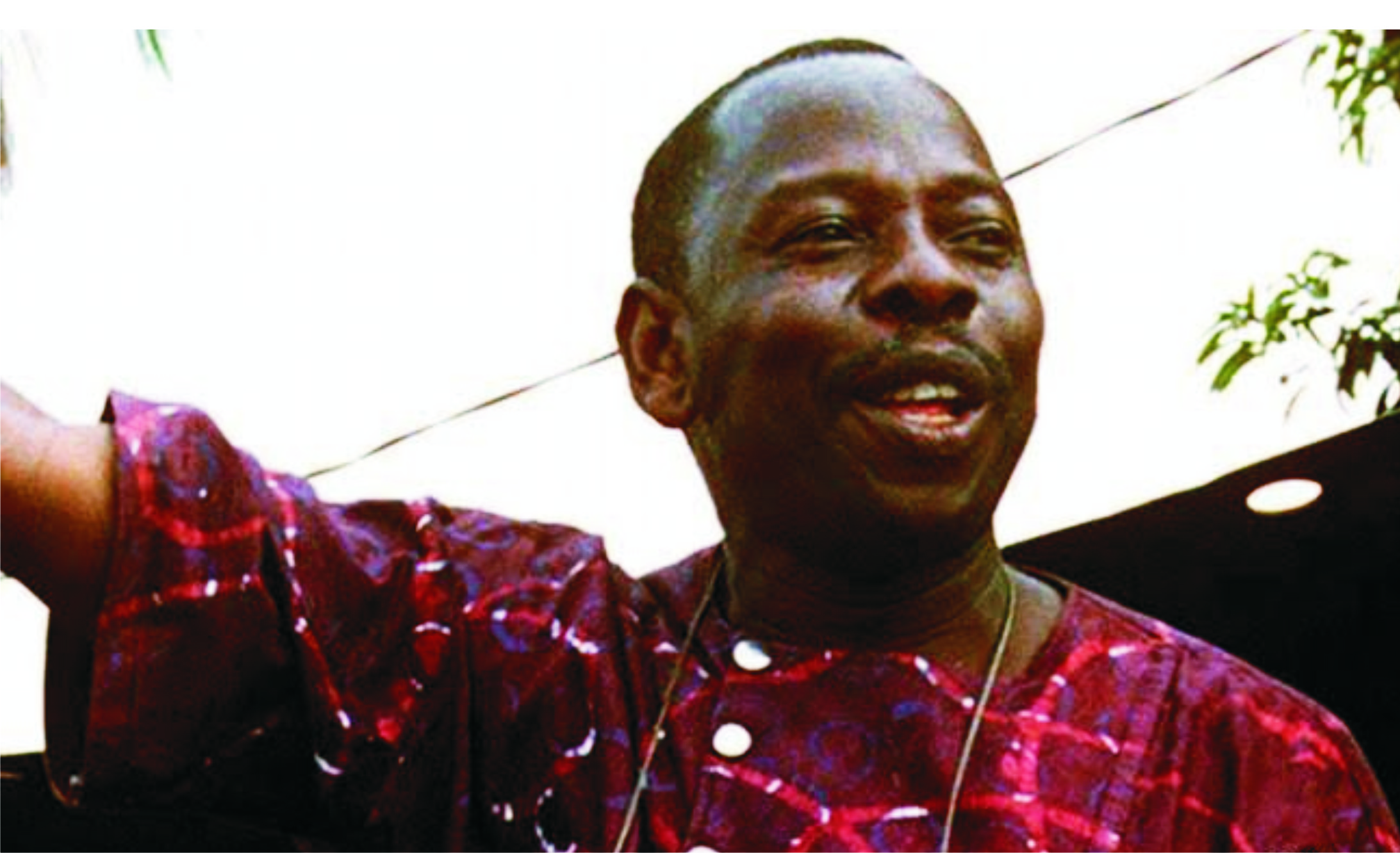
On November 10, 1995, the Nigerian military government of General Sani Abacha executed Ken Saro-Wiwa and eight other Ogoni leaders after a deeply controversial trial. Their deaths marked one of the darkest chapters in Nigeria’s history. At a time when fear silenced citizens and sycophancy flourished around military power, Saro-Wiwa chose to confront tyranny. Many Nigerians retreated into silence, while others praised the regime to secure favour. He knew the risks, yet refused to abandon a people whose land had been devastated by oil exploration and whose lives remained trapped in poverty. His courage arose from the conviction that public responsibility sometimes demands resistance to authority. Saro-Wiwa understood that speaking against a military government could lead to imprisonment or death.
Nonetheless, he believed the suffering of the Ogoni people demanded a courageous response. While oil was extracted from their land, they were left with polluted rivers, damaged farmland, declining livelihoods and an environment hostile to human survival. Fishing grounds and sources of livelihood were threatened, while the people struggled to secure basic amenities. The wealth beneath their soil brought neither adequate development nor a fair share of national resources. For him, silence in the face of injustice would have amounted to complicity. Through the Movement for the Survival of the Ogoni People (MOSOP), he organised a peaceful campaign that took the Ogoni question to the international community. MOSOP gave ordinary people an organised platform through which to express their grievances and insist on recognition.
The Ogoni Bill of Rights, presented to the Federal Government in 1990, demanded political autonomy, economic justice, environmental protection and control over the people’s resources. The campaign exposed the human and ecological costs of oil operations, particularly those associated with Shell, and challenged the apparent alliance between corporate interests and an unresponsive State. The Ogoni struggle became a defining expression of minority rights and environmental justice in Nigeria and Africa. Saro-Wiwa’s writings and mobilisation drew attention to communities treated as expendable because of their limited population and political influence. He argued that numerical strength should never determine a people’s value or rights.
A minority community does not become less deserving of justice because it cannot command electoral numbers or political power. In Nigeria, every ethnic group deserves dignity, protection and a fair opportunity to benefit from the commonwealth. Rather than respond to peaceful agitation with dialogue, the Abacha regime resorted to repression. Ogoni leaders were harassed, detained and killed; others fled into exile. The crisis intensified after four Ogoni chiefs were killed in May 1994. Saro-Wiwa and other MOSOP leaders were arrested, tried by a special tribunal and executed despite international appeals for clemency and serious concerns about the trial’s fairness. The executions drew worldwide condemnation and intensified scrutiny of Nigeria’s human-rights record and oil companies in the Niger Delta.
They demonstrated the danger of using State institutions to suppress peaceful demands. The proceedings remain a reminder of the need for judicial independence and due process. Saro-Wiwa’s courage rested on the conviction that justice must be pursued despite the cost. His method combined non-violent resistance, public education and grassroots organisation. His struggle recalled the civil-rights campaign of Martin Luther King Jr. and the power of peaceful mobilisation against injustice. Saro-Wiwa linked environmental degradation to political exclusion, economic exploitation and the denial of democratic rights. Oil-producing communities, he insisted, should not remain zones from which wealth is removed to develop other parts of the country.
Their people must benefit through roads, schools, healthcare, jobs and clean water. Resource extraction carries a duty to protect host communities. His argument extended to the structure of the Nigerian federation. He challenged a revenue-allocation system that made oil-producing communities bear the environmental and social costs of extraction without commensurate benefits. Like advocates of fiscal federalism, he believed resources should be managed and shared equitably. He envisaged a society in which no community would be disadvantaged by its size, ethnicity, political affiliation, culture or religion. His vision was a country bound together by justice and equal citizenship. Saro-Wiwa was also a gifted writer, dramatist and public intellectual.
Through books, essays, plays and television, he documented Nigerian society’s contradictions and challenged abuses of power. His popular television series, Basi and Company, demonstrated his creative range, while his leadership of the Association of Nigerian Authors encouraged writers to engage national questions. He believed literature should not be detached from society’s struggles. His pen exposed environmental injustice, political repression and the dangers of silencing courageous voices. He used storytelling, satire and drama to shape public consciousness and expose social contradictions. His literary achievements gave his activism wider reach and made the Ogoni experience part of national conversation. His commitment to the Ogoni people extended beyond the oil question.
During the Civil War, he worked to protect his vulnerable community. He urged younger generations to reject subservience and complacency and pursue change through lawful, peaceful means. Citizens, he believed, must not surrender their responsibility to challenge wrong doing. An injury to one community threatens the rights and security of all. The return to democratic government in 1999 and the establishment of the Niger Delta Development Commission, the Ministry of Niger Delta Affairs and the Hydrocarbon Pollution Remediation Project (HYPREP) are among developments that have kept the region’s demands in public view. Saro-Wiwa did not create these institutions, but his movement helped expose the urgency of intervention and sustain pressure for redress.
His death made it harder to ignore the Niger Delta’s environmental and political grievances. Yet, interventionist institutions do not prove that the original demands have been met. Their effectiveness depends on competent leadership, transparent spending, measurable outcomes and community participation. Yet, thirty-one years after his execution, the central concerns of the Ogoni struggle remain unresolved. The HYPREP-led clean-up has offered hope, but many residents await meaningful improvements. Questions persist about the programme’s pace, quality and transparency, and whether its benefits reach ordinary people. A clean-up should be judged not by ceremonies or contracts, but by restored land and waterways, safe drinking water, improved livelihoods and better public health.
It must include long-term monitoring to ensure treated sites remain safe. Residents deserve information about contamination, remediation methods and completion timelines. Reports that water projects in Gwara and Ebubu Communities, in Khana and Eleme Local Government Areas respectively, failed weeks after commissioning have raised further concerns. If confirmed, the failures would indicate weaknesses in supervision, procurement and quality control.
To be continued in our next edition.
Taneh Beemene
-
Business4 days ago
BSG Partiner American Coy To Invest $100m In Gas Processing
-

 Oil & Energy4 days ago
FG To Double Oil, Gas Reserves, Moves To Intensified fresh Exploration
-
Business4 days ago
Seme Customs Intercepts Live Pacific Ridley Sea Turtle
-
Sports4 days ago
Fernandes Turns Down Man Utd Offer
-
Business4 days ago
159m small businesses registered on database in three years – SMEDAN boss
-
Sports4 days ago
Rivers To Host National Table Tennis Championship
-
Maritime4 days ago
Nimasa,China MSA Sign Bilateral Maritime Agreement
-

 Sports4 days ago
Kenyans Win PH International Marathon, Cart Home $10,000