
Features
Staying Above Board At The Bench

The saying that “the judiciary is the last hope of the common man” is a truism that endures for all ages.
Such a universal acknowledgement of the role of the judiciary, therefore, underscores the necessity for a vibrant and efficient judicial system in any polity.
Jurists and scholars are unequivocal on the fact that the “Rule of Law” is sacrosanct and a prime requirement for any society that hopes to make any meaningful political and socio-economic progress.
In the main, the rule of law sustains any society through fair and just process of adjudication in disputes, which often involve citizens and institutions. It allows for peace, order and equity in the society.
Analysts, therefore, see judges and magistrates, who are the principal operators of the judicial system, as public officers who must always be seen to be above board, in order to earn the citizens’ respect and ensure the dignity of their office.
Mr Joseph Daudu (SAN), the President of the Nigerian Bar Association (NBA), also expressed a similar viewpoint, saying that judges must always protect their integrity at all times.
“The transparency of the judicial system is like a delicate ornament, which must be kept shining and pure at all times,” he said.
Daudu’s comments came against the backdrop of the controversy that trailed the recent courtesy visit of Mr Justice Ibrahim Auta, the President of the Federal High Court, to the EFCC Chairman, Mrs Farida Waziri, in her office.
Analysts note that in spite of the high standards demanded of judges as dispensers of justice, the judges, as humans, also face enormous challenges, which include undue pressures from powerful forces and other forms of temptations.
Against the backdrop of “black market” injunctions, questionable ex-parte orders, unnecessary adjournments and other controversies trailing the courts, recent concerns about conduct of judges are very apt.
At a valedictory court session, in honour of the retired Chief Judge of the Federal High Court, Justice Dan Abutu, on June 15, stakeholders expressed varying viewpoints on their expectations from judges in the nation’s judicial system.
Mr Godwin Ogboji, an Abuja-based legal practitioner, advised judges against demeaning their high offices via needless visits to offices of other top government officials from the hallowed chambers of their courts.
Judges, Ogboji insisted, must strive to adhere to the principles of separation of powers, which were unwittingly eroded through their unnecessary interactions with other government functionaries.
Mr Kayode Ajulo, another lawyer, said that judges must always endeavour to strike a balance between their judicial and social dispositions, so as not to create any impression of bias in the minds of litigants.
“Like Caesar’s wife, the judges must always be above board,” Ajulo said, adding that judges had a prime responsibility to ensure that the rule of law was respected at all times.
“The alternative to this is anarchy,” Ajulo warned, stressing further that everyone had the responsibility to promote the evolution of a society that is politically, socially and economically stable.
He, however, pointed out that judges must always be receptive of criticisms from members of the public, with regards to their conduct in and outside the courtroom.
Mr Thompson Bernard, a Lagos-based legal practitioner, shared Ajulo’s viewpoint but stressed that judges after all, were not infallible since some of them had been sacked over shady and unethical behaviour.
“No country can outgrow its social encumbrances with a rotten judicial system. The public must be pro-active in monitoring the conduct of the court officials and the judges, in particular.
“The more critical people are about the action of judges, the more cautious the judges will become,” Bernard said.
Observers noted a curious scenario, which played itself out recently, when a Senior Advocate of Nigeria (SAN) led other senior lawyers to challenge the way and manner a judge handled a multi-million fraud suit involving a former minister.
In specific terms, they filed a petition against the judge for alleged high-handedness and bias over his refusal of bail in what the petitioners viewed as a purely bailable offence.
They anchored their arguments on Section 32 of the Constitution, which considered an accused person innocent until he or she was pronounced guilty after trial.
The Chief Justice of Nigeria (CJN), Justice Aloysius Katsina-Alu, on June 23 also re-echoed the need for judges to jealously guard their integrity, when he swore in two new justices of the Supreme Court.
He chided those he called “judicial interlopers” and “mischief makers”, some of who, ironically, came from the bench, bar and the larger public. Their common aim, he added, was to subvert the rule of law and the judicial system.
Katsinal-Alu, warned that the National Judicial Council (NJC) would not spare any errant judges or lawyers over any form of misconduct henceforth, adding that the nation’s judiciary had come such a long way and would never condone self-destruction efforts.
“The judiciary ought to be stabilizing the nascent democracy. It has come a long way and no judicial officer will be allowed to destroy it at this crucial point,” he warned.
No doubt, the high expectation from the nation’s Bench, as key stakeholders in Nigeria’s democratic growth, has been of enormous concern to many citizens in recent times.
Prof. Attahiru Jega, the Chairman of INEC, once expressed some reservations over the scores of injunctions against the nominations and substitutions of candidates of political parties, in the build up to the April polls. He noted that such legal decisions even threatened the effective conduct of the April polls.
Mr Simeon Nwakaudu, President of Media Development Initiative (MDI), a non-governmental organization, said it had become necessary for more powers to be ceded to the political parties, so as to reduce the pressure on the courts in political matters.
He, nonetheless, insisted that judges must be frank, articulate and unbiased in matters related to the administration of justice.
He lamented that the country’s judicial system had yet to protect and promote the real ideals of the rule of law because of various human factors, claiming that many innocent people had been wrongly convicted in the past.
On his part, Justice Abutu warned that undue delay in trials, occasioned by needless adjournments, inadvertently bred corrupt tendencies in the judicial system, while it also amounted to the denial of justice.
He asked for new regulations in the judicial system, so as to combat the worrisome spate of adjournments, ex-parte, interlocutory motions and injunctions, all of which are largely responsible for delayed trials.
In specific terms, he canvassed for a ceiling on the number of times cases could be adjourned, and number of applications that could be made at the instance of parties to litigations.
Mr Akpan Ekerewem, an Abuja-based human rights activist, agreed with the retired judge, stressing that the rule of the Common Law, which permitted parties to apply to amend their processes at any stage of court proceedings had been blatantly abused.
He said that judges must guard and preserve the courts’ jurisdictions, while erring judges should be sanctioned.
Ekerewem argued that recent public scrutiny of the activities of judges was healthy for the polity, adding that it signified an increase in the public awareness regarding the need to maintain sanity in the country’s judicial system.
Mr Sunday Ejike, a senior journalist who writes for the People’s Daily newspaper, said that there were “good and bad judges” in the country, stressing that recent allegations of corruption leveled against some judges could not be simply ignored.
Another journalist, Ahuraka Isah, accused some “powerful litigants” as culpable in the inducement of judges to obtain favourable judgments and injunctions.
According to him, the Nigeria Judicial Council (NJC) ought to be overhauled to enable it to play its role as the overseer of the law officers more effectively.
A cleric, Pastor Samuel Adeyemi, expressed the viewpoint that judges as humans were also open to temptations, adding, however, that in line with the ethics and standards of their calling, judges must always strive to live above board.
He expressed worry at the tendency of judges nowadays, to socialize in clubs, golf courses, town hall meetings and other places, where one could never find them in the past, when ethical standards were very high.
Despite these challenges, judiciary analysts say that Nigerian judges are still among the best in the world, as many of them had been appointed to top judicial posts across the world in recognition of their quality service delivery.
They, nonetheless, note that as the times are quite challenging, adequate mechanisms ought to be in place within the judicial system, so as to save the judiciary from self-destruction tendencies brought about by undue external interferences, internal intrigues or corrupt tendencies.
Odeh writes for News Agency of Nigeria (NAN).
Martin Odeh




It has been 25 years of impactful development of the Niger Delta region, facilitated by theNiger Delta Development Commission. NDDC. Without doubt, it has been a remarkable journey, marked by significant milestones and daunting challenges.
For the past week, the NDDC has been celebrating its achievements, beginning with a thanksgiving service in Akure, Ondo State, on July 6, drawing stakeholders and Niger Deltans to express gratitude to God for the Commission’s journey so far.
Taking off on the wings of the Oil Minerals Development Commission, OMPADEC, in 2000, the NDDC has grown into a symbol of federal presence in the oil-rich Niger Delta region.
The celebration moved from spiritual reflection and thanksgiving to strategic communication, with a World Press Conference held in Asaba, Delta State, on Monday, the 7th of July. There, members of the Fourth Estate across all media gathered in what was perhaps the most extensive media engagement of its kind. The NDDC Managing Director and Chief Executive Officer, Dr. Samuel Ogbuku, reaffirmed the Commission’s commitment to its motto of “making a difference.”
Dr. Ogbuku stated, “The President gave us a matching order during our inauguration to positively turn things around in the Niger Delta region.” That presidential directive, he noted, continues to guide the Board and Management as they pursue legacy projects across the region.
From electricity restoration in Ondo to road linkages in Bayelsa and Akwa Ibom, the NDDC’s impact was showcased in clear, tangible terms. “We commissioned the 45-km double-circuit 33KV feeder line from Omotosho Power Station to Okitipupa in Ondo State,” Dr. Ogbuku recalled, “bringing electricity back to 25 local governments after 15 years in darkness.” This was just one of several landmark interventions highlighted during the press briefing, underscoring the Commission’s renewed vigour under the current leadership.
The Managing Director spoke candidly about the setbacks caused by years of instability in leadership. “Frequent changes in management and boards have slowed our progress,” he admitted. “But today, we are targeting legacy projects. Our mandate is to complete those critical projects.” He emphasised that the Commission had transitioned from a transactional mindset to one of transformation, including the digitisation of procurement processes to ensure transparency and accountability.
Other top executives echoed similar sentiments. The Chairman of the Governing Board, Mr. Chiedu Ebie, stressed the importance of collaboration, particularly with the media, whom he described as “critical stakeholders” in advancing development. Alabo Boma Iyaye, the Executive Director of Finance and Administration, noted that the celebrations would run until Saturday, July 12, culminating in a gala night and plenary session in Port Harcourt.
Perhaps, the most significant message from the silver jubilee celebration is the renewed hope that the Niger Delta can finally experience holistic and sustainable development.
According to Ogbuku, “Through the initiative of the Board and Management, we have restructured the administrative architecture of the Commission to its 13 statutory Directorates, introduced robust Corporate Governance protocols… This formalised a value- driven institutional culture anchored on ethics and performance.”
As the weeklong celebrations continue across different states in the region, the NDDC appears determined not just to celebrate its past but to chart a bold course for the future.
The people of the Niger Delta are watching, hopeful that the next 25 years will be defined not by promises, but by lasting progress that transforms lives and communities, truly making a difference.
The celebration also featured a movie premiere titled “Making a Difference”, which traced the Commission’s journey and told stories of transformation in communities once plagued by underdevelopment. For many observers, the film served as both an emotional tribute and a powerful reminder of the NDDC’s role in shaping the destiny of the region.
The Governing Board and management of the NDDC have again proven to Nigerians, particularly the people of the oil-bearing Niger Delta region, that history does matter. They have also shown clearly that extraordinary personalities can upturn calculations and permutations. The above assertion was evidenced by the torrents of praises, accolades, and commendations poured on the Commission and its management and board by critical stakeholders during its week-long 25th anniversary celebration.
Beginning with Ondo State, one of the NDDC mandate states, Ondo Governor, Lucky Aiyedatiwa, hailed the management of the NDDC for the peace and development currently prevailing in the Niger Delta region. He said the Commission, under the current management and board, has succeeded in bridging developmental gaps in the region, noting that NDDC’s emphasis on partnerships and collaboration aimed at driving sustainable development across the Niger Delta has ushered in unprecedented progress.
Aiyedatiwa, who spoke at the Thanksgiving Service of the NDDC held at St Thomas’s Anglican Church, Akure, the Ondo State capital, stressed that the commission has undoubtedly lived up to its established mandate, commending the Board and Management for their exemplary leadership and commitment.
The Governor hailed the commission’s commitment and dedication to project conception, implementation, and completion, noting that the NDDC has established a culture of delivery and the region would no longer witness abandonment of projects as was the case in the past.
He said, “As we celebrate the Silver Jubilee of the NDDC, we must acknowledge the progress we have made and also recognise that there is still much work to be done as the Niger Delta region continues to face significant development challenges and we must work together to address these issues. “I urge the NDDC to continue to improve on its activities, ensuring that projects are tailored to the needs of the communities we serve. Let us work together to unlock the potential of our region, promote economic growth and enhance the lives of our people. We are partners in progress, unity and development.”
From Ondo State to Asaba, the Delta State capital, it was the same rain of praises. The Asaba monarch, the Asagba of Asaba, Obi Epiphany Azinge, on his part, was full of praises for the NDDC for its achievements in the past 25 years.
Obi Azinge spoke when Ebie led a delegation of the Commission’s Board and Management to pay a courtesy visit to him in his palace in Asaba, the Delta State capital. The Royal Father commended the NDDC for its intervention in several sectors across the Niger Delta region.
He expressed delight with the foreign postgraduate scholarship programme, which had helped many youths from the Niger Delta upgrade their knowledge.
He also acknowledged the contributions of the NDDC Chairman, whom he said had served the Delta State Government in different capacities. He noted that Ebie served meritoriously as Delta State Commissioner for Basic and Secondary Education and later, Secretary to the State Government. The monarch thanked the NDDC for selecting Asaba as the venue for some of the activities marking its 25th anniversary, such as a press conference and the movie premiere.
Earlier, the NDDC Board Chairman congratulated Asagba on his ascension to the throne of his forefathers, saying he was eminently qualified for the position. Ebie expressed optimism that the Asagba’s reign would bring good tidings to Asaba, which serves as both a Kingdom and the capital of Delta State.
He stated that the NDDC had come of age and was now a big brother to the new development agencies in Nigeria’s geo-political zones. Ebie disclosed that as part of the silver jubilee celebration, the Commission was going around the nine States of the Niger Delta.
The NDDC Chief Executive Officer pledged that the NDDC’s commitment to adhering strictly to the President’s directive to the Commission to complete all ongoing projects in the region, including roads, bridges, schools, and healthcare facilities. He disclosed that the Commission was engaging all stakeholders to ensure harmony and cooperation in the task of developing the hitherto neglected Niger Delta region.
He noted that, ”It is not only by our efforts; it is the collaborative efforts from all the stakeholders who believe the time has come when there should be stability in the NDDC and that stability is a challenge to us to ensure that we deliver development to the people of the Niger Delta region.”
Ifeatu Agbu
Agbu wrote in from Port Harcourt.
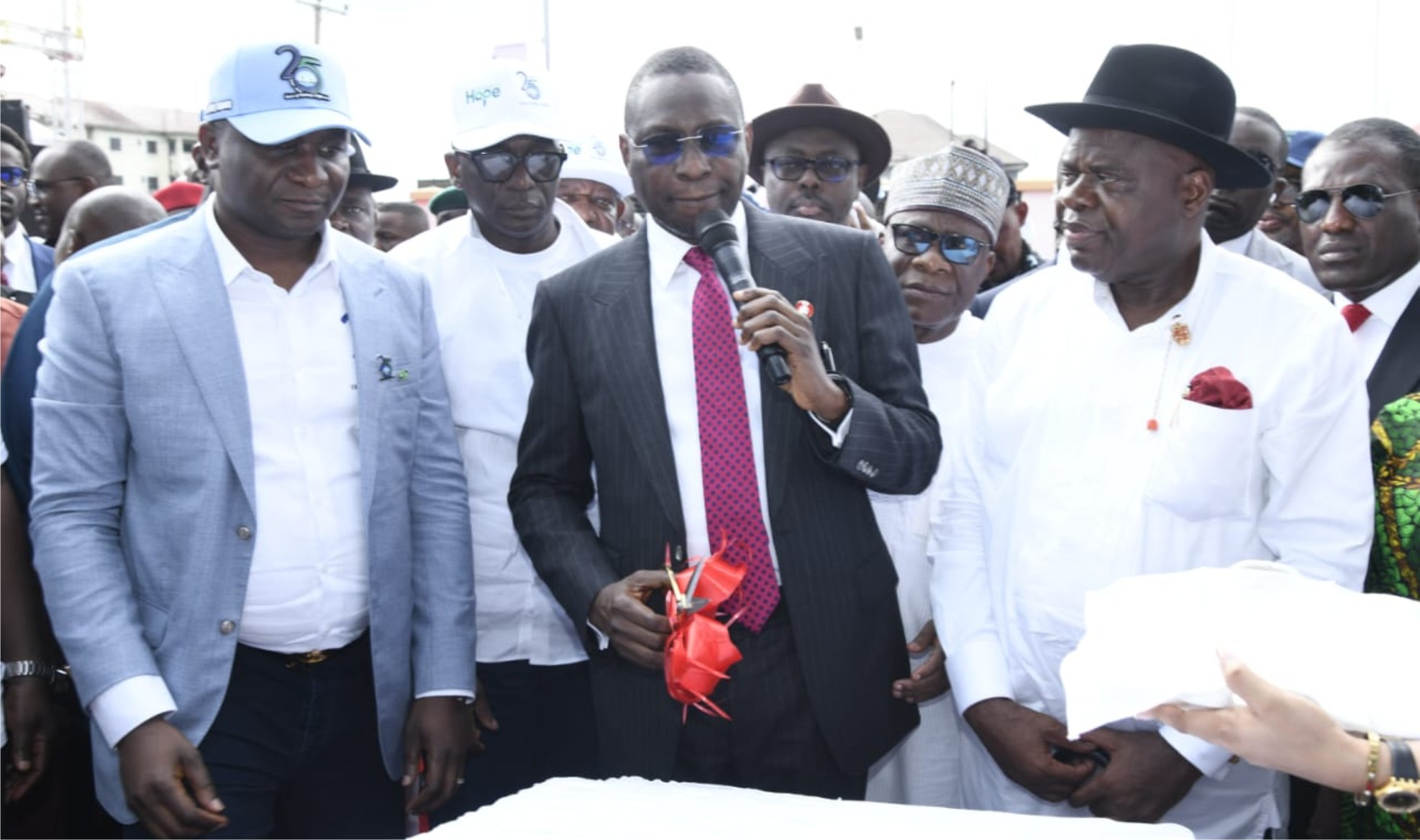
The mandate of the Niger Delta Development Commission, NDDC, is to facilitate the rapid and sustainable development of the Niger Delta region, while that of the Economic and Financial Crimes Commission, EFCC, is to investigates financial crimes and put corrupt practices in check.
Given their different roles, the idea of an alliance between the two organisations may seem far-fetched. However, with the NDDC Managing Director, Dr Samuel Ogbuku, and the EFCC Executive Chairman, Mr. Olanikpekun Olukoyede, it is not just an idea; it is a reality.
The unique collaboration between the NDDC and the EFCC has given rise to the Renewed Hope Multi-Purpose Training Centre, unveiled on Tuesday at Otuokpoti Community in Ogbia Local Government Area, Bayelsa State.
According to the NDDC Managing Director, the vast training complex was executed with funds recovered on behalf of the Commission by the EFCC.
Ogbuku explained that the Bayelsa training centre was funded through the money recovered by the EFCC and executed under a signed performance bond, ensuring transparency and impact. He noted that the facility represented one of several such centres being constructed in Delta and Rivers States. He said: “We have similar facilities currently under construction in Odi, Bayelsa State, while the ones in Delta State are being built in Patani and Ozorro and another two in Rivers State.”
He observed that the Multi-Purpose Training Centre, which was completed in record time, was a partnership between the EFCC and the NDDC, as the anti-crime agency had recovered the funds that facilitated the project’s execution.
Ogbuku observed that the facility, which could accommodate 1,000 persons, represented a significant step toward empowering local communities through skills development and inclusive growth.
The training centre’s components, which include a school, hospital, cafeteria, police post, and recreational centre, are all designed to support training, healthcare, and emergency accommodation within a single integrated complex.
Speaking at the inauguration ceremony, the EFCC Chairman assured the NDDC of the release of more recovered funds in the coming weeks.
Olukoyede described the NDDC as a “renewed and transformed government agency.” He assured that the EFCC would do everything to recover all outstanding statutory contributions due to the NDDC from oil companies.
He noted: “We have made several recoveries on behalf of the NDDC, and we will not relent in this direction. We are encouraged by the fact that the NDDC is making the Renewed Hope Agenda of the Federal Government a reality in the Niger Delta region.”
Olukoyede commended the NDDC for its institutional and policy reforms, declaring that the people of the Niger Delta will have every reason to celebrate the current leadership of the Commission. He described the NDDC as a beacon of good governance under President Bola Ahmed Tinubu.
He noted: “The Niger Delta is the goose that lays the golden egg and should not be denied the benefits of that golden egg. On our part at the EFCC, we must do everything within our power to ensure that the three per cent statutory contribution due to the NDDC is recovered and handed over to the Commission. We are going to continue supporting you.”
He said further: “Under this President, NDDC is working; good governance is being delivered. It is my delight to be part of this transformational agenda. The Renewed Hope Agenda is no longer a slogan—it is a reality. For the first time, people are identifying with what NDDC is doing.”
Olukoyede commended the NDDC, saying the Commission has refined its processes to uphold the principles of probity. This aligns with the agency’s head’s emphasis on upholding transparency and accountability in the country’s affairs.
The Chairman of the anti-crime agency confessed that his perspective on the NDDC was turned around in 2024, when the NDDC management, led by Ogbuku, paid him a courtesy visit at the EFCC’s headquarters in Abuja.
Olukoyede stated that he was impressed by the Commission’s “Rewind to Rebirth” initiative.
He declared: “The five minutes of interaction with the MD left me with a different perception of NDDC. Maybe, we will begin to see an NDDC that is a symbol of pride, accountability, transparency and able to deliver on its mandate.
“From his presentation, you can see that he is ready to bring a change, and that is the exact thing that we stand for in EFCC.”
Assuring that the EFCC would continue to assist the NDDC to achieve its mandate, he said: “We have been working with you to make recoveries; we will continue to do more.
“The collaboration is something we need to take to the next level, and with what you have put on the table I think we are ready to work with you to strengthen your systems and processes and to take the NDDC to the next level.”
In his remarks, the Minister of Niger Delta Development, Engr. Abubakar Momoh, praised the NDDC Board and Management for their unity of purpose and commitment to service delivery, stating that the level of harmony and stability within the Commission is unprecedented.
He declared: “What we are witnessing here today has never happened in the history of the NDDC. Since I assumed office as Minister, I have not been called upon to settle any crisis within the Commission. This is a testament to the teamwork between the Board and Management.”
Also speaking, the Chairman of the NDDC Governing Board, Mr. Chiedu Ebie, emphasised the human capital development focus of the two projects commissioned, noting that reforming the NDDC is an ongoing but rewarding process.
He stated: “We are moving from transaction to transformation. We are doing our best to improve not just the reputation of the NDDC, but everything that concerns the Commission. Today is about promoting and celebrating human capacity.”
Without a doubt, the Niger Delta region is confronted with ecological and environmental challenges that should, perforce, attract significant funds from the Federal Government and the oil companies operating in the region.
Sadly, this has not been so, thus limiting the capacity of the NDDC to fulfill its mandate of driving the development process and transforming the Niger Delta region into one that is “economically prosperous, socially stable, ecologically regenerative and politically peaceful.”
It is rather unfortunate that, despite the spirited efforts by successive boards and managements of the NDDC to meet the expectations of the people, their efforts have not been matched with commensurate funding.
The issue of inadequate funding is resurfacing again. Indeed, it is an inconvenient truth that will remain on the front burner until it is fully addressed.
That explains why the NDDC Managing Director highlighted the issue during interactive sessions that the Commission’s Board and Management held with the relevant Committees of the National Assembly in Abuja last year.
Ogbuku told the House of Representatives Committee on NDDC, chaired by Hon. Ibori-Suenu Erhiatake, that the Commission is owed over N2 trillion, arising from withheld funds and underpayments by both the government and the oil companies. He blamed this on non-compliance with the Act establishing the Commission.
Given the enormous impact of their activities on the environment, the oil companies are expected to be at the forefront in the critical task of urgently developing the oil basin that has suffered so much neglect in the past. It is, in fact, in their interest to develop the communities where they operate to guarantee peace, which is very necessary for them to continue with their work.
Thankfully, both the Senate and the House of Representatives promised to assist the NDDC in recovering its outstanding funds. In their various interactions with the NDDC leadership, the lawmakers expressed concern about the disregard for existing laws governing the Commission’s funding.
The Chairman of the Senate Committee on NDDC, Senator Asuquo Ekpenyong, expressed displeasure over the disregard for the law by the International Oil Companies (IOCs) and promised to call them to order.
The Senate Committee Chairman stated that proper funding would help NDDC to adequately address the sustainable development of the Niger Delta region, noting that the challenge of developing the region was enormous and that all relevant contributors to the NDDC must play their roles diligently.
Senator Ekpenyong said that in discharging its oversight functions, his committee will ensure that every contributor to NDDC pays what they owe the Commission, “because we cannot afford to toy with the development of that very important region. We owe it to the country to make sure that we improve the living conditions of the people of the region.”
It is reassuring to note that both chambers of the National Assembly are concerned about the pressing funding challenges facing the NDDC and are taking steps to address the situation.
The lawmakers understand that we have a responsibility to adequately fuel the vehicle chosen to drive the development process in the Niger Delta region.
In 2023, the House of Representatives unveiled plans to investigate the activities of International Oil Companies (IOCs) operating in the Niger Delta region, as well as the recovery of over $4 billion allegedly owed to the NDDC.
The resolution was passed sequel to the adoption of a motion sponsored by Hon. Donald Kimikanboh Ojogo, who frowned at the flagrant breach of the NDDC Act, 2000, which was established in response to heightened agitations and violent yearnings for special intervention in the oil-producing states.
He said: “The House is aware that the indebtedness of the IOCs to the NDDC had culminated in the drive by the Economic and Financial Crimes Commission (EFCC) to commence the debt recovery process.
By Ifeatu Agbu
-

 News3 days ago
RSG Targets Nine Million Residents in Mosquito Net Distribution Campaign
-

 Oil & Energy3 days ago
Aiyedatiwa Signs New Electricity Bill
-

 Maritime3 days ago
Marine Minister Commends President Tinubu On NPERA Bill Assent
-

 Oil & Energy3 days ago
NLNG Commissions Research And Innovation Centre In RSU
-

 News3 days ago
KenPoly Holds Eight Convocations, August 29
-

 News3 days ago
RSG Begins Another Phase of Projects Commissioning Today
-

 News3 days ago
RMAFC Completes Revenue Sharing Review, Proposes New Pay
-

 Maritime3 days ago
NAGAFF Petitions IGP Over Alleged Maritime Police Harassment