Connect with us

Opinion

Winning The War Against Malaria

Published

on

Malaria is one of the diseases that is prevalent not only in the coastal towns and communities, but also in the upland villages and cities. Malaria is caused by a germ that grows in the patient’s blood, and the anopheles mosquito specie is its carrier.

The New Webster’s Dictionary of the English Langauge, International edition defines malaria as an infectious, chiefly tropical disease characterised by the periodic chills and fever, splenic enlargement and anemia.

For years, international organisations, such as World Health Organisation, Red Cross and United Nations International Children Education Fund, have been trying in their distinguished ways to combat this epidemic, yet only minimal success has been recorded now, the issue at stake is how the international communities and various governments, would, without further delay, map-out modalities aimed at solving the problem  of human destruction caused by this medical vampire.

Comparatively, the recent pronouncement by the Rivers State Governor, Right Honourable Chibuike Rotimi-Amaechi on an “Anti-Mosquito Chemical Spraying Scheme” during a stakeholders meeting, held in October is visionary. Expatiating the scheme, Amaechi said that the Rivers State Government will on February, 2010 flag on “Anti-Mosquito chemical spraying programme” for the entire state.

This vision by the state chief executive shows the high level of readiness to combat this deadly disease. Therefore, private partnership with government is as well needed on the fight to eradicate mosquitoes in our society.

The state government anti-mosquito chemical spraying scheme, if pursued vigoriously will as well, affect the genetic growth of all the species of mosquitoes. On this note, the government should vigoriously re-awaken the epidemiological unit of the state Ministry of Health through the provision of the necessary implement for proficiency. Particularly, the Public Health Enlightenment Department should be adequately funded to enable the unit perform credibly, considering the amphibious nature of Rivers State.

Public enlightenment campaigns should be carried out on ways to prevent the spread of malaria. And because of the diversity in terrians of the state, the mode of enlightenment for the riverine areas should be different from the upland communities.

In a nutshell, the most effective way to prevent mosquitoes from breeding, is generally the sanitisation of the immediate environment and surroundings.

This can be achieved by regularly clearing of the surroundings, draining the stagnant water, frequent emptying of water inside buckets, jars and coconut shells, within our environment.

Meanwhile, to make the rural areas feel the impact of the proposed anti-mosquito chemical spraying programme, the various public health units of all the health centres of the twenty-three local government areas of Rivers State should be re-invigorated by the government.

Again, since Rivers State is a multi-lingual state, where people from other ethnic nationalities are residing, it is imperative to recruit the services of Youth Corp members from other parts of the country as members of the enlightenment team to serve as interpreters. This measure will not only ensure proper assimilation of the subject matter, but will also fulfill the purpose of the establishment.

There is also the need for the State House of Assembly to pass a bill on Rivers State Anti-Mosquito Chemical Spraying into law to foster the legality of the scheme, while the government should make the sanitary inspectors more pro-active in their statutory functions, so that the anti-mosquito chemical spraying programme will become a reality in the entire state.

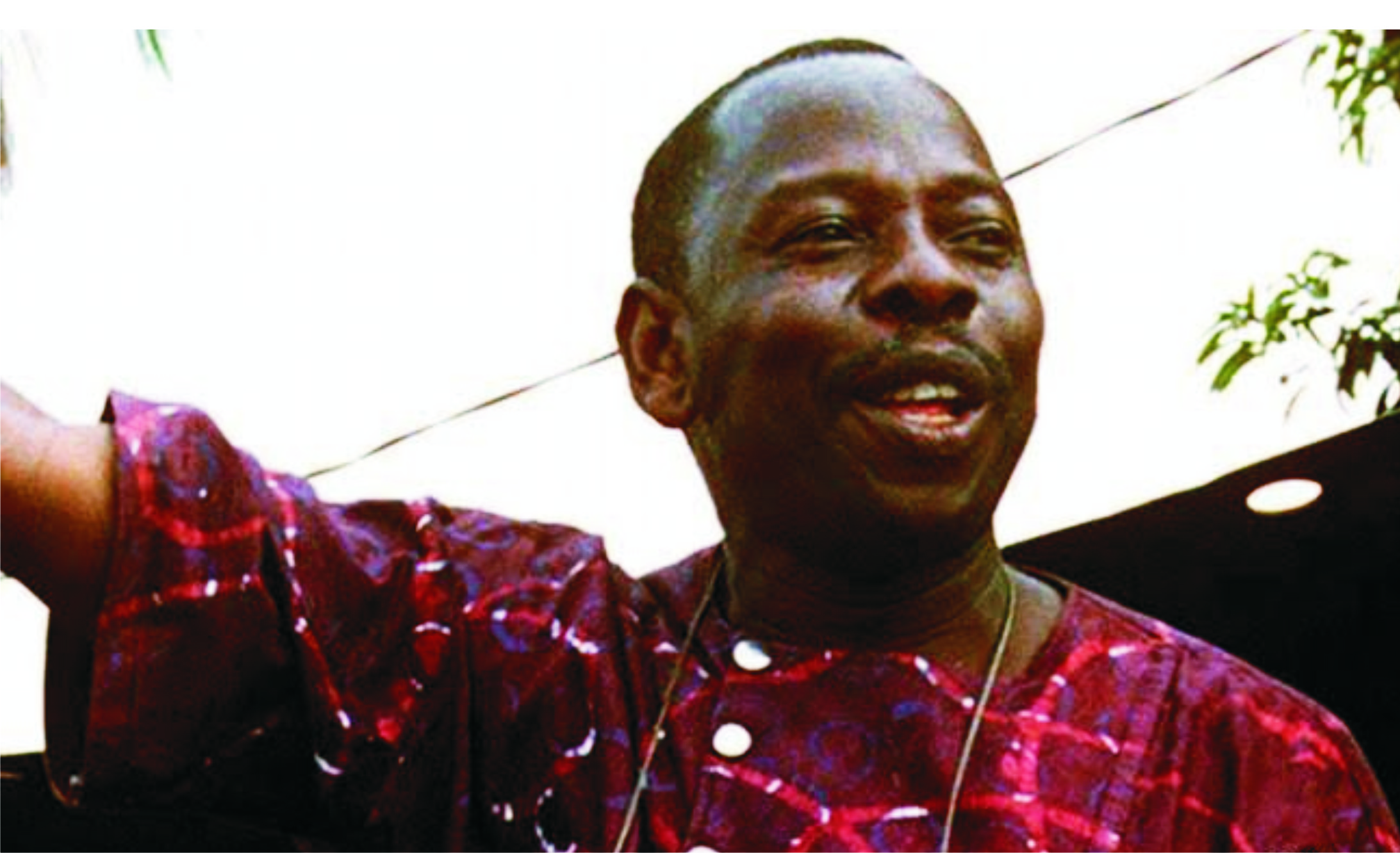
Abije is of the Radio Rivers


Roy Godpower Abije

Continue Reading

Opinion

Flamingos’ Triumph, Nigeria’s Responsibility

Published

on

Quote: “The Flamingos have conquered the world; Nigeria must now rise to its responsibility of nurturing the next generation of champions.”

Sometimes, sporting victories go far beyond the excitement of winning a trophy. They become defining moments in a nation’s history, inspiring generations and reminding people of what can be achieved through talent, determination, discipline, and teamwork. The historic triumph of the nation’s U-17 women’s football team, the Flamingos, at the 2026 FIFA U-17 Women’s World Cup in Morocco is one such watershed moment. To the young Nigerian ladies who have brought honour and international recognition to our country: congratulations. You have made Nigeria proud, given Africa a historic milestone to celebrate, and demonstrated that our young girls can compete successfully with the very best in the world By defeating Japan 2–1 in the final on November 7, 2026, the Flamingos became the first African country to win the FIFA U-17 Women’s World Cup.

More significantly, they became the first African women’s national team to win a FIFA World Cup title at any level. This extraordinary achievement deserves far more than a passing celebration. The final against Japan demonstrated the character and composure that carried the Nigerian team to the summit of world football. Nigeria took the lead in the 39th minute through Awawu Bashiru. Just two minutes into the second half, Oluebube Umejiaku doubled the advantage with an impressive finish. Japan refused to surrender, reducing the deficit through Fuki Ito in the 80th minute following a corner kick, but the Flamingos remained resolute and held on until the final whistle. It was a moment of pure joy not only for Nigeria, but for the entire African continent.

Umejiaku deserves special commendation for her outstanding performance throughout the competition, earning the prestigious Golden Ball award as the tournament’s best player. Her composure, attacking intelligence, and ability to deliver when it mattered most demonstrated the enormous potential within Nigeria’s young footballers. However, this victory was not the work of a single individual. It was the product of collective effort. The depth of talent in the squad was highlighted by five different Nigerian players receiving Player of the Match honours across the team’s six victories. Oluwakemi Adegbuyi earned recognition following the two-zero group stage win over Puerto Rico, while Kanyinsola Yusuf was named top player after the three-one win against North Korea.

Umejiaku received the award in both the round of sixteen victory against Mexico and the final against Japan. Favour Nkwocha was honored after the one-zero quarter-final victory over Venezuela, and Awawu Bashiru claimed hers following a dynamic two-goal performance in the three-one semi-final defeat of Brazil. These performances underline an important lesson: successful teams are built on collective strength rather than reliance on one star player. The magnitude of this achievement becomes even clearer when viewed against the history of the competition. Since the tournament’s inception in New Zealand in 2008, the trophy had been dominated by a small group of global powerhouses, including North Korea with four titles, Spain with two, and South Korea, France, and Japan with one title each.

Nigeria has now broken into this elite circle, adding a new name to the list of champions and ending Africa’s long wait for the trophy. For a country that has enjoyed considerable success in men’s youth football—where the male U-17 team has claimed five titles across past decades—this victory is particularly significant. With the Flamingos becoming world champions, Nigeria has proven its strength across both male and female youth football, extending the country’s record of winning at least one FIFA U-17 World Cup title across five consecutive decades, from the 1980s to the 2020s. Beyond statistics, there is a far more vital message in the Flamingos’ success. It reminds us that Nigerian girls deserve opportunities, encouragement, and real investment to develop their talents.

For too long, young girls in many parts of our society have had to contend with cultural expectations and social limitations that discourage them from pursuing careers in sports. Some parents still regard football as unsuitable for their daughters, while others prioritize the sporting development of boys. The Flamingos have provided a compelling reason why such attitudes must change. Given the right environment, training, and opportunities, Nigerian girls can compete at the highest international level and bring glory home. The Federal Government and the Nigerian Football Federation must not allow the excitement surrounding this victory to fade without concrete action.  We must commend President Bola Tinubu for the cash rewarding each player with a savings certificate rewards for the technical crew and the players.

But beyond the reward, this victory should mark the beginning of a sustainable programme for women’s football development rather than an isolated success celebrated only when trophies are won. Investment in modern training facilities, qualified coaches, grassroots competitions, medical support, and international exposure is necessary to sustain momentum. The football authorities must ensure these young champions have a clear, supportive pathway into the U-20 national team, the Super Falcons, and professional football. At the same time, we must remember that these players are still young. Their formal education, welfare, and personal development must not be sacrificed in the pursuit of sporting success; football should open doors of opportunity for them, not deprive them of other possibilities in life.

As Nigerians celebrate this historic achievement, we must recognise that the Flamingos have become ambassadors of hope for young African girls. They have shown that the continent can challenge the traditional dominance of other regions in women’s football. Congratulations once again to the Flamingos and their coaching staff for writing their names in the history books and lifting the spirit of a nation. The Flamingos have conquered the world; now, let Nigeria rise to the responsibility of nurturing the next generation of champions.

By;  Calista Ezeaku


Continue Reading

Opinion

Making Public Toilets Truly Convenient

Published

on

Quote: “A public convenience that is inaccessible, filthy, unsafe or without water is public inconvenience in disguise.”
The expression “public convenience” sounds reassuring. Yet, in many parts of Nigeria, the reality behind the familiar signboard is anything but convenient. What should offer relief often becomes a source of embarrassment, discomfort and health concern. Across markets, motor parks, beaches, shopping areas and other busy public spaces, access to clean and functional toilets remains a challenge. Some facilities are poorly maintained; others have no running water, soap, proper doors or reliable lighting. Women, children, older persons and persons with disabilities face greater difficulties. This raises a simple but important question: if a public toilet cannot provide basic dignity and hygiene, in what sense is it a public convenience?
The problem is not merely the absence of toilet structures. It is also the failure to maintain them. A local government or private operator may construct a facility and announce its opening with fanfare, but the real test begins after commissioning. Who cleans it? Who supplies water? Who repairs broken fittings? Who ensures that users can enter safely and leave without fear? Without clear answers, even a newly built toilet can quickly deteriorate. Public toilets are essential infrastructure, not decorative additions to a town-planning project. Drivers, traders, commuters and street vendors cannot return home whenever they need a toilet. When suitable facilities are unavailable, some resort to open defecation or urination in drains, vacant plots, bushes and corners of buildings.
Such practices degrade the environment and expose communities to health risks. The consequences extend beyond unpleasant odours. Poor sanitation can contaminate water and food, encourage the spread of infectious diseases and create breeding conditions for flies and other pests. Women and girls may also restrict their movement or avoid drinking water when they cannot find a safe toilet. This is an issue of public health, safety and human dignity. Rivers State, with its busy urban centres, markets, waterfront communities and transport routes, has particular reason to take this matter seriously. Yet development cannot be measured only by flyovers, roads, buildings and streetlights. It must also be measured by the availability of basic facilities that make everyday life safer and more comfortable.
Government at the local and state levels should therefore treat public sanitation as a practical service-delivery responsibility. Every major market, motor park, public beach, recreational centre and high-traffic public space should have accessible toilets, with provision for women, men, children and persons with disabilities. Facilities should have water, handwashing points, adequate ventilation, lighting, secure doors and proper waste-disposal arrangements. Construction alone will not solve the problem. Authorities should establish maintenance plans, assign responsibility to identifiable operators and inspect facilities regularly. Where private operators are engaged, agreements should specify standards, opening hours, fees and cleaning schedules.
Any charge imposed on users should be reasonable, transparent and accompanied by visible evidence of service. Paying to use a toilet should not mean paying for the privilege of entering a filthy room. There is also a place for public-private partnerships and community participation. Market associations, transport unions, business owners and residents can help monitor facilities and report faults. Government must not use community participation to abandon its responsibility. Regulation, standards and enforcement remain necessary. Public education is equally important. Users must stop damaging fittings, littering toilets or treating public property as nobody’s responsibility. A clean facility can become unusable within days if people misuse it. Sanitation is a shared obligation: government must provide and maintain the infrastructure, operators must manage it properly, and members of the public must use it responsibly.
The authorities should also make sanitation part of routine urban planning. New markets, parks, motor terminals and public gathering places should not be approved without adequate toilet facilities and a credible maintenance arrangement. Existing facilities should be mapped, assessed and rehabilitated where necessary. Publishing inspection results and providing complaint channels would encourage operators to maintain standards. Ultimately, the measure of a civilised society is not only found in its grand buildings or impressive public projects. It is also reflected in how it treats the ordinary needs of ordinary people. Access to a clean toilet should not depend on knowing someone, buying something at a hotel or restaurant, or searching desperately for a secluded corner.
More importantly, sanitation authorities should establish minimum operating standards for public conveniences and ensure that operators comply with them. Such standards should cover cleanliness, water supply, waste disposal, accessibility, personal safety and the frequency of maintenance. Regular inspections should be backed by meaningful sanctions against operators who neglect their responsibilities. Facilities that consistently fail to meet prescribed standards should be shut down for rehabilitation rather than allowed to endanger public health. Government should also provide accessible channels through which users can report unsatisfactory conditions without fear of intimidation or reprisal. Special attention must be given to the safety and privacy of women and girls, particularly in public places that remain busy after dark.
Separate and clearly identified facilities, functional locks, adequate lighting and, where necessary, the presence of attendants can help reduce the risk of harassment and other forms of abuse. Provision should also be made for sanitary waste disposal and facilities that accommodate the needs of nursing mothers, young children, older persons and people living with disabilities. These are not extravagant demands but essential considerations in designing public infrastructure that serves everyone.
The phrase “public convenience” must mean what it says. A facility that denies people cleanliness, safety and dignity is not convenient simply because it has been labelled public.
Government should make functional toilets a visible part of its sanitation agenda, while citizens should protect and respect them. The call, therefore, is for less ceremony around toilet projects and more commitment to their everyday upkeep. Public conveniences must become convenient in reality, not merely in name. When nature calls, people should find relief not another public problem.
By: Sylvia ThankGod-Amadi
Continue Reading

Opinion

Ken Saro-Wiwa’s Unfinished Struggle (I)

Published

on

On November 10, 1995, the Nigerian military government of General Sani Abacha executed Ken Saro-Wiwa and eight other Ogoni leaders after a deeply controversial trial. Their deaths marked one of the darkest chapters in Nigeria’s history. At a time when fear silenced citizens and sycophancy flourished around military power, Saro-Wiwa chose to confront tyranny. Many Nigerians retreated into silence, while others praised the regime to secure favour. He knew the risks, yet refused to abandon a people whose land had been devastated by oil exploration and whose lives remained trapped in poverty. His courage arose from the conviction that public responsibility sometimes demands resistance to authority. Saro-Wiwa understood that speaking against a military government could lead to imprisonment or death.
Nonetheless, he believed the suffering of the Ogoni people demanded a courageous response. While oil was extracted from their land, they were left with polluted rivers, damaged farmland, declining livelihoods and an environment hostile to human survival. Fishing grounds and sources of livelihood were threatened, while the people struggled to secure basic amenities. The wealth beneath their soil brought neither adequate development nor a fair share of national resources. For him, silence in the face of injustice would have amounted to complicity. Through the Movement for the Survival of the Ogoni People (MOSOP), he organised a peaceful campaign that took the Ogoni question to the international community. MOSOP gave ordinary people an organised platform through which to express their grievances and insist on recognition.
The Ogoni Bill of Rights, presented to the Federal Government in 1990, demanded political autonomy, economic justice, environmental protection and control over the people’s resources. The campaign exposed the human and ecological costs of oil operations, particularly those associated with Shell, and challenged the apparent alliance between corporate interests and an unresponsive State. The Ogoni struggle became a defining expression of minority rights and environmental justice in Nigeria and Africa. Saro-Wiwa’s writings and mobilisation drew attention to communities treated as expendable because of their limited population and political influence. He argued that numerical strength should never determine a people’s value or rights.
A minority community does not become less deserving of justice because it cannot command electoral numbers or political power. In Nigeria, every ethnic group deserves dignity, protection and a fair opportunity to benefit from the commonwealth. Rather than respond to peaceful agitation with dialogue, the Abacha regime resorted to repression. Ogoni leaders were harassed, detained and killed; others fled into exile. The crisis intensified after four Ogoni chiefs were killed in May 1994. Saro-Wiwa and other MOSOP leaders were arrested, tried by a special tribunal and executed despite international appeals for clemency and serious concerns about the trial’s fairness. The executions drew worldwide condemnation and intensified scrutiny of Nigeria’s human-rights record and oil companies in the Niger Delta.
They demonstrated the danger of using State institutions to suppress peaceful demands. The proceedings remain a reminder of the need for judicial independence and due process. Saro-Wiwa’s courage rested on the conviction that justice must be pursued despite the cost. His method combined non-violent resistance, public education and grassroots organisation. His struggle recalled the civil-rights campaign of Martin Luther King Jr. and the power of peaceful mobilisation against injustice. Saro-Wiwa linked environmental degradation to political exclusion, economic exploitation and the denial of democratic rights. Oil-producing communities, he insisted, should not remain zones from which wealth is removed to develop other parts of the country.
Their people must benefit through roads, schools, healthcare, jobs and clean water. Resource extraction carries a duty to protect host communities. His argument extended to the structure of the Nigerian federation. He challenged a revenue-allocation system that made oil-producing communities bear the environmental and social costs of extraction without commensurate benefits. Like advocates of fiscal federalism, he believed resources should be managed and shared equitably. He envisaged a society in which no community would be disadvantaged by its size, ethnicity, political affiliation, culture or religion. His vision was a country bound together by justice and equal citizenship. Saro-Wiwa was also a gifted writer, dramatist and public intellectual.
Through books, essays, plays and television, he documented Nigerian society’s contradictions and challenged abuses of power. His popular television series, Basi and Company, demonstrated his creative range, while his leadership of the Association of Nigerian Authors encouraged writers to engage national questions. He believed literature should not be detached from society’s struggles. His pen exposed environmental injustice, political repression and the dangers of silencing courageous voices. He used storytelling, satire and drama to shape public consciousness and expose social contradictions. His literary achievements gave his activism wider reach and made the Ogoni experience part of national conversation. His commitment to the Ogoni people extended beyond the oil question.
During the Civil War, he worked to protect his vulnerable community. He urged younger generations to reject subservience and complacency and pursue change through lawful, peaceful means. Citizens, he believed, must not surrender their responsibility to challenge wrong doing. An injury to one community threatens the rights and security of all. The return to democratic government in 1999 and the establishment of the Niger Delta Development Commission, the Ministry of Niger Delta Affairs and the Hydrocarbon Pollution Remediation Project (HYPREP) are among developments that have kept the region’s demands in public view. Saro-Wiwa did not create these institutions, but his movement helped expose the urgency of intervention and sustain pressure for redress.
His death made it harder to ignore the Niger Delta’s environmental and political grievances. Yet, interventionist institutions do not prove that the original demands have been met. Their effectiveness depends on competent leadership, transparent spending, measurable outcomes and community participation. Yet, thirty-one years after his execution, the central concerns of the Ogoni struggle remain unresolved. The HYPREP-led clean-up has offered hope, but many residents await meaningful improvements. Questions persist about the programme’s pace, quality and transparency, and whether its benefits reach ordinary people. A clean-up should be judged not by ceremonies or contracts, but by restored land and waterways, safe drinking water, improved livelihoods and better public health.
It must include long-term monitoring to ensure treated sites remain safe. Residents deserve information about contamination, remediation methods and completion timelines. Reports that water projects in Gwara and Ebubu Communities, in Khana and Eleme Local Government Areas respectively, failed weeks after commissioning have raised further concerns. If confirmed, the failures would indicate weaknesses in supervision, procurement and quality control.
To be continued in our next edition.

Taneh Beemene

Continue Reading

Trending