
Nation
THE STATES

Adamawa
The Lamido of Adamawa, Alhaji Barkindo Mustapha, has
given Abdul’Aziz Nyako, the eldest son of Governor. Murala Nyako the traditional title of “Sarkin Matasa”, meaning the leader of youths in Adamawa.
Speaking at the ceremony in his palace recently in Yola, Barkindo said the title was given to Nyako based on his contribution to youth mobilisation and development in the state.
The traditional ruler said that Nyako was expected to continue to mobilise youths in the area to realise their potential for the socio-economic development of the emirate.
He added that the youth leader would also serve as security adviser to the emirate.
Barkindo, also made his son, Alhaji Mohammed Barkindo, “Kauran Adamawa” at the ceremony, and called on the new title holders to see their recognition as a challenge to live up to the expectation of the emirate.
FCT
The FCT Police Command has arrested 60 commercial mo
torcycle operators for operating within the city centre.
The Commissioner of Police in charge of the FCT, Mr Aderenle Shinaba, who led the operation, said the suspects violated the ban on operating in the metropolis.
Shinaba said that 50 of the operators were arrested at Area 1, while 10 were picked up at AYA roundabout in Asokoro.
The commissioner said the raid was part of efforts to rid the city of hoodlums and criminals during the yuletide.
Gombe
The Deputy Commissioner of Police, Gombe command, Mr
Nyat Jatau, has urged security agencies to bury their differences and unite to promote peace and security of lives and property.
He made the call on Saturday during an end-of-year party for security agents working in Gombe State.
Jatau noted that without cooperation, unity and the spirit of understanding, individual efforts aimed at ensuring law and order would be fruitless.
He said the Federal Government established the various security agencies and paramilitary organisations to ensure division of labour.
Jigawa
Governor Sule Lamido of Jigawa State last Saturday in
Hadejia commended traditional rulers for ensuring peaceful co-existence among the people of the state.
Lamido made the commendation at the celebration of the 10th anniversary on the throne of the Emir of Hadejia, Alhaji Adamu Maje.
He said that the traditional institution had been playing significant roles in maintaining peace and stability in the state.
“Our monarchs have been supportive and cooperative with my government for the benefit of our people,” he said.
Kano
The Ohanaeze Ndigbo, Kano State chapter, has called on
Christians to use this Christmas season to pray for peace and development in the country in 2013.
This is contained in a statement issued on Saturday in Kano by the president of the association, Chief Tobias Idika.
“We felicitate with Christians all over the world in celebrating the birth of Jesus Christ.
“We call on all Christians and, indeed, Nigerians to use this season to reflect on the series of crises and calamities that befell Nigeria in 2012,’’ the statement stated.
Kaduna
A lecturer, Mr Usman Alhassan, has called on President
Goodluck Jonathan to assent to the National Bio-safety bill passed by the Senate.
Alhassan, who lectures at the Institute for Agriculture Research (IAR), Zaria, made the call in an interview with newsmen in Zaria, Kaduna State.
The bill provides a framework to ensure the development and use of Genetically Modified Organisms (GMOs) do not negatively affect plants, animals and human health or the environment.
It would be recalled that recalls that the senate had on June 1, 2012, agreed that the bill should be harmonised with a version passed by the House of Representatives in July 2009 and sent to the president for assent.
Kebbi
The Legal Aid Council in Kebbi State has donated
relief materials to the state’s remand home to support the inmates.
The state coordinator of the council, Salisu Alhassan, told newsmen in Birnin Kebbi that the materials included, mattresses, blankets, soap and provisions.
He said the decision to donate the materials to the remand home was to ensure comfort and to give the inmates a sense of belonging.
He said the council would ensure improvement on the donation with the collaboration of other stakeholders.
Kwara
The Kwara State Government in Ilorin has reaf-
firmed its determination to develop rural communities to curb rural-urban migration among the people.
The Secretary to the State Government, Alhaji Isiaka Gold made the reaffirmation while declaring open a workshop organised for liaison officers and youth empowerment coordinators from the 16 local governments of the state.
The workshop was at the instance of the Special Assistant to the State Governor on Intergovernmental Affairs, Alhaji Aro Yahya.
Gold said the government had perfected arrangements to construct more roads in rural areas, provide portable water, electricity and other social amenities and infrastructure for the people.
Niger
The Chief of Army Staff, Lt.-Gen. Azubuike
Ihejirika says the Nigerian Army would channel resources toward providing first class training for its personnel to meet contemporary challenges.
Ihejirika, made the statement during the graduation ceremony of the 8th Basic Counter Terrorism Training conducted by the Nigerian Army Training Centre, Kontagora, for junior officers.
He said the training would enhance the capacity of the personnel to discharge their professional duties.
He explained that the training was organised for junior officers because of the deficiency in professional conduct bordering on indiscipline, negligence in performance of duties and illegal duties.
Ondo
The Commissioner of Police in Ondo State, Mr
Danladi Mshelbuala, has assured the people of the state of adequate security before, during and after the yuletide.
Mshelbuala, who gave the assurance in Akure told newsmen that the people had no cause to express fear of insecurity as they celebrate the yuletide.
He advised the people go about their lawful activities during the period.
He said the police had put in some security measures in compliance with the directives of the Inspector-General of Police to check criminal activities in the country during the celebrations.
Osun
Governor Rauf Aregbesola of Osun State says peace
ful coexistence among Nigerians irrespective of their religion and ethnic groups is vital for national development.
Aregbesola who made this known on Saturday at the grand finale of the 2012 Iwude festival in Ilesha, urged Nigerians to live in peace and harmony for the country to witness rapid development.
He expressed regrets over the insecurity and chaos in some parts of the country and called on community, religious leaders and all stakeholders in the affairs of the nation to preach peace.
He, however, commended the Yorubas for allowing peace to reign in the region, urging the people to continue to imbibe the spirit of tolerance and love for one another.
Plateau
The Special Task Force (STF) maintaining peace in
Plateau State, says it has put in place some security measures to ensure hitch-free Christmas and New Year celebrations in the state.
In a statement by its media officer, Capt. Salisu Mustapha, the task force said security operatives would be deployed to churches and strategic areas throughout the period.
“STF would increase the temporary checkpoints throughout the festive period as well as intensify vehicular search at checkpoints,’’ it said.
It said vehicles had been banned from entering premises of recreation centres during the period, adding that STF men would be posted to the centres to complement efforts of local security operatives.



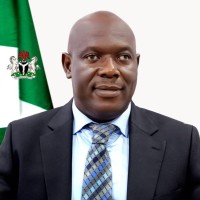
The Hydrocarbon Pollution Remediation Project (HYPREP) has commemorated the 15th anniversary of the release of the United Nations Environment Programme (UNEP) Environmental Assessment Report on Ogoniland, reaffirming its commitment to restoring the environment and improving the livelihoods of affected communities.
In a statement signed by the Project Coordinator, Prof Nenibarini Zabbey, to commemorate the anniversary, HYPREP described the anniversary as a significant milestone in Nigeria’s environmental restoration efforts, noting that the project has made remarkable progress in implementing the recommendations of the landmark UNEP report released on August 4, 2011.
The UNEP report had revealed extensive oil pollution across Ogoniland, severe environmental degradation, and serious public health risks resulting from decades of petroleum operations. It also recommended an initial $1 billion fund to commence the cleanup of the affected communities.
According to HYPREP, the Federal Government formally launched the Ogoni clean-up in 2016, while the Project Coordination Office was established in 2017 to drive the implementation of UNEP’s recommendations.
Zabbey said the current administration has continued to prioritise the project under the Renewed Hope Agenda.
Providing an update on the cleanup, the Project Coordinator disclosed that 30 of the 65 contaminated sites identified by UNEP have been fully remediated, while work is ongoing at several medium- and high-risk locations. It also stated that more than 1.5 million mangrove seedlings have been planted as part of what it described as the world’s largest restoration of oil-degraded mangroves, with over 1,000 hectares of shoreline already rehabilitated.
Zabbey further revealed that 49 Ogoni communities have been connected to potable water schemes through multiple water projects and booster stations aimed at providing safe drinking water across the region.
In the health sector, he said the 100-bed Ogoni Specialist Hospital in Kpite and the 43-bed Cottage Hospital in Buan are nearing completion, adding that several existing health facilities have been upgraded with modern medical equipment, while five ambulances have been donated to improve emergency healthcare services. The Project Coordinator also disclosed that a three-year human health biomonitoring study is being conducted in collaboration with the World Health Organization’s International Agency for Research on Cancer (IARC).
On economic empowerment, Zabbey stated that the Project has created more than 8,000 direct jobs and trained thousands of Ogoni youths and women in various vocational and technical skills, including software development, cybersecurity, aviation, commercial diving, seafaring, mechatronics, and creative arts. The project also reported awarding scholarships to more than 1,000 students, providing grants to small businesses, and supporting persons living with special needs through skills acquisition programmes.
The statement further highlighted ongoing legacy projects, including the Ogoni Power Project and the Centre of Excellence for Environmental Restoration, which it said is about 96 per cent complete. HYPREP also welcomed the recent designation of the Ogoni Wetland as a Ramsar Site of International Importance and pledged to continue promoting biodiversity conservation and sustainable management of the ecosystem.
Marking the anniversary, Zabbey said the progress achieved over the past 15 years demonstrates the collective commitment of government, development partners, stakeholders, and local communities to restoring Ogoniland. He called for renewed collaboration to sustain the cleanup effort, promote environmental sustainability, and support the long-term development of the region. 3
-

 News2 days ago
RSG Targets Nine Million Residents in Mosquito Net Distribution Campaign
-

 Oil & Energy2 days ago
Aiyedatiwa Signs New Electricity Bill
-

 Maritime2 days ago
Marine Minister Commends President Tinubu On NPERA Bill Assent
-

 Oil & Energy2 days ago
NLNG Commissions Research And Innovation Centre In RSU
-

 News2 days ago
KenPoly Holds Eight Convocations, August 29
-

 News2 days ago
RMAFC Completes Revenue Sharing Review, Proposes New Pay
-

 News2 days ago
RSG Begins Another Phase of Projects Commissioning Today
-

 Maritime2 days ago
NAGAFF Petitions IGP Over Alleged Maritime Police Harassment