
Nation
THE STATES

Bauchi
The Bauchi Commissioner for Information, Mr Mohammed Damina, has said that the government plans to spend N300 million to digitalise two state-own media organisations. Damina made this known in an interview in Bauchi on Monday.
He said that a team from the Nigerian Broadcasting Commission (NBC) had earlier visited the stations and gave professional recommendations on their digitalisation.
“Submissions were made to Gov. Isa Yuguda on the two stations – Bauchi State Television (BATV) and Bauchi Radio Corporation (BRC). “Right now we are waiting for his approval as soon as funds are made available to the ministry, we will embark on the project,’’ he said.
Benue
The police in Benue have arraigned two men, Thaddeaus Enemani, and Abubakar Adamu before a Makurdi Magistrates’ Court for alleged house breaking and theft. Police prosecutor Daniel Swende told the court that one Timothy Anima, residing behind Modern Market Makurdi, reported the case to the police.
He said the complainant woke up on Nov. 9 to discover that his motorcycle valued at N84,000, which he parked at his residence was missing.
Swende said that during investigation, Enemani of the same address and Adamu of No 39 Udeni Street, North Bank, Makurdi, were arrested and the motorcycle was recovered.
He said Enemani confessed to committing the crime with Adamu, but the accused pleaded not guilty to the charges. Prosecution said investigation into the matter was still in progress and asked the court for another date for the case to be mentioned. He said the offence contravened the provisions of Sections 97(2), 353 and 288 of the Penal Code. .
FCT
The Minister of State for Finance, Dr Yerima Ngama, says government is ready to present a uniform chart of accounts and budget to the three tiers of government for deliberation.
Declaring open a three-day workshop on the roadmap for the implementation of International Public Sector Accounting Standards (IPSAS), he said that during the workshop, a draft of the National Standardised Uniform Chart of Accounts, Budget and the General Purpose Financial Statements would be exposed to participants.
Ngama said that the uniform chart would assist in Peer Review Mechanism among the three tiers of government and bring about integrity in the public sector financial reports.
Gombe
Governor Ibrahim Dankwambo of Gombe State, said his administration had approved the restructuring of the state’s board of revenue to enhance its activities.
Speaking at the North-East Sensitisation Programme on the Tax-payer Identification Number (TIN) in Gombe, the governor said that the state was poised to increase its revenue generation capacity.
The governor, who was represented by his deputy, Mr Tha’anda Rubainu, said that his administration had signed the state’s Fiscal Responsibility Bill into law.
“The new state’s fiscal law is aimed at improving efficiency of fiscal management especially in the areas of allocation and management of public expenditure. “We want to improve on our revenue collection strategies, manage and control our debt and institute transparency in all our fiscal matters.
Jigawe
The National Agency for Food and Drug Administration and Control (NAFDAC) has embarked on market surveillance in Jigawa to check the circulation of unwholesome water in the state.
The NAFDAC Director in Jigawa State, Mr Kenneth Azikwe, said in an interview in Dutse that the agency had deployed its surveillance teams to its six zonal offices in the state.
Azikwe said that the agency was sensitising producers to ensure proper labelling of their products to guard against adulteration.
The director said that the agency had registered all producers of sachet water in the state and put in place an effective mechanism to ensure compliance with regulations.
“We are geared to see that producers of sachet water maintain good production practices. “We are also calling on people to reject any product or sachet water without NAFDAC registration number,” he said.
Kaduna
The Katsina State Government, says it has engaged 5,000 women to plant Moringa across the state. Moringa is locally known as Zogale.
The Special Adviser to Gov. Ibrahim Shema on Economic Matters, Alhaji Garba Matazu, told newsmen on Tuesday in Katsina that the initiative was part of the government’s women empowerment programme.
He said the women were selected from across the 34 local government areas and were empowered to raise nurseries with a view to setting up plantations in the future.
Matazu said the state plans to export the moringa leaves and oil, which have nutritional and medicinal values.
Kano
The Police Command in Kano State, has warned against the use of knockout and other fireworks in the state.
The warning was issued by the Divisional Police Officer (DPO) in Charge of Sabon- Gari, Mr Shuaibu Bello, a Chief Superintendent of Police, during a stakeholders meeting in Kano.
Bello said the command had observed the rampant use of knockout and fireworks during festive periods in the state.
He advised parents, guardians, religious leaders and ward heads, to caution their children and followers against the trend as the law banning fireworks and knockout is still in force.
The DPO warned that the command would not hesitate to deal with anyone caught.
Kebbi
Kebbi State University of Science and Technology, Aliero, will spend about N95.7million on fresh and reaccreditation of courses.
The Vice Chancellor, Prof. Abdullahi Zuru, said in, Kebbi, that the National Universities Commission (NUC) would conduct the exercise on Nov. 25.
“The accreditation of courses in universities is a national issue and we cannot be an exception. With the release of funds from the State Government, we hope to fulfil all requirements for sustained academic and administrative activities,” he said. He said 10 programmes would be subjected to the re-accreditation process, while four courses would be accredited for the first time.
Zuru commended the State Government for releasing the funds. He said the money had enabled the institution to rehabilitate its infrastructure as well as improve facilities for academic and administrative work.
Kwara
A former Speaker of Kwara State House of Assembly, Alhaji Babatunde Mohammed has canvassed first line charge for the Houses of Assembly and Local Government Councils in Nigeria.
He said on Monday that the measure would further deepen democracy and promote good governance.
The former speaker said that the Houses of Assembly under the present dispensation needed to discharge their duties diligently.
Mohammed also called for the abolition of State/ Local Government Joint Accounts as it will accelerate development at the grassroots. He said that the present dispensation had caused some drawbacks on governance at the local government level, noting that non-performance was inevitable.
Ogun
The Awujale of Ijebuland, Oba Sikiru Adetona, has called for constitutional role for traditional rulers as well as the creation of Ijebu State. Adetona made the call during a presentation at the public hearing on the review of the 1999 Constitution in East Ogun Senatorial District, held in Ijebu-Ode, Ogun. Awujale said the current constitution had no role for traditional institution, in spite of its important and relevant contributions to the development of the nation. The monarch said before the arrival of the colonial masters, traditional rulers governed and administered their kingdoms and communities. “There is therefore need for a defined role for traditional rulers in our constitution. “This should include but not limited to their respective state and local government areas, without prejudice to whatever national roles they may be invited to play in the interest of the nation.“
Oyo
The Country Manager of Harvest Plus in Nigeria, said Mr Paul Ilona said the organization planned to reach about 1.8 million Nigerian households by 2016 with fortified Vitamin A maize. Ilona in Ibadan on Monday that the programme would reach 25,000 households in the first year.
He said that the plan was to multiply intensively the bio-fortified maize crops so that by 2014, many households would be reached. “Before the end of phase two of our bio-fortification programme, which will continue till 2018, we want to reach out to about eight million Nigerians who should be planting bio-fortified crops. “For now, our areas of focus in Nigeria are cassava and maize, but in the near future we will bring fortified millet.” Ilona said. He said the fortified maize would also complement the nutrients in the diet of the rural poor.



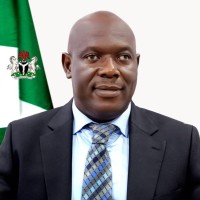
The Hydrocarbon Pollution Remediation Project (HYPREP) has commemorated the 15th anniversary of the release of the United Nations Environment Programme (UNEP) Environmental Assessment Report on Ogoniland, reaffirming its commitment to restoring the environment and improving the livelihoods of affected communities.
In a statement signed by the Project Coordinator, Prof Nenibarini Zabbey, to commemorate the anniversary, HYPREP described the anniversary as a significant milestone in Nigeria’s environmental restoration efforts, noting that the project has made remarkable progress in implementing the recommendations of the landmark UNEP report released on August 4, 2011.
The UNEP report had revealed extensive oil pollution across Ogoniland, severe environmental degradation, and serious public health risks resulting from decades of petroleum operations. It also recommended an initial $1 billion fund to commence the cleanup of the affected communities.
According to HYPREP, the Federal Government formally launched the Ogoni clean-up in 2016, while the Project Coordination Office was established in 2017 to drive the implementation of UNEP’s recommendations.
Zabbey said the current administration has continued to prioritise the project under the Renewed Hope Agenda.
Providing an update on the cleanup, the Project Coordinator disclosed that 30 of the 65 contaminated sites identified by UNEP have been fully remediated, while work is ongoing at several medium- and high-risk locations. It also stated that more than 1.5 million mangrove seedlings have been planted as part of what it described as the world’s largest restoration of oil-degraded mangroves, with over 1,000 hectares of shoreline already rehabilitated.
Zabbey further revealed that 49 Ogoni communities have been connected to potable water schemes through multiple water projects and booster stations aimed at providing safe drinking water across the region.
In the health sector, he said the 100-bed Ogoni Specialist Hospital in Kpite and the 43-bed Cottage Hospital in Buan are nearing completion, adding that several existing health facilities have been upgraded with modern medical equipment, while five ambulances have been donated to improve emergency healthcare services. The Project Coordinator also disclosed that a three-year human health biomonitoring study is being conducted in collaboration with the World Health Organization’s International Agency for Research on Cancer (IARC).
On economic empowerment, Zabbey stated that the Project has created more than 8,000 direct jobs and trained thousands of Ogoni youths and women in various vocational and technical skills, including software development, cybersecurity, aviation, commercial diving, seafaring, mechatronics, and creative arts. The project also reported awarding scholarships to more than 1,000 students, providing grants to small businesses, and supporting persons living with special needs through skills acquisition programmes.
The statement further highlighted ongoing legacy projects, including the Ogoni Power Project and the Centre of Excellence for Environmental Restoration, which it said is about 96 per cent complete. HYPREP also welcomed the recent designation of the Ogoni Wetland as a Ramsar Site of International Importance and pledged to continue promoting biodiversity conservation and sustainable management of the ecosystem.
Marking the anniversary, Zabbey said the progress achieved over the past 15 years demonstrates the collective commitment of government, development partners, stakeholders, and local communities to restoring Ogoniland. He called for renewed collaboration to sustain the cleanup effort, promote environmental sustainability, and support the long-term development of the region. 3
-

 News2 days ago
RSG Targets Nine Million Residents in Mosquito Net Distribution Campaign
-

 Oil & Energy2 days ago
Aiyedatiwa Signs New Electricity Bill
-

 Oil & Energy2 days ago
NLNG Commissions Research And Innovation Centre In RSU
-

 Maritime2 days ago
Marine Minister Commends President Tinubu On NPERA Bill Assent
-

 News2 days ago
KenPoly Holds Eight Convocations, August 29
-

 News2 days ago
RSG Begins Another Phase of Projects Commissioning Today
-

 News2 days ago
RMAFC Completes Revenue Sharing Review, Proposes New Pay
-

 Maritime2 days ago
NAGAFF Petitions IGP Over Alleged Maritime Police Harassment