
Nation
THE STATES

FCT
Senior Special Assistant to the President on MDGs, Dr Precious Gbeneol, said recently that Nigeria would domesticate the Integrated Implementation Framework (IIF) to enable it to track programmes for realising the goals .
Gbeneol made the statement in Abuja while briefing newsmen on the MDGs Integrated Implementation Framework (IIF). The IIF are tools used for accelerating and assessing the implementation of MDGs programmes by individual countries.
She said the tracking tool would serve as an efficient peer review mechanism that would foster accountability and increase transparency.
Earlier, Mr Daouda Toure, Resident Coordinator of the UN System in Nigeria. said IIF was an initiative of the UN Secretary-General aimed at promoting partnership and accountability for the acceleration of the drive for the attainment of MDGs.
Jigawa
The Jigawa Commissioner for Lands, Regional Planning and Urban Development, Alhaji Muhammed Barde,said 24 contractors had won bidding for the construction of six township roads in the state.
Barde said in an interview with newsmen in Dutse on Friday, that the State Government would spend N3 billion on the projects.
The commissioner said that 46 contractors bidded for the projects,out of which 24 were successful, adding that N4.2 billion was spent on construction of nine township roads across the state, recently.
Barde said the companies won the bidding because of their outstanding qualities, commitment, honesty in executing projects in other parts of the federation.
The commissioner said the six township roads would be constructed in Birnin kudu, Gwaram, Gwiwa, Kirikasamma, Karkarna and Taura, explained that the construction firms were expected to finish the work between November 2012 and February 2013.
Kaduna
The Waziri of Fika Emirate in Yobe, Malam Adamu Fika, has identified the restoration of moral, academic and ethical values as the greatest challenge of facing Nigerian universities.
Speaking last Saturday at the Ahmadu Bello University (ABU) 50th Anniversary Public Lecture, Fika, who was represented by Prof. Ango Abdullahi, a former Vice-Chancellor of the university, said the challenge should be tackled head on.
He stressed the need for the Federal Government to intensify its efforts to transform the country’s education system so as to guarantee national development and advised the university authorities to do everything possible to proffer lasting solutions to the challenges facing the institution.
An elder statesman, Alhaji Yusuf Maitama-Sule, who is also the chairman of the occasion, identified the late Sardauna’s philosophy as the panacea to the myriad social, political, economic and security challenges facing the country nowadays.
Kogi
Luck ran out on a suspected six-man robbery gang in Lokoja lastThursday as two of them were killed in a bloody gun battle with policemen.
The Kogi Commissioner of Police, Mr Mohammed Katsina, who briefed newsmen on the incident, said that two of the suspects were also arrested while two escaped with gunshot injuries.
Katsina said that one Chimeze, believed to be the ring leader of the gang, was one of those killed. He said the suspects, who carried out the operation on three power bikes, intercepted a man coming out from one of the commercial banks on Fen junction in Lokoja and dispossesed him of his money.
Katsina said the suspects fired several shots into the air to subdue their victim. He added that it was the gunshots that attracted the command’s undercover anti-crime outfit to the scene.
Kano
The Kano State Road and Traffic Agency (KAROTA), has urged motorists in the state to always observe traffic rules to ensure safety on the road.
The Managing Director of the agency, Alhaji Mohammed Diggol, made the call in an interview in Kano on Saturday.
Diggol said that motorists and all road users needed to be sensitised on the importance of observing road signs so as to avoid road accidents. He said that vehicles plying the roads would be regularly checked to ensure that they were road-worthy.
The managing director urged all stakeholders to support the agency in its efforts to inculcate the ideal traffic culture in motorists, to make the roads safer.
He commended Governor Rabiu Kwankwaso for embarking on “massive” road construction and the installation of street lights in the state and he said the initiative had helped to reduce road accidents in the state.
Kwara
Two men, Kazeem Kamaldeen and Oluwafemi Yusuf, were last Thursday arraigned before an Ilorin Magistrates’ Court for allegedly forging the receipt of the Kwara State Polytechnic, Ilorin.
The accused were arraigned on a three-count charge of criminal conspiracy, forgery and giving false information in respect to the offence, contrary to Sections 97, 363 and 178 of the Penal Code.
According to the charge sheet, the first accused issued a fake departmental receipt to some final year students to enable them get their original HND certificates and NYSC call-up letters. The accused, however, pleaded not guilty to the allegations leveled against them.
Police prosecutor Sanni Abdullah, however, told the court that investigation into the case was ongoing, and urged it to use its discretion on the issue of bail.
In her ruling, Magistrate Sakirat Olanipekun, granted the accused bail in the sum N3,000 each and two sureties in like sum. She adjourned the case to November 27, for further mention.
Lagos
True Federalism is the only way forward for Nigeria, the traditional ruler of Lagos, Oba Rilwan Akiolu II, said in Lagos, Saturday.
Addressing the 1999 Constitution Review Congress on the Lagos Island Federal Constituency 1, He said that the power allocated to the Federal Government in the 1999 Constitution was too much and urged that some of it should be relinquished to states and local governments.
The traditional ruler suggested that states and local governments should be given greater powers to facilitate development and Akiolu expressed regret that the federal Government controlled the bulk of revenues from levies that should go to states.
He canvassed that Lagos State should be given its due rights as a former Federal Capital while advocating that traditional rulers should be under the control of local governments. “Anything short of that is unacceptable,’’ he said.
He commended members of the National Assembly for the initiative of holding the public congress, saying that they had demonstrated by this initiative, that they were the true representatives of Nigerians.
Ogun
No fewer than 20 graves will be relocated in Sapon and Ilugun in Ogun following the expansion and rehabilitation of major roads in the state.
The State Government started the rehabilitation of major roads in Abeokuta, recently. Construction workers have begun to demolish houses on the roads marked for expansion, under close supervision by Gov. Ibikunle Amosun.
Many of the corpses, which had been buried more than 20 years ago, were located between Sapon and Ilugun areas of the metropolis.
Relatives of some of the corpses pleaded with the State Government to assist the families in the reburial process and rituals.
A 38-year-old business man, Kehinde Bankole, said that his family would rebury at least eight corpses because of the road expansion.
Osun
An Osogbo Senior Magistrates’ Court last Thursday ordered that Hannah Akinwalehimi, 22, remanded in prison custody for allegedly kidnapping a seven-day-old baby.
The police prosecutor, Sgt.Elisha Olusegun, told the court that Akinwalehimi committed the offence at about 2.30 p.m. on October 22 at Oke-Asa compound, Iree in Boripe Local Government Area of Osun.
According to Olusegun, the accused entered the room of Mr and Mrs Jelili Aderemi and carried the baby “with intent to deprive the parents access to the baby.”
The prosecutor said that the offence was contrary to and punishable under Section 371(1) of the Criminal Code Cap 34, Vol 11, Laws of Osun, 2003. The accused pleaded not guilty and her counsel, Mr S.P. Ogundari, made an oral application for her bail.
Oyo
The Oyo State Government, has signed a Memorandum of Understanding (MoU) with a United Kingdom-based milk producing company, Kama Milk Industry, for the processing and production of soya milk.
Governor Abiola Ajimobi, who presided over the signing ceremony at the Governor’s Office Ibadan, last Thursday, said that the development was the product of his foreign trips which were aimed at improving the economy of the state.
When it eventually comes on stream, the company, which establishment was put at N4 billion, would produce about 750,000 tonnes of soya milk per annum, aside the creation of about 100,000 jobs for the people of the state.
The governor assured the management of the company that the government would provide the enabling environment to enhance its success.
Plateau
Vice President Namadi Sambo last Saturday said that the Federal Government had collected N10 billion as donations to resettle flood victims in the country.
He said in his address to the victims and community leaders of flood-ravaged areas in Plateau South, after touring sites in a helicopter, that “the damage is unbelievable, devastating.
He said that President Goodluck Jonathan was saddened by the development and stressed that the Federal Government was worried over the destruction of farmlands and bridges.
Sambo expressed government’s commitment to ensuring that the victims were settled and advised those affected to be calm.
He said that part of the monies realised had been released to the health minister to check against any outbreak of diseases in the affected areas.
Sambo promised government’s continued assistance to the victims, pointing out that government had always been committed to people in such circumstances.
Nasarawa
Governor Tanko Al-Makura of Nasarawa State last Saturday said that the state’s boundary with the Federal Capital Territory FCT ought to be well-defined in the constitution to eliminate unnecessary controversies.
The governor said this in Lafia during the public session held on the review of the 1999 constitution, Saturday.
Al-Makura, who was represented by his deputy, Mr Dameshi Luka, expressed regret that the 1999 Constitution failed to reflect the fact that Nasarawa State was sharing boundary with the
FCT.
“Part II of the First Schedule of the constitution clearly defines in detail the boundary lines of the FCT. “Ironically, Nasarawa State, which practically shares the longest boundary with the FCT, is not mentioned anywhere in the aforementioned definition.
Sokoto
Nigerians have commended the National Assembly for its initiatives to allow the people at the grassroots to participate in the constitution review.
The Speaker, House of Representatives, Alhaji Aminu Tambuwal, said in Sokoto that the public hearings on constitution review “is aimed at having a constitution that will stand the test of time’’.
“We want to have a constitution which is widely acceptable and a long lifespan. The public hearings are also aimed at widening the scope of consultations and inclusiveness,” he said.
He appealed to Nigerians to actively participate in the review to ensure a lasting constitution.
The Vice Chancellor, Usmanu Danfodiyo University, Sokoto, Prof. Riskuwa Shehu, advocated the use of the public hearings to decide national issues.



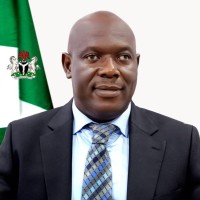
The Hydrocarbon Pollution Remediation Project (HYPREP) has commemorated the 15th anniversary of the release of the United Nations Environment Programme (UNEP) Environmental Assessment Report on Ogoniland, reaffirming its commitment to restoring the environment and improving the livelihoods of affected communities.
In a statement signed by the Project Coordinator, Prof Nenibarini Zabbey, to commemorate the anniversary, HYPREP described the anniversary as a significant milestone in Nigeria’s environmental restoration efforts, noting that the project has made remarkable progress in implementing the recommendations of the landmark UNEP report released on August 4, 2011.
The UNEP report had revealed extensive oil pollution across Ogoniland, severe environmental degradation, and serious public health risks resulting from decades of petroleum operations. It also recommended an initial $1 billion fund to commence the cleanup of the affected communities.
According to HYPREP, the Federal Government formally launched the Ogoni clean-up in 2016, while the Project Coordination Office was established in 2017 to drive the implementation of UNEP’s recommendations.
Zabbey said the current administration has continued to prioritise the project under the Renewed Hope Agenda.
Providing an update on the cleanup, the Project Coordinator disclosed that 30 of the 65 contaminated sites identified by UNEP have been fully remediated, while work is ongoing at several medium- and high-risk locations. It also stated that more than 1.5 million mangrove seedlings have been planted as part of what it described as the world’s largest restoration of oil-degraded mangroves, with over 1,000 hectares of shoreline already rehabilitated.
Zabbey further revealed that 49 Ogoni communities have been connected to potable water schemes through multiple water projects and booster stations aimed at providing safe drinking water across the region.
In the health sector, he said the 100-bed Ogoni Specialist Hospital in Kpite and the 43-bed Cottage Hospital in Buan are nearing completion, adding that several existing health facilities have been upgraded with modern medical equipment, while five ambulances have been donated to improve emergency healthcare services. The Project Coordinator also disclosed that a three-year human health biomonitoring study is being conducted in collaboration with the World Health Organization’s International Agency for Research on Cancer (IARC).
On economic empowerment, Zabbey stated that the Project has created more than 8,000 direct jobs and trained thousands of Ogoni youths and women in various vocational and technical skills, including software development, cybersecurity, aviation, commercial diving, seafaring, mechatronics, and creative arts. The project also reported awarding scholarships to more than 1,000 students, providing grants to small businesses, and supporting persons living with special needs through skills acquisition programmes.
The statement further highlighted ongoing legacy projects, including the Ogoni Power Project and the Centre of Excellence for Environmental Restoration, which it said is about 96 per cent complete. HYPREP also welcomed the recent designation of the Ogoni Wetland as a Ramsar Site of International Importance and pledged to continue promoting biodiversity conservation and sustainable management of the ecosystem.
Marking the anniversary, Zabbey said the progress achieved over the past 15 years demonstrates the collective commitment of government, development partners, stakeholders, and local communities to restoring Ogoniland. He called for renewed collaboration to sustain the cleanup effort, promote environmental sustainability, and support the long-term development of the region. 3
-

 News2 days ago
RSG Targets Nine Million Residents in Mosquito Net Distribution Campaign
-

 Oil & Energy2 days ago
Aiyedatiwa Signs New Electricity Bill
-

 Oil & Energy2 days ago
NLNG Commissions Research And Innovation Centre In RSU
-

 Maritime2 days ago
Marine Minister Commends President Tinubu On NPERA Bill Assent
-

 News2 days ago
KenPoly Holds Eight Convocations, August 29
-

 News2 days ago
RSG Begins Another Phase of Projects Commissioning Today
-

 News2 days ago
RMAFC Completes Revenue Sharing Review, Proposes New Pay
-

 Maritime2 days ago
NAGAFF Petitions IGP Over Alleged Maritime Police Harassment