
Editorial
NNPC Probe: Matters Arising

The House of Representatives recently set up an ad-hoc committee to probe the Federal Government’s subsidy payments approved by the Petroleum Products Pricing Regulatory Agency (PPPRA), a subsidiary of the Nigerian National Petroleum Corporation (NNPC).
The ad-hoc committee is the fallout of the controversy surrounding the huge payments of N1.3trillion credited to petroleum products importers, including the NNPC, which made the President Goodluck Jonathan administration to announce the withdrawal of subsidy on petrol with effect from January 1, 2012.
The subsidy withdrawal which triggered a one-week nationwide strike and protests by the Nigeria Labour Congress (NLC), Trade Union Congress (TUC), and civil society organisations (CSOs), brought to the front burner, once again, the critical issue of unbridled corruption in the oil and gas industry.
In the wake of the suspension of the industrial action by organised labour, the Minister of Petroleum Resources, Mrs Diezani Alison-Madueke, announced sweeping measures to investigate the malfeasance and the corrupt manipulation of the subsidy regime by unscrupulous officials of the NNPC, including setting up committees to audit the process, and recommend strict disciplinary measures against those found wanting. The minister also requested the Economic and Financial Crimes Commission (EFCC) to investigate those involved in the subsidy management process, and prosecute anyone found culpable of corrupt practices.
A Senate committee had also been investigating the alleged disappearance of N450billion from the Federation Account, after the National Revenue Mobilisation, Allocation and Fiscal Commission (NRMAFC) had accused the NNPC of diverting the said sum, which it claimed should have formed part of the revenue from crude oil sales that was denied the three tiers of government in 2010.
Indeed, the efforts to unmask the sharp practices in the downstream sector of the oil and gas industry marks a turning point in the anti-corruption war of the Federal Government. For us, this is the first bold step to fight corruption headlong in the country.
We say so, because, since the beginning of the House ad-hoc committee’s investigation into the subsidy saga, a whole gamut of inconsistencies have emerged from the various government ministries, departments and agencies that have volunteered information at the committee’s hearing.
From the Ministry of Petroleum Resources, PPPRA, Ministry of Finance to the Central Bank of Nigeria (CBN), it is obvious that the manipulations that characterised the subsidy regime had been a conduit pipe for siphoning huge public funds at the detriment of the infrastructural development of the nation; and the wellbeing of Nigerians. If from a budget allocation of N450billion, the government had paid out about N1.736trillion as at December 31, 2011, we think that some people must be held to account for the money.
The Tide believes that the on-going probe of the subsidy regime, is a significant step in the fight against corruption in the country. Given that the oil industry is the nation’s largest revenue earner, and contributes more than 85 per cent of Nigeria’s Gross National Product (GNP), we feel that a successful war against corruption in the sector will be a great victory in the anti-graft crusade because other indices of sharp practices within the economy would naturally fall in line.
This is why we challenge the House ad-hoc committee probing the alleged sharp practices in the subsidy regime to ensure that no stone is left unturned in unravelling the sharp manipulations, those involved and their sponsors. The committee should also ensure that appropriate laws are invoked and the relevant anti-graft agencies engaged to arrest and prosecute collaborators in this menace.
Besides, the committee must critically examine the KPMG Audit Reports and the several audit reports of the Nigeria Extractive Industries Transparency Initiative (NEITI), which indicted the NNPC, and ensure strict implementation of such damning recommendations. We insist that those indicted should be arrested, and prosecuted.
This probe should not be treated like previous inquiries into misappropriations in government, which till date have not gone beyond the submission of reports and recommendations; or empty promises to deal with those found culpable. The rot in NNPC has dragged this nation down for too long, and must be tackled now, once and for all.
The momentum created by the subsidy withdrawal, strike and eventual probe should not be allowed to fizzle out without those responsible held to account. This is the time to make a frontal attack against economic saboteurs, and ensure that the impact of the transformation agenda of government is felt by the ordinary Nigerian.



As Nigeria moves toward the 2027 general elections and campaign activities intensify, violence against opposition politicians has become an issue that can no longer be overlooked. What should be a season of competing ideas is increasingly turning into a test of intimidation, and early signs suggest that those challenging the ruling establishment are the primary targets.
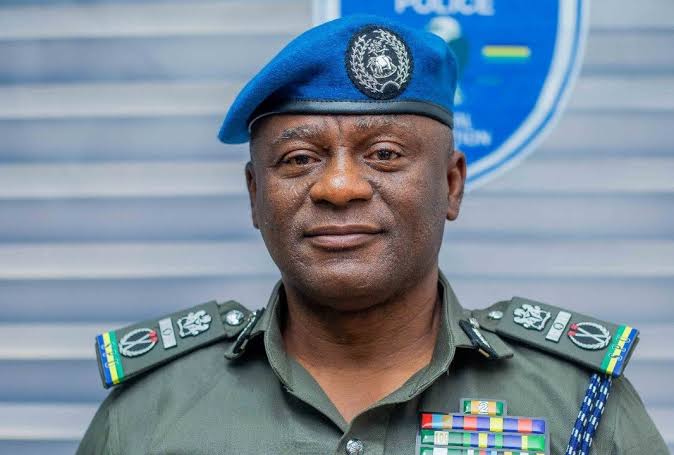
It was, therefore, welcome news when the Inspector-General of Police, Olatunji Disu, warned politicians, political thugs and others against destroying, defacing or removing campaign posters, banners and billboards. In a statement issued in Abuja by the Force Public Relations Officer, CSP Ani Iniedu, the police condemned such acts as political intolerance, directed Commissioners of Police in all 36 States and the Federal Capital Territory to take preventive measures, and warned that sponsors would also face prosecution. The police rightly described such vandalism as a criminal act that undermines parties’ and candidates’ freedom to canvass for votes.
But billboards are replaceable; human lives are not. While applauding the IGP’s stance, we urge him to extend the same stern warning and enforcement zeal to thugs who assault opposition members during campaigns. A police force that punishes the tearing of a poster but ignores the breaking of a skull will have its priorities questioned. Allowing such attacks to continue could erode the foundations of our democracy.
Consider the African Democratic Congress (ADC) presidential campaign flag-off in Sokoto State on November 4, 2026. The party alleged that the State Government denied it access to public facilities, sealed its campaign venue and pressured hotels to reject its delegates, forcing it to hold the rally at its secretariat. The Sokoto authorities, however, denied instructing hotels to turn guests away. More seriously, two suspected ADC supporters were reportedly shot along the Sokoto–Wurno Road while travelling to the venue, allegedly by operatives of the Sokoto State Community Guards.
Whatever the truth of these competing accounts, a shooting demands more than press statements. It requires a transparent, independent investigation and prosecution where warranted. Sokoto was not an isolated incident. The following day in Birnin Kebbi, the ADC presidential campaign convoy was reportedly attacked by armed gangs. Amnesty International said vehicles were vandalised, people assaulted with cutlasses and roads blocked, while the party’s Kebbi governorship candidate, Abubakar Malami, alleged that media equipment was destroyed and tear gas deployed. His convoy had suffered a similar attack in the city in September 2025.
The Nigeria Democratic Congress (NDC) has suffered similar attacks. On November 4, hoodlums stoned the motorcade of its presidential candidate, Peter Obi, and running mate, Rabiu Musa Kwankwaso, at Watt Market roundabout in Calabar, Cross River State. Police reported arresting a 27-year-old suspect, Victor Edet, although it remains unclear whether he has been arraigned. The State Government has denied suggestions that ruling-party supporters were responsible. Worse, in Asaba, Delta State, one person was killed and five injured when suspected thugs attacked an NDC rally. A death at a political rally is no longer a warning; it is a damning indictment of the prevailing political climate.
Even critics of the establishment who are not frontrunners have not been spared. Omoyele Sowore, presidential candidate of the African Action Congress (AAC), was attacked by suspected thugs at a restaurant in Ado-Ekiti on October 30. He alleged that the assailants were linked to the Ekiti State Government House and that the Department of State Services leaked his location. Both the State Government and the security service denied involvement, while the police reported a minor injury and a discreet investigation. These conflicting accounts make an independent, publicly reported inquiry indispensable.
What deepens the concern is the Federal Government’s apparent silence. We are unaware of any specific, forceful condemnation of these assaults, even as All Progressives Congress (APC) rallies appear to proceed nationwide without incident. Such silence can easily be misconstrued as complicity, regardless of intent.
According to the Centre for Democracy and Development, 109 election-related deaths were recorded in the build-up to the 2023 polls. The Kimpact Development Initiative separately documented 238 incidents and 24 deaths during the general elections. Beyond Nigeria, Kenya’s 2007–08 post-election violence claimed more than 1,000 lives, according to the Waki Commission. Ghana, by contrast, enacted the Vigilantism and Related Offences Act in 2019 to curb party vigilante groups, a model worth studying.
The remedies are neither exotic nor expensive. The IGP should extend his directive to cover assaults on individuals and disruptions of rallies, while establishing a dedicated investigative unit to probe the Sokoto shooting and the attacks in Kebbi, Calabar, Asaba and Ado-Ekiti. It should publish the status of each case within a fixed period. Suspects must be prosecuted and their sponsors, regardless of party or position, brought to justice. State-backed security outfits, including the Community Guards, should be audited and barred from partisan duties.
The Federal Government must speak and act unequivocally. President Tinubu should specifically condemn attacks on opposition candidates and direct all security agencies to guarantee equal protection for every party. Governors must ensure equal access to public facilities for registered parties. The Independent National Electoral Commission (INEC), which has warned of fines and imprisonment under the Electoral Act 2026 for inflammatory campaign conduct, should enforce the Code of Conduct for Political Parties. Working with the Inter-Agency Consultative Committee on Election Security, it should publish a joint security plan covering campaigns, polling, and collation. Parties must discipline their supporters, courts expedite electoral-violence trials, and civil society and the media maintain a public record of incidents and their outcomes.
The credibility of the 2027 elections is at stake. An election is credible only when every contender can campaign, travel, assemble and speak freely, without fear. Without a free opposition, there can be no meaningful democracy. Nigeria is not a one-party State, and law enforcement agencies must demonstrate their neutrality through action, not communiqués. The campaign atmosphere is too tense to be left to chance. Billboards deserve protection, certainly, but citizens deserve it far more.

-
News2 days ago
RSG Reaffirms Commitment To STEM Education, Technological Advancement
-
Business2 days ago
‘NUJ, NPA’s Partnership Would Boost Port Producrivity, Economic Growth’
-

 News2 days ago
IGP Warns Police Officers Against Partisanship …Directs Regular Engagement With Journalists
-
Business2 days ago
Fire Threat Interrupts Asaba Air Peace Flight
-
 News2 days ago
Customs To Deploy AI, Scanners Against Snuggling
-
Business2 days ago
Fish Production Deficit, A Major Investment Opportunity – Minister
-
Business2 days ago
NCDMB, NLNG Unveil $9m For Professorial Endowment Research Chairs In Six Varsities
-
 Politics2 days ago
2027: INEC Begins Deployment Of Non-Sensitive Materials