
Editorial
Release Orosanya Report Now

It needs not be restated here that the Niger Delta Development Commission (NDDC), a child of circumstance, is a product of the yearnings of the beleaguered people of the Niger Delta who have for several years suffered the highest magnitude of neglect and marginalization occasioned by mindless and near criminal exploitation of its mineral resources.
Founded in the wake of the failure of the defunct Niger Delta Development Board (NDDB) and the former Oil Mineral Producing Areas Development Commission (OMPADEC) to fully and squarely address the age-long developmental problem of the Niger Delta region, the NDDC was thus conceptualised to intervene in the developmental crisis of the region and fast-track its developmental needs in such a way that the morass of poverty, squalor and misery that has been the lot of the region would be fought to a standstill and the people rescued from the nadir of socio-economic asphyxia.
Sadly however, a cursory look at the performance of the NDDC since its inception would reveal a prosaic picture of the commission so much so that there is hardly any meaningful record on the credit side of its balance sheet either to warrant self applause from its authorities or accolade from its member-states and the general public.
Indeed, there is hardly any discourse on the Niger Delta region or any forum on the developmental challenges of the region that has not reviewed the activities of the commission vis-à-vis the needs of the people that has not given the NDDC thumbs down.
In fact, the commission has been criticised severally for not achieving its objectives of fostering the much-desired development in the Niger Delta region. And if the performance of the NDDC has been anything but impressive, observers say it is because the lofty goals of the commission as enshrined in its master plan are being gradually sacrificed by some boardroom political gladiators with primordial interests and inordinate quests.
Incensed by this sad state of affairs in the commission, some Niger Deltans and many highly perceptible Nigerians have canvassed the outright scrapping of the commission and the transfer of its bureaucracy and affairs to the Federal Ministry of Niger Delta for proper attention and co-ordination.
Exasperated by the NDDC’s anthology of woes and the general outcry against its inefficiency and ineffectiveness, President Goodluck Jonathan had appointed a 7-man Committee headed by former Head of Civil Service of the Federation, Mr. Steve Orosanya to make an inquest into the conduct of the affairs of the commission and proffer measures that would strengthen the institution.
Albeit, based on the recommendations of the Orosanya Commission, the former board was sacked and a new board and management appointed to manage its affairs. And even as the new board has started well in earnest, many people, especially Niger Delta indigenes expect President Jonathan to go beyond that by directing the immediate release of the white paper so that the committee’s report would be made public and its recommendations implemented to the letter.
No doubt, there exists certain intervening variables in public policy goals and implementation, especially in a clime like ours, the committee’s report, like many others before it, should not be bound in red tapes and allowed to gather dusts in the drawers of file cabinets of seedy bureaucrats obsessed with impeding the progress of the Niger Delta region.
The Tide believes that the NDDC can be sanitised if the Federal Government musters the political will to speedily address the issues on the panel’s report regardless of whose ox is gored.
We must depart radically from the past when white papers of reports of panels of public interest are never released, much against the grain of the very etiquette under-guarding such exercises.
The Tide is convinced that unless the Federal Government releases the white paper on the Orosanya Panel Report and adheres strictly to its recommendations, the government will still be groping to find solutions to the crisis in the commission, and the Niger Delta region will be the ultimate loser. This is why we think the white paper should be released now. The people of the Niger Delta are waiting.



As Nigeria moves toward the 2027 general elections and campaign activities intensify, violence against opposition politicians has become an issue that can no longer be overlooked. What should be a season of competing ideas is increasingly turning into a test of intimidation, and early signs suggest that those challenging the ruling establishment are the primary targets.
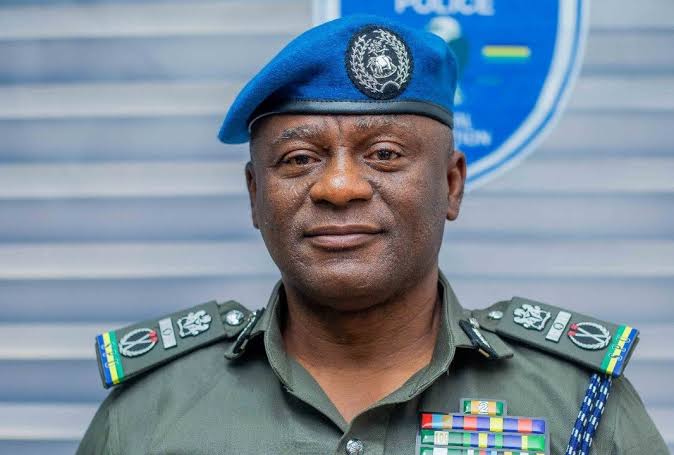
It was, therefore, welcome news when the Inspector-General of Police, Olatunji Disu, warned politicians, political thugs and others against destroying, defacing or removing campaign posters, banners and billboards. In a statement issued in Abuja by the Force Public Relations Officer, CSP Ani Iniedu, the police condemned such acts as political intolerance, directed Commissioners of Police in all 36 States and the Federal Capital Territory to take preventive measures, and warned that sponsors would also face prosecution. The police rightly described such vandalism as a criminal act that undermines parties’ and candidates’ freedom to canvass for votes.
But billboards are replaceable; human lives are not. While applauding the IGP’s stance, we urge him to extend the same stern warning and enforcement zeal to thugs who assault opposition members during campaigns. A police force that punishes the tearing of a poster but ignores the breaking of a skull will have its priorities questioned. Allowing such attacks to continue could erode the foundations of our democracy.
Consider the African Democratic Congress (ADC) presidential campaign flag-off in Sokoto State on November 4, 2026. The party alleged that the State Government denied it access to public facilities, sealed its campaign venue and pressured hotels to reject its delegates, forcing it to hold the rally at its secretariat. The Sokoto authorities, however, denied instructing hotels to turn guests away. More seriously, two suspected ADC supporters were reportedly shot along the Sokoto–Wurno Road while travelling to the venue, allegedly by operatives of the Sokoto State Community Guards.
Whatever the truth of these competing accounts, a shooting demands more than press statements. It requires a transparent, independent investigation and prosecution where warranted. Sokoto was not an isolated incident. The following day in Birnin Kebbi, the ADC presidential campaign convoy was reportedly attacked by armed gangs. Amnesty International said vehicles were vandalised, people assaulted with cutlasses and roads blocked, while the party’s Kebbi governorship candidate, Abubakar Malami, alleged that media equipment was destroyed and tear gas deployed. His convoy had suffered a similar attack in the city in September 2025.
The Nigeria Democratic Congress (NDC) has suffered similar attacks. On November 4, hoodlums stoned the motorcade of its presidential candidate, Peter Obi, and running mate, Rabiu Musa Kwankwaso, at Watt Market roundabout in Calabar, Cross River State. Police reported arresting a 27-year-old suspect, Victor Edet, although it remains unclear whether he has been arraigned. The State Government has denied suggestions that ruling-party supporters were responsible. Worse, in Asaba, Delta State, one person was killed and five injured when suspected thugs attacked an NDC rally. A death at a political rally is no longer a warning; it is a damning indictment of the prevailing political climate.
Even critics of the establishment who are not frontrunners have not been spared. Omoyele Sowore, presidential candidate of the African Action Congress (AAC), was attacked by suspected thugs at a restaurant in Ado-Ekiti on October 30. He alleged that the assailants were linked to the Ekiti State Government House and that the Department of State Services leaked his location. Both the State Government and the security service denied involvement, while the police reported a minor injury and a discreet investigation. These conflicting accounts make an independent, publicly reported inquiry indispensable.
What deepens the concern is the Federal Government’s apparent silence. We are unaware of any specific, forceful condemnation of these assaults, even as All Progressives Congress (APC) rallies appear to proceed nationwide without incident. Such silence can easily be misconstrued as complicity, regardless of intent.
According to the Centre for Democracy and Development, 109 election-related deaths were recorded in the build-up to the 2023 polls. The Kimpact Development Initiative separately documented 238 incidents and 24 deaths during the general elections. Beyond Nigeria, Kenya’s 2007–08 post-election violence claimed more than 1,000 lives, according to the Waki Commission. Ghana, by contrast, enacted the Vigilantism and Related Offences Act in 2019 to curb party vigilante groups, a model worth studying.
The remedies are neither exotic nor expensive. The IGP should extend his directive to cover assaults on individuals and disruptions of rallies, while establishing a dedicated investigative unit to probe the Sokoto shooting and the attacks in Kebbi, Calabar, Asaba and Ado-Ekiti. It should publish the status of each case within a fixed period. Suspects must be prosecuted and their sponsors, regardless of party or position, brought to justice. State-backed security outfits, including the Community Guards, should be audited and barred from partisan duties.
The Federal Government must speak and act unequivocally. President Tinubu should specifically condemn attacks on opposition candidates and direct all security agencies to guarantee equal protection for every party. Governors must ensure equal access to public facilities for registered parties. The Independent National Electoral Commission (INEC), which has warned of fines and imprisonment under the Electoral Act 2026 for inflammatory campaign conduct, should enforce the Code of Conduct for Political Parties. Working with the Inter-Agency Consultative Committee on Election Security, it should publish a joint security plan covering campaigns, polling, and collation. Parties must discipline their supporters, courts expedite electoral-violence trials, and civil society and the media maintain a public record of incidents and their outcomes.
The credibility of the 2027 elections is at stake. An election is credible only when every contender can campaign, travel, assemble and speak freely, without fear. Without a free opposition, there can be no meaningful democracy. Nigeria is not a one-party State, and law enforcement agencies must demonstrate their neutrality through action, not communiqués. The campaign atmosphere is too tense to be left to chance. Billboards deserve protection, certainly, but citizens deserve it far more.

-
News2 days ago
RSG Reaffirms Commitment To STEM Education, Technological Advancement
-
Business2 days ago
‘NUJ, NPA’s Partnership Would Boost Port Producrivity, Economic Growth’
-

 News2 days ago
IGP Warns Police Officers Against Partisanship …Directs Regular Engagement With Journalists
-
Business2 days ago
Fire Threat Interrupts Asaba Air Peace Flight
-
 News2 days ago
Customs To Deploy AI, Scanners Against Snuggling
-
Business2 days ago
Fish Production Deficit, A Major Investment Opportunity – Minister
-
Business2 days ago
NCDMB, NLNG Unveil $9m For Professorial Endowment Research Chairs In Six Varsities
-
 Politics2 days ago
2027: INEC Begins Deployment Of Non-Sensitive Materials