Connect with us

Oil & Energy

MAN, Ministry Tackle High Electricity Costs, Erratic Supply

Published

on

The Manufacturers Association of Nigeria has said it is working with the Federal Ministry of Power to address high electricity tariffs, unreliable grid supply and rising energy costs that are undermining industrial production and competitiveness in the country.
The association said the collaboration would focus on developing sustainable energy solutions for manufacturers, including renewable energy, battery storage, captive power generation and improved electricity distribution.
Speaking during the second edition of the Manufacturers Energy Security and Energy Efficiency Summit in Lagos, the President, MAN, Dr. Ifeanyi Okoye, regretted that high electricity tariffs, unreliable grid supply and heavy dependence on fossil fuels had made industrial production exceptionally difficult.
Okoye said energy expenses consumed nearly half of some factories’ operating budgets, weakening their competitiveness, increasing product prices and threatening jobs.
He said manufacturers had continued to operate their own power infrastructure despite paying for electricity from the national grid.
“When energy expenses claim nearly half of a factory’s operating budget, competitiveness evaporates, retail prices skyrocket, and jobs are placed on the line,” he said.
Okoye said the association was moving beyond advocacy to implement practical solutions through its Industrial Energy Cost Reduction and Energy Support Programme, as key partners in delivering the initiative.
According to him, the programme would promote factory-roof solar installations, battery energy storage systems, captive natural gas generation and smart energy management networks to reduce production costs and protect manufacturers from global fuel price shocks.
He, however, stressed that manufacturers needed affordable, long-term financing to undertake the energy transition.
 “We cannot finance 21st-century industrial transitions with 30-day commercial bank loans at cut-throat interest rates,” Okoye said.
He said the summit would bring financial institutions, climate funds and green investors together to develop long-tenured, low-interest financing instruments, carbon credit opportunities and asset-financing
Also speaking, the Minister of Power, Joseph Tegbe, warned industrial customers against unauthorised electricity connections.
He disclosed that investigations had uncovered about 14 industrial customers along a particular corridor who owed more than N400m in unpaid electricity charges over several years.
Tegbe said such practices deprived the electricity sector of revenue needed to sustain power supply and unfairly burdened consumers who paid their bills.
“Such conduct deprives the sector of revenue that we need to sustain the supply, and unfairly burdens consumers who pay honestly,” Tegbe said.
The minister vowed to recover the outstanding charges and hold those responsible accountable, urging MAN to encourage its members to maintain lawful electricity connections and comply with applicable regulations.
 Tegbe acknowledged that manufacturers continued to struggle with electricity interruptions, poor power quality, vandalism and electricity theft, adding that the government was directing investments towards addressing the underlying problems.
Speaking on behalf of manufacturers, the MAN South-East Chairman, Ada Chukwudozie, said energy had become a question of survival and competitiveness for Nigerian manufacturers.
 She said manufacturers were increasingly financing and managing their own electricity infrastructure while struggling with rising production costs and limited access to capital.
 “We are effectively running a second power system paid for by ourselves, besides the grid we also pay for. And that is why for the Nigerian manufacturer, energy is no longer simply an operational issue. It is a question of survival and competitiveness,” Chukwudozie said.
 She explained that unreliable electricity supply forced manufacturers to make difficult choices between purchasing energy and raw materials, maintaining equipment and paying workers.
The regulator added that manufacturers could strengthen their competitiveness by adopting cleaner energy sources as international markets increasingly imposed environmental and carbon-related requirements on products and supply chains.
Continue Reading

Oil & Energy

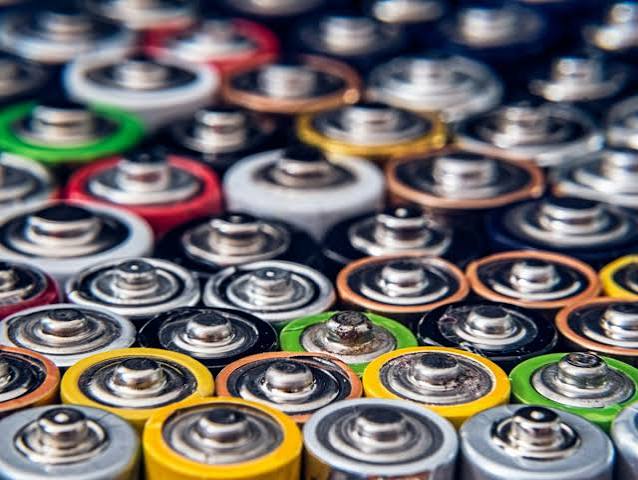
Can Cheap Batteries Deliver COP31’s 35% Electrification Goal?

Published

on

Electrification will be the major focus of the COP31 United Nations climate conference, to hold in Antalya, Türkiye, from today, November 9 to 20, 2026. The host country will invite the attending nations to sign onto a voluntary pledge to reach 35 percent electrification on a global level by 2035. J
ust a year ago, this target may have seemed overly ambitious, but now, experts say that a number of factors, including volatile oil and gas markets stemming from the war in Iran, paired with enormous advances in clean energy technologies, have put that goal within “striking distance.”
The months-long closure of the Strait of Hormuz has catalyzed the clean energy transition and the rate of electrification around the world. Before the United States and Israel began their military offensive in Iran back in February of this year, one fifth of the world’s oil and gas trade flowed through the Strait of Hormuz. Its abrupt closure therefore sent global oil and gas markets into turmoil and sent energy-importing countries around the world scrambling for alternatives, especially ones that they could produce and control on their home soil. And, just like that, renewable energy became the new face of energy security.
“Wind and solar cannot be embargoed, blockaded, or shut off by a foreign power,” David Frykman, General Partner at Stockholm-based venture capital group Norrsken, wrote in an op-ed for Fortune earlier this year. “Every terawatt-hour of domestic renewable generation is a terawatt-hour that no adversary can weaponize.”
But there is another, quieter force that has made this rapid global pivot toward renewable energies possible – the energy storage boom. Energy storage is critical to ensure grid stability in the face of rapid electrification and the increasing representation of intermittent energy sources like wind and solar power in national energy mixes. Major advances in the sector in recent years have made battery storage more affordable and more scalable than ever before – just in time for the world’s most recent bout of ‘fossilflation.’
“What’s really become a game-changer in the past two years is the rapid deployment of large-scale batteries that can hang onto ever larger amounts of power to be used throughout the day to smooth out demand and avoid overtaxing the grid,” Forbes wrote in a Monday report.
The second quarter of this year saw the United States’ largest-ever energy storage expansion, at 20.2 gigawatt-hours of additional capacity, according to a report by the Solar Energy Industries Association and Benchmark Mineral Intelligence. That puts this year’s total additions at 30.8 GWh – and counting.
“Although President Trump is no fan of renewable energy or batteries, utility-scale energy storage capacity still nearly doubled to 165 GWh from 88 GWh in the first 18 months of his administration,” the Forbes article goes on to detail. “Grid operators, utilities and data center developers are all buying batteries as fast as they can to meet power demand and improve grid reliability. As a result, battery energy storage systems supplied more electricity to the grid in the year’s first eight months than in all of 2025.”
Ironically, despite his best efforts, Donald Trump is overseeing one of the United States’ most significant clean energy booms in the nation’s history as solar and wind have simply become too cheap to fail. And the United States is not alone. Buoyed by a flood of cheap solar panels and battery storage systems coming out of China, even the world’s poorest countries are experiencing clean energy revolutions.
“Some countries are pulling off stunningly fast energy transitions, adding solar so rapidly, it’s become a major source of electricity over the course of years — not decades,” reports CNN.
Pakistan has become the surprise poster child of this trend as residents install rooftop solar and batteries faster than any other market on Earth, as these systems provide electricity more cheaply and reliably than the country’s own beleaguered energy infrastructure. In addition, emerging economies including Brazil, Chile, El Salvador, Morocco, Kenya, and Namibia have all overtaken the United States – the world’s largest economy – in their clean energy transitions.
By Haley Zaremba
Continue Reading

Oil & Energy

Reps Panel Dismisses Petition Against NIPCO gas Licence

Published

on

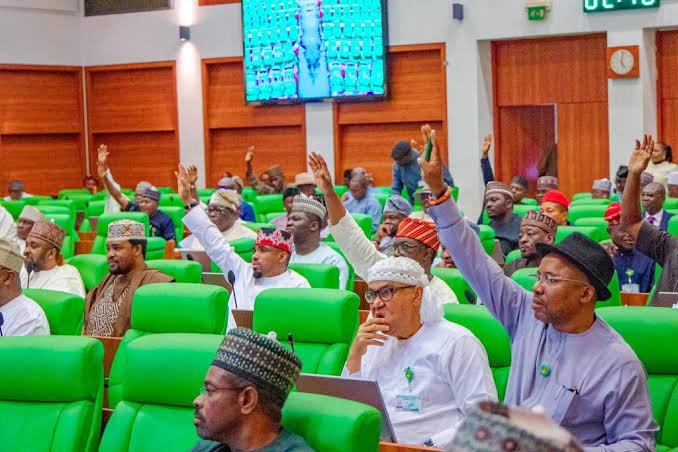
The House of Representatives has dismissed a petition seeking the cancellation of gas distribution licences awarded to NIPCO Plc, ruling that the petitioners failed to provide credible evidence to substantiate their allegations.

The decision followed a review by the House Sub-Committee on the Petition concerning NIPCO Plc, which rejected the complaint filed by the Nigerian Energy Security Watch Group (NESWG) for lacking substance and evidential support.

The petition had called for an investigation into, and the suspension and cancellation of, gas distribution licences issued by the Nigerian Midstream and Downstream Petroleum Regulatory Authority (NMDPRA) to NIPCO for Lagos, Ogun, Oyo and Osun states, as well as the Lagos and Lekki Free Trade Zones.

Announcing the decision last Thursday, the Chairman of the Sub-Committee, Peter Aniekwe, said the petitioners relied on hearsay and failed to establish any wrongdoing in the licensing process.

“At its sitting today, the Sub-Committee resolved not to proceed with the investigation, and the petition is accordingly dismissed,” Aniekwe said.

The committee, which also includes Dahaltu Shehu, was constituted in October to examine the petition. It was granted an additional 14 days on October 26 to conclude its assignment.

Aniekwe said the issuance and regulation of gas distribution licences were statutory responsibilities of the NMDPRA under the Petroleum Industry Act, while stressing that the National Assembly would continue to exercise oversight over the process.

He disclosed that the regulator had committed to completing and rolling out gas distribution licensing in the fourth quarter of 2026, adding that the committee would monitor the implementation.

“Nigerians deserve a gas market that is open, competitive and safe, and investors deserve rules that are clear and stable,” he said.

The lawmaker reaffirmed the House’s commitment to considering petitions from individuals and organisations with genuine concerns about the petroleum sector, saying “each complaint would be assessed on its merits”.

Continue Reading

Oil & Energy

Nigeria Lost 3.3m Barrels To Oil Thieves In 2025 –Report

Published

on

Nigeria is said to lost 3.33 million barrels of crude oil to theft in 2025, with nearly two-thirds of the reported losses occurring in the final three months, as the Nigerian Upstream Petroleum Regulatory Commission’s revenue collection declined by N2.14tn, The PUNCH reports.
The commission’s 2025 annual report, released last Thursday, showed that crude oil and gas revenue collections fell from N12.56tn in 2024 to N10.42tn in 2025, representing a 17.03 per cent decline, despite increases in receipts from gas flare penalties, signature bonuses and concession rentals.
Data from the commission’s 2025 report showed that crude theft rose sharply in the fourth quarter, when 2.19 million barrels were recorded. This represented 65.8 per cent of the total volume reported for the year and was almost five times the 440,434 barrels recorded in the third quarter.
The commission recorded 896,471 barrels of crude theft in the first quarter, while its second-quarter report showed a negative figure of 200,400 barrels, which it attributed to excess volumes identified during reconciliation.
The combined quarterly figures brought reported losses for the year to approximately 3.33 million barrels.
The report read, “Nigeria recorded 896,471 barrels of crude oil theft in the first quarter.
The second quarter recorded a negative 200,400 barrels, which the commission described as an excess volume in its reconciliation. Reported theft stood at 440,434 barrels in the third quarter. The fourth quarter recorded 2.19 million barrels, the highest quarterly volume of the year.”
The losses came despite the huge financial burden of securing the country’s petroleum assets even as the Nigerian National Petroleum Company Limited reported energy security costs of N8.67tn in 2025, compared with about N3.1tn in 2024.
The expenditure reflects the cost of interventions to protect oil and gas infrastructure and support national energy security, although the entire amount cannot be attributed solely to combating crude theft.
The persistence of theft alongside the rising security costs raises questions about the effectiveness of measures to protect production facilities and crude evacuation infrastructure.
The losses also represent crude that could otherwise have contributed to government revenue, export earnings and the supply of feedstock to domestic refineries.
Despite the reported theft, Nigeria produced 541.08 million barrels of crude oil and blended condensate in 2025. Quarterly production stood at 132.70 million barrels in the first quarter, 137.69 million in the second, 137.45 million in the third and 133.23 million in the fourth quarter. The country also produced 48.52 million barrels of unblended condensate during the year.
On revenue, the report said oil and gas royalties, including Project Gazelle and NNPC receivables, remained the largest contributor, generating N8.97tn in 2025, compared with N11.08tn in 2024. The decline of N2.11tn represented a 19.03 per cent reduction.
 “The total approved budget for 2025 was N645,462,335,500.80, with total income of N342,814,462,174.97 and total expenditure was N304,533,385,103. Total revenue generated was N10,424,478,448,682.40, which is 63 per cent of projected revenue of N16,538,206,608,738.00.
“357 oil spill incidents were reported. 49.5 per cent of the spills were a result of sabotage. There was an increase of 64.74 per cent in revenue in 2024 over 2023 and a decrease of 20.53 per cent in 2025 over 2024 revenues,” the report added.
However, receipts from gas flare penalties increased from N391.26bn to N611.42bn, representing a 56.27 per cent rise.
Signature bonuses also increased by 44.2 per cent, from N369.58bn in 2024 to N532.94bn in 2025, while concession rentals rose by 61.1 per cent, from N23.71bn to N38.19bn.
Miscellaneous revenue increased from N35.20bn to N46.44bn. Conversely, royalty by price declined from N313.72bn to N213.41bn, while lease renewal receipts fell sharply from N230.73bn to N8.23bn.
The commission’s total income from cost of revenue collection and internally generated revenue, however, increased by 21.85 per cent to N342.81bn in 2025, compared with N281.34bn in 2024.
The report showed that cost of revenue collection contributed N335.45bn, while internally generated revenue accounted for N7.36bn.
The commission generated N10.42tn against a projected revenue target of N16.54tn, representing 63 per cent performance.
Beyond crude theft, the report documented 357 oil spill incidents during the year, with sabotage accounting for 49.5 per cent of the reported cases.
Continue Reading

Trending