
Connect with us

Business

NCDMB Deepens Energy Ties With China …Seeks Boost In Manufacturing

Published

on

The Nigerian Content Development and Monitoring Board (NCDMB), has intensified its drive to attract Chinese investment, technology and manufacturing capacity into Nigeria’s oil and gas industry.
To this end, the Board said it has engaged more than 100 Chinese Original Equipment Manufacturers (OEMs) in Chengdu, China.
NCDMB in a statement from its Corporate Communications Division said; the engagement formed part of Board and oil industry’s participation in the 15th China Shale Oil and Gas Summit, convened recently at the Chengdu Century City International Conference Centre.
The summit, themed “Empowering Efficient and Green Development via Intelligent Technologies, Innovating to Lead the Shale Oil and Gas Revolution,” provided a platform for NCDMB and representatives of key groups in the oil industry to showcase Nigeria’s local content framework and investment opportunities in manufacturing, technology and broader oil and gas services.
Executive Secretary of NCDMB, Engr. Felix Omatsola Ogbe, represented by the Director, Project Certification and Authorization Division (PCAD) and Senior Technical Adviser to the Executive Secretary, Engr. Austin Uzoka, delivered a keynote address on the first day of the summit titled, “Nigeria’s Local Content Journey and Opportunities for Chinese Collaboration in Oil and Gas Equipment Manufacturing.”
Ogbe explained that NCDMB was seeking to move the relationship between Nigerian oil and gas industry and Chinese manufacturers beyond the conventional buyer-seller model towards investment, manufacturing, technology transfer and stronger integration into global supply chains.
He assured that the Nigerian Oil and Gas Content Development (NOGICD) Act guarantees that any oil and gas equipment manufacturing facility that is established in the country will be patronised by the oil and gas industry, with further opportunities across the Gulf of Guinea.
“We are looking beyond the traditional buyer-seller relationship. What can we build together? We want Chinese companies to see Nigeria not simply as a market for their products, but as a strategic investment destination, a platform for manufacturing and technology development, and a gateway to opportunities across the wider African market,” he said.
The Executive Scribe highlighted the Nigerian Oil and Gas Park Scheme (NOGaPS) as a platform for industrial investment, encouraging Chinese OEMs to establish manufacturing, assembly and service operations in Nigeria, with opportunities for technology transfer, technical arrangements and integration of Nigerian businesses into their supply chains.
He also identified China’s strength in manufacturing, engineering, technology and energy infrastructure as an opportunity to support Nigeria’s industrial development.
“China has developed tremendous capabilities in manufacturing, engineering, technology and energy infrastructure. We want to explore how those capabilities can be connected with the opportunities that exist in Nigeria, for mutual benefits” he added.
On Nigeria’s local content journey, Engr. Ogbe explained that the agenda had evolved from increasing Nigerian participation in oil and gas projects to a broader drive for industrial capacity, manufacturing, technology ownership and global competitiveness.
“Nigeria’s local content journey has evolved significantly since the Local Content Law was enacted in year 2010. What began primarily as an effort to increase Nigerian participation in the oil and gas industry has developed into a broader industrial development agenda focused on building capabilities, deepening manufacturing, promoting technology ownership and positioning Nigerian businesses to compete within regional and global markets,” he noted.
The Tide learnt that the second day of the summit featured a Business-to-Business (B2B) session organised by the Board, which drew participation from more than 100 Chinese equipment manufacturers and Nigerian oil and gas industry stakeholders to explore opportunities in local manufacturing, supply-chain integration, investment, technology development and market access.
The Statement from the Board’s Division of Corporate Communications further added that representatives of the Petroleum Technology Association of Nigeria (PETAN), led by Mr. Sylvester Ovunwese, participated in the event alongside representatives of Project 100, including Mrs. Olateju Oyelakun of Encapsulate Nigeria Limited and Mr. Namdi Akudulu of Wider Energy.
The Statement said that, Renaissance African Energy Company was represented by its General Manager, Nigerian Content Development, Engr. Olarenwaju Lanre Olawuyi.
Engr. Olawuyi who made a presentation on behalf of the company and Oil Producing Trade Session (OPTS), noted the session provided an opportunity for Nigerian companies to showcase their capabilities, while Chinese manufacturers explored prospects for market entry, local production and technical cooperation.
Consequently, the engagement generated significant interest among participating Chinese OEMs, with more companies expressing willingness to explore business relationships with Nigerian and participate in Nigeria’s expanding oil and gas manufacturing ecosystem .
The Tide also gathered that the Board’s participation extended to the exhibition floor, where the NCDMB booth attracted visitors, industry players and prospective investors seeking information on Nigeria’s oil and gas sector, local content opportunities and avenues for establishing business operations in the country.
“The Chengdu programme reinforces NCDMB’s commitment to expanding Nigeria’s international industrial connections and advancing the objectives of the Nigerian Oil and Gas Industry Content Development (NOGICD) Act.
“By connecting Nigerian businesses with global manufacturers and technology providers, NCDMB is seeking to move the local content agenda from participation-capability-manufacturing- technology ownership and regional competitiveness”, the NCDMB stated.
Ariwera  Ibibo-Howells, Yenagoa


Continue Reading

Business

Consumers, Partner Prospective Investors, Others To Push   Bayelsa 60MW Gas Turbine Expansion 
Published

on

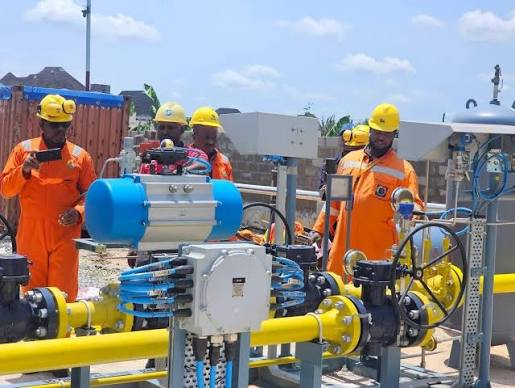
Electricity consumers, prospective investors and the   Bayelsa business class have called on the Government and the management of the newly state installed 60mw gas fired turbines   to expand power supply statewide.

Cross session of stakeholders said at a programme tagged, ‘Power Infrastructure and its value chain’ organised in Yenagoa, the State capital by a group known as the ‘South-South Reawakening’.

The Tide reports that the event which brought together key industry actors, traditional rulers, policy makers, financial experts, academics and the Media was held as part of activities to commemorate the 30th creation anniversary of the State.

Setting the tone for deliberations, the host and convener of the ‘South-South Re-Awakening Group’, Mr. Joseph Ambakederimo, described electricity as the primary catalyst for industrialisation and economic growth.

He lauded the State Government for establishing the 60-Megawatt gas turbine in Yenagoa, stressing the need to transition the State into a sustainable 24-hour power economy.

“Without power, you cannot industrialise. Power is everything. As we celebrate, let us not be lost in the euphoria. There’s more work to be done in Bayelsa State.

“We should start now to plan for the future.  where do we want to be and how in the next 30 years in terms of industrial development and deployment of power resources to better the lives of our people?”, the Convener inquired. 

In his remarks, the Chairman of the Bayelsa State Traditional Rulers Council, King Bubaraye Dakolo, highlighted reliable electricity as a key driver for economic expansion and a tool to curb social vices.

“Power is the bedrock and  foundation for sustainable industrialisation. Bayelsa is leading in this regard as a state with 60mw gas turbine that will guarantee 24-hour electricity to the people. It means that we must all seize this opportunity, grow our businesses, and then maximise output”, the Monarch said. 

Speaking on infrastructure development, the Managing Director of the Bayelsa Electricity Company Limited, Engineer Olice Kemenanabo, stressed that power generation alone is insufficient without strong distribution and transmission networks.

“The power system, particularly generation, is only as strong as its weakest link. The value chain must therefore be planned and operated as one integrated system. That comes to the investment aspect of it”, he said. 

Addressing regulatory oversight, the Director-General of the Bayelsa Electricity Regulatory Agency, Dr. Rosalyn Dressman, reassured consumers of continuous efforts to sustain power availability and address service complaints.

“Electricity has improved over time. Our business is to make sure that Bayelsa has electricity. How do we do that? We coordinate generators, distributors, consumers to make sure everybody speaks one common language”, she noted. 

Meanwhile, in a communique issued at the end of the programme,  Chairman of the Drafting Committee, Charles Eni-Umukoro, said the stakeholders roundtable advocated policy consistency, legislative backing for energy infrastructure, a specialised task force against vandalism, and the expansion of the 60-Megawatt system.

The event featured an engaging panel discussion moderated by veteran journalist Daniel Abia, focusing on emerging opportunities within the state’s electricity value chain.

Panelists at the event included the Dean, Faculty of Basic and Applied Sciences at the University of Africa, Toru-Orua, Professor Francis Sikoki, Director General of the Bayelsa Electricity Regulatory Agency, Dr. Roselyn Dressman, Managing Director of the Bayelsa Electricity Company Limited, Engr. Olice Kemenanabo represented by the Director of Operations, Engr. Steve Bubagha and an Investment and Advisory Professional, Mr. Ebipere Clark.

By: Ariwera Ibibo-Howells, Yenagoa
Continue Reading

Business

PETROAN Orders Nationwide Meter Checks after NMDPRA under-dispensing warning

Published

on

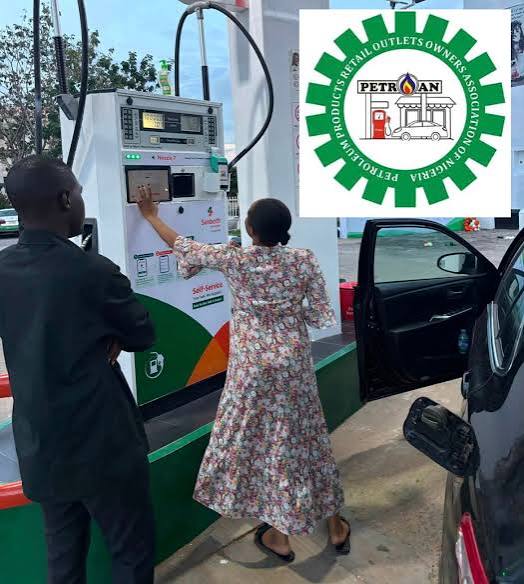
The Petroleum Products Retail Outlets Association of Nigeria has asked its members across the country to inspect their dispensing meters.

This instruction came following a warning by the Nigerian Midstream and Downstream Petroleum Regulatory Authority over alleged under-dispensing of petroleum products.

The association’s National President, Billy Gillis-Harry, disclosed this on Wednesday while speaking on Channels Television’s ‘The Morning Brief programme’.

According to him, PETROAN convened an emergency meeting of its National Executive Council on Tuesday after the regulator raised concerns about the accuracy of fuel dispensing at retail outlets.

He said the meeting lasted until about 10 pm, after which members were directed to check their equipment.

“PETRON circulated a message around the country, calling our members to check their meters as quickly as possible,” Gillis-Harry said.

The PETROAN president said some members had already commenced checks, noting that prolonged use could affect the performance of dispensing equipment and lead to either short-measuring or dispensing more fuel than customers paid for.

“Equipment can be faulty over time because of usage,” he said, recalling that he had previously lost money in his own retail business because a faulty meter was dispensing more fuel than customers paid for.

Gillis-Harry also assured motorists that members of the association remained committed to ensuring that the quantity paid for by customers was accurately dispensed.

“But I can tell you that PETRON members will, at all times, insist on making sure that they sell their products one litre for one litre,” he said.

He advised motorists to monitor the quantity shown on the dispensing meter whenever they buy fuel and request receipts after making purchases.

He further urged consumers to familiarise themselves with the fuel capacity of their vehicles and compare it with the quantity indicated by the dispenser.

“Oftentimes, we educate our staff to call the attention of the patron to check the meter while it is being dispensed. And also to get the customer to check after the product has been dispensed,” he said.

Gillis-Harry said PETROAN collaborates with the Weights and Measures Division of the Ministry of Industry, Trade and Investment and the NMDPRA on the maintenance and accuracy of fuel dispensing meters.

“PETRON consistently works with the Weights and Measures Division of the Ministry of Trade and Investment, and also the NMDPRA. These are the two regulatory authorities that ensure that our meters are functional. And they are up to date and accurate,” he said.

The NMDPRA had warned filling station operators against under-dispensing petroleum products, stating that outlets found short-changing consumers could face sanctions, including the withdrawal of their operating licences.

Gillis-Harry said the association was treating the regulator’s warning with seriousness and had commenced engagement with its members to identify and correct any faults.

“But we took what the NMDPRA called our attention to yesterday very seriously. And we already started working on that,” he said.

Continue Reading

Business

NCC Seizes N2m  Pirated Books In Omoku

Published

on

The Director-General of the Nigerian Copyright Commission (NCC), Dr. John Asein, has reiterated the Commission’s determination to enforce zero tolerance for piracy in all its forms, warning that anyone found reproducing or selling pirated books would face the full weight of the law.
Asein, who spoke through the Director of the NCC Port Harcourt Office, Mr. Abdulsalam Babatunde, gave the warning during an enforcement operation at Omoku Main Market in Ogba/Egbema/Ndoni Local Government of Rivers state over the week, where pirated textbooks worth over N2 million were confiscated.
He urged members of the public, particularly schools, tertiary institutions, booksellers and other users of literary works, to patronise only authorised authors and publishers and refrain from purchasing pirated publications.
The NCC Director-General said the Commission would continue to execute its mandate in accordance with the provisions of the Copyright Act, stressing that persons involved in the reproduction and sale of pirated books would be dealt with according to the law.
The operation, conducted on Thursday, September 17, involved personnel of the NCC and officers of the Nigeria Security and Civil Defence Corps (NSCDC), resulting in the arrest of two suspects.
Babatunde equally warned persons involved in the sale of pirated materials in Rivers State and neighbouring states to desist from the practice, stressing that the law would catch up with those who violate copyright provisions.
A publisher, Mr. Friday Ijere, decried the losses being suffered by publishers and authors as a result of piracy, noting that pirates were making unscrupulous gains from intellectual works belonging to others.
Ijere called for sustained sensitisation campaigns to enlighten booksellers, schools and other users of literary works on the dangers and consequences of patronising pirated publications.
He said piracy was seriously affecting the publishing industry, as the practice deprives publishing firms and authors of legitimate income and undermines the efforts invested in producing literary works.
The two suspects arrested during the operation claimed they were unaware that the books they had purchased were pirated, insisting that they had bought them believing they were genuine copies.
One of the suspects said the arrest had become fqqaaan eye-opener, explaining that they would not have knowingly purchased books they suspected to be pirated.
They subsequently promised to desist from patronising pirated publications and ensure that they purchase books only from authorised sources in the future.
The enforcement operation underscores the NCC’s renewed efforts to curb the circulation of pirated literary works and protect the rights and economic interests of authors, publishers and other copyright owners.
Continue Reading

Trending

