
Editorial
Addressing The Housing Crisis In Rivers

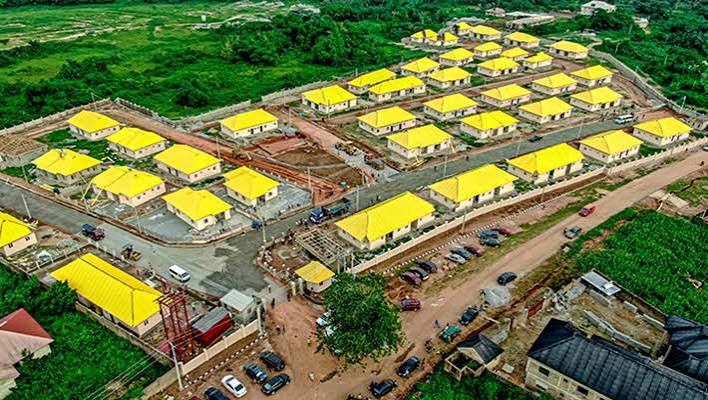
While Cross River has chosen the path of moral suasion, the situation in Rivers State, particularly in its capital Port Harcourt, presents a far more acute and pressing emergency that demands more than pleas. The Cross River experience merely provides a mirror for a deeper, more entrenched malady here. If accommodation has become expensive in Calabar, in Port Harcourt it has become prohibitive, and indeed, for many low and middle-income families, unattainable.
In Port Harcourt and Obio/Akpor today, securing decent shelter has become an ordeal defined by exorbitant charges. A modest one-bedroom flat now commands as much as one million naira per annum in many areas, while a finished apartment with Plaster of Paris ceiling can attract between N1.5 million and N1.7 million. These figures are not isolated; they represent the new normal in parts of Diobu, Rumuokoro, Peter Odili Road, and other densely populated axes. The consequence is a relentless displacement of tenants who have occupied premises for years but can no longer meet arbitrary increases.
The weight of this crisis is felt most keenly by the ordinary citizen. The average civil servant, whose minimum wage remains grossly inadequate against market realities, finds it increasingly impossible to reside within the city he serves. In Bonny, the situation is even more outrageous, driven by the presence of oil and gas operations, where rents rival those of highbrow districts in Lagos and Abuja. Families are being frustrated out of their homes, livelihoods are being disrupted, and workers are forced to relocate to distant peripheries, with attendant costs in time and transportation. It is a burden too heavy to bear.
This local agony must be situated within a national catastrophe. Nigeria faces an estimated housing deficit of 28 million units, a figure consistently cited by the Federal Ministry of Housing and Urban Development (2023) and corroborated by the World Bank (2023). The National Bureau of Statistics (NBS) reported in its Consumer Price Index of late 2024 that housing, water, electricity, gas and other fuels contributed significantly to headline inflation, which peaked at 34.19 per cent in June 2024. When shelter, a fundamental human need, becomes this unaffordable, the social contract begins to fray.
Affordability indices further illuminate the hardship. According to the NBS Nigerian Labour Force Survey 2023, over 63 per cent of Nigerians are classified as multidimensionally poor, spending more than 60 per cent of their income on housing and food alone. For a civil servant on Grade Level 08 in Rivers State earning less than N150,000 monthly, a rent of N1 million per annum consumes over 55 per cent of annual income, far above the 30 per cent threshold recommended by UN-Habitat (2022) for housing affordability. This is not merely a market fluctuation; it is a systemic impoverishment.
We cannot feign ignorance of the role of government inaction in compounding this deficit. For a protracted period, the Rivers State Government has largely abandoned the housing sector as a social responsibility. The low-cost housing estates at Aggrey Road and other locations built under former Governor Peter Odili provided modest relief. His successor, Chibuike Rotimi Amaechi, initiated some developments, notably the Golf Estate and other schemes, but many remained incomplete or inaccessible to the poor. Under Nyesom Wike, there was little demonstrable interest in mass housing for low-income earners, with priority accorded to roads, flyovers and other infrastructure.
Regrettably, the housing projects undertaken by the present administration appear not to be tailored for the average citizen or the indigent. They are priced beyond the reach of the very people most in need of intervention. When government housing is targeted at the affluent, it ceases to be a social programme and becomes a commercial venture, leaving the chasm between supply and demand to be exploited by speculative landlords and agents.
Part of that exploitation is fuelled by the spiralling cost of building materials. Data from the NBS Construction Price Index (2024) and the Cement Manufacturers Association of Nigeria (2024) show that the price of a 50kg bag of cement rose from about N4,500 in early 2023 to between N12,000 and N15, 000 by 2026, an increase of several per cent. Sharp sand, granite, reinforcement bars and agency fees have followed a similar trajectory. The Central Bank of Nigeria (2024) also linked this to foreign exchange volatility and high logistics costs. When construction becomes this expensive, only high-rent properties can guarantee returns, thus perpetuating the cycle.
It is for this reason that moral appeals alone, such as that issued in Cross River, will not suffice in Rivers. What is imperative is legislative intervention. Ebonyi State has provided a worthy precedent, where government fixed rental ceilings for different categories of accommodation and drastically reduced agency and legal fees to two per cent, with enforcement mechanisms. Rivers State should act likewise, enacting a tenancy law that curtails arbitrary rent hikes, standardises agency charges, and provides protection against capricious eviction. Shelter cannot be left entirely to market forces.
The long-term solution lies in massive public investment in housing. The state government must return to direct construction of low-cost and medium-income estates in Port Harcourt, Obio/Akpor, Eleme, and Bonny, as a deliberate strategy to flood the market and force down rental values. Concurrently, it must collaborate with the Federal Government and private sector to subsidise building materials, streamline land titling, and regulate the activities of housing agents. The burden on the average individual is already too heavy. To restore dignity, stability and productivity to our people, government must treat housing not as a privilege, but as a right.



The Independent National Electoral Commission’s (INEC) disclosure of an alleged plot to target its ad hoc personnel ahead of the 2027 general elections demand urgent national attention. The reported arrest of suspects, with intelligence support from the Department of State Services (DSS), is encouraging, but must not breed complacency. Any attack on electoral workers threatens not only human lives but also Nigerians’ constitutional right to choose their leaders through credible elections. The alleged conspiracy must be thoroughly investigated, its sponsors identified and all those found culpable prosecuted.
Particularly troubling is the reported targeting of National Youth Service Corps (NYSC) members, who play a vital role in Nigeria’s electoral process. Many serve far from home and undertake sensitive assignments at polling units and other electoral locations. As civilians, they should not be exposed to intimidation, abduction or violence without adequate protection. If election workers are vulnerable, the safety of other officials, observers and voters cannot be guaranteed.
Nigeria’s electoral history offers painful lessons. Human Rights Watch reported in Nigeria’s Post-Election Violence, published in May 2011, that more than 800 people died in the violence following the 2011 general elections. NYSC members serving as electoral officials were among the victims. This tragedy underscores the deadly consequences of political tension, incitement and disputed outcomes. Nigeria must act on the latest warning before another preventable disaster occurs.
INEC deserves recognition for uncovering the alleged plot, while the DSS and other security agencies merit commendation for their reported assistance. However, arrests are only the beginning. Investigators must establish the suspects’ identities, motives, networks and intended targets, ensuring that evidence is admissible in court. The process must remain impartial and free from political interference. Credible public updates are also necessary, provided they do not compromise investigations or operational security.
The authorities must adopt a comprehensive, intelligence-led security strategy for 2027. INEC’s proposed security conference should produce practical measures developed in collaboration with the Inter-Agency Consultative Committee on Election Security (ICCES), the police, the DSS and other relevant agencies. Threat assessments should guide personnel deployment, secure transportation, emergency communications, evacuation procedures and rapid response. Protection must extend beyond polling day to the distribution of sensitive materials, collation centres and the safe return of ad hoc personnel.
Those who provide intelligence must also be protected from retaliation. Confidential reporting channels and appropriate safeguards should be established for informants and others assisting investigations. Equally, security deployments must not intimidate voters or facilitate political repression. Personnel should act professionally, impartially and proportionately, within the law. Clear mechanisms for reporting misconduct and investigating abuses are essential to maintaining public confidence.
The threat also highlights broader concerns about trust in the electoral system. The European Union Election Observation Mission’s June 2023 final report identified shortcomings in transparency and operational implementation during Nigeria’s 2023 general elections, alongside concerns about the legal framework and electoral dispute resolution. Credible elections require more than security; they depend on transparent procedures, accountable officials and consistent enforcement of electoral laws. INEC must demonstrate measurable progress in addressing previously identified weaknesses.
Voter apathy presents another challenge. INEC’s published figures indicate that approximately 25 million people voted in the 2023 presidential election, out of about 93.5 million registered voters, a turnout of roughly 26.7 per cent. Although insecurity is not the sole cause of low participation, threats against electoral personnel can heighten public anxiety and discourage voters from exercising their franchise. INEC should strengthen civic education, improve polling accessibility and communicate procedures clearly. Political parties, civil society and the media must promote peaceful participation and reject electoral intimidation.
Misinformation and manipulated digital content pose additional risks. False reports, fabricated announcements and deepfake videos can inflame tensions, impersonate officials and mislead voters. INEC should establish a well-resourced, rapid-response communication system supported by verified digital channels and timely public statements. Collaboration with credible media organisations and fact-checkers would help counter falsehoods without suppressing legitimate criticism. Clear, consistent communication is indispensable, as administrative confusion and delayed explanations often allow rumours to spread.
Electoral integrity must also begin within INEC itself. The chairman’s warning against partisanship, negligence, extortion and ethical misconduct deserves serious attention. Security measures cannot compensate for officials who abuse their positions or disregard established procedures. INEC should strengthen staff training, ensure transparent recruitment and deployment, provide secure channels for reporting misconduct and enforce disciplinary rules consistently. Allegations of bribery and political interference must be investigated regardless of rank, while ad hoc personnel should receive adequate briefing, support and prompt payment.
The legal framework also requires clarity and consistent enforcement. INEC should explain the precise provisions and applicability of Section 26 of the Electoral Act 2026, including the obligations of electoral officials and security personnel, and publish authoritative guidance on neutrality and professional conduct. Complaints by opposition parties that they have been prevented from campaigning in certain states must likewise be investigated impartially. Any established violations should attract appropriate corrective action. Electoral fairness requires not only impartial polling officials but also lawful campaigning, access to competing viewpoints and freedom from intimidation.
The alleged plot against INEC’s ad hoc personnel is a warning against complacency ahead of the 2027 general election. Governments, security agencies, INEC, political parties and civil society must work together to prevent violence, punish misconduct and protect citizens’ participation. The commission should communicate its security priorities, maintain accessible threat-reporting channels and provide periodic updates on preparedness. Nigeria’s democracy cannot be safeguarded by assurances alone; it requires demonstrable preparation, impartial law enforcement and an unwavering commitment to free, fair and credible elections.
-

 Politics3 days ago
LG CITY BOY COORDINATOR HAILS WIKE’S SUPPORT FOR ONYESOH, TINUBU
-
Politics3 days ago
DIRI INAUGURATES APC CAMPAIGN COUNCIL, SETS MILLION VOTES TARGET FOR TINUBU
-

 Politics3 days ago
NDC Candidate Urges Oborevwori To Probe Asaba Political Violence
-

 News3 days ago
Army Recovers X Account After Hack Attempt
-
 Business3 days ago
Nigeria Loses N17tr Yearly To Abandoned Projects
-
Politics3 days ago
2027: Oborevwori Tasks Media On Fair, Accurate Reporting
-
Politics3 days ago
2027: AKPABIO ENVISAGES TINUBU’S VICTORY IN SOUTH SOUTH REGION
-
Politics3 days ago
Asaba Political Violence: Police Confirm One Dead, Delta Govt Urges Probe