
News
RSG Sets October 31 Deadline For Commercial Vehicles To Adopt State Colours


The Rivers State Government has given commercial vehicle and tricycle operators in the State up to October 31, 2026, to paint their vehicles in the officially approved State colours or risk having them impounded.
The Permanent Secretary, Ministry of Transport, Dr. (Mrs.) Vera Ndidi Sam-Dike, gave the ultimatum in a final reminder issued to commercial transport operators in the State, recently.
Sam-Dike said the approved colour scheme was designed as a safety and security measure to enable passengers easily identify legitimate commercial vehicles and assist security agencies in monitoring commercial transportation within the State.
She stressed that the final deadline for commercial transport operators to comply with the government’s directive remains October 31, 2026.
According to her, the enforcement of the directive will commence strictly from November 1, 2026, as there will be no further extension of the October 31 deadline.
The Permanent Secretary warned that any commercial taxi, bus or tricycle found operating without the approved State colours from November 1 would be immediately impounded by the relevant authorities.
Sam-Dike further stated that affected vehicles would remain out of service until their owners complied with the painting requirement and paid all applicable fines and charges.
She urged commercial transport operators who were yet to comply with the directive to take advantage of the remaining period to have their vehicles painted before the enforcement date.
She also advised operators requiring further information on the approved colour scheme and other aspects of the directive to contact the Head of the Land Transportation Department, Engr. Andrew Alapuberesisika.
The Ministry, she said, would also provide information on workshops offering subsidised painting rates to assist operators who may be seeking affordable options to meet the requirement.
Sam-Dike recalled that the Ministry had earlier organised a town hall meeting with relevant stakeholders to address concerns and issues arising from the proposed State colour painting scheme.
She commended transport union leaders and vehicle owners who had already complied with the directive, describing their cooperation as important to the success of the policy.
She, however, urged all other commercial transport operators in the State to comply with the directive within the stipulated period, warning that the Ministry would commence full enforcement from November 1 without further notice.
By: King Onunwor



Nigeria’s crude oil and condensate production rose to 1,677,777 barrels per day in August 2026, representing a 0.4 per cent increase from the 1.67 million bpd recorded in July.
The increase, though modest, marked another month of improved oil production as the country sustained compliance with its Organisation of Petroleum Exporting Countries (OPEC) crude oil quota.
The Nigerian Upstream Petroleum Regulatory Commission (NUPRC) disclosed this in a statement issued yesterday by its Head, Media and Corporate Communications, Eniola Akinkuotu.
The regulator stated that crude oil production, excluding condensates, stood at 1,500,190 barrels per day in August.
It said the country met its OPEC quota for the fourth consecutive month, reflecting continued efforts by operators to restore affected production capacity and address operational bottlenecks.
The latest increase followed the resolution of operational challenges involving the Single Buoy Mooring at the Erha field, which had affected production performance in the preceding month.
The NUPRC said the restoration of normal evacuation and production operations at the asset contributed positively to the overall output recorded during the month.
The statement read, “The NUPRC attributed the modest improvement in August production largely to the resolution of the Single Buoy Mooring operational challenges at the Erha field, which had adversely impacted production performance in the preceding month.
“The restoration of normal evacuation and production operations at the asset contributed positively to overall production volumes during the period under review.”
The regulator added that production activities across most other producing assets remained relatively stable, with operators sustaining measures aimed at improving efficiency, maintaining asset integrity and reducing operational disruptions.
According to the commission, the lowest daily crude oil and condensate production recorded in August was 1.64 million bpd, while the highest stood at 1.71 million bpd.
A breakdown of production by terminals and streams showed that the Bonny Terminal recorded the highest average output during the month, accounting for 320.04 thousand bpd.
Forcados Terminal followed with 317.40 thousand bpd, while the Qua Iboe Terminal recorded an average of 171.72 thousand bpd of crude oil and condensates.
Escravos Oil Terminal posted a daily average of 131.71 thousand bpd, while Bonga ranked fifth among the leading producing terminals with an average of 92.50 thousand bdp of crude oil.
The August output represented an increase of 6,777 bpd from July’s 1,671,000 barrels per day, based on the rounded July figure. It was also 57,621 bpd, lower than the 1,735,398 bpd recorded in June.
The June figure represented a decline of about 3.3 per cent in August when compared with the latest available June production data.
The NUPRC said the August performance reflected the industry’s continued efforts to resolve operational constraints and restore affected production capacity.
It stated, “While the increase recorded in August was modest, it reflects the industry’s continued efforts to address operational bottlenecks and restore affected production capacity.
“Stakeholders remain focused on enhancing asset reliability, improving operational resilience and advancing intervention programs to support sustained production growth in the coming months.”
The regulator further emphasised the importance of timely intervention, effective asset management and collaboration among industry stakeholders in safeguarding the country’s crude oil production capacity.
Nigeria’s oil production has remained a major focus of government efforts to increase revenue, improve foreign exchange earnings and strengthen the country’s ability to meet its OPEC production quota.
News
RSLGSC: Critics Of Biometric Exercise Are Haters Of Rivers -Chairman …Insists Commission Never Sacked 21,000 Workers …Discovers Seven-Year-Old On Staff Roll
Chairman, Rivers State Local Government Service Commission (RSLGSC), Sir Israel N. Amadi, has described the critics of the recently conducted biometric verification exercise of local government workers as people who do not mean well for the State.
Amadi stated this at the inauguration of the Ad-Hoc Biometric Verification Complaints Committee in Port Harcourt, recently.
He stressed that the exercise was not designed to sack workers but to sanitise the local government workforce and establish an accurate personnel database.
The LG Commission boss explained that contrary to reports that about 21,000 local government workers had been sacked, the exercise actually uncovered 4,109 additional personnel on the payroll, some of whom were reportedly overseas while others were found to be working in different establishments within the State.
He said the verification also revealed several disturbing irregularities, including the employment of a seven-year-old child, persons allegedly engaged in dual employment, duplicate Bank Verification Numbers (BVNs), closed or suspected forged bank accounts and other discrepancies in workers’ records.
Amadi explained that the total staff strength of the 23 local government councils, based on status reports as of July 24, 2025, stood at 30,523, excluding Emohua Local Government Area, but subsequently rose to 34,684, representing a variance of 4,109 personnel allegedly recruited into the system within one month.
He said the development did not sit well with the Commission and prompted it to invite some principal officers of the affected local government councils for questioning, particularly as the increase occurred after the biometric verification exercise had already been announced.
The Commission Chairman said the verification exercise was initiated following a meeting in September 2025 between the State Governor, Sir Siminialayi Fubara, his predecessor, Chief Nyesom Wike, members of the Commission and other stakeholders over lingering disagreements in Emohua Local Government Area and issues involving workers allegedly engaged in dual employment.
He disclosed that Fubara subsequently directed the Commission to conduct physical verification and biometric audit of local government staff across the state, beginning with Emohua on November 3, 2025, while Simforest Limited was engaged as consultant to establish a centralised portal and undertake biometric capture, payroll and human resource management functions.
Amadi said the exercise was preceded by extensive sensitisation through radio, television and print media, while workers were required to submit documents including appointment and confirmation letters, promotion letters, age declaration, First School Leaving Certificate, BVN, NIN and salary account statements covering six years, among others.
He added that the consultant, in collaboration with commercial banks, authenticated the account numbers and statements submitted by workers, leading to the discovery of several closed or allegedly forged accounts, persons in dual employment, duplicate BVNs and workers who were below 18 years at the time of their employment.
According to him, the Commission also constituted a Project Steering Committee comprising representatives of the Office of the Head of Service, Office of the Accountant-General, Association of Local Governments of Nigeria (ALGON), Nigerian Union of Local Government Employees (NULGE), the Local Government Service Commission and the consulting firm to ensure transparency and proper oversight.
He said representatives were deployed to verification centres across the local government areas to monitor the process and ensure that no genuine worker was denied access.
Amadi explained further that the inauguration of the Ad-Hoc Biometric Verification Complaints Committee was aimed at giving workers who were not captured, or who believed they were wrongly affected by the exercise, an opportunity to present their complaints for consideration.
The 12-member committee, chaired by the Head of Service, Dr. (Mrs.) Iyingi S. I. Brown, has one month to complete its assignment and submit its findings.
Members of the committee include Dame (Dr.) Tong Awani, Dr. Gwara L. Nuka, Dame (Dr.) Josephine Chukwujwe, Sammy Apiat, Hon. Alwell Ihunda, the NULGE President, Rivers State; the NLC President, Rivers State Council, Charles Emini, Biometric Verification Consultant, while Samuel Epogo, Assistant Director, DSS Rivers State, and the Commissioner of Police, Rivers State, are to serve as observers, and Barrister George as the Secretary of the committee.
Meanwhile, Dr. Brown, who spoke through a representative, pledged that the committee would be thorough, diligent and objective in carrying out the assignment.
By: King Onunwor

President Bola Tinubu, former Vice-President Atiku Abubakar and former Anambra State Governor, Peter Obi, have been listed as presidential candidates of the All Progressives Congress (APC), African Democratic Congress (ADC) and Nigeria Democratic Congress (NDC) respectively.
This was contained in the final list released by the Independent National Electoral Commission (INEC) for the 2027 general election.
They are among the 18 presidential candidates on the list for the January 16, 2027 presidential election, released by the commission on Saturday.
The list, signed by the Secretary of the Commission, Rose Oriaran-Anthony, contains the names of the presidential and vice-presidential candidates, their ages, gender and educational qualifications.
The final list retains the major contenders, including Tinubu, Atiku, Obi, African Action Congress candidate, Omoyele Sowore, Peoples Democratic Party candidate, Sandy Onor, and Labour Party candidate, Sunday Okereke.
Tinubu is paired with Vice-President Kashim Shettima, Atiku with former Minister of Transportation, Rotimi Amaechi, while Obi is running with former Kano State Governor, Rabiu Kwankwaso.
Other candidates on the final list are Rufai Adekunle Omo-Aje of the Action Alliance; Abbas-Bin Aliyu of the Action Democratic Party; Yusuf Kabiru of the Action Peoples Party; Oluseyi Makinde of the Allied Peoples Movement; Sunday Adenuga of the Boot Party; Moses Adebisi of the Democratic Liberty Alliance; Ada Okwori of the National Democratic Party; and Nkem Okereke of the National Rescue Movement.
Others are Donald Duke of the Peoples Redemption Party; Adewole Adebayo of the Social Democratic Party; Peter Agada of the Young Progressives Party; and Daniel Nwanyanwu of the Zenith Labour Party.
The publication comes about six weeks after the commission released the personal particulars and credentials of 19 presidential candidates and their running mates.
The earlier publication, made on August 2, was based on the candidates’ Form EC9 and contained information including educational qualifications, dates of birth, occupations and other personal details submitted to the commission.
The August list had included Tinubu, Atiku, Obi, Onor, Sowore, Duke, Ada Okwori, Chukwu Anita Zugwai of the Young Progressives Party, Rufai Omo-Aje, Adenuga, Samuel Memeh of the Democratic Liberty Alliance, Nwanyanwu, Okereke, Okereke Iken Esther of the National Rescue Movement, Abbas-Bin Aliyu, Dikwa Suleiman Mohammed of the New Nigeria Peoples Party, Adebayo, Seyi Makinde and Yusuf Kabiru.
Notably, however, the final list shows two significant changes.
The candidate for the YPP has changed, with Chukwu Zugwai, who appeared on the August provisional list, now replaced by Peter Agada.
Agada is listed as 54 years old and is running with Patience Ndidi Key.
The New Nigeria Peoples Party has also been removed from the presidential contest.
Dikwa Mohammed, who was previously listed as the party’s presidential candidate in August, did not appear in the final document.
The NNPP is therefore not among the 18 parties with presidential candidates in the published final list.
The reduction from 19 to 18 candidates changes the 19-person field which was previously widely regarded as the working list ahead of the final publication.
Meanwhile, the final list has also put to rest debates about the entry of some notable names in the presidential race.
Also absent from the list is businessman, Gbenga Olawepo-Hashim, who had laid claim to the presidential ticket of the Accord Party.
The party had earlier said it would not field a presidential candidate after concluding that none of its aspirants met the nomination deadline.
Also worthy of note is that the final document shows two female presidential candidates: Okwori of the NDP and Okereke of the NRM, while the other presidential candidates are men.
The list also shows four female vice-presidential candidates, including Peace Egobia Ofordile of the APP, Bintu Konto of the Labour Party, Nafisat Usaku Abubakar of the DLA and Patience Ndidi Key of the YPP.
The six women represent only 16.7 per cent of the 36-person presidential/vice-presidential field, far less than the push for a 35 per cent affirmative action for women’s representation in politics.
Meanwhile, the ages of the presidential and vice-presidential candidates range from 35 to 80, reflecting a contest that combines relatively younger candidates with political veterans such as Atiku, 79, and Donald Duke, 64.
INEC had fixed January 16, 2027, as the date for the presidential and National Assembly elections.
The release of the final list therefore signals a major milestone in the preparations for the 2027 poll, as the commission moves from the publication of provisional candidate particulars to the definitive field of presidential candidates.
-
 News34 seconds ago
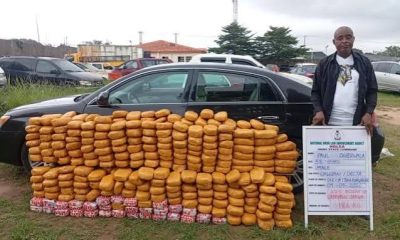
NDLEA Seizes UK-Bound Cannabis, Drugs Hidden In Bread, Speakers
-
 News36 seconds ago
Account For ?126bn ‘Missing’ Electoral Funds, SERAP Tells INEC
-

 News33 seconds ago
NBA Tasks Law Students On Advocacy, Professional Excellence
-
 News31 seconds ago
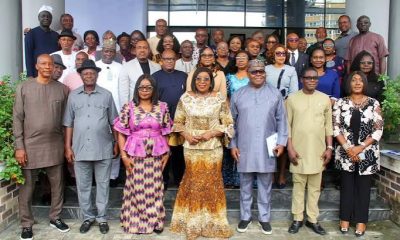
RSG Tasks Permanent Secretaries On Transformational Leadership …As Number Of PS Rises To 39 In Rivers
-
 News53 seconds ago
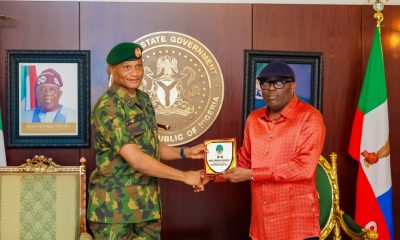
Cultivate Culture Of Thanksgiving, Fubara Urges Rivers People
-
 News42 seconds ago
BRICS: Nigeria Seeks Reform Of UN, Global Financial System
-
 News38 seconds ago
Rivers HOS, Permanent Secretaries Inducted Into Institute of Directors of Nigeria