
Business
NIMASA Moves To Save Over $40,000, Bans Foreign Vessels

The Nigerian Maritime Administration and Safety Agency (NIMASA has announced a bold move stopping foreign vessels from operating in Nigeria’s cabotage environment.
NIMASA in a public notice recently said the action was taken to enhance enforcement of the statutory requirements for indigenous participation in Nigeria’s Cabotage trade and maritime activities.
NIMASA is laden with the statutory mandate of implementing applicable laws including the NIMASA Act 2007 and the Coastal and Inland Shipping (Cabotage) Act 2003, in addition to the Cabotage regulations which altogether seek to empower local shipowners and advance indigenous shipping.
Explaining the new policy action, NIMASA stated, “Under the enhanced enforcement regime, all persons and entities requiring vessels for Cabotage operations are required to use vessels that meet applicable Nigerian ownership, registration, manning and construction requirements and are duly registered in the Special Register for Vessels and Ship Owning Companies Engaged in Cabotage.”
The Agency further required all vessels, owners, operators, charterers, managers and other stakeholders engaged in Cabotage activities to maintain valid statutory certificates, licenses, registrations and other required documentation.
“Cabotage vessels must, as applicable, be wholly owned by Nigerian citizens, duly registered in the relevant Special Register, manned by Nigerian citizens and built in Nigeria.
“Deployment of vessels that do not meet these requirements may only be considered where the requisite Nigerian capacity is unavailable and the statutory conditions have been established and verified by NIMASA,” the agency added.
Experts and indigenous shipowners have lamented that over $40,000 is lost to foreign ships doing business in Nigerian waters daily. The amount translates to a whopping $14.5 million (about N20.15 billion) in a year.
“The Agency will continue to monitor compliance with the Cabotage Act, its regulations and applicable guidelines, in a bid to entrench maritime governance and ensure that jobs meant for Nigerians are not outsourced,” NIMASA assured.
While the Cabotage Act provides the right of first refusal to indigenous vessels, foreign vessels have continued to do over 95% of cabotage businesses in Nigeria. Industry players cite lack of capacity and non-availability of standard vessels from indigenous shipowners.
The new policy move may now require foreign vessels to partner local shipowners to assume indigenous ownership in order to continue to do business in Nigeria if NIMASA would actually implement the action to the letter.


Continue Reading
The Federal Government and the Nigerian Navy have called for stronger collaboration among government agencies, environmental experts and other stakeholders to protect Nigeria’s lakes from pollution, over-exploitation and the growing effects of climate change.
The call came in Abuja recently as Nigeria joined the global community to mark World Lake Day, with stakeholders warning that the degradation and shrinking of lakes could have far-reaching consequences for water security, food production, livelihoods, biodiversity and the country’s emerging blue economy.
The event was organised by Naval Base Abuja, theme, “Revitalising our Lakes: Advancing Ecosystem Resilience and Shared Prosperity.”
Among those in attendance were officials of the Federal Ministry of Environment, the Nigerian Navy, environmental experts, representatives of government agencies, paramilitary organisations, members of the academic community and the media.
Speaking at the event, the Minister of Environment, Alhaji Balarabe Lawal, said the condition of lakes and reservoirs around the world had deteriorated significantly compared with the situation in the 1990s.
Lawal, who was represented by the Director of Pollution Control and Environmental Health in the ministry, Mrs Omotunde Adeola, identified rapid urban expansion, toxic and nutrient pollution, excessive water extraction, invasive species, habitat degradation, biodiversity loss and unsustainable land-use practices as some of the major threats confronting lake ecosystems.
He also expressed concern over the growing practice of dumping solid waste into water bodies, noting that floods increasingly wash refuse and other pollutants into lakes and reservoirs.
According to him, failure to address the problems could affect water volume and quality, undermine the ability of lakes to serve as natural buffers against environmental shocks, destroy biodiversity and threaten the livelihoods and well-being of communities that depend on the water bodies.
The warning has particular significance for Nigeria, where inland water bodies support fishing, agriculture, transportation, electricity generation, tourism and a wide range of economic activities.
The minister said Nigeria had more than 100 small lakes and several major lakes distributed across the country, with 16 officially recognised major lakes classified as natural or man-made. They include Lake Chad, Kainji Lake and Oguta Lake.
Lake Chad, in particular, illustrates the scale of the challenge facing the region. The lake, shared by Nigeria, Niger, Chad and Cameroon, has experienced dramatic fluctuations and long-term shrinkage.
The European Space Agency has reported that its surface area declined by about 90 per cent from its extent in the 1960s, with reduced rainfall, climate change, irrigation and increasing demand for freshwater among the contributing factors.
The shrinking of Lake Chad has implications beyond the environment. The lake and its surrounding basin support fishing, farming, livestock production and other economic activities for millions of people across the four countries. Its decline therefore has consequences for food security, employment, migration and regional stability.
Kainji Lake presents a different dimension of the importance of Nigeria’s inland waters. Created by the construction of the Kainji Dam on the River Niger, the reservoir supports hydroelectric power generation, fishing, agriculture and other economic activities.
Similarly, Oguta Lake in Imo State is an important natural lake with ecological, economic and tourism value. Its catchment is connected to several rivers and parts of the Niger floodplain, making its environmental condition important to the wider ecosystem of southeastern Nigeria.
Lawal said healthy lakes provide water for human consumption, food production, irrigation and health, while also contributing to hydroelectric power generation, drought mitigation, microclimate regulation and biodiversity conservation.
He further linked the protection of lakes to the development of Nigeria’s blue economy, noting that inland waterways provide opportunities for transportation, trade, ecotourism and recreation.
Globally, lakes are estimated to number more than 117z million and cover about five per cent of the Earth’s land surface. Their ecological and economic importance has made their protection an increasingly important component of climate and environmental policy.
He commended the Commander of Naval Base Abuja, Commodore Oluseyi Oladipo, for sustaining the observance of World Lake Day, describing the initiative as an important platform for raising public awareness about the ecological, economic and social value of lakes.
He said the Federal Ministry of Environment would continue to work with the Nigerian Navy and other stakeholders to protect and restore the country’s water bodies.
Also speaking, Oladipo said the Navy’s involvement in the initiative went beyond environmental awareness, describing it as part of the service’s effort to strengthen civil-military relations and expand its contribution to national development.
He said the initiative was consistent with the Renewed Hope Agenda of President Bola Tinubu, particularly the emphasis on strengthening the civilian assistance and outreach functions of the Armed Forces.
According to him, the Navy also seeks to contribute to efforts aimed at rehabilitating the Lake Chad Basin ecosystem and protecting other critical water bodies across the country.
“We are inspired to use World Lake Day to emphasise the importance of lakes to ecosystems, economies and communities, while fostering greater awareness of environmental issues,” he said.
Oladipo said the Navy hoped the commemoration would stimulate pragmatic policy measures to protect and restore lakes threatened by pollution, overuse and climate change.
He added that the Navy was using the occasion to educate students, young people, policymakers and members of the public on the ecological importance of lakes and the need for responsible use of water resources.
The initiative, according to the Navy, is intended to demonstrate that environmental protection requires more than annual commemorations and must translate into practical action.
For Nigeria, the challenge is increasingly clear: preserving its lakes is not simply an environmental responsibility but also an economic and national-security imperative.
Stories by Nkpemenyie Mcdominic, Lagos
President Bola Ahmed Tinubu, GCFR has received the Director-General of the Nigerian Maritime Administration and Safety Agency NIMASA, Dr. Dayo Mobereola, at the State House, Abuja, to discussed issues bordering on the development of Nigeria’s maritime sector.
During the meeting, Dr. Mobereola briefed the President on developments within NIMASA over the past two years, highlighting the progress recorded by the Agency as well as some of the challenges confronting the industry.
Following the briefing, President Tinubu reaffirmed his administration’s commitment to the continuous development of Nigeria’s maritime industry.
He noted that the creation of NIMASA was a deliberate step towards ensuring that the maritime sector contributes more significantly to the nation’s Gross Domestic Product GDP.
While commending NIMASA for the progress recorded so far, the Presidentd charged Dr. Mobereola and his team at NIMASA not to rest on their oars.
The Federal Ministry of Marine and Blue Economy has moved to translate recommendations on boosting fish production in Nigeria into concrete action, with the Minister of Marine and Blue Economy, Dr. Adegboyega Oyetola, inaugurating a technical committee to drive implementation.
Oyetola, who inaugurated the “Technical Committee on Accelerating Fish Production in Nigeria” in Abuja recently, said the initiative was aimed at moving beyond policy recommendations to coordinated action capable of delivering measurable improvements in the country’s fisheries and aquaculture sector.
He said fish remained a critical source of animal protein for millions of Nigerians, while the fisheries and aquaculture value chain provided livelihoods through production, processing, marketing, transportation and other related services.
“Fish is an important source of animal protein for millions of Nigerians. The fisheries and aquaculture sector sustains livelihoods across production, processing, marketing, transportation and related services.
“However, domestic production remains substantially below national demand, with consequences for food security, household incomes and foreign-exchange resources,” he said.
Oyetola identified high production costs, particularly the cost of feed, inadequate access to quality fish seed and broodstock, weak fish-health and biosecurity systems, post-harvest losses and insufficient cold-chain and storage infrastructure among the major challenges confronting the sector.
He also cited limited access to affordable finance, gaps in research and innovation, weak data systems, as well as inadequate standards, traceability and market development as constraints that must be urgently addressed.
According to the Minister, “The transfer of fisheries and aquaculture functions to the Federal Ministry of Marine and Blue Economy has provided a stronger institutional platform for addressing these challenges as part of Nigeria’s broader blue-economy development.”
He reaffirmed the ministry’s commitment to increasing sustainable domestic fish production, strengthening the fisheries value chain and progressively reducing Nigeria’s dependence on fish imports.
The Minister recalled that ministry, in collaboration with the National Institute for Policy and Strategic Studies (NIPSS), convened a strategic roundtable on October 29, 2025 on accelerating fish production in Nigeria, which produced recommendations aimed at addressing production and value-chain constraints.
He said the newly inaugurated committee had been constituted to rigorously assess those recommendations and turn validated proposals into a practical, prioritised implementation roadmap.
“Your assignment is not to develop another policy or establish a parallel programme,” Oyetola told members of the committee, stressing the report of the roundtable must be assessed against the National Policy on Marine and Blue Economy, the National Fisheries and Aquaculture Policy, relevant laws, existing government programmes and the statutory mandates of relevant institutions.
He charged the committee to scrutinise every recommendation and determine whether it should be adopted, refined, integrated into existing frameworks, subjected to further study or set aside as unviable.
The minister urged members of the technical committee, drawn from government, academia, professional bodies, research institutions and industry, to approach the assignment with urgency, objectivity and a strong focus on results. He said their recommendations must be realistic, evidence-based and financially responsible, while delivering tangible gains in fish production, job creation and food security.
Oyetola assured the committee of the ministry’s institutional support and expressed confidence that its work would provide a practical pathway for accelerating growth in Nigeria’s fisheries and aquaculture sector.
Speaking earlier, the Permanent Secretary of the Federal Ministry of Marine and Blue Economy and Chairman of the committee, Mrs Fatima Sugra Mahmood, assured the committee would approach its mandate with a strong sense of responsibility, ensuring the recommendations of the roundtable would be thoroughly reviewed and translated into practical interventions capable of delivering measurable results.
She said the committee would work closely with relevant government institutions, researchers, industry stakeholders and development partners to identify priority actions, address existing gaps and develop a realistic implementation roadmap to accelerate sustainable fish production, strengthen the fisheries value chain and contribute to Nigeria’s food security and economic development.
A member of the committee, Prof Akintola Shehu Latunji, Professor of Fisheries at Lagos State University, who spoke on behalf of other members, thanked the Minister for inaugurating the committee. He said the committee would work with relevant stakeholders to deliver its mandate and catalyse fish production across the country.
-
 Metro5 days ago
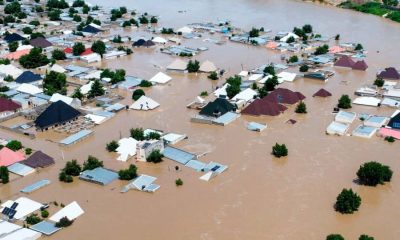
From Himalayan Ice to Niger Delta Floods: How Melting Glaciers Will Reshape Nigeria’s Coastline
-
Sports25 minutes ago
Edo Queens Emerge WAFU B Champions, Qualify For CAF WCL
-
Sports25 minutes ago
African V’Ball: Amaka Paul Emerges 4th Best Scorer
-
Politics17 minutes ago
Ex-IGP Clinches SDP Ticket For 2027 Nasarawa Governorship Race
-
Oil & Energy47 minutes ago
Delta Targets 120MW Power Boost, Moves To Cut Reliance On National Grid
-
Politics17 minutes ago
2027: LP Candidate Vows To Secure Ikwerre State Assembly Seat
-
News38 minutes ago
President Tinubu Reaffirms Commitment To Maritime Development
-
Politics7 minutes ago
Tinubu, ‘Open Your Hand’ Politics Grand Master – Dike