
Business
NCDMB Champions Local Content, Industrial Growth At AOW 2026

The Executive Secretary of Nigerian Content Development and Monitoring Board (NCDMB), Engr. Felix Omatsola Ogbe has stated the need for African countries to move beyond resource ownership and focus on building sustainable industrial capacity, creating greater value from their natural resources and positioning African businesses to compete globally.
Engr. Ogbe said this while delivering his opening remarks at the Africa Oil Week (AOW) 2026 in Accra, Ghana recently.
NCDMB Secretary represented by the Director, Corporate Services, NCDMB, Dr. Abdulmalik Halilu, who spoke on the theme, “from Resource Ownership to Industrial Power”, noted the need to harness and utilise our resources.
“Local content frameworks must promote the development and utilisation of African cross border capacities for the industrialisation of Africa.
“Local content value proposition include research and technology development, local employment, strategic partnerships, ownership and control of assets, supply chain optimisation and sustainable operations, increase production and utilisation of locally made good and contributions to gross domestic product (GDP)”, he said.
NCDMB participated in the Africa Local Content Programme, an event The Tide learnt is a leading international conference, networking, and exhibition programme focused on Africa’s oil, gas, and upstream energy sector.
AOW brings together industry leaders, governments, regulators, investors, and service providers to develop policy, share discoveries, secure investment, and shape the continent’s energy future.
Themed, ‘Building African Capacity, Competitiveness and Collaboration Across the Upstream Value Chain’, the Africa Local Content Programme was organised in partnership with the NCDMB, the African Union (AU), and the Petroleum Commission Ghana.
The event featured high-level discussions aimed at advancing African capacity, competitiveness and collaboration across the upstream value chain.
A Statement from the Corporate Communications Division of the NCDM Omomehin, participated in discussions on “Harmonising and Standardising Technology and Policy: Driving Change through the Brazzaville Accord,” which focused on the importance of policy and technology alignment in driving regional energy development.
The Statement also added that the General Manager, Corporate Communications Division, Dr Obinna Ezeobi moderated the session on “Market Entry Insights: Unlocking Africa’s Most Compelling Upstream Opportunities,” while Dr. Hailu joined other industry stakeholders as a panelist to discuss the strategies and enablers that will accelerate investment in Africa’s upstream oil and gas sector.
The discussants according to the Board agreed that local content can be used to attract investments and lower the cost of operations, while Africa oil producers must ensure stability of regulations in their jurisdictions.
The Tide gathered that officials of the NCDMB also featured in several strategic sessions, contributing the Board’s experience and perspectives on critical issues shaping the future of Africla’s energy industry as Mr. Erefagha Turner, Assistant Manager Planning, Research and Statistics contributed to discussions on “Unlocking Capital for African Content Growth,” with emphasis on creating financing pathways to support the growth of indigenous businesses across the continent.
Turner described the Nigerian Content Intervention Fund (NCI Fund) as a successful financing model that has helped service companies to grow capacities, while Engr. Dokubo Obongo.
The Manager Institutional Strengthening and Capacity Building contributed to the session on “Investing in Talent: Building Africa’s Energy Workforce,” which highlighted the importance of skills development and investment in human capital as essential requirements for building a globally competitive African energy workforce.
Another contributor from the NCDMB was Mr. Ajimijaye Omomehin who made inputs into the discussions on “Building Regional Oil & Gas Industrial Hubs.
The various sessions highlighted the importance of access to capital, policy harmonisation, technology, talent development and regional collaboration in transforming Africa’s abundant natural resources into sustainable industrial and economic opportunities.
Ariwera Ibibo-Howells, Yenagoa


Continue Reading
The Nigeria Union of Journalists (NUJ), Rivers State Council under the leadership of Comrade Paul Bazia has called for greater accountability in the management of public funds at the local government level, stressing the need for increased investment in basic infrastructure and services that would improve the lives of residents.
The Union made the call in a communiqué issued at the end of its 10th Congress held on Thursday, September 3, 2026, at the Ernest Ikoli Press Centre, Port Harcourt, where it reviewed issues affecting journalists, governance, security and the socio-economic development of Rivers State.
Congress noted the increasing allocations accruing to local governments from the Federation Account Allocation Committee, FAAC, and stressed the need for proper management and deployment of the funds to critical development sectors.
It urged local government authorities to regularly disclose information on revenues received and expenditures undertaken, particularly in areas such as roads, primary healthcare, education, sanitation, water supply and other basic services.
On waste management, NUJ expressed concern over the worsening environmental sanitation situation in parts of Rivers State, attributing the challenge to indiscriminate disposal of refuse and inadequate modern waste collection and management systems.
The Congress therefore called on the Rivers State Government and local government authorities to establish an effective, accountable and accessible waste-management system, including regular waste collection, designated disposal points and stronger enforcement of environmental sanitation regulations.
It also urged residents to take responsibility for proper waste disposal and desist from dumping refuse in drainage channels and other unauthorised locations, noting that such practices could worsen environmental and public health challenges.
On public order, Congress expressed serious concern over the increasing activities of cultists and touts around bus stops, transport corridors and markets in Port Harcourt, warning that such activities could encourage extortion and intimidation of citizens and negatively affect the economic environment.
The Union therefore called on the State Government, local government authorities and security agencies to take decisive and lawful action against cultism and touting, while ensuring that enforcement operations respect the rights and dignity of citizens.
On education, Congress urged the Rivers State House of Assembly to reconsider the suspension of funding for the Rivers State Medical Scholarship Programme with PAMO University, stressing that students already benefiting from approved scholarship arrangements should not be unnecessarily disadvantaged.
The Congress also expressed concern over police extortion and brutality in the state, particularly the killing of a UNIPORT graduate along Agip Road, Port Harcourt, and called for the prosecution of officers found culpable, insisting that dismissal from service should not replace criminal justice.
As the 2027 general elections approach, the NUJ urged political actors and parties to conduct their activities peacefully and in accordance with the Electoral Act, while charging journalists to maintain accuracy, neutrality, balance and professionalism and avoid unverified information, hate speech and reports capable of escalating political tensions.
The Union, while reaffirming its commitment to accountability, good governance, human rights, peace and professional journalism, also offered its platform to the Rivers State Police Command for regular briefings on security developments and other matters of public interest.
King Onunwor
The Federal Government and the Nigerian Navy have called for stronger collaboration among government agencies, environmental experts and other stakeholders to protect Nigeria’s lakes from pollution, over-exploitation and the growing effects of climate change.
The call came in Abuja recently as Nigeria joined the global community to mark World Lake Day, with stakeholders warning that the degradation and shrinking of lakes could have far-reaching consequences for water security, food production, livelihoods, biodiversity and the country’s emerging blue economy.
The event was organised by Naval Base Abuja, theme, “Revitalising our Lakes: Advancing Ecosystem Resilience and Shared Prosperity.”
Among those in attendance were officials of the Federal Ministry of Environment, the Nigerian Navy, environmental experts, representatives of government agencies, paramilitary organisations, members of the academic community and the media.
Speaking at the event, the Minister of Environment, Alhaji Balarabe Lawal, said the condition of lakes and reservoirs around the world had deteriorated significantly compared with the situation in the 1990s.
Lawal, who was represented by the Director of Pollution Control and Environmental Health in the ministry, Mrs Omotunde Adeola, identified rapid urban expansion, toxic and nutrient pollution, excessive water extraction, invasive species, habitat degradation, biodiversity loss and unsustainable land-use practices as some of the major threats confronting lake ecosystems.
He also expressed concern over the growing practice of dumping solid waste into water bodies, noting that floods increasingly wash refuse and other pollutants into lakes and reservoirs.
According to him, failure to address the problems could affect water volume and quality, undermine the ability of lakes to serve as natural buffers against environmental shocks, destroy biodiversity and threaten the livelihoods and well-being of communities that depend on the water bodies.
The warning has particular significance for Nigeria, where inland water bodies support fishing, agriculture, transportation, electricity generation, tourism and a wide range of economic activities.
The minister said Nigeria had more than 100 small lakes and several major lakes distributed across the country, with 16 officially recognised major lakes classified as natural or man-made. They include Lake Chad, Kainji Lake and Oguta Lake.
Lake Chad, in particular, illustrates the scale of the challenge facing the region. The lake, shared by Nigeria, Niger, Chad and Cameroon, has experienced dramatic fluctuations and long-term shrinkage.
The European Space Agency has reported that its surface area declined by about 90 per cent from its extent in the 1960s, with reduced rainfall, climate change, irrigation and increasing demand for freshwater among the contributing factors.
The shrinking of Lake Chad has implications beyond the environment. The lake and its surrounding basin support fishing, farming, livestock production and other economic activities for millions of people across the four countries. Its decline therefore has consequences for food security, employment, migration and regional stability.
Kainji Lake presents a different dimension of the importance of Nigeria’s inland waters. Created by the construction of the Kainji Dam on the River Niger, the reservoir supports hydroelectric power generation, fishing, agriculture and other economic activities.
Similarly, Oguta Lake in Imo State is an important natural lake with ecological, economic and tourism value. Its catchment is connected to several rivers and parts of the Niger floodplain, making its environmental condition important to the wider ecosystem of southeastern Nigeria.
Lawal said healthy lakes provide water for human consumption, food production, irrigation and health, while also contributing to hydroelectric power generation, drought mitigation, microclimate regulation and biodiversity conservation.
He further linked the protection of lakes to the development of Nigeria’s blue economy, noting that inland waterways provide opportunities for transportation, trade, ecotourism and recreation.
Globally, lakes are estimated to number more than 117z million and cover about five per cent of the Earth’s land surface. Their ecological and economic importance has made their protection an increasingly important component of climate and environmental policy.
He commended the Commander of Naval Base Abuja, Commodore Oluseyi Oladipo, for sustaining the observance of World Lake Day, describing the initiative as an important platform for raising public awareness about the ecological, economic and social value of lakes.
He said the Federal Ministry of Environment would continue to work with the Nigerian Navy and other stakeholders to protect and restore the country’s water bodies.
Also speaking, Oladipo said the Navy’s involvement in the initiative went beyond environmental awareness, describing it as part of the service’s effort to strengthen civil-military relations and expand its contribution to national development.
He said the initiative was consistent with the Renewed Hope Agenda of President Bola Tinubu, particularly the emphasis on strengthening the civilian assistance and outreach functions of the Armed Forces.
According to him, the Navy also seeks to contribute to efforts aimed at rehabilitating the Lake Chad Basin ecosystem and protecting other critical water bodies across the country.
“We are inspired to use World Lake Day to emphasise the importance of lakes to ecosystems, economies and communities, while fostering greater awareness of environmental issues,” he said.
Oladipo said the Navy hoped the commemoration would stimulate pragmatic policy measures to protect and restore lakes threatened by pollution, overuse and climate change.
He added that the Navy was using the occasion to educate students, young people, policymakers and members of the public on the ecological importance of lakes and the need for responsible use of water resources.
The initiative, according to the Navy, is intended to demonstrate that environmental protection requires more than annual commemorations and must translate into practical action.
For Nigeria, the challenge is increasingly clear: preserving its lakes is not simply an environmental responsibility but also an economic and national-security imperative.
Stories by Nkpemenyie Mcdominic, Lagos
President Bola Ahmed Tinubu, GCFR has received the Director-General of the Nigerian Maritime Administration and Safety Agency NIMASA, Dr. Dayo Mobereola, at the State House, Abuja, to discussed issues bordering on the development of Nigeria’s maritime sector.
During the meeting, Dr. Mobereola briefed the President on developments within NIMASA over the past two years, highlighting the progress recorded by the Agency as well as some of the challenges confronting the industry.
Following the briefing, President Tinubu reaffirmed his administration’s commitment to the continuous development of Nigeria’s maritime industry.
He noted that the creation of NIMASA was a deliberate step towards ensuring that the maritime sector contributes more significantly to the nation’s Gross Domestic Product GDP.
While commending NIMASA for the progress recorded so far, the Presidentd charged Dr. Mobereola and his team at NIMASA not to rest on their oars.
-
Sports1 hour ago
Edo Queens Emerge WAFU B Champions, Qualify For CAF WCL
-
Sports1 hour ago
African V’Ball: Amaka Paul Emerges 4th Best Scorer
-
 Metro5 days ago
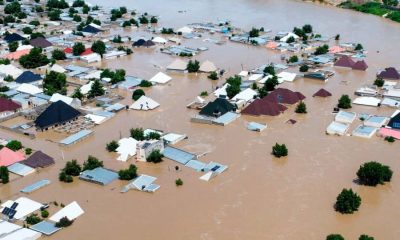
From Himalayan Ice to Niger Delta Floods: How Melting Glaciers Will Reshape Nigeria’s Coastline
-
Business58 minutes ago
FG Seek Stronger Collaboration Among Government Agencies
-
Sports2 hours ago
Nigerian Female Keeper Joins Crystal Palace
-
Rivers39 minutes ago
PR, Tool For Mutual Relationship With Public – NSCDC Boss
-
Sports2 hours ago
D’Tigress suffer defeat in 2026 FIBA World Cup opener
-
Sports1 hour ago
Shooting stars edge CS Sfaxien 1-0 in CAF confederation cup