
Business
Bayelsa Denies Delays In Infrastructure Project Execution… Task Journalists On Factual Reportage

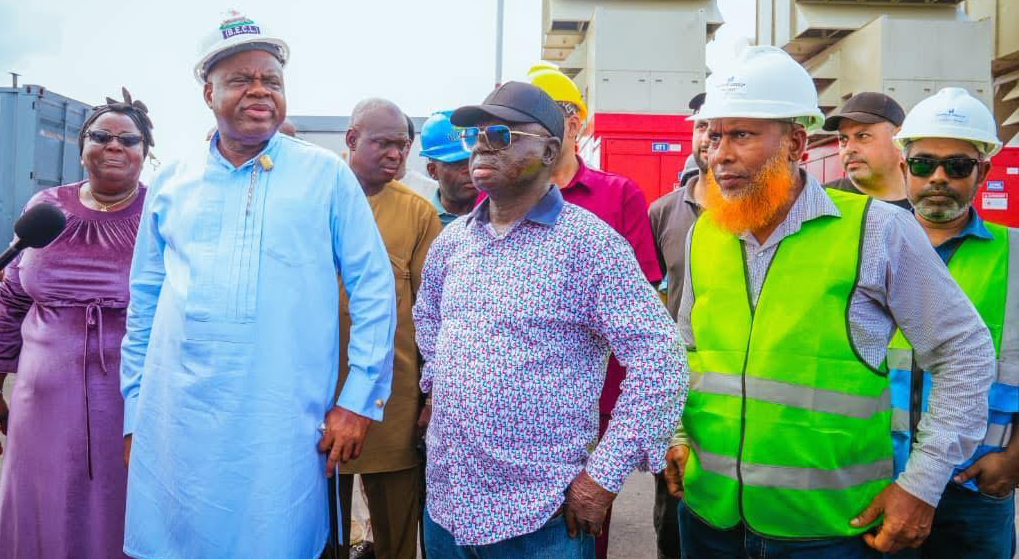
The Bayelsa State Government has charged Journalists on authentic and fact-based reportage on its activities and ongoing projects and programmes in the State.
The State’s Commissioner for Information, Orientation and Strategy, Mrs. Ebiuwou Koku-Obiyai gave the charge midweek during the State’s monthly Transparency briefing in Yenagoa, the State capital.
Speaking against the backdrop of alleged delays of work at the Igbogene new stadium in Yenagoa which recent reports have allegedly attributed to a pending federal government funding, the Commissioner described the claim as false and misinforming.
“There is no truth in that. That is all false. Work at the Stadium which is a world-standard, FIFA-standard stadium, is ongoing.
“The prosperity government remains fully committed to delivering a world-class facility for our youth. We are not waiting for anyone,” she stated.
Mrs. Koku-Obiyai said the administration of Governor Douye Diri remains focused on completing the stadium and other projects as part of efforts to develop the State and engage youths.
She described the media as a critical partner in governance and commended journalists for bringing government policies and projects to public domain
“With the election season approaching, I urge the press to remain professional and impartial in their reportage.
“Report facts. Hold government accountable. But do not become partisan players, or elevate personal issues above developmental concerns”, she said.
“I want to call on Bayelsans and friends of the state to participate in activities marking “30th creation anniversary of the State, the Glory of All Lands.
“The anniversary is an opportunity to celebrate the state’s achievements and project its future”, she added.
By: Ariwera Ibibo-Howells, Yenagoa


Business
NCDMB Canvases Pan-African Local Content Synergy For Economic Diversification, Industrial Dev
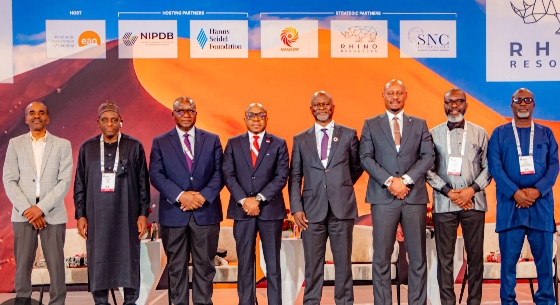
The Nigerian Content Development and Monitoring Board (NCDMB), has called for deeper collaboration among African nations to unlock the continent’s enormous local content potentials and accelerate economic diversification, industrial growth, and sustainable development across the oil and gas value chain.
The position was presented during a strategic engagement in Namibia with focus on African Local Content Opportunities and cross-border partnerships.
Executive Secretary of the Board, Engr. Felix Omatsola Ogbe, represented by Dr. Abdulmalik Halilu highlighted the importance of leveraging African capabilities, harmonizing local content policies, and fostering strategic partnerships among African businesses to maximize value retention within the continent.
Speaking on the theme, “African Local Content Opportunities: Pathway to Economic Diversification and Development,” Dr. Halilu noted that several African countries have established legal and regulatory frameworks for local content development, creating a foundation for greater regional integration and industrial cooperation.
He emphasized that African local content should promote the development and utilization of cross-border capacities and capabilities as a catalyst for the industrialization of the continent.
Ogbe referenced key aspirations of the 2025 APPO Ministerial Council’s Brazzaville Declaration, which encourages African nations to strengthen supplier capacity, support skills development and knowledge transfer, promote joint ventures and partnerships, harmonize local content regulations, and encourage public-private partnerships to enhance African participation in the oil and gas industry.
He further showcased existing African capabilities across fabrication, engineering, manufacturing, subsea services, marine operations, and project execution, demonstrating that the continent possesses significant capacity that can be leveraged through strategic collaboration among African companies and institutions.
Drawing from Nigeria’s local content success story, he highlighted the transformative impact of a data-driven implementation framework, noting the significant growth achieved since the enactment of the Nigerian Oil and Gas Industry Content Development (NOGICD) Act.
The Board’s Scribe emphasized that robust data systems, compliance monitoring, supplier development initiatives, and strategic investments have strengthened local participation and enhanced industry competitiveness.
According to him, the future of African local content lies in practical business-to-business partnerships that enable companies from different African countries to jointly pursue and execute major projects.
He outlined partnership models such as prime-subcontractor arrangements, incorporated local content joint ventures, contractual consortium bids, and reciprocal market access alliances as effective mechanisms for expanding African participation in large-scale energy projects.
The NCDMB boss stressed that realizing a truly integrated African local content ecosystem would require coordinated action across multiple sectors, including regulatory harmonization, trade facilitation, customs cooperation, immigration reforms, and access to sustainable financing.
He also endorsed initiatives aimed at creating a Pan-African supplier database and interactive opportunities platform to aggregate and showcase African capabilities.
“The opportunities available across Africa can only be fully unlocked through deliberate and synchronized efforts that enable cross-border service delivery and industrial collaboration.
“The Brazzaville Declaration represents an important starting point, but implementation, partnership, and policy alignment will ultimately determine the success of Pan-African local content”, Ogbe said.
The NCDMB’s helmsman further emphasized that the Board believes that leveraging the African Continental Free Trade Area (AfCFTA) framework and strengthening cooperation among African institutions and businesses will create new opportunities for indigenous companies to compete, collaborate, and deliver world-class projects across the continent.
Meanwhile, during the first panel session, the Director, Monitoring and Evaluation, Mr. Esueme Dan Kikile, Esq., shared his views on Global Best practices, perspectives on strategies for strengthening local participation and maximizing in-country value in the oil and gas industry.
Mr Kikile further Namibians to explore practical approaches to supplier development, skill transfer, enterprise growth and sustainable local content with discussions highlighting lessons from successes of other oil producing countries and their various relevance to building a resilient and sustainable oil and gas sector.
Similarly, at the exhibition tour at the Namibian Oil and Gas Conference (NOGC), Vice President of Namibia, Mrs. Lucia Witbooi, Vice President of Namibia, visited the Nigerian Content Development and Monitoring Board (NCDMB) exhibition stand.
A Statement from the Division of Corporate Communications of the NCDMB has it that the Namibian Vice President was warmly received by Mr. Esueme Dan Kikile, Esq., Director of Monitoring & Evaluation of the Board, alongside other staff.
The Statement adde that Kikile highlighted the Board’s mandates and activities, emphasizing the significance of the Nigerian Oil and Gas Industry Content Development (NOGICD) Act and its transformative impact on Nigeria’s oil and gas industry.
He also underscored the importance of regional collaboration and knowledge exchange in advancing sustainable growth across Africa’s energy sector.
By: Ariwera Ibibo-Howells, Yenagoa
Saturday PUNCH found that N74.48bn paid by manufacturers accounted for 13.82 per cent of the N538.91bn total local Company Income Tax collected during the period, according to data from the National Bureau of Statistics.
However, the sector’s tax remittance fell by 30.98 per cent year-on-year from N107.90bn in Q1 2025, highlighting the changing tax landscape as the four new tax laws introduced a simplified framework for businesses from January 1, 2026.
The Federal Government and the Manufacturers Association of Nigeria agree that the reforms should ensure that manufacturers meet their tax obligations without facing the multiple assessments, levies and administrative costs that previously burdened the productive sector.
Following a recent presentation to manufacturers, the Executive Secretary of the Joint Revenue Board, Olusegun Adesokan, said the new tax framework fundamentally changed manufacturers’ position within the tax system.
“The new law reframes the Nigerian manufacturer from an endlessly assessed target to a protected taxpayer. The law provides stronger safeguards than ever before. Our shared responsibility is to ensure these safeguards are consistently applied across every level of government,” Adesokan said.
He urged manufacturers to hold valid Tax Identification Numbers, maintain accurate records, file employees’ returns on time, pay undisputed assessments and raise valid objections where necessary.
Adesokan also urged manufacturers to comply with the Model Taxes and Levies Law, reject cash transactions for tax payments and use available dispute-resolution channels.
“The success of tax reform will ultimately be measured not by the taxes we impose, but by the businesses we enable to grow, the jobs we enable to create, and the prosperity we enable to share,” he said.
He said the four new tax laws had created an opportunity to reposition taxation as a strategic tool for growing the productive sector.
“In more recent times, the issue of tax has generated a lot of attention, both from the government and the private sector. And the four new tax laws that took effect from 1st of January 2026 have so far been a bigger platform for engaging and for deciding whether tax should support productivity or it should continue to burden the productive sector,” Ajayi-Kadir said.
He said manufacturers previously paid between 120 and 160 taxes and levies, which increased operating costs and created uncertainty for businesses.
The MAN DG said the Tax Ombud would provide manufacturers with a formal avenue for resolving disputes over assessments and other tax-related grievances.
“And we have a recourse in the tax ombudsman where we can address our grievances, our disagreements, and we’ll be sure to have a dispassionate settlement,” he said.
The Executive Vice Chairman of the NCC, Dr Aminu Maida, made the call last week at the closing ceremony of the fourth NCC Hackathon Live Show in Abuja, where innovators showcased technology solutions targeted at persons with disabilities and other digitally excluded Nigerians.
Maida, who was represented by the Executive Commissioner, Stakeholder Management, Rimini Makama, said Nigeria must move from being largely dependent on imported software to developing technologies tailored to local needs.
“Through this hackathon, we are transforming Nigeria from a passive importer of foreign software into a creator of locally engineered assistive technology that serves the ability of all its citizens,” he said.
He added that the solutions developed at the hackathon, ranging from artificial intelligence-powered speech-to-text technologies to voice-enabled public platforms, accessible USSD solutions and inclusive mobile applications, represented building blocks for technological self-reliance.
“By investing in a homegrown, universally accessible codebase, we guarantee Nigeria’s digital economy remains operational, secure, affordable, and responsive to Nigeria’s realities, immune to external shocks,” Maida said.
The NCC boss further urged venture capitalists, telecommunications operators and state governments to provide the investment and partnerships required to move the innovations beyond prototypes.
“We ask you not to view these innovators as contestants, but as future founders, future partners, and future vendors,” he said. “We encourage you to step forward, invest in these accessible prototypes, and help us remove digital exclusion.”
Maida said the need for locally relevant technologies had become more urgent because millions of Nigerians remained at risk of exclusion as economic and social activities increasingly moved online.
Citing World Bank estimates, he said about 25 million Nigerians experience at least one form of disability, while approximately 3.6 million experience significant difficulties in functioning.
He added that persons with disabilities could be excluded not only from connectivity but also from education, employment, financial services, healthcare and participation in society if digital products were not designed with accessibility in mind.
Representing MTN Nigeria, the Senior Manager, Strategy and Innovation, Chinyelu Chikwendu, pledged the telecom operator’s support for the innovators, saying the company was willing to provide infrastructure and explore partnerships with startups whose technologies aligned with its operations.
“We are happy to support your growth. We are happy to support these beautiful ideas that you are all working on, and we are here to help you with the various infrastructures that we have,” Chikwendu said.
She said MTN had infrastructure and platforms that startups could leverage to scale their products, including cloud services, its data centre and API marketplace.
Chikwendu also invited the 20 innovators who participated in the hackathon to apply for the company’s next Cloud Accelerator Programme, which provides startups with mentorship, funding and infrastructure support.
Also speaking, Amadi Kenneth of the Central Bank of Nigeria’s Consumer Protection and Financial Inclusion Department said the apex bank saw opportunities to deploy some of the innovations to expand financial inclusion.
“We want to see that the excluded Nigerians are brought into the financial system,” he said, identifying women, youths, persons with disabilities and people in remote communities as priority groups.
Kenneth said the CBN would collaborate with the NCC and could invite some participants to its Digital Channel Working Group to examine how their applications could support financial inclusion.
The NCC Director of Digital Economy, Helen Obi, said the commission expected the partnerships emerging from the event to help innovators scale their technologies beyond the competition.
She also urged financial institutions to consider dedicated funding for young innovators, saying, “Youths need to be encouraged. Let’s begin to have a huge fund projected for this sector of the economy.”
At the end of the competition, Sora emerged winner and received N3m, while ClearSignal won N2m in second place and Ikor received N1m for finishing third. The three were selected from five finalists, which also included Aditus and Axol.
-

 News2 days ago
Collaboration With NAF Key To Securing Rivers, Nigeria’s Economy -Fubara
-

 News2 days ago
Police Rescue Two Foreign Women Held Captive In Lagos
-
 Business2 days ago
Manufacturers Pay N74.5bn Tax As Reforms Offer Relief
-

 Niger Delta30 minutes ago
Bayelsa Reads Riot Act To Biseni Clan Over Shutdown of Oil Firms’ Operations
-
 City Crime28 minutes ago
Bayelsa Renders June, July Account Of Financial Receipt, Expenditure
-
 Business23 minutes ago
NCDMB Canvases Pan-African Local Content Synergy For Economic Diversification, Industrial Dev
-

 Oil & Energy2 days ago
Firm Launches Programme To Fast-track Clean Energy Start-ups
-
 Politics2 days ago
NDC Ekiti Confirms State Chairman’s Resignation