
Maritime
Bayelsa Renders June, July Account Of Financial Receipt, Expenditure


Technical Adviser to the Bayelsa State Governor on Treasury, Accounts and Revenue, Mr. Timipre Seipulo has rendered account of financial receipt and expenditures of the State Government for the months of June and July, 2026.
He said after all capital and recurrent expenditures were made in June, the state had over N1.2 billion left.
Seipulo declared the financial receipt and expenditures at the monthly transparency briefing of the State Government held on Thursday in Yenagoa, the State capital.
He stressed that with the brought-forward balance of over N37.3 billion from May, the State recorded a closing balance of N38.305 billion for the month of June.
The governor’s Aide further explained that in July after recurrent and capital expenditures over N16 million was left, stating that adding a balance brought forward of N38.305b the State has a balance of N38.321b.
“After all capital and recurrent expenditures were made in June, we had over N1.2b left.
“The N38.321b balance is not savings as being speculated. It’s been deployed for both capital and recurrent expenditures for the month of August”, he said.
“In July after recurrent and capital expenditures over N16 million was left. And in addition to the balance brought forward of N38.305b we had a balance of N38.321b.
“As at August 21st, 2026, some capital and recurrent payments had already been made”, he clarified.
By: Ariwera Ibibo-Howells, Yenagoa


Continue Reading
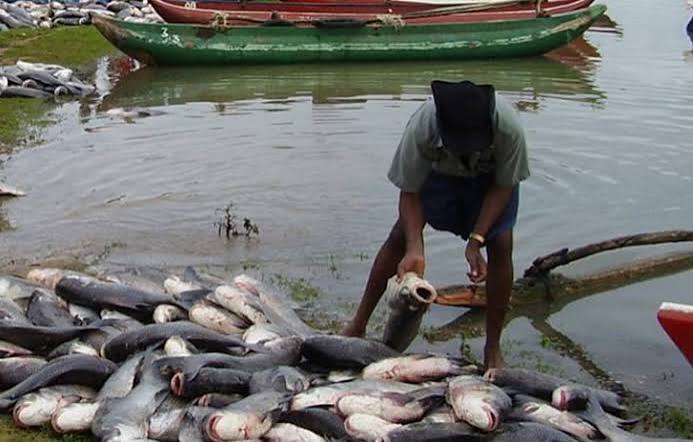
The Federal Ministry of Marine and Blue Economy has moved to translate recommendations on boosting fish production in Nigeria into concrete action, with the Minister of Marine and Blue Economy, Dr. Adegboyega Oyetola, inaugurating a technical committee to drive implementation.
Oyetola, who inaugurated the “Technical Committee on Accelerating Fish Production in Nigeria” in Abuja last week, said the initiative was aimed at moving beyond policy recommendations to coordinated action capable of delivering measurable improvements in the country’s fisheries and aquaculture sector.
He said fish remained a critical source of animal protein for millions of Nigerians, while the fisheries and aquaculture value chain provided livelihoods through production, processing, marketing, transportation and other related services.
“Fish is an important source of animal protein for millions of Nigerians. The fisheries and aquaculture sector sustains livelihoods across production, processing, marketing, transportation and related services.
“However, domestic production remains substantially below national demand, with consequences for food security, household incomes and foreign-exchange resources,” he said.
Oyetola identified high production costs, particularly the cost of feed, inadequate access to quality fish seed and broodstock, weak fish-health and biosecurity systems, post-harvest losses and insufficient cold-chain and storage infrastructure among the major challenges confronting the sector.
He also cited limited access to affordable finance, gaps in research and innovation, weak data systems, as well as inadequate standards, traceability and market development as constraints that must be urgently addressed.
According to the Minister, “The transfer of fisheries and aquaculture functions to the Federal Ministry of Marine and Blue Economy has provided a stronger institutional platform for addressing these challenges as part of Nigeria’s broader blue-economy development.”
He reaffirmed the ministry’s commitment to increasing sustainable domestic fish production, strengthening the fisheries value chain and progressively reducing Nigeria’s dependence on fish imports.
The Minister recalled that ministry, in collaboration with the National Institute for Policy and Strategic Studies (NIPSS), convened a strategic roundtable on October 29, 2025 on accelerating fish production in Nigeria, which produced recommendations aimed at addressing production and value-chain constraints.
He said the newly inaugurated committee had been constituted to rigorously assess those recommendations and turn validated proposals into a practical, prioritised implementation roadmap.
“Your assignment is not to develop another policy or establish a parallel programme,” Oyetola told members of the committee, stressing the report of the roundtable must be assessed against the National Policy on Marine and Blue Economy, the National Fisheries and Aquaculture Policy, relevant laws, existing government programmes and the statutory mandates of relevant institutions.
He charged the committee to scrutinise every recommendation and determine whether it should be adopted, refined, integrated into existing frameworks, subjected to further study or set aside as unviable.
The minister urged members of the technical committee, drawn from government, academia, professional bodies, research institutions and industry, to approach the assignment with urgency, objectivity and a strong focus on results. He said their recommendations must be realistic, evidence-based and financially responsible, while delivering tangible gains in fish production, job creation and food security.
Oyetola assured the committee of the ministry’s institutional support and expressed confidence that its work would provide a practical pathway for accelerating growth in Nigeria’s fisheries and aquaculture sector.
Speaking earlier, the Permanent Secretary of the Federal Ministry of Marine and Blue Economy and Chairman of the committee, Mrs Fatima Sugra Mahmood, assured the committee would approach its mandate with a strong sense of responsibility, ensuring the recommendations of the roundtable would be thoroughly reviewed and translated into practical interventions capable of delivering measurable results.
She said the committee would work closely with relevant government institutions, researchers, industry stakeholders and development partners to identify priority actions, address existing gaps and develop a realistic implementation roadmap to accelerate sustainable fish production, strengthen the fisheries value chain and contribute to Nigeria’s food security and economic development.
A member of the committee, Prof Akintola Shehu Latunji, Professor of Fisheries at Lagos State University, who spoke on behalf of other members, thanked the Minister for inaugurating the committee. He said the committee would work with relevant stakeholders to deliver its mandate and catalyse fish production across the country.
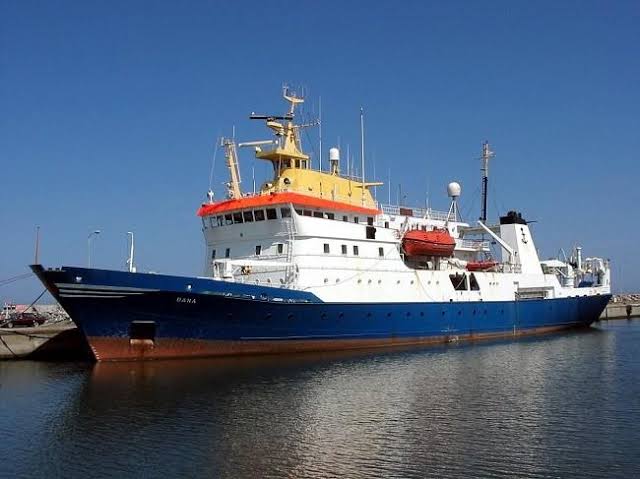
The Nigerian Maritime Administration and Safety Agency (NIMASA has announced a bold move stopping foreign vessels from operating in Nigeria’s cabotage environment.
NIMASA in a public notice recently said the action was taken to enhance enforcement of the statutory requirements for indigenous participation in Nigeria’s Cabotage trade and maritime activities.
NIMASA is laden with the statutory mandate of implementing applicable laws including the NIMASA Act 2007 and the Coastal and Inland Shipping (Cabotage) Act 2003, in addition to the Cabotage regulations which altogether seek to empower local shipowners and advance indigenous shipping.
Explaining the new policy action, NIMASA stated, “Under the enhanced enforcement regime, all persons and entities requiring vessels for Cabotage operations are required to use vessels that meet applicable Nigerian ownership, registration, manning and construction requirements and are duly registered in the Special Register for Vessels and Ship Owning Companies Engaged in Cabotage.”
The Agency further required all vessels, owners, operators, charterers, managers and other stakeholders engaged in Cabotage activities to maintain valid statutory certificates, licenses, registrations and other required documentation.
“Cabotage vessels must, as applicable, be wholly owned by Nigerian citizens, duly registered in the relevant Special Register, manned by Nigerian citizens and built in Nigeria.
“Deployment of vessels that do not meet these requirements may only be considered where the requisite Nigerian capacity is unavailable and the statutory conditions have been established and verified by NIMASA,” the agency added.
Experts and indigenous shipowners have lamented that over $40,000 is lost to foreign ships doing business in Nigerian waters daily. The amount translates to a whopping $14.5 million (about N20.15 billion) in a year.
“The Agency will continue to monitor compliance with the Cabotage Act, its regulations and applicable guidelines, in a bid to entrench maritime governance and ensure that jobs meant for Nigerians are not outsourced,” NIMASA assured.
While the Cabotage Act provides the right of first refusal to indigenous vessels, foreign vessels have continued to do over 95% of cabotage businesses in Nigeria. Industry players cite lack of capacity and non-availability of standard vessels from indigenous shipowners.
The new policy move may now require foreign vessels to partner local shipowners to assume indigenous ownership in order to continue to do business in Nigeria if NIMASA would actually implement the action to the letter.
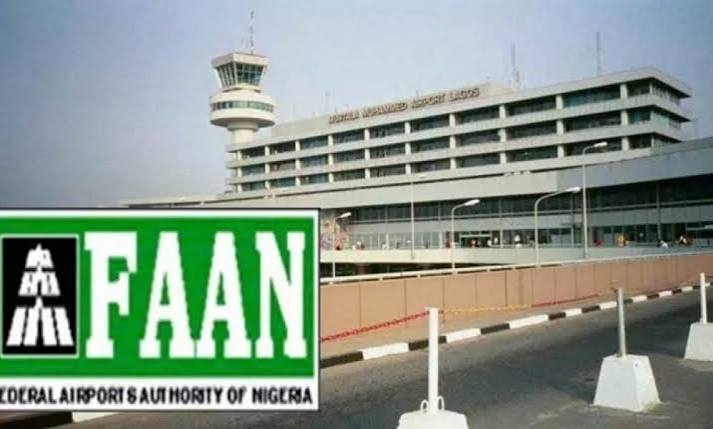
The Federal Airports Authority of Nigeria (FAAN) has cleared Bolt to resume operations at all FAAN-managed airports after both parties reached an agreement on how the ride-hailing company will operate within the airport environment.
FAAN announced this in a statement made available to Aviation Journalists and signed by its Director of Public Affairs and Consumer Protection, Henry Agbebire, last Thursday.
The authority also dismissed claims that it had introduced or undertaken control of airport taxi fares.
The development followed complaints from travellers over the temporary suspension of e-hailing services at the airports, with many passengers raising concerns about the higher cost and inconvenience caused by the disruption.
FAAN, while announcing the resolution, apologised to passengers affected by the situation and said it had taken their concerns into consideration.
FAAN said it had been dealing with challenges associated with commercial and e-hailing vehicles operating at airports for almost 10 years.
According to the authority, some of the issues included passenger solicitation, touting, random pick-ups, unregulated operations and concerns over safety and accountability.
It said some drivers also operate on multiple platforms, making it necessary to have better control and visibility over commercial transportation within the airport environment.
To address the situation, FAAN said it has introduced the Airport Car Hire Rank Management System (ACHRAMS) to organise the activities of authorised airport car-hire operators.
FAAN stressed that ACHRAMS was not designed to compete with popular e-hailing platforms such as Bolt and Uber.
“ACHRAMS is not an e-hailing application and was never conceived as a competitor to Uber, Bolt or any other mobility platform.
“It is also important to clarify that the fares highlighted in some of the recent public discussions were not rates newly imposed by FAAN or created by ACHRAMS.” The statement explained.
FAAN in the statement said airport taxi fares existed before the introduction of ACHRAMS, adding that the system only made the existing rates more visible to passengers.
The authority, however, admitted that the difference between the airport taxi fares and the cheaper rates for passengers were used to paying on e-hailing platforms contributed to the public backlash.
“FAAN is aware of and deeply appreciates the concerns expressed by passengers over the increased cost and inconvenience experienced during the temporary interruption of e-hailing services.
“We sincerely apologize for the difficulties this caused our passengers.” the statement also said.
The authority maintained that its decision was driven by safety, security and regulatory concerns rather than an attempt to make money from airport transportation.
“While the authority’s actions were driven by regulatory, safety and security considerations rather than economic interests, FAAN acknowledges that the immediate impact on passengers was significant. We listened, reflected and made the necessary adjustments.
“Following discussions between both sides, an agreement had now been reached with Bolt on the company’s operations at airports.
“The authority is therefore pleased to announce that, following constructive engagements, FAAN and Bolt have reached an agreeable operational framework and Bolt is cleared to commence its services at FAAN-managed airports immediately.” FAAN announced.
According to the statement, the agreement would allow it to maintain security and order within airports while giving passengers the convenience and freedom to choose e-hailing services.
FAAN said its responsibility was to ensure that all approved operators worked within a safe, secure, and orderly airport environment.
FAAN thanked travellers for their patience and understanding, stressing that passenger safety, security, convenience and overall experience remained central to its decisions.
By: Enoch Epelle
-

 Business35 seconds ago
Manufacturers Pay N74.5bn Tax As Reforms Offer Relief
-
 News2 hours ago
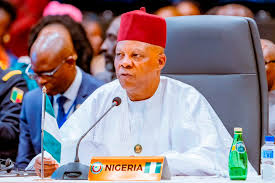
Take Action Over Xenophobic Attacks In S’Africa, Tinubu Tells AU
-
Rivers1 hour ago
AWLA Seeks Renewed Recognition, Support For Women
-
 News2 hours ago
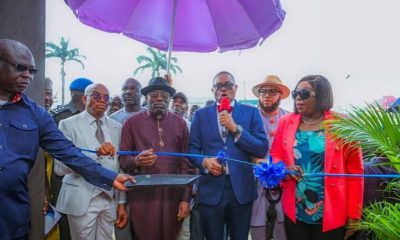
Fubara Scores Double On Health, Unveils New General Hospital
-
Rivers1 hour ago
Stakeholders Chart Course For Nigeria’s Oil, Gas Industry
-

 News2 hours ago
2027: My Legacy Projects ‘ll Give APC Advantage In Rivers -Fubara …Commissions 14.5km Agba-Ndele Road, Bridge
-
Rivers1 hour ago
Ogoni Dialogue Committee Denies Role In 40 NNPCL Jobs, Contract Awards
-

 News2 hours ago
Police Rescue Two Foreign Women Held Captive In Lagos