Connect with us

Editorial

That Oshiomhole’s Call On FG’s Road Projects

Published

on

There are moments in the life of a legislature when plain speaking becomes a public service. Senator Adams Oshiomhole provided such a moment on the floor of the Senate when he accused the Minister of Works, Senator David Umahi, of manifestly neglecting critical federal arteries in Edo and Delta States, and implored his colleagues to prevail on the Minister to adopt a more equitable and genuinely national approach to road infrastructure delivery. It was blunt, it was uncomfortable, and it was necessary.

The specifics of his complaint deserve restating. Drawing attention to the recent approval of some 20 new road projects despite the parlous state of existing ones, the former Edo State governor lamented that Nigerians cannot travel from Benin to Warri, Benin to Asaba, Benin to Auchi, or Auchi to Okene without encountering severe distress. He alleged a deliberate omission of these corridors from the national budget in the last three years, save for palliative interventions directed by President Bola Tinubu through tax credit arrangements. His question — “What have we done wrong?” — resonates far beyond the chambers of the National Assembly.

We lend our full and unequivocal support to that call. The Auchi-Benin Road, for instance, has been in a deplorable and near-impassable condition for several years, turning what should be a two-hour journey into an all-day ordeal of broken axles, extortionate fares, and despondent commuters. The media have, on multiple occasions, chronicled the suffering of motorists, traders, and students who ply that route. To describe it as a federal road today is to stretch the meaning of the term beyond recognition.

This pattern of sidelining is not confined to Edo or Delta. Even here in Rivers State, the disposition of the Federal Ministry of Works has left much to be desired, particularly along the Eleme axis of the East-West Road. That road, which ought to be a flagship of federal presence in the Niger Delta, has remained in a wretched state for long. Those who use it daily — workers at the Eleme Petrochemical Complex, the two refineries, Onne Port, and the countless ancillary industries — can attest to its deterioration. Work has proceeded in fits and starts without the sustained urgency such a strategic road demands.

The Eleme stretch is not a mere intra-state byway. It is the gateway to the nation’s economic jugular. According to the Federal Ministry of Works and Housing’s 2023 Highway Condition Survey, only about 35 per cent of the country’s 36,000 kilometres of federal roads are rated as being in good or fair condition, with the remainder classified as poor or very poor. The East-West Road, conceived in the 1970s to bind the entire Niger Delta, remains unfinished in critical sections more than four decades after. If it had been treated as a priority, the perennial gridlock, carnage, and economic loss on the Eleme-Refinery junction would have long been consigned to history.

The irony is as painful as it is glaring. The Niger Delta remains the goose that lays the golden eggs. Data from the Nigeria Extractive Industries Transparency Initiative [NEITI 2023 Oil and Gas Audit] show that the region still accounts for over 78 per cent of Nigeria’s federally collected export earnings and about 65 per cent of total government revenue. The National Bureau of Statistics [NBS Foreign Trade Report Q4 2024] similarly confirms that crude oil continues to dominate export receipts. By every metric of equity and economic logic, a region that sustains the national purse deserves first-rate consideration in the allocation of infrastructure, not afterthoughts and tokenism.

Road infrastructure is not largesse to be dispensed by favour; it is the skeleton upon which commerce, cohesion, and citizenship hang. When contracts are concentrated in one geopolitical zone while other zones are left to contend with craters, it erodes trust in the federation itself. The World Bank’s Nigeria Development Update [June 2023] estimated that poor transport connectivity inflates the cost of moving goods by up to 40 per cent and costs the Nigerian economy an estimated $1.5 billion annually in lost man-hours and vehicle maintenance. If we profess to be one country, then equity must be the compass that guides key institutions before any project is executed. Development must spread round, not pool in one place as though other regions do not matter.

There is also a grave security dimension that can no longer be ignored. The deplorable condition of federal roads has become a veritable enabler of criminality. The NBS Crime Experience and Security Perception Survey reported over 2.5 million incidents of kidnapping-related occurrences nationally, with transport workers identifying bad road spots as prime ambush points. When vehicles are forced to crawl at 10 kilometres per hour through failed sections at Auchi, Sapele Road, or Eleme, they become sitting ducks for armed gangs. Fixing bad roads, therefore, is not merely about convenience; it is about safeguarding lives.

By his intervention, Senator Oshiomhole has hit the nail on the head and reminded Minister Umahi of a fundamental constitutional truth: public office is held in trust. The Ministry of Works is not a personal estate where contracts are awarded according to whim or political convenience. It is a national institution funded by the collective resources of Nigerians, including the oil and gas rents from the very communities whose roads are now neglected. The Minister must demonstrate balance, transparency, and a pan-Nigerian outlook in the distribution of projects that impact the daily existence of citizens. Selective neglect breeds suspicion, and suspicion is corrosive at a time when the nation is preaching unity, oneness, equity, and justice.

Consequently, the National Assembly must go beyond rhetoric and assert its oversight powers with vigour. Sections 88 and 89 of the 1999 Constitution [as amended] empower the legislature to investigate and expose any maladministration in the execution of federal projects. If an office holder is not acting rightly, it is the duty of the Senate and the House of Representatives to call him to order. Oversight must not be reduced to budget approval ceremonies; it must translate to field verification, public hearings, and insistence that the Federal Character principle, as enshrined in Section 14(3) of the Constitution, reflects in road awards.

Let the Auchi-Okene, Benin-Warri, Benin-Asaba, and Eleme East-West gangways be restored to motorable dignity. Let priority be given to completing existing, economically vital roads before embarking on new ones. If those who, through their resources, sustain the federation are sidelined in the distribution of tangible dividends, it tells poorly of our nationhood. Bad roads must be fixed, and they must be fixed now, with fairness as the guiding standard.


Continue Reading

Editorial

Making Rivers’ 2026 Budget Count 

Published

on

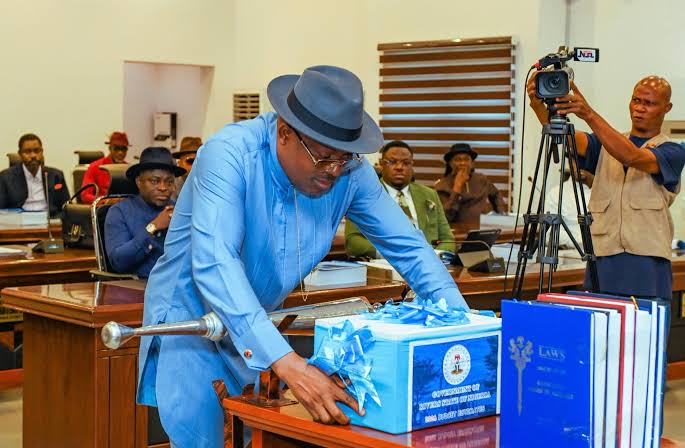
The presentation of the proposed 2026 Rivers State budget marks a critical moment in the state’s development journey. Tagged the Budget of Resilience for Growth and Development, the N1.854 trillion appropriation seeks to consolidate progress in infrastructure, human capital development, and security. At a time when economic uncertainty still confronts many states, the proposal projects optimism about Rivers State’s fiscal future. However, beyond ambitious figures and lofty promises, the real measure of success will lie in disciplined implementation and measurable outcomes.
The proposed revenue projection of N1.854 trillion represents a 24.49 per cent increase over the adjusted 2025 budget. The expectation of higher receipts from the Federation Account Allocation Committee (FAAC), derivation funds, and internally generated revenue reflects confidence in improving national economic conditions. Yet, caution remains imperative. Heavy reliance on federally distributed revenue continues to expose the state to fluctuations in oil prices and national fiscal policy. Strengthening internally generated revenue through improved tax administration, expanded economic activities, and prudent financial management should remain a long-term priority.
The recurrent expenditure of N413.11 billion appears reasonably contained when compared with the capital allocation of N1.405 trillion. This translates to a capital-to-recurrent ratio of roughly 77:23, a distribution that suggests a deliberate emphasis on development projects rather than routine government spending. Such fiscal discipline deserves commendation, provided that recurrent obligations, including salaries, pensions, and operational costs, are settled promptly without compromising service delivery.
One notable aspect of the recurrent budget is the provision for new recruitments, increased overheads, and the settlement of gratuities, pensions, and death benefits. The government’s commitment to clearing inherited liabilities offers renewed hope to retired civil servants who have endured years of uncertainty. This approach reflects both compassion and administrative responsibility. Nevertheless, increased personnel costs should be accompanied by improved productivity, accountability, and performance within the public service.
Infrastructure understandably dominates the capital budget, with over N533.32 billion allocated to works and infrastructure. Roads, bridges, and other public facilities remain essential to economic growth, investment attraction, and regional integration. In a state whose economy depends significantly on commerce and logistics, better transport networks can stimulate business activities and reduce the cost of moving goods and services. The true test will be whether projects are completed on schedule and according to specification.
Education emerges as another major beneficiary, receiving an allocation of N315 billion. This substantial investment recognises that human capital remains the strongest foundation for sustainable development. Better schools, improved learning facilities, teacher development, and educational technology can transform the future of Rivers State. However, funding alone is not enough. Effective monitoring, transparent procurement, and measurable learning outcomes must accompany this transformative investment if the education sector is to achieve lasting impact.
Healthcare receives N105.43 billion, making it one of the largest sectoral allocations. While the amount demonstrates government recognition of the importance of public health, citizens will expect tangible improvements in hospitals, primary healthcare centres, medical equipment, and personnel welfare. The lessons of recent global health emergencies have shown that resilient healthcare systems are indispensable to economic stability. Every community should experience the benefits of this important investment, particularly rural and underserved areas.
Agriculture receives just over N19.26 billion, while power is allocated N15 billion. These allocations deserve careful examination because agriculture and reliable electricity remain key drivers of diversification and employment. Rivers State possesses considerable agricultural potential, but productivity remains below expectations. Increased investment in mechanisation, extension services, storage facilities, and agro-processing could generate thousands of jobs. Likewise, improved electricity infrastructure would stimulate manufacturing and small businesses. It would be unfortunate to put all the eggs in one basket by relying overwhelmingly on oil revenues while these productive sectors remain relatively underfunded.
The social sector allocation of N435.41 billion encompasses education, healthcare, youth development, women affairs, sports, and community development. These sectors directly affect the quality of life of citizens and deserve sustained attention. Youth empowerment programmes, women-focused initiatives, and community development projects can reduce unemployment, promote inclusion, and strengthen social cohesion. Such investments are indispensable if the state intends to build lasting peace and prosperity.
The allocations to the judiciary and the Rivers State House of Assembly equally deserve attention. Strong democratic institutions are fundamental to accountability, the rule of law, and effective governance. Adequate funding should strengthen judicial efficiency and legislative oversight rather than merely expand administrative expenditure. Public confidence will increase only when institutional funding translates into better justice delivery, transparency, and responsible governance.
While the budget’s ambitions are commendable, enforcement remains the decisive challenge. Nigeria’s public finance history is replete with budgets that promised much but delivered far less. Timely releases, strict procurement processes, independent monitoring, and regular public reporting should, therefore, become the cornerstone of execution. Transparency is not merely a slogan but an indispensable requirement for sustaining public trust. In this regard, the government’s pledge that every kobo will be spent wisely must be matched by verifiable evidence.
In all, the proposed 2026 Rivers State budget presents a bold opportunity to accelerate development across critical sectors. Its emphasis on infrastructure, education, healthcare, and social investment aligns with the state’s long-term aspirations. Yet, as the popular saying goes, the proof of the pudding is in the eating. The Rivers State House of Assembly must subject the estimates to rigorous scrutiny before approval, while the executive must ensure faithful implementation. If transparency, fiscal discipline, and accountability guide execution, this budget could indeed become a genuine blueprint for resilience, inclusive growth, and sustainable development for Rivers people.
Continue Reading

Editorial

Improving Surveillance in Rivers’ Boundary Communities

Published

on

The Rivers State Government’s promise to improve boundary security has given residents hope at a time when insecurity is becoming a serious concern. Speaking at the 3rd Annual National Assembly/Border and Boundary Community Stakeholders’ Interface in Abuja, Deputy Governor Ngozi Nma Odu called for stronger cooperation between the Federal Government, security agencies, traditional rulers, and local communities. The meeting focused on how better border/boundary management can improve security and support economic growth. Rivers people now expect these promises to lead to real action.
However, many residents are asking whether enough is being done to protect the state’s boundaries. Crimes that were once common only in some northern parts of the country are now being reported in Rivers State. According to the Nigeria Security Tracker of the Council on Foreign Relations, the South-South recorded 287 violent deaths linked to crime in 2025, representing a 19 per cent increase compared with 2023. These figures show that strong action is urgently needed.
Many communities, especially those near state boundaries, have little or no police presence. Some have no police post or station at all, making it easier for criminals to operate. The Nigerian Bureau of Statistics reported in its 2024 Crime Survey that only 31 per cent of rural communities in the South-South have a functioning police presence within 10 kilometres. This leaves many residents without adequate protection.
There are also repeated reports that armed herders have entered forests in the Ikwerre area and other parts of the state. If these reports are correct, they should be treated as a serious security threat. Many people say they face kidnapping, attacks, and harassment from armed criminals hiding in the forests. Slow official responses have increased public worry and reduced confidence.
Although the Federal Government controls the country’s security agencies, the Rivers State Government also has an important role to play. Governor Siminalayi Fubara, as the state’s chief security officer, should take stronger steps to protect lives and property. Criminals should not be allowed to enter the state freely while people live in fear. Waiting for others to act is like burying one’s head in the sand.
Security at the state’s boundaries should start with thorough screening of everyone entering Rivers State through officially recognised entry points. The Nigeria Police Force has the authority to carry out stop-and-search operations where necessary. Well-planned, intelligence-based checks can help prevent criminals and illegal weapons from entering the state without affecting lawful travellers and businesses. Weak borders/boundaries encourage crime.
Local government chairmen should also play a leading role because they are closest to the people. They can work with vigilante groups, traditional rulers, and community leaders to gather and share useful security information. According to the CLEEN Foundation’s 2023 report, Policing and Public Safety in Nigeria, 68 per cent of Nigerians believe that properly supervised community policing helps to reduce crime. Rivers State should make better use of this approach.
The Deputy Governor’s call for inclusive border/boundary governance should include local chiefs, youth leaders, women groups, and other community stakeholders. Their involvement will improve the sharing of information and make it easier to respond quickly to security threats. After all, prevention is better than cure.
The state should also invest in modern security equipment such as drones, communication radios, and solar-powered surveillance posts at important boundary locations. These are practical tools that can improve security in a state as important and geographically complex as Rivers. No community can truly develop where people live in fear.
Better security will also strengthen the economy. Boundary communities support farming, trade, and social ties with Abia, Imo, Akwa Ibom, and Bayelsa states. Insecurity disrupts business activities, discourages investors, and affects lawful trade. The World Bank stated in its 2024 Nigeria Development Update that insecurity at the state level can reduce local economic growth by as much as 2.5 per cent each year.
The Rivers State Government should, therefore, move beyond meetings and public statements by taking practical steps. More police posts should be established, community vigilante groups should receive proper training and support, and regular security meetings should be held with neighbouring states. The decisions reached in Abuja will have little value unless they are fully implemented.
The safety of Rivers people should never be delayed or left to others alone. While cooperation with the Federal Government is necessary, the state must take the lead in protecting its people and boundaries. If urgent actions are not taken, lawlessness could become more common. Rivers State must act now before the chickens come home to roost.
Continue Reading

Editorial

A Fair Wage for Difficult Times

Published

on

The latest demand by the Federal Workers Forum (FWF) for an upward review of the national minimum wage from N70,000 to N300,000 should not be dismissed as another routine labour agitation. Rather, it should be seen as a reflection of the deep economic pain confronting millions of Nigerian workers whose purchasing power has been severely eroded by inflation, rising living costs, and a struggling economy. Whether or not the figure being demanded is attainable, the message behind it cannot be ignored.
The decision of the Forum to proceed with a nationwide protest also underscores the growing frustration among federal workers who believe that repeated appeals have produced little meaningful action. Their complaints over unpaid entitlements, wage awards, promotion arrears, and other outstanding benefits deserve prompt attention from the authorities. A government that expects dedication and productivity from its workforce must also fulfil its obligations to them.
It is significant that the Chief of Staff to the President recently acknowledged that federal workers are poorly remunerated. Such an admission is welcome because it confirms what workers have consistently argued for years. However, acknowledgement alone is insufficient. Nigerians expect practical measures that will improve workers’ welfare rather than statements that only recognise the obvious.
The economic realities confronting workers are doubtlessly harsh. Food prices have climbed beyond the reach of many families, transportation costs have risen sharply, rents continue to increase, and the cost of healthcare and education has become unbearable for many households. Salaries that appeared modest a few years ago have become grossly inadequate in today’s economic environment.
Compounding the hardship is the persistent challenge of insecurity across the country. Many workers travel daily under difficult and sometimes dangerous conditions to earn incomes that barely sustain their families. The emotional and financial burden of this situation has created widespread frustration and anxiety, contributing to the tense atmosphere that now pervades the nation.
Against this background, the call for a living wage is both reasonable and urgent. The purpose of a minimum wage is not just to keep workers employed but to enable them to live with dignity. When full-time workers cannot adequately feed their families, pay school fees, access healthcare, or meet basic living expenses, it becomes clear that existing wage structures require serious review.
The Federal Government should, therefore, approach this matter with the seriousness it deserves. It should immediately commence purposeful discussions with organised labour and representatives of the Federal Workers Forum to examine realistic options for improving workers’ welfare. Delaying action or relying on promises will only deepen public dissatisfaction and erode confidence in the government.
Equally important is the need for the government to honour existing commitments. Reports of outstanding wage awards, unpaid allowances, and promotion arrears should be independently verified and settled without unnecessary delay. Keeping faith with agreements already reached would demonstrate sincerity and rebuild trust between the authorities and their employees.
That said, the workers must also appreciate the importance of sustained dialogue. While peaceful protest remains a constitutional right, industrial disputes are more productively resolved through negotiation than confrontation. Every effort should be made to avoid actions capable of disrupting essential public services or escalating national tension.
The leadership of organised labour also has a crucial role to play. The Nigeria Labour Congress (NLC) and the Trade Union Congress (TUC) must rise and provide united, responsible, and strategic leadership. Workers need strong representation that combines firmness with wisdom and places national interest alongside legitimate labour demands.
There is no doubt that the government faces enormous fiscal challenges. Declining revenues, mounting debt obligations, and competing development needs make public finance increasingly difficult. Nevertheless, these realities cannot become excuses for allowing civil servants to sink deeper into poverty. Sound economic management must ultimately translate into improved living conditions for citizens.
In truth, paying workers a fair and sustainable wage is not only a social obligation; it is an economic necessity. Better-paid workers stimulate consumer spending, enhance productivity, reduce corruption arising from financial desperation, and contribute to greater national stability. Investment in workers is an investment in economic growth.
Nigeria can ill afford another prolonged confrontation between government and labour at a time when insecurity, inflation, and public discontent already threaten social cohesion. Both sides should exercise restraint, avoid inflammatory rhetoric, and demonstrate genuine commitment to finding common ground. Nigerians expect solutions, not endless disputes.
The message from the current agitation is unmistakable. The Federal Government must heed the legitimate demands of workers by urgently pursuing a new living wage that reflects present economic realities and restores hope to millions of households. At the same time, workers should keep engaging the government through peaceful dialogue, mutual respect, and responsible negotiation. At this critical moment in our country’s history, compromise, compassion, and decisive leadership offer the surest path to industrial harmony and national progress.
Continue Reading

Trending