
Environment
FG Alls For stronger Partnerships, Women Inclusion In Water Governance


The Federal Government has called for stronger collaborations and increased participation of women in water governance to ensure equitable access to water and sanitation nationwide.
The Minister of Water Resources and Sanitation, Prof. Joseph Utsev, made the call at a news conference to commemorate the 2026 World Water Day.
He said the day, instituted by the United Nations, highlights the importance of freshwater and promotes sustainable management of water resources globally.
Utsev noted that the theme, “Water and Gender: Where Water Flows, Equality Grows,” underscores the link between water access, sanitation and gender equality, aligning with Sustainable Development Goals (SDGs) 5 and 6.
The minister stressed that inclusive governance and women’s participation are essential for sustainable development and national growth.
Utsev said the ministry had constructed and rehabilitated over 6,700 water schemes, providing safe drinking water to more than 32 million Nigerians.
“Rural interventions have benefited over two million people, while about 500 additional projects were implemented across Benue, Jigawa, Gombe, Nasarawa, Bauchi, Borno, Yobe, Ogun, and Niger states.
According to the minister, the ministry has completed two National Water Quality Reference Laboratories in Asaba and Umuahia to enhance monitoring and protect public health.
“The Dadin Kowa irrigation scheme delivered 2,000 hectares of land to farmers, including women, while micro-irrigation projects were completed in Jigawa, Oyo, and Kwara, with additional schemes underway in Kebbi,” Utsev said.
“Other dams recording progress include Mangu, Adada, and Ogbesse, while Alau Dam in Borno is being strengthened to improve flood control and water supply to Maiduguri,” he added.
The minister said the National Water Resources Institute had trained over 1,500 youths in plumbing, drilling, and water technology, while 24 water-use licences were issued to ensure equitable allocation of resources.
He noted that River Basin Development Authorities had developed over 154,000 hectares of irrigable land, benefiting more than 1.6 million farmers.
Utsev reaffirmed government’s commitment to inclusive water access and dignified sanitation, urging all stakeholders to collaborate to ensure no one is left behind.
“Water must become a force for equality, empowerment, and sustainable development,” he said, commending development partners, state governments, civil society organisations, and traditional institutions for their support.
He stressed that sustained investment, stronger coordination across federal, state, and local levels, and political will are key priorities, with women’s meaningful participation in planning and decision-making central to success.
The ministry’s Permanent Secretary, Dr Emanso Umobong, said World Water Day highlights the critical link between water and gender, noting that access to safe water directly affects women’s health, education, and economic empowerment.
Umobong was represented by Dr Adebiyi Tajudeen, Director, Finance and Accounts Department in the ministry.
She said gender-responsive water systems are essential to equitable and inclusive societies, and thanked development partners, civil society, and the diplomatic community for their support.
Umobong added that advancing water and sanitation is a direct pathway to achieving SDG 6 and SDG 5, emphasising that gender-inclusive governance strengthens system sustainability and resilience.
She outlined strategies including gender-responsive planning, targeted financing for schools and health facilities, robust data systems, and partnerships promoting women’s leadership at all levels.
“World Water Day is not merely ceremonial; it is a global call to action,” she said, urging stakeholders to amplify the message: “When water flows, equality grows”.
She added that tangible projects demonstrate the impact of gender-responsive water governance, citing functioning schools, operational clinics, thriving markets, and resilient communities.
Highlights of the event included the presentation of the 2026 UN World Water Development Report, Water for All People: Equal Rights and Opportunities, by Dr Enang Momah from UNESCO.
The report said gender inequalities undermine global water security, disproportionately affecting women and girls, who, in spite of managing household water, remain underrepresented in governance and technical roles.
“Unequal access also affects health, education, livelihoods, and safety, currently, 2.1 billion people lack safely managed drinking water, with women and girls spending 250 million hours daily collecting it”.
The report warned that climate change, water scarcity, and disasters worsen these inequalities, calling for stronger action to ensure equal rights, participation, and opportunities in water management.
The Tide source reports that a sensitisation and awareness campaign was held at the Lugbe axis to promote safe water use, especially among vulnerable populations.
The event also featured the distribution of sanitary products to women and girls, as well as the presentation of trophies to winners of the hygiene video skit competition.


Continue Reading
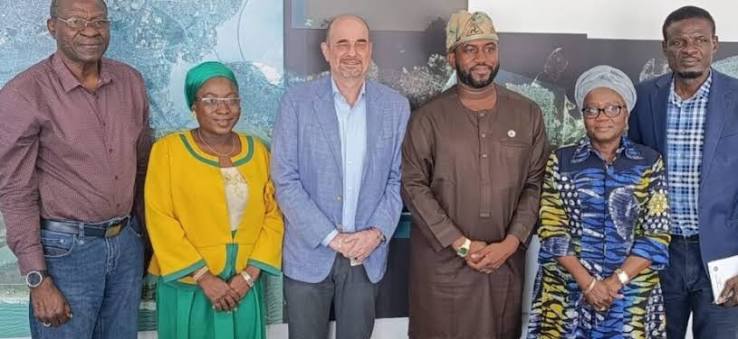
The Lagos Water Corporation (LWC) has commenced discussions with Julius Berger Nigeria Plc to strengthen coordination between water and road infrastructure projects.
This is contained in a statement issued by the corporation.
The corporation said the engagement followed a courtesy and familiarisation visit led by its Managing Director, Mr Mukhtaar Tijani, to Julius Berger’s Ijora office.
It said the visit was aimed at strengthening institutional relations and creating opportunities for deeper collaboration between both organisations.
The corporation stressed the importance of cordial relationships with neighbouring organisations and strategic stakeholders to promote future collaboration.
The meeting focused on road construction, water pipeline protection, water infrastructure development and sustainable water supply across Lagos Island and its environs.
Both organisations highlighted the need for early communication and technical coordination to prevent conflicts between road projects and existing water infrastructure.
Julius Berger Regional Commercial Manager, Region West, Mr Alexander Bauer, reaffirmed the company’s commitment to sustainable engineering solutions rather than short-term fixes.
Bauer stressed the importance of early stakeholder engagement and proper coordination before construction activities begin.
The meeting also examined access to project drawings and technical information required to improve coordination between water and road infrastructure projects.
Julius Berger explained that releasing detailed project drawings remained subject to approval from the appropriate client.
Both organisations therefore agreed on the need to engage the Lagos State Government to secure necessary approvals and strengthen technical collaboration.
The discussions also focused on accurate pipeline information and its importance in planning future water infrastructure and urban development projects.
The LWC delegation raised concerns about uncoordinated borehole drilling and its potential effects on groundwater resources and the ecosystem.
Participants noted that stronger public water supply systems could reduce dependence on individual boreholes and help protect underground water resources.
Construction & Maintenance
They also agreed on the importance of sharing information on construction activities, road conditions, project schedules and potential disruptions.
Security and community considerations were also discussed, with Julius Berger highlighting its engagement with relevant authorities on security infrastructure within the area.
The meeting ended with a shared commitment to open communication, stronger technical coordination and exploring further opportunities for collaboration.
The engagement is expected to strengthen synergies between water and road infrastructure planning and support resilient and sustainable infrastructure development across Lagos.
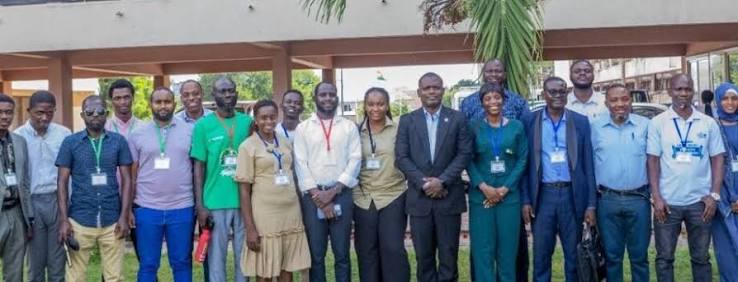
Some Climate Experts across Africa have called for investment in African youth to enhance future security.
They made the call on Wednesday during a webinar organised by Planet, People and Peace Foundation (PPPF), a non-governmental organisation, to observe 2026 International Youth Day (IYD).
According to them, there is a need to invest, listen and create opportunities for young African people.
The Tide source reports that the 2026 theme of the IYD is “Different Contexts, Common Aspirations’’.
Miss Bisi Kumuyi, the Secretary, Climate Beyond Border Caravan (CBBC), Nigeria, who canvassed for investment in youth, said the future of Africa would be determined by the opportunities the continent created for its young people today.
The CBBC, an initiative of PPPF, is a pan-African, youth-led campaign promoting climate action, cross-border cooperation and green economic transformation across the continent.
‘‘As Africa joins the rest of the world to commemorate International Youth Day on Aug. 12, 2026, we celebrate the energy, creativity, resilience and determination of young Africans who continue to shape the continent’s present and future.
‘‘This year’s theme reminds us that young people across Africa live in different social, economic and cultural circumstances.
‘‘They share common aspirations: access to quality education, decent employment, innovation, peace, inclusion, environmental sustainability and opportunities to fulfil their potential,’’ she said.
Also speaking, Mrs Nouran Farouk, an Egyptian Climate Activist, called for urgent investment in Africa’s youth.
According to her, Africa is the world’s youngest continent, and its youthful population represented one of its greatest assets.
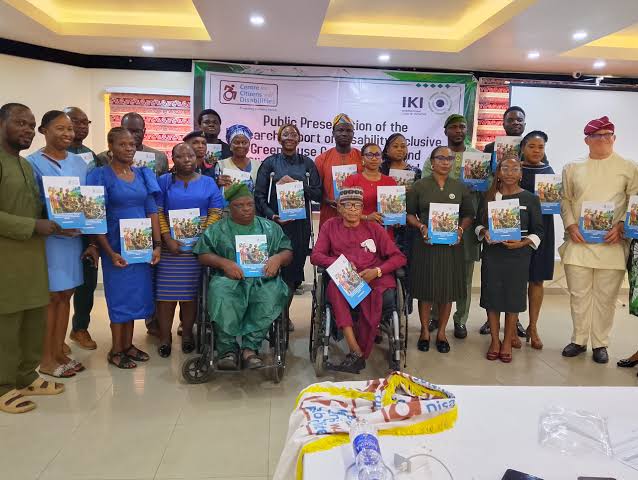
The Centre for Citizens with Disabilities (CCD) has unveiled a research report on impacts of climate change on Persons With Disabilities (PWDs), calling for its implementation in the country.
The Acting Director CCD, Mr Godwin Unumeri, made the call at the public presentation of the report titled: “Disability-Inclusive Greenhouse Gas Emission and Climate Change Adaptation and Mitigation in Nigeria” on Wednesday in Lagos.
The event brought together government institutions, development partners, civil society organisations, persons with disabilities and other key stakeholder to foster dialogue, collaboration and stronger commitment to disability-inclusive climate change adaptation and mitigation in Nigeria.
Unumeri urged stakeholders to strengthen collaboration and policy commitment toward building climate resilience and ensuring the inclusion of persons with disabilities in Nigeria’s climate response.
He noted that valuable insights and recommendations from stakeholders at a validation workshop in February had been incorporated into the report.
According to him, effective implementation of the recommendations requires sustained collaboration, strong policy commitment, adequate resource mobilisation and coordinated action across sectors.
“By working together, we can translate these findings into practical interventions that strengthen climate resilience and ensure the full inclusion of persons with disabilities in Nigeria’s climate response,” he said.
In her remarks, the General Manager, Lagos State Office for Disability Affairs (LASODA), Adenike Oyetunde-Lawal, urged the stakeholders to ensure that the report would be translated into practical interventions to enhance full inclusion of PWDs particularly in climate change policies.
-

 News2 days ago
RSG Targets Nine Million Residents in Mosquito Net Distribution Campaign
-

 Oil & Energy2 days ago
Aiyedatiwa Signs New Electricity Bill
-

 Maritime2 days ago
Marine Minister Commends President Tinubu On NPERA Bill Assent
-

 Oil & Energy2 days ago
NLNG Commissions Research And Innovation Centre In RSU
-

 News2 days ago
KenPoly Holds Eight Convocations, August 29
-

 News2 days ago
RSG Begins Another Phase of Projects Commissioning Today
-

 News2 days ago
RMAFC Completes Revenue Sharing Review, Proposes New Pay
-

 Maritime2 days ago
NAGAFF Petitions IGP Over Alleged Maritime Police Harassment