
Nation
Nigeria Risks Drifting Without Strong Education Policies-Don

 Nigeria’s quest for national greatness may remain elusive if educational policies continue to suffer poor implementation, Prof Nathaniel Abraham has warned, declaring that education remains the strategic compass capable of steering the country toward sustainable growth and global competitiveness.
The respected scholar made this assertion while delivering the 206th Inaugural Lecture of the University of Port Harcourt at its Abuja Centre of Excellence. His lecture, titled, “The Rudderless Ship and Its Major Rescuer,” employed a striking maritime metaphor to illustrate the state of the nation’s educational system and, by extension, its development trajectory.
According to Prof. Abraham, the rudder, though a small and seemingly insignificant component located at the rear of a ship, determines the direction, stability, and safety of the entire vessel. Without it, even the most magnificent ship with powerful engines and sophisticated equipment will drift aimlessly and is at risk of wreckage. He likened this crucial component to educational policies in a nation’s governance structure, arguing that policies serve as the guiding mechanism that determines whether a country reaches its intended destination or wanders endlessly without direction.
In his analysis, he noted that Nigeria possesses abundant human and natural resources and is not! lacking in intellectual capacity or policy formulation. However, he emphasised that the country’s recurring challenge lies in weak implementation, inconsistency, and a culture of cutting corners.
He recalled that at independence in 1960, Nigeria stood shoulder to shoulder with several nations that are now classified among the world’s leading economies. The difference, he maintained, is not destiny or potential, but discipline and adherence to policy execution.
“What made them move forward was discipline and the will to implement policies the way they were designed. For as long as we trivialise our educational policies, we will continue to drift. But the moment we commit to proper implementation, Nigeria is destined for greatness,” he stated.
Prof. Abraham stressed that education remains the foundation upon which every other sector stands. He argued that a properly structured and effectively managed educational system produces competent manpower, ethical leadership, innovation, and national cohesion. Conversely, a poorly managed system weakens governance, slows economic growth, and undermines social stability.
Delving into higher education administration, the Professor identified funding as a critical coordinate of effective university management. Drawing from his scholarly publications in international journals, he explained that adequate and well-managed funding directly impacts teaching quality, research output, infrastructure development, staff motivation, and global competitiveness of universities.
He described the current funding situation in Nigerian universities as grossly inadequate, noting that without intentional and strategic financial investment, reforms may remain theoretical.
“Funding is very poor. If we address it deliberately and commit to doing it right, the transformation will be evident,” he affirmed.
Beyond funding, he called for collective responsibility in rebuilding the education sector, urging policymakers, administrators, lecturers, parents, and students to play active roles in restoring value and credibility to the system.
He emphasised that education should not be seen as the exclusive concern of those currently within school walls, but as a national asset that shapes future generations and determines the country’s long-term prosperity.
Respondents at the well-attended lecture described it as both diagnostic and prescriptive, noting that Prof. Abraham not only identified systemic weaknesses but also offered a roadmap for reform. Some participants expressed optimism that the insights presented could serve as a blueprint for policymakers if carefully studied and adopted.
The event drew members of the academia, deans, the clergy, stakeholders, and guests from various sectors who commended the inaugural lecturer for what many described as a courageous and timely intervention in the national conversation on education.
At the conclusion of the lecture, Prof. Abraham was flanked by deans and colleagues in recognition of his contribution to scholarship and public discourse.
The 206th Inaugural Lecture once again highlighted the role of the University of Port Harcourt as a centre for intellectual engagement and policy advocacy. More importantly, it amplified a central message: without a functional “rudder” in the form of faithfully implemented educational policies, Nigeria’s journey toward development may remain uncertain. But with discipline, adequate funding, and unwavering commitment to policy execution, the nation can chart a new course toward enduring greatness.


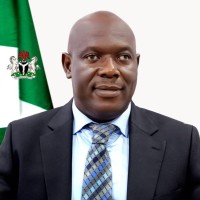
The Hydrocarbon Pollution Remediation Project (HYPREP) has commemorated the 15th anniversary of the release of the United Nations Environment Programme (UNEP) Environmental Assessment Report on Ogoniland, reaffirming its commitment to restoring the environment and improving the livelihoods of affected communities.
In a statement signed by the Project Coordinator, Prof Nenibarini Zabbey, to commemorate the anniversary, HYPREP described the anniversary as a significant milestone in Nigeria’s environmental restoration efforts, noting that the project has made remarkable progress in implementing the recommendations of the landmark UNEP report released on August 4, 2011.
The UNEP report had revealed extensive oil pollution across Ogoniland, severe environmental degradation, and serious public health risks resulting from decades of petroleum operations. It also recommended an initial $1 billion fund to commence the cleanup of the affected communities.
According to HYPREP, the Federal Government formally launched the Ogoni clean-up in 2016, while the Project Coordination Office was established in 2017 to drive the implementation of UNEP’s recommendations.
Zabbey said the current administration has continued to prioritise the project under the Renewed Hope Agenda.
Providing an update on the cleanup, the Project Coordinator disclosed that 30 of the 65 contaminated sites identified by UNEP have been fully remediated, while work is ongoing at several medium- and high-risk locations. It also stated that more than 1.5 million mangrove seedlings have been planted as part of what it described as the world’s largest restoration of oil-degraded mangroves, with over 1,000 hectares of shoreline already rehabilitated.
Zabbey further revealed that 49 Ogoni communities have been connected to potable water schemes through multiple water projects and booster stations aimed at providing safe drinking water across the region.
In the health sector, he said the 100-bed Ogoni Specialist Hospital in Kpite and the 43-bed Cottage Hospital in Buan are nearing completion, adding that several existing health facilities have been upgraded with modern medical equipment, while five ambulances have been donated to improve emergency healthcare services. The Project Coordinator also disclosed that a three-year human health biomonitoring study is being conducted in collaboration with the World Health Organization’s International Agency for Research on Cancer (IARC).
On economic empowerment, Zabbey stated that the Project has created more than 8,000 direct jobs and trained thousands of Ogoni youths and women in various vocational and technical skills, including software development, cybersecurity, aviation, commercial diving, seafaring, mechatronics, and creative arts. The project also reported awarding scholarships to more than 1,000 students, providing grants to small businesses, and supporting persons living with special needs through skills acquisition programmes.
The statement further highlighted ongoing legacy projects, including the Ogoni Power Project and the Centre of Excellence for Environmental Restoration, which it said is about 96 per cent complete. HYPREP also welcomed the recent designation of the Ogoni Wetland as a Ramsar Site of International Importance and pledged to continue promoting biodiversity conservation and sustainable management of the ecosystem.
Marking the anniversary, Zabbey said the progress achieved over the past 15 years demonstrates the collective commitment of government, development partners, stakeholders, and local communities to restoring Ogoniland. He called for renewed collaboration to sustain the cleanup effort, promote environmental sustainability, and support the long-term development of the region. 3
-

 News1 day ago
RSG Targets Nine Million Residents in Mosquito Net Distribution Campaign
-

 Oil & Energy1 day ago
Aiyedatiwa Signs New Electricity Bill
-

 Maritime1 day ago
Marine Minister Commends President Tinubu On NPERA Bill Assent
-

 Oil & Energy1 day ago
NLNG Commissions Research And Innovation Centre In RSU
-

 News1 day ago
KenPoly Holds Eight Convocations, August 29
-

 News1 day ago
RMAFC Completes Revenue Sharing Review, Proposes New Pay
-

 News1 day ago
RSG Begins Another Phase of Projects Commissioning Today
-

 Maritime1 day ago
NAGAFF Petitions IGP Over Alleged Maritime Police Harassment