
Nation
EFCC Holds Stakeholders Engagement Party With Media, CSOs


The Economic and Financial Crime Commission (EFCC) Port Harcourt zonal command has held a one-day capacity workshop with some selected media organisations and civil society organisations in the state
The one-day capacity workshop was aimed at strengthening existing relationships among the media and the civil society organisations in the state with a view to improving the existing relationships among the graft agency and the media.
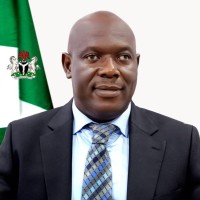
Speaking at the event the zonal commander of EFCC, MR. HASSAN SAIDU, said the
initiative is part of the Commission’s ongoing commitment to strengthening collaboration with key stakeholders, particularly the media and civil society, in our collective fight against economic and financial crimes , adding that the decision to organize this workshop underscores the strategic importance the EFCC places on the roles of the media and the CSOs as watchdogs of the society.
According to him,all over the world, the partnership between anti-corruption agencies, the media, and civil society has been instrumental in promoting transparency, accountability, and good governance, noting that the collaboration is even more imperative in Nigeria given the scale and sophistication of economic crimes we contend with.
“Let me take this opportunity to acknowledge and appreciate the invaluable support you have given to the EFCC over the years.
Your consistent focus on our work through reporting, advocacy, and public engagement has helped to sustain the momentum of our preventive and enforcement efforts.”
The EFCC’s mandate is both engaging and arduous. I say this because the landscape of economic crime is dynamic and your duty to report and interpret these developments requires diligence, patriotism and integrity.”
He posted that It is in recognition of these challenges that the Commission introduced a Specialized Workshop Series on Economic and Financial Crimes Reporting for journalists, adding that the commission has expanded this initiative to include civil society organizations to further demonstrate their belief in an inclusive and collaborative anti-corruption framework.
“As you are aware, Port Harcourt remains Nigeria’s treasure base of the Nation and a fertile ground for various forms of economic and financial crimes, ranging from pipeline vandalism, foreign exchange scams and business email compromise to investment and property fraud, and crude oil theft.”
The EFCC zonal commander averred that the 2025 edition of the workshop is Understanding Cryptocurrency Fraud and other Emerging Financial Crimes and Prosecution of Financial Crimes: Issues, Challenges and Way Forward , adding that
It is imperative for us to note that the surge of Cryptocurrency Fraud and other related offences in the Nigeria’s Cyberspace is becoming alarming hence, as part of the efforts of the EFCC to nip this menace and eradicate these crimes from Nigeria Cyberspace there is need for synergy with relevant Stakeholders, that is the reason why the Commission has chosen these topics to educate, create awareness and discuss arising issues that will yield more significant results as the EFCC tackles the spate of these crimes.
“We must work together to intensify public sensitization. Your platforms- print, broadcast, digital, and community-based- are essential in equipping Nigerians with the knowledge to make informed decisions and avoid falling prey to scammers. ”
He reiterated that the fight against economic and financial crimes is not the sole responsibility of the EFCC or other anti-corruption agencies. It is a collective national duty, meaning all hands must be on deck , stressing that
We owe it to our country and, indeed, the global community to expose and confront corrupt practices wherever they exist.
“The media must continue to hold public institutions accountable, while civil society must deepen civic engagement and promote transparency at all levels.
The EFCC remains committed to building a stronger and more effective partnership with all stakeholders in the fight against corruption. he stated.
Earlier In his presentation on cryptocurrency-related crimes, CSE Coker Oyegunle, Head of Advanced Fee Fraud, explained that digital assets are increasingly being used for money laundering, identity theft, phishing, malware attacks, and ransomware, most of which involve untraceable crypto payments.
He noted that Nigeria now has a coordinated regulatory framework involving multiple agencies. The Securities and Exchange Commission (SEC) serves as the lead regulator under the Investment and Securities Act 2025, defining digital assets as securities and licensing virtual asset service providers.
Our correspondent reports that other topics presented during the workshop include prosecuting Financial crimes: Issues, challenges and the way forward and the role of CSOs and media in driving a preventive frame work.


The Hydrocarbon Pollution Remediation Project (HYPREP) has commemorated the 15th anniversary of the release of the United Nations Environment Programme (UNEP) Environmental Assessment Report on Ogoniland, reaffirming its commitment to restoring the environment and improving the livelihoods of affected communities.
In a statement signed by the Project Coordinator, Prof Nenibarini Zabbey, to commemorate the anniversary, HYPREP described the anniversary as a significant milestone in Nigeria’s environmental restoration efforts, noting that the project has made remarkable progress in implementing the recommendations of the landmark UNEP report released on August 4, 2011.
The UNEP report had revealed extensive oil pollution across Ogoniland, severe environmental degradation, and serious public health risks resulting from decades of petroleum operations. It also recommended an initial $1 billion fund to commence the cleanup of the affected communities.
According to HYPREP, the Federal Government formally launched the Ogoni clean-up in 2016, while the Project Coordination Office was established in 2017 to drive the implementation of UNEP’s recommendations.
Zabbey said the current administration has continued to prioritise the project under the Renewed Hope Agenda.
Providing an update on the cleanup, the Project Coordinator disclosed that 30 of the 65 contaminated sites identified by UNEP have been fully remediated, while work is ongoing at several medium- and high-risk locations. It also stated that more than 1.5 million mangrove seedlings have been planted as part of what it described as the world’s largest restoration of oil-degraded mangroves, with over 1,000 hectares of shoreline already rehabilitated.
Zabbey further revealed that 49 Ogoni communities have been connected to potable water schemes through multiple water projects and booster stations aimed at providing safe drinking water across the region.
In the health sector, he said the 100-bed Ogoni Specialist Hospital in Kpite and the 43-bed Cottage Hospital in Buan are nearing completion, adding that several existing health facilities have been upgraded with modern medical equipment, while five ambulances have been donated to improve emergency healthcare services. The Project Coordinator also disclosed that a three-year human health biomonitoring study is being conducted in collaboration with the World Health Organization’s International Agency for Research on Cancer (IARC).
On economic empowerment, Zabbey stated that the Project has created more than 8,000 direct jobs and trained thousands of Ogoni youths and women in various vocational and technical skills, including software development, cybersecurity, aviation, commercial diving, seafaring, mechatronics, and creative arts. The project also reported awarding scholarships to more than 1,000 students, providing grants to small businesses, and supporting persons living with special needs through skills acquisition programmes.
The statement further highlighted ongoing legacy projects, including the Ogoni Power Project and the Centre of Excellence for Environmental Restoration, which it said is about 96 per cent complete. HYPREP also welcomed the recent designation of the Ogoni Wetland as a Ramsar Site of International Importance and pledged to continue promoting biodiversity conservation and sustainable management of the ecosystem.
Marking the anniversary, Zabbey said the progress achieved over the past 15 years demonstrates the collective commitment of government, development partners, stakeholders, and local communities to restoring Ogoniland. He called for renewed collaboration to sustain the cleanup effort, promote environmental sustainability, and support the long-term development of the region. 3
-

 News2 days ago
RSG Targets Nine Million Residents in Mosquito Net Distribution Campaign
-

 Oil & Energy2 days ago
Aiyedatiwa Signs New Electricity Bill
-

 Maritime2 days ago
Marine Minister Commends President Tinubu On NPERA Bill Assent
-

 Oil & Energy2 days ago
NLNG Commissions Research And Innovation Centre In RSU
-

 News2 days ago
KenPoly Holds Eight Convocations, August 29
-

 News2 days ago
RSG Begins Another Phase of Projects Commissioning Today
-

 News2 days ago
RMAFC Completes Revenue Sharing Review, Proposes New Pay
-

 Maritime2 days ago
NAGAFF Petitions IGP Over Alleged Maritime Police Harassment