Connect with us

Oil & Energy

Oil Demand to Rise Through 2032 as Energy Transition Stalls

Published

on

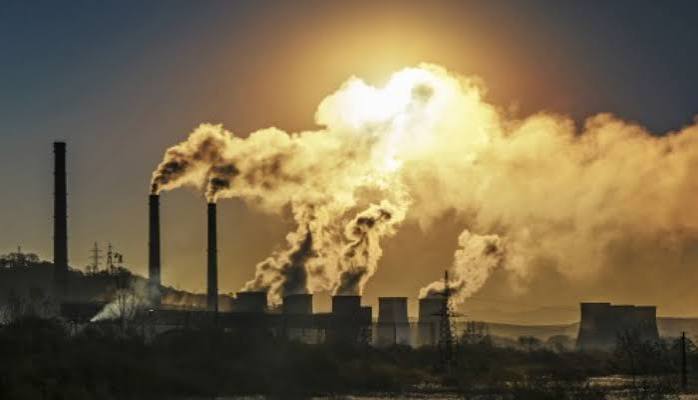
Global demand for crude oil is going to continue on an upward trajectory until at least 2032, Wood Mackenzie has warned in a new report that says the world is way off track in meeting its Paris Agreement goals. The drivers: transport and petrochemicals.
The report will not come as a surprise to those following energy development closely over the past five years or so, as efforts to put the world—or at least parts of it—on the path to an energy system whose emissions of carbon dioxide are equal to the emissions it absorbs and stores first intensified and then slowed down. Meanwhile, despite trillions of dollars being spent on that transition, oil, coal, and natural gas continue to satisfy around 80% of the world’s primary energy needs.
“Fossil fuels are widely available, cost-competitive and deeply embedded in the energy system,” Wood Mackenzie said in its report. This might be a little puzzling in the context of frequently repeated claims that wind and solar power generation is no cheaper than generation from hydrocarbons and that over the long term, electric cars are cheaper than internal combustion engine vehicles.
It is worth remembering, however, that the cost of both power generation and vehicles can be calculated in different ways, yielding different results. For wind and solar, for instance, the preferred cost calculation is based on a metric dubbed levelized cost of energy, LCOE ignores a lot of the costs associated with electricity generated by wind or solar installations by excluding, among others, the cost of backup generation capacity that kicks in when the wind dies down or the suns sets—and that cost of backup capacity keeps going higher because hydrocarbon generators are penalized by being made to pay for their carbon emissions.
This is, put simply, why the transition has slowed down recently and the ultimate net-zero target remains far from sight. This is also why oil, gas, and coal remain cost-competitive even with all the carbon levies that transition-enthusiastic governments are throwing at the energy industry. Wood Mackenzie remains hopeful, however, outlining several scenarios for the future. The only ones ending with a net-zero energy system, however, require a massive increase in the money spent on decarbonizing the global economy.
Global investment needs to rise to $4.3 trillion per year over the period to 2060, Wood Makenzie said in its report, adding the money would go towards funding projects in the power generation, grid, upstream, critical minerals, and “new technologies” fields. “Achievable, but only with a global alignment for scaling investment that is currently lacking,” the consultancy warned.
Theoretically, a lot of things may look achievable from where Wood Mackenzie stands. In practice, it has been a major challenge to get governments from different parts of the world to agree on a transition at all. And even after they agreed, many are pursuing energy security rather than a transition, as evidenced by the fact that it is not just oil and gas demand growing: coal demand is growing as well, even though there are lower-emission alternatives to what is widely known as the dirtiest hydrocarbon of all. In fact, coal demand hit an all-time high last year, despite years of decarbonization efforts, the massive surge in wind and solar installations and the record sales of electric cars—and it might break this record this year.
Because of this real-life context, Wood Mackenzie described a base-case scenario that has hydrocarbons continue to cover the bulk of global energy demand over the observable future, with wind and solar only going towards covering additional, new demand. Yet in fairness, they cannot cover all the incremental demand as evidenced by the rush to build new baseload generation and extend the life of existing power plants as demand for electricity from data centers soars. In other words, oil, gas, and coal demand growth may remain a fixture of the global energy system for even longer than 2032.
Some authors in the energy space have called this scenario an energy addition instead of an energy transition. Alternative sources of energy have their place in the broader system but they cannot replace hydrocarbons because of their shortcomings that are difficult to overcome. In the case of wind and solar, this is, of course, weather dependence and the output variability this dependence causes. There is also the matter of actual cost, which is considerably higher than the cost of generating electricity from coal and natural gas when all costs are taken into account, including the cost of battery storage that is touted as the ultimate solution to the weather-dependence and variability problem.
In short, the energy transition is not happening as planned because it could not happen as planned unless countries spend most of their money singularly on transition-related activities. By the way, the European Union has been trying to do just that in the past three years—and failing so far. The only thing that transition advocates have to show for their effort is energy cost inflation and less reliable electricity supply—except in China where wind and solar are solidly backed up with massive coal capacity.
By Irina Slav for Oilprice.com
Continue Reading

Oil & Energy

Renewable Energy Investment Forum Begins Nov. 25

Published

on

Nigeria’s growing solar market will take centre stage as the Renewable Energy Forum Africa (REFA) 2026 holds in Lagos on November 25-26 with the backing of the Rural Electrification Agency (REA).

Organised by the Africa Solar Industry Association (AFSIA) and supported by SolarPower Europe, the forum would bring together investors, developers, regulators, utilities and policymakers at the Radisson Blu Anchorage Hotel, Victoria Island.

The agency said the forum would strengthen partnerships, attract investment and support Nigeria’s clean energy and local manufacturing ambitions.

REA Managing Director, Abba Abubakar Aliyu, is billed to deliver the keynote address at the opening plenary.

The forum would also examine local manufacturing following the launch of Nigeria’s first privately owned 100MW solar module assembly plant in Ibeju-Lekki, Lagos.
The event would also feature B2B meetings, an exhibition and the AFSIA Awards on November 25.
It would be noted that Nigeria is West Africa’s leading solar market, with about 618MWp operational capacity, ranking first in the region and eighth in Africa, according to AFSIA.

The country also leads the continent in mini-grid capacity with 132MWp, while its commercial and industrial (C&I) solar capacity stands at 385MWp.

The market is receiving fresh support through the $750m World Bank-backed Distributed Access through Renewable Energy Scale-up (DARES) programme, targeting 1,350 mini-grids and electricity access for 17.5 million Nigerians.

Continue Reading

Oil & Energy

CBN Appoints Eight New Pre-shipment Agents For Crude Oil And Gas Exports

Published

on

The Central Bank of Nigeria (CBN) has appointed eight pre-shipment inspection agents to monitor crude oil and gas exports, alongside two monitoring and evaluation agents to oversee their activities.
The appointments, announced in a notice signed by Aderinola Shonekan, Director of the CBN’s Trade and Exchange Department, took effect on October 2, 2026, under the Nigerian Export Supervision Scheme.
The notice directs authorised dealer banks, the Nigeria Customs Service, petroleum regulators, terminal operators and oil and gas companies to comply with the revised arrangements.
The CBN assigned the eight inspection agents to specific crude oil and gas export terminals as part of the revised framework.
The allocations are as follows:
Dakee Engineering and Construction Ltd.: LNG, Escravos (Gas), Bonny River Terminal (BRT) and EGTL.
Trexem Energy Services Limited: Egina, Qua-Iboe and Tulja. Geoscape Limited: Escravos, ERHA, Odudu and FSO Cawthorne.
617 Limited: Bonga, Brass, Usan and Eagle.Robinson International Energy Ltd.: Ugo-Cha, Penington, Aje, Ima, Oyo and Nembe. Trobell International Nigeria Limited: Forcados, Bonny and Okwori.
Integrated Shipping Services Nigeria Ltd.: Akpo, Antan, Okoro, Anyala-Madu and Ebok.
Kephren Business Ltd.: Ukpokiti, Utapate, Yoho, Abo, Agbami, Ajapa, Okono, Okwok and additional marginal streams designated by the Nigerian Upstream Petroleum Regulatory Commission (NUPRC).
The CBN also appointed two monitoring and evaluation agents, the Q&Q Control Services Limited and the Arlington Securitas Nigeria Limited to oversee the inspection companies.
The Q&Q Control Services Ltd. would monitor 617 Limited, Trexem Energy Services Limited, Geoscape Limited and Kephren Business Ltd while the Arlington Securitas Nigeria Limited would monitor Dakee Engineering and Construction Ltd., Trobell International Nigeria Limited, Robinson International Energy Ltd. and Integrated Shipping Services Nigeria Ltd.
The latest appointments follow previous changes to the CBN’s monitoring arrangements for crude oil and gas exports.
The latest changes update the companies responsible for inspecting export cargoes and the terminals assigned to them. The notice requires the relevant institutions and operators to comply with the new allocations from October 2, 2026.
The appointments also come amid growth in Nigeria’s gas export earnings.
According to the CBN, Nigeria’s gas export earnings rose to $2.53 billion in the first quarter of 2026, reflecting stronger earnings from the country’s natural gas sector and contributing to its external trade position.
The revised inspection arrangements place designated agents in charge of specified export terminals, while the monitoring and evaluation companies oversee the inspection agents’ activities under the scheme.
Recall that in May 2024, the apex bank appointed 11 pre-shipment inspection and monitoring agents under the export supervision scheme.
The government subsequently reviewed the allocation of oil export terminals in March 2025, assigning additional terminals to nine inspection agents appointed under the scheme.
In July 2026, the CBN also appointed Candid Oil Services Limited as the pre-shipment inspection agent for the Taurus Oil and Gas Depot.
Continue Reading

Oil & Energy

What’s Next for Global Natural Gas Demand?

Published

on

The Iran war and the lack of LNG supply from the Middle East have upended forecasts of near-term natural gas demand and import costs.
So far this year, economies in Europe and Asia have relied more on renewables and coal for power generation to offset reduced gas supplies procured at very high prices.
This year’s crisis has prompted governments to rethink energy policies with energy security the top priority, again, after the 2022-2023 energy crisis.
After the decline in global gas demand this year, due to prices at four-year highs, the obvious question for gas market participants is where demand is going after the current crisis ends. Has the second gas crisis in four years permanently undermined expectations of long-term gas demand growth?
Gas cannot be replaced in many industrial processes, yet. Electricity-generating systems in major economies that have relied on gas for power cannot have a reliable electricity supply without gas.
Still, this year and over the past four years, key gas markets in Europe and Asia have seen the share of gas in their electricity mix decline.
The UK, the Netherlands, and Turkey, and major Asian economies China, Japan, and South Korea, have all seen the share of gas-fired electricity drop, according to data from think tank Ember cited by Reuters columnist Gavin Maguire.
The spike in natural gas prices has accelerated Europe’s renewables rollout, which took off in earnest earlier this decade when Russia invaded Ukraine in 2022 and cut off pipeline gas supply to most of Europe. The share of renewables has surged in the EU and the UK in recent years, gradually sidelining gas as the reliable backup fuel rather than the one meeting growing electricity demand.
Globally, “Gas is losing its share in the global power mix as renewables increasingly meet rising electricity demand,” Ember said in a report earlier this year. The analysis found that the share of gas in the global power mix declined for the fifth consecutive year in 2025, despite a small rise in absolute gas generation. Strong growth in clean power, led by solar and wind, met around 68% of global electricity demand growth over the five years to 2025, reducing the need for a significant rise in gas power generation
Related: Mexico’s Richest Man Sells $1.15 Billion in Oil Stocks
According to Ember, 61 out of 124 economies generating electricity from gas had passed their gas generation peak.
However, these countries accounted for around one-fifth of global gas-fired electricity generation in 2025. So the large gas-generating economies, albeit a smaller group, haven’t seen their peak in gas power generation.
The biggest emerging economies, China, India, and Brazil, have actually met their surging electricity demand without turning to gas, Ember noted.
China’s gas share remained close to 3% of the electricity mix in 2025 despite rapid demand growth, while gas power generation in India and Brazil plays a more limited balancing role, the think tank said.
“The economics and energy security case for electricity are increasingly moving in the same direction,” said Malgorzata Wiatros-Motyka, ?Senior Electricity Analyst at Ember.
“As renewables lower costs and reduce exposure to fuel price shocks and geopolitical disruptions, gas is steadily losing the advantages that once made it the default fuel for power system growth.”
The writing may have been on the wall for natural gas producers and exporters if natural gas was only used in power generation.
But natural gas key uses include as feedstock in industrial manufacturing, including cement and steel, as a chemical feedstock for fertilizer, or as the start of the supply chain of manufacturing plastics, paints, synthetic fabrics, and medicine, to name a few.
And then comes the biggest twist in energy and electricity demand forecasts in recent years—the AI boom. Data centers will drive a large part of the rise in global electricity demand, which has returned to growth even in the U.S. and Europe after a decade or so of flatlining. Renewable energy alone will not meet the surge in power demand, and gas will play a key role in America and in most of Asia, where many countries are positioning to become AI and data center hubs.
The biggest LNG producers, exporters, and traders see long-term gas demand growth intact despite this year’s supply shock that is reducing consumption amid spiking prices.
For example, Shell, the world’s biggest LNG trader, said in its annual LNG Outlook 2026 this summer that surging gas demand in South and Southeast Asia would push global LNG demand up by 65% by 2050 from 2025 levels, although growth this year has been stalled by the Strait of Hormuz crisis.
Shell sees global LNG demand increasing to nearly 700 million tons annually by 2050, up by around 65% from the 2025 levels of 422 million tons.
“The conflict created a system-wide shock with disruption cascading across all segments of the economy, but the LNG industry has proved resilient and able to adapt to changing market conditions,” Cederic Cremers, President of Integrated Gas at Shell, commented in the outlook.
“While more investment in both supply and demand infrastructure is needed, the long-term outlook remains strong and LNG will continue to be a stabilising force in the global energy system.”
The International Gas Union (IGU) said in its 2026 World LNG Report in July that “while LNG industry is not immune from the challenges of operating in an era of heightened geopolitical uncertainty, its unique ability to re-distribute large quantities of clean-burning energy from a broadening supply base only enhance LNG’s role as a ‘shock absorber’ to the global economy.”
By; Tsvetana Paraskova

Continue Reading

Trending