Connect with us

Rivers

IAUE Governing Council Chair Assures On Mandate Delivery

Published

on

Chairman of the 13th Governor Council, Ignatius Ajuru University of Education (IAUE), Hon. Chinyere Igwe, has promised that the Council will ensure the University remains “a beacon of hope, fountain of knowledge, integrity and inclusiveness.”
Hon. Igwe, who made the promise during the maiden meeting of the Council on Friday at the Council Chambers, stated that members are called to harness the potentials of the academic community.
A statement signed by the Public Relations Officer of the University, Dr. Ngozi Okiridu, said Hon. Igwe expressed gratitude to the Minister of the Federal Capital Territory (FCT), Abuja, Chief Ezenwo Nyesom Wike, and the Executive Governor of the State, Sir Siminalayi Fubara, for the constitution of the Governing Council.
He also appreciated members of the Council present at the meeting, noting that it underscores their “unwavering commitment to the advancement of higher education, research and societal development.”
The Pro-chancellor affirmed that he was honoured to serve alongside them as their expertise, dedication and vision will steer the University towards greater heights.
He further stated that the gathering symbolises their “shared responsibility, collective aspirations, and devotion to fostering an environment of academic excellence, innovation and holistic development.”
While highlighting the importance of their roles as custodians of the University’s mission, vision and values, Chief Igwe reiterated that their decisions, policies and strategic visions must align with the goal of nurturing future leaders, promoting groundbreaking research and addressing societal challenges.
Hon. Igwe acknowledged the visionary leadership of previous administrations whose relentless efforts laid a strong foundation for them to build upon, adding that it is their collective duty to sustain and enhance the legacy and to ensure that they remain responsive to the evolving needs of society and the global landscape.
According to him, they would ensure that IAUE students graduate not only with knowledge, but with integrity, critical thinking and the skills necessary to excel in a rapidly changing digital world.
“Achieving and maintaining the highest standards of scholarship, research and teaching must remain the primary focus of Council, as this commitment to excellence will distinguish the University as a leading institution that produces impactful research, highly competent graduates and contribute positively to national and global development”, he stated.
He stressed that they must work to change the narrative of the University out there, and highlighted the importance of discipline as the foundation upon which the institution must be built.
“Without discipline”, he emphasised, “even the most talented individual or promising institution risk losing their direction and purpose.”
“It is through disciplined conduct that a conducive learning, teaching and working environment can be maintained, especially one that nurtures creativity, fosters collaboration and promotes excellence.”
The 13th Pro-chancellor and Governing Council Chairman of IAUE called for open dialogue, constructive deliberations, criticism and a spirit of mutual respect and cooperation.
He also encouraged all to work diligently and collectively, guided by the principles of transparency and discipline to chart a strategic course that will secure a prosperous future for the university.
In his speech, the Acting Vice Chancellor of IAUE, Professor Okechuku Onuchuku, gave a brief history of the University, highlighting its programmes and achievements recorded under his watch.
He informed the Council of the needs of the University and appealed to them to facilitate the process already started to achieve the building of classroom blocks, office complex, sports complex, Senate building, Council Chambers, staff quarters, VC’s lodge, power infrastructure, some overhead cost to run the University, etc.
Sogbeba Dokubo
Continue Reading

Rivers

National Health Council’s 67th Meeting Ends In Lafia … As RIVCHPP Participates Fully

Published

on

The 67th National Council on Health (NCH) meeting, Nigeria’s highest health policy-making body, has ended in Lafia, Nasarawa State, after bringing together key stakeholders across the country’s health sector to deliberate on existing challenges and strategies for improving healthcare delivery.
The meeting, held under the theme, “Commitment to Results: Delivering Equitable Healthcare for All Nigerians,” provided a platform for participants to review critical issues affecting the health sector and explore practical approaches to strengthening healthcare services nationwide.
At the end of the deliberations, participants emphasised that achieving sustainable progress in the health sector requires effective policy implementation, accountability and sustained commitment to ensuring that all Nigerians have access to quality, affordable and equitable healthcare services.
The Rivers State Contributory Health Protection Programme (RIVCHPP), led by its Executive Secretary/Chief Executive Officer, Dr. Vetty Agala, participated in the meeting alongside other health sector leaders and stakeholders from across the federation.
On the sidelines of the National Council on Health meeting, the Forum of State Social Health Insurance Agencies (SSHIA) Chief Executive Officers also held a separate meeting at the office of the Executive Secretary of the Nasarawa State Health Insurance Agency in Lafia. The meeting was chaired by the Forum’s Chairman, Mr. Safana Mohammed.
At the Forum’s meeting, Dr. Vetty Agala, who serves as the Forum’s Secretary-General and Executive Secretary of RIVCHPP, actively participated in discussions focused on advancing Universal Health Coverage (UHC) through stronger alignment of state health insurance schemes with primary healthcare development and climate resilience initiatives.
The discussions also explored sustainable financing mechanisms under the National Health Sector Renewal Investment Initiative (NHSRII) framework, with particular emphasis on protecting vulnerable households affected by climate-induced health and economic disruptions from catastrophic out-of-pocket healthcare expenditures.
Participants highlighted the disproportionate impact of climate-related events on poor and vulnerable populations, noting that such disruptions often deepen existing economic hardships, particularly when affected households are confronted with unexpected health emergencies.
The Forum noted the strategic role of state health insurance agencies in providing targeted financial risk protection and ensuring that vulnerable populations and communities have access to affordable healthcare without suffering financial hardship.
RIVCHPP’s participation in the meeting underscores the Programme’s continued engagement in national health policy discussions and its commitment to strengthening health insurance coverage, promoting financial risk protection and advancing Universal Health Coverage in Rivers State and Nigeria at large.
Continue Reading

Rivers

2027: Kalabari Renaissance Foundation Chair Urges Political Consciousness, Unity

Published

on

The Chairman of the Kalabari Renaissance Foundation, Harry Awolayeofori Macmorrison, has called on Kalabari people to strengthen their political consciousness, pursue meaningful representation, and actively participate in governance ahead of the 2027 general elections.
He made the call during the Third Unified Kalabari New Year Festival held on Monday, November 16, 2026, in Minama, Asari-Toru Local Government Area of Rivers State.
Speaking under the theme, “Unity of Heritage, Power of the Tides: Advancing Kalabari Prosperity to the World”, he stressed that cultural identity must go handi-in-hand with political awareness, collective responsibility and strategic engagement in governance.
He clarified that the Kalabari Renaissance Foundation was neither a political party nor an appendage of any political organisation, but stated that the Kalabari people must become more conscious of their political interests and developmental aspirations.
He urged them to participate responsibly in the electoral process, make informed choices and demand accountability, equitable development and meaningful political representation.
Macmorrison further called for unity across Kalabari communities, urging the people to rise above political, religious and communal differences.
He emphasised that the development of one community should be the collective concern of all, noting that the progress of Buguma should matter to Bakana, just as the advancement of Abonnema, Abalama, Minama and Elem-Kalabari should concern the entire Kalabari nation.
He said the annual festival, beyond its cultural significance, provided an opportunity to mobilise the people towards a common development agenda, particularly in education, youth empowerment, women’s development, environmental sustainability, tourism and economic advancement.
The Foundation’s Chairman also advocated greater participation of Kalabari people in governance and development planning, urging its members and committees to remain active throughout the year rather than limiting their activities to the annual festival.
The celebration attracted traditional rulers, chiefs, government representatives, cultural groups and Kalabari sons and daughters from within and outside Rivers State.
The Amanyanabo of Minama, His Royal Highness, King Dr. Iboroma Talbot Pokubo, Loku XII, delivered the royal welcome address and commended the gathering for promoting Kalabari heritage and unity.
The festival featured traditional libation, Ekine performances, Iria dances, Ikpakaa dancers, women’s cultural displays, traditional wrapper presentations and a special performance by the host community’s Omofin dancers.
Macmorrison also highlighted the importance of protecting the Kalabari riverine environment, particularly its mangrove ecosystem, and called for partnerships to address pollution, erosion and environmental degradation, with  a tree-planting exercise forming part of the activities.
He further appealed to Kalabari people in the diaspora, corporate organisations, development partners and government institutions to support the Foundation’s vision of transforming the festival into an internationally recognised cultural tourism event.
The humanitarian intervention of the Foundation in the rehabilitation of Madam Ibiene Amachree, who had previously lived under difficult circumstances around the Air Force Roundabout, was also highlighted.
Macmorrison, who appealed for continued support towards her accommodation, welfare and rehabilitation, commended the Amanyanabo of Minama, Council of Chiefs, Local Organising Committee and the entire Minama community for hosting the celebration.
The Unified Kalabari New Year Festival began in Abalama in 2024, moved to Elem-Kalabari in 2025, and was hosted by Minama in 2026, reflecting the Foundation’s commitment to rotating the event among Kalabari communities.
The festival ended with a renewed call for the Kalabari people to translate their shared cultural heritage into political consciousness, stronger unity and sustainable economic and social development.
Continue Reading

Health

HIV Gets New Prevention Technology … Media Urged To Announce Lenacapavir Entry

Published

on

Prevention for HIV has taken yet another more advanced dimension with the introduction of the Lenacapavir (LEN) Pre-Exposure Prophylaxis (PrEP) into the stable of HIV prevention.

This was disclosed to Journalists assembled from across Nigeria in a two-day training programme on Lenacapavir in Lagos State.

In his presentation, the Lead Facilitator, and Principal Partner, Kent Consult Limited, Abuja, Dr. Segun Oyedeji, said unlike the earlier Post-Exposure Prophylaxis (PEP), which is taken to prevent HIV infection after exposure, the Lenacapavir PrEP is taken by non-infected persons.
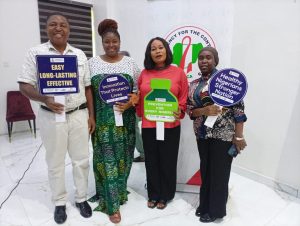
Such targeted persons are usually those exposed to vulnerable behaviours capable of exposing them to HIV infection.

“PrEP is taken before you are exposed to HIV, and comes in three forms: the daily oral PrEP, Truvada pill; the two-months interval injectible, Cabotegravir; and the long-acting bi-annually (six months interval) injectible, Lenacapavir. There’s also the Dapivrine Vaginal Ring, which women wear for one month”, he said.

Dr. Oyedeji explained that PrEP is meant for people who are exposed by their risk profile to HIV infection.

Risk profile, he explained, “is the kind of risk behaviours they exhibit in their lifestyle.”

Such people include people with a partner who has HIV, people who don’t always use condoms, sex workers, etc.
PrEP, according to Dr. Oyedeji, “builds up protection in your body so that if HIV enters your body, the medicine stops it from multiplying.”

Also, within the period the person is taking it, the person must get tested for HIV every three months interval.

So far, among the four options of PrEP, Adedeji, continued, “the Lenacapavir is the game-changer everyone is talking about.”

The reason is that it is a Capsid inhibitor, first of its class, that attacks the protein shell that HIV uses to copy itself, which is different from old drugs, and is just two injections per year, plus small starter tablets at the beginning. Not daily pills.

He, however, noted that before any of the PrEP options can be used, the person has to go through an eligibility test to ascertain which of the options would be suitable for the person, based on the person’s risky behaviour, and that all the person needs to do is to go to any health facility close to them to seek for the service, or the State Agency for the Control of AIDS (SACA) to get the right direction.
On his part, the Senior Prevention Manager, AIDS Healthcare Foundation (AHF), Mr. Adeleye Taofeek, who spoke on condom use as part of preventive measures for both HIV and Sexually Transmitted Infections (STIs), encouraged the use of condoms, especially where abstinence from sex is inevitable.

He said, “We are canvassing that as much as you use PrEP, you can also use condoms to prevent other STIs, beside HIV.

“We want the media to engage in demand creation for use of the various HIV prevention options: whether it is condom, PrEP, or change of behaviour, staying with an uninfected partner, we want the media to support the national response by creating demand for HIV prevention options.”

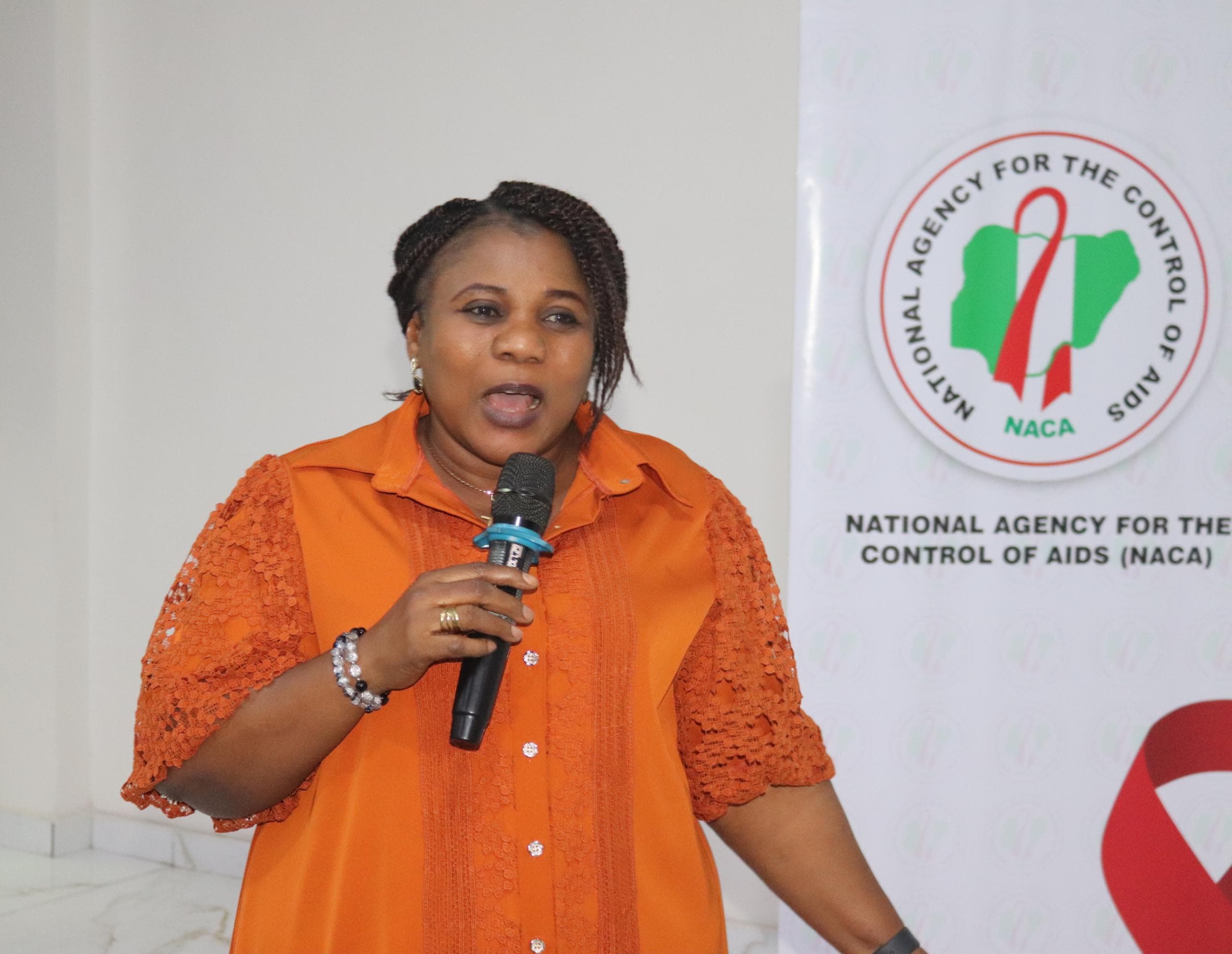
Earlier in her welcome address to participating Journalists at the two-day training, organised by the NACA and the Institute of Human Virology, Nigeria (IHVN), the Director-General, National Agency for the Control of AIDS (NACA), Dr. Temitope Ilori, emphsised the importance of the media in awareness creation.

She said: “PrEP is an effective HIV prevention for people who are HIV-negative and may be at risk of acquiring HIV. However, the availability of a prevention intervention is only one part of the equation. People must also have access to the right information, understand their prevention options, know where services are available, and feel confident seeking those services. This is where you, our media professionals, become indispensable partners.

“The media has the power to shape public understanding. A well researched story can dispel a misconception, encourage someone to seek a prevention service and potentially change a life. On the contrary, inaccurate or sensational reporting can create fear, reinforce stigma and discourage people from accessing HIV services.

“We, therefore, count on you to report PrEP and HIV prevention accurately, responsibly, and without stigma.”

The NACA D-G, who was represented by the Head, Public Relations and Protocol, NACA, Toyin Aderibigbe, charged the participants at the training, saying, “your reporting should make these issues understandable to ordinary Nigerians.”
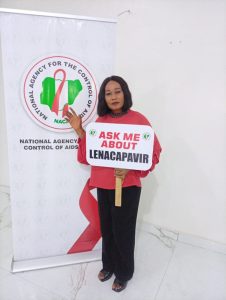
Research shows that so far there have been no infections among all the people who have received the LEN PrEP, showing almost 100% protection.

The World Health Organisation (WHO) adopted it in July 2025 as an additional PrEP option.

In Nigeria, NAFDAC approved it in the late 2025 and received regulatory clearance, with the country receiving its first batch of doses in March 2026, and subsequently distributed it to 8 pilot states.

The states are: Akwa Ibom, Anambra, Benue, Cross River, Ebonyi, FCT, Gombe, and Kwara.

Investigation revealed that since May 2026, all the pilot states are accessing the LEN, and the demand is very high, especially among sex workers who want privacy and no daily pills.

In Rivers State, although the Lenacapavir is expected to arrive soon, the daily oral PrEP (Truvada pill), and the two-months interval injectible (Cabotegravir) are available, and the relevant authorities are encouraging people to access the drug.

Sogbeba Dokubo

Continue Reading

Trending