
Oil & Energy
Increased Oil Bunkering: WIPM Seeks Security Agency’s Intervention

The Warri Indigenous Peoples Movement (WIPM) has urged security agencies to crack down on the high-level oil bunkering activities in the Niger Delta region.
The President – General, WIPM, Hon Kingsley Tenumah, made the call at a Press Conference, in Abuja, last Thursday.
called on the Economic and Financial Crimes Commission (EFCC) to expand its investigations beyond refinery turnaround expenditures to include the role of some security agencies in allowing illegal bunkering to persist.
Describing the illegal siphoning of crude oil from Nigeria as a major threat to national revenue and regional stability, the movement said shiploads of Nigerian crude oil continue to leave the country illegally on a daily basis.
He called on the Economic and Financial Crimes Commission (EFCC) to expand its investigations beyond refinery turnaround expenditures to include the role of some security agencies in allowing illegal bunkering to persist.
Tenumah clarified that the Itsekiri ethnic nationality is not involved in any protest or campaign calling for the removal of the Group Chief Executive Officer of the Nigerian National Petroleum Company Limited (NNPCL), Bayo Ojulari.
He said the focus should be on those operating on the high seas, not just small-scale jerry-can bunkering.
In his words, “We want the authorities to go after the high-level oil bunkering in the Niger Delta region, the ones operating on the high seas, not just the small-scale jerry-can bunkering. Shiploads of illegal Nigerian crude oil are being taken out of this country on a daily basis.
“We live in the Niger Delta, and it should be known that the region comprises over 30 major ethnic nationalities. One tribe cannot lord it over the rest of us. That is why we are distancing ourselves from any call to remove Engineer Bayo Ojulari.
“We want the EFCC to expand its investigation beyond the funds spent on refinery turnaround maintenance. They must also probe how the military allows this bunkering to escape with our oil every day. All this blackmail is simply to pressure Ojulari into opening the pipelines again so they can resume looting our oil.”
Stressing the contribution of the Itsekiri ethnic nationality, which he said produces over 33 per cent of Nigeria’s oil revenue, Tenumah stressed the need for fair treatment in the allocation of jobs, contracts, and benefits from oil production.
Also speaking, the General Secretary, WIPM, Comrade Monoyo Edon, noted that concerns about past decisions or policies of the NNPCL should be addressed through proper oversight and due process.
According to him, any calls for investigations or reviews should be made responsibly and through the appropriate institutions of government.
“We encourage dialogue rather than confrontation and urge all parties to seek solutions that will promote transparency, accountability, and sustainable development in the oil sector. We note that leadership positions in the oil and gas sector often face scrutiny and pressure. It is important that such scrutiny is fair and focused on policy rather than personalities or ethnic affiliations,” he said.
Chief Priest of the Omadino Community in Warri South Local Government Area, Roland Oti-Yomere, maintained that illegal bunkering is the real fight.
Oti- Yomere said “what we are focused on today is the rampant illegal bunkering taking place in the creeks. The Managing Director is aware of it and is determined to put an end to it. That is the real fight. We will support him fully to ensure that those involved are brought to justice.
“We are also calling on the authorities to rise to their responsibilities and take firm action. We stand in support of the Presidency and its ongoing reforms. We believe that once these reforms take root, everyone will get their fair share.
“That is why some people are fighting against it. Finally, we appeal that surveillance contracts be shared among ethnic nationalities based on their actual production levels”.


Continue Reading
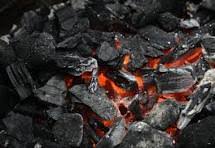
Global coal consumption reached another record in 2025, seemingly contradicting years of discussion about phasing out the world’s most carbon-intensive fossil fuel.
But the headline number does not tell the whole story.
The latest Statistical Review of World Energy shows that global coal consumption rose to 166.0 exajoules last year. That represented an increase of 0.7% from 2024.
At the same time, global electricity generation from coal declined. Coal-fired power production fell 0.3% to 10,511 terawatt-hours.
Those two trends are not mutually exclusive. Coal is used not only to generate electricity, but also in steelmaking, cement production, and other industrial processes. The divergence also reflects a changing geographic picture in which coal is declining across much of the developed world while remaining deeply embedded in Asia’s industrial economy.
A Record With Important Qualifications
Coal consumption reached a record in absolute terms, but it did not keep pace with overall energy demand.
Total global energy supply increased from 592.2 exajoules in 2024 to 600.3 exajoules in 2025, an increase of about 1.4%. Coal grew more slowly, so its share of the global energy mix slipped from 27.9% to 27.7%. Thus, despite the global record in coal consumption, coal lost a small amount of market share.
This pattern appears frequently during energy transitions. A fuel can continue growing in absolute terms even as faster-growing alternatives reduce its share of the total. With global energy demand still rising, losing market share does not necessarily mean declining consumption.
Renewable energy provides a relevant comparison. Renewable energy supply increased by nearly 10% in 2025, far outpacing coal. But the world’s appetite for energy was large enough to accommodate growth in renewables and another record for coal at the same time.
Coal Is Increasingly an Asian Fuel
The most striking feature of the coal market is its geographic concentration.
Asia Pacific consumed 138.1 exajoules of coal in 2025, accounting for 83.2% of the global total. China alone consumed 92.2 exajoules, or 55.6% of all the coal used in the world.
India contributed another 23.1 exajoules, representing 13.9% of global consumption. Together, China and India accounted for almost 70% of the world’s coal use. Add Indonesia, and the three countries consumed nearly 73% of the total.
This is why broad statements about a global coal phaseout can be misleading. Coal may be steadily retreating in Europe and North America, but its future is increasingly being determined in Asia.
Non-OECD countries accounted for 85.2% of global coal consumption in 2025. Their coal use has grown at an average annual rate of 1.9% over the past decade. OECD consumption, by contrast, has declined at an annual rate of 4.8%.
Europe consumed just 4.4% of the world’s coal last year. The European Union’s share was only 2.8%, following another 3.2% decline in consumption.
The global total therefore combines two very different stories. One is a long-term retreat from coal across much of the developed world. The other is coal’s continued importance to the large and growing economies of Asia.
One surprise in the 2025 data is that coal-fired electricity generation declined even as total coal consumption increased.
China generated 5,756 terawatt-hours of electricity from coal, down 1.1% from 2024. India’s coal generation fell 3.0% to 1,464 terawatt-hours. Since those two countries produce nearly 69% of the world’s coal-fired electricity, relatively small percentage declines can have a large effect on the global total.
Coal generation across Asia Pacific declined 1.2%, while Europe posted another 3.4% decrease. The European Union’s coal generation fell 3.6% and accounted for only 2.6% of the global total.
The divergence between consumption and power generation indicates that coal demand outside the electric power sector helped support the record. Coal consumption statistics include industrial uses that are not captured by electricity-generation totals. Changes in plant efficiency, coal quality, inventories, and measurement can also prevent the two series from moving in perfect alignment.
Whatever the precise combination, the result is notable. The world consumed a record amount of coal while producing less electricity from it.
The United States broke sharply with the broader developed-world trend in 2025.
U.S. coal consumption rose 10.4% to 8.7 exajoules. Coal-fired electricity generation jumped 13.1% to 804 terawatt-hours, while domestic coal production increased 4.4%.
In absolute terms, the increase in U.S. coal consumption was larger than the net increase for the entire world. U.S. consumption rose by about 0.8 exajoules, while the global total increased by roughly 0.7 exajoules. Declines in several other countries offset part of the American increase.
Still, this should not be mistaken for a return to coal’s former dominance in the United States.
U.S. coal consumption remains about 62% below its 2005 peak. Coal-fired generation is approximately 63% below its 2007 high, and production is about 54% below its 1998 peak.
The 2025 increase was substantial, but it occurred within a long-term structural decline. The United States still accounted for just 5.3% of global coal consumption and 7.7% of global coal-fired generation.
Global coal production remained near record levels at 180.8 exajoules, but it was essentially flat in 2025.
China increased production by 1.7% and supplied 52.4% of the world total. Its coal consumption was nearly unchanged, but its imports fell 10.1%. The combination suggests that increased domestic production displaced a meaningful amount of imported coal.
That shift helped push global coal trade down 3.1% to 35.3 exajoules. Indonesia, the world’s largest exporter, saw exports fall 7.4%. U.S. exports declined 11.5%, while Colombian exports plunged 21.3%.
Thus, record global consumption did not translate into record international trade. Much of the world’s coal is produced and consumed within the same countries, especially China and India.
The 2025 data support neither the claim that coal is disappearing nor the claim that the energy transition has stopped.
Coal use reached a record, but its share of global energy declined. Coal-fired electricity generation fell, but industrial and other uses kept total consumption elevated. Coal rebounded sharply in the United States but remained far below its historical peak. Europe continued to move away from coal, while Asia accounted for more than four-fifths of global demand.
The coal market is no longer one unified global story. It is a widening divide between countries that are steadily reducing their dependence on coal and countries where it remains central to electricity, industry, and economic development.
That divide is likely to continue defining the coal market for many years.
By Robert Rapier

The Federal Government has announced plans to end electricity subsidy payments from 2027 as part of efforts to tackle mounting liabilities in the power sector.
Minister of Power, Joseph Tegbe, disclosed this at a media interactive session , in Abuja, at the weekend.
Tegbe said the Federal Government would phase out subsidies beginning from 2027, assuring Nigerians the policy would not deprive citizens of the benefits currently enjoyed under the subsidy regime.
According to him, the proposed removal forms part of broader reforms aimed at ensuring the long-term sustainability of the electricity sector while tackling the financial challenges confronting the industry.
Tegbe explained that despite the planned subsidy withdrawal, there are no immediate plans to increase electricity tariffs, reassuring consumers that the government is not considering a tariff hike in the short term.
“The phase-out of electricity subsidies will begin from 2027. However, there are no immediate plans to increase electricity tariffs. Our goal is to build a commercially viable power sector while protecting vulnerable consumers.
“The Power Consumer Assistance Fund will play a critical role in cushioning the impact on vulnerable consumers as we implement these reforms,” the minister stated.
He pointed out that implementation timeline and consumer protection measures would be unveiled as the reform process progresses, emphasizing that Nigeria’s electricity subsidy has remained a major fiscal burden.

An oil servicing firm, Solewant Group, has unveiled protective coatings and paints to secure oil facilities.
The products, manufactured at its new plant, sited in Alode Eleme, Rivers State, comprise of paints and coating that aid durability of oil facilities.
The products included the Solguard Architectural Coatings range comprising emulsion, matt and silk paints; Solguard Industrial Protective Coatings, featuring red oxide metal primer and alkyd gloss enamel; Solguard Heavy-Duty Protective Systems, including zinc-rich epoxy primer, high-build epoxy coat and acrylic polyurethane; and the flagship Novaguard Premium Specialty Coatings, made up of 100 per cent solid epoxy, polyurethane and polyurea systems for heavy industrial applications.
Unveiling the paints, at the weekend, Minister of State for Petroleum Resources(Oil), Senator Heineken Lokpobiri, described the products as innovative and pledged the federal government’s support to indigenous companies.
Lokpobiri described Solewant’s products as milestone in Nigeria’s industrialisation drive and local content development.
“This is clear evidence of the growth, which shows that local service providers in Nigeria have developed over the past 15 years.
“I’m very happy today that I have the privilege to witness this plant that will not just service Nigeria, but will service the entire African continent”, the minister said.
Lokpobiri praised Solewant’s expansion into Namibia, saying it marked the beginning of broader opportunities for Nigerian companies across Africa’s energy sector.
“We are fully committed to supporting companies like Solewant Group. That is the only way we can grow this industry.
“The solution to Nigeria’s energy problem lies with Nigerians. Nobody will come from anywhere to solve our problems in Africa”, he said.
He noted that the company’s new manufacturing capability would help address one of Nigeria’s biggest oil production challenges by providing locally manufactured protective coating solutions for ageing pipelines.
“Our pipes are completely corroded, and we need solutions that Solewant is providing to address that problem. What you have done here is a Nigerian solution to the Nigerian problem”, he said.
Speaking at the occasion, Solewant Group Chief Executive Officer, Solomon Ewanehi, said the investment was driven by the vision of ending Nigeria’s dependence on imported industrial coatings while building globally competitive manufacturing capacity.
In his words, “today we are not just launching the Solewant Coating Manufacturing Plant. We are launching confidence; confidence that Nigeria has the competence, the capacity and the courage to manufacture not just what we consume but also what we can export to compete with international standards.”
Ewanehi explained that the company unveiled 11 enhanced coating products under the Solguard and Novaguard brands, developed and manufactured in Nigeria for the oil and gas, marine, infrastructure and industrial sectors.
“Sixteen years ago, we asked a simple question: Why should Nigeria, a leading oil and gas nation, continue to import the very coatings that protect our critical assets?
“Today, that vision has become steel, concrete, plant and people”, he stated.
According to him, the products were designed to deliver world-class corrosion protection for pipelines, offshore platforms, refineries, storage tanks, bridges, power plants and other critical infrastructure operating in harsh environments.
Also speaking, Secretary to the Government of the Federation, Senator George Akume, described the project as “a powerful statement of confidence in Nigeria” and applauded Solewant for expanding local manufacturing despite ongoing economic reforms.
Represented by the his Special Adviser on Technical Matters, Prof Bolaji Babatunde, Akume said “your decision to expand manufacturing capability, develop technology and create value within Nigeria is a commendable example of the kind of private sector leadership that the Federal Government seeks to encourage me”.
Rivers State Governor Siminalayi Fubara, represented by his Chief of Staff, Barr. Sunny Ewuhle, also commended the company for choosing Rivers State as its industrial base.
“We are calling on all local and foreign investors to emulate what Solewant Group has done in Rivers State,” he said, pledging the state’s support for manufacturing, local content development and industrial growth.
Namibia’s High Commissioner to Nigeria, H.E. Walde Natangwe Ndavishiya, described the investment as timely, saying Solewant was well positioned to support Namibia’s emerging oil and gas industry.
“I particularly commend Solewant Group for taking the bold step of establishing a branch office in Namibia. This demonstrates confidence in Namibia and its emerging opportunities,” he stated.
By: Kevin Nengia