
Nation
FG Restates Commitment To Seafarers’ Welfare, Safety

The Minister of Marine and Blue Economy, Adegboyega Oyetola, has reaffirmed the Federal Government’s commitment to enhancing the safety of the seafaring profession and upgrading maritime institutions to international standards.
Speaking at the 2025 World Seafarers’ Day celebration in Port Harcourt on Wednesday, organised by NIMASA, with the theme, “My Harassment-Free Ship.
He said that this year’s theme “speaks to our collective duty to make every ship a safe and respectful workplace noting that harassment and bullying have no place in our maritime industry.
The Minister further emphasised the importance of continuous training and retraining to ensure seafarers remain competitive and employable.
Also speaking, the Minister of Labour and Employment, Muhammadu Maigari, emphasised that seafarers are the backbone of international trade, facilitating the smooth transportation of goods and services across the globe.
He stressed the need to eliminate all forms of violence, harassment, and bullying against seafarers.
In his welcome address, the Director-General of NIMASA, Dr. Dayo Mobereola, emphasised the need for the maritime community to prioritise the welfare, safety of seafarers and maintain zero tolerance for harassment.
According to the DG, “Today provides opportunity for the Maritime Community to honor seafarers globally for their immense contribution to both domestic and international trade, powering the blue economy and connecting nations across oceans”.
He said that this year’s theme was particularly apt, as it was a call to action to “ensure that our seafarers feel safe, are valued and protected while at sea because the ship is not just their place of work; it is their temporary home. It must therefore reflect the highest standards of dignity and professionalism fostering zero tolerance for harassment”.
He declared that NIMASA must continue to play its part in ensuring that Nigeria contributes effectively to regulations affecting seafarers, as Nigeria remains the highest contributor of seafarers in Africa. “Our men and women sail on vessels in our domestic waters and also globally. This will continue to grow through the Nigerian Seafarers Development Program (NSDP) and the effort of our Maritime Training Institutions.
‘At the recently concluded 113th session of the International Labour Conference held in Geneva, seven (7) amendments to the MLC 2006 code addressing a broad range of issues affecting seafarers, including the recognition of seafarers as key workers, improved protection against ship board violence and harassment, enhanced access to shore leave and repatriation and updated medical and occupational safety standards were approved by an overwhelming majority.
These seven (7) amendments reflect collective global effort to align maritime Labour standards with the evolving landscape of global shipping.
I, therefore, call on shipowners, operators and crewing agencies to begin to review their operational manuals to align with these amendments ahead of the expected entry into force in December 2027. Our seafarers must be able to report grievances without fear of retaliation, while also ensuring protection against vexations or malicious complaints.
He added that NIMASA will play its role by establishing clear policies and procedures for preventing and addressing harassment on Nigerian-flagged vessels, ensuring confidential reporting channels for incidents of harassment and that reports are thoroughly investigated and addressed.
“Today is a clear reminder to us all – government, employers, unions, shipowners, and civil society- that seafarers should not be left alone in their struggles. They look up to us to help them foster a culture of zero tolerance on ships to protect their dignity”, he stated.
He also assured that under his leadership, NIMASA will ensure compliance with regulatory requirements, particularly the renewal of entries into force by ship owners, operators, and relevant agencies come December 2027.



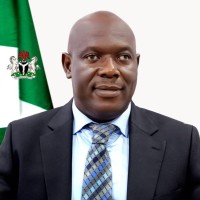
The Hydrocarbon Pollution Remediation Project (HYPREP) has commemorated the 15th anniversary of the release of the United Nations Environment Programme (UNEP) Environmental Assessment Report on Ogoniland, reaffirming its commitment to restoring the environment and improving the livelihoods of affected communities.
In a statement signed by the Project Coordinator, Prof Nenibarini Zabbey, to commemorate the anniversary, HYPREP described the anniversary as a significant milestone in Nigeria’s environmental restoration efforts, noting that the project has made remarkable progress in implementing the recommendations of the landmark UNEP report released on August 4, 2011.
The UNEP report had revealed extensive oil pollution across Ogoniland, severe environmental degradation, and serious public health risks resulting from decades of petroleum operations. It also recommended an initial $1 billion fund to commence the cleanup of the affected communities.
According to HYPREP, the Federal Government formally launched the Ogoni clean-up in 2016, while the Project Coordination Office was established in 2017 to drive the implementation of UNEP’s recommendations.
Zabbey said the current administration has continued to prioritise the project under the Renewed Hope Agenda.
Providing an update on the cleanup, the Project Coordinator disclosed that 30 of the 65 contaminated sites identified by UNEP have been fully remediated, while work is ongoing at several medium- and high-risk locations. It also stated that more than 1.5 million mangrove seedlings have been planted as part of what it described as the world’s largest restoration of oil-degraded mangroves, with over 1,000 hectares of shoreline already rehabilitated.
Zabbey further revealed that 49 Ogoni communities have been connected to potable water schemes through multiple water projects and booster stations aimed at providing safe drinking water across the region.
In the health sector, he said the 100-bed Ogoni Specialist Hospital in Kpite and the 43-bed Cottage Hospital in Buan are nearing completion, adding that several existing health facilities have been upgraded with modern medical equipment, while five ambulances have been donated to improve emergency healthcare services. The Project Coordinator also disclosed that a three-year human health biomonitoring study is being conducted in collaboration with the World Health Organization’s International Agency for Research on Cancer (IARC).
On economic empowerment, Zabbey stated that the Project has created more than 8,000 direct jobs and trained thousands of Ogoni youths and women in various vocational and technical skills, including software development, cybersecurity, aviation, commercial diving, seafaring, mechatronics, and creative arts. The project also reported awarding scholarships to more than 1,000 students, providing grants to small businesses, and supporting persons living with special needs through skills acquisition programmes.
The statement further highlighted ongoing legacy projects, including the Ogoni Power Project and the Centre of Excellence for Environmental Restoration, which it said is about 96 per cent complete. HYPREP also welcomed the recent designation of the Ogoni Wetland as a Ramsar Site of International Importance and pledged to continue promoting biodiversity conservation and sustainable management of the ecosystem.
Marking the anniversary, Zabbey said the progress achieved over the past 15 years demonstrates the collective commitment of government, development partners, stakeholders, and local communities to restoring Ogoniland. He called for renewed collaboration to sustain the cleanup effort, promote environmental sustainability, and support the long-term development of the region. 3
-

 News2 days ago
RSG Targets Nine Million Residents in Mosquito Net Distribution Campaign
-

 Oil & Energy2 days ago
Aiyedatiwa Signs New Electricity Bill
-

 Oil & Energy2 days ago
NLNG Commissions Research And Innovation Centre In RSU
-

 Maritime2 days ago
Marine Minister Commends President Tinubu On NPERA Bill Assent
-

 News2 days ago
KenPoly Holds Eight Convocations, August 29
-

 News2 days ago
RSG Begins Another Phase of Projects Commissioning Today
-

 News2 days ago
RMAFC Completes Revenue Sharing Review, Proposes New Pay
-

 Maritime2 days ago
NAGAFF Petitions IGP Over Alleged Maritime Police Harassment