
Business
LCCI Urges FG To Front Manufacturing Reforms

The Lagos Chamber of Commerce and Industry (LCCI) has called on the Federal Government to spearhead reforms in the manufacturing sector by tackling the key cost drivers inhibiting the growth of the sector.
President of LCCI, Gabriel Idahosa, who made the call at a media conference on the State of the Economy in Lagos, highlighted several areas of possible intervention.
“In light of increasing global economic shifts, we urge the government to spearhead transformative reforms in the manufacturing sector by addressing critical cost drivers such as high inflation, interest rates, multiple taxation, and exchange rate volatility.
“Strategic measures should include instituting single-digit tax regimes for manufacturing entities, stabilising the naira through proactive foreign exchange policies, and leveraging public-private partnerships to reduce production costs”, he said.
Idahosa noted that the Micro, Small and Medium Enterprises (MSMEs) remain the backbone of the nation’s economy, adding that they are confronted with significant challenges, including inadequate access to finance and unreliable power supply.
According to him, “MSMEs remain the backbone of Nigeria’s economy, and we urge the government to expand access to credit at concessionary rates below the prevailing CBN MPR.
“Additionally, introducing technology-driven lending platforms and tailored financial literacy programs can empower MSMEs to scale operations effectively.
“These steps will mitigate the rising cost of production, safeguard employment, and improve the competitiveness of Nigerian products in regional and global markets.
“A 2024 survey by PWC revealed that 35% of businesses identified limited financing as their primary growth inhibitor, while 21% highlighted poor electricity as a major operational hurdle. These constraints stifle the growth potential of MSMEs, which are vital contributors to Nigeria’s GDP and employment.
“To support MSMEs growth, the government should facilitate access to affordable financing by collaborating with financial institutions to develop MSME-friendly loan products with lower interest rates and simplified application processes.
“Additionally, investing in reliable power infrastructure or providing incentives for alternative energy solutions can alleviate the energy challenges faced by small businesses, enabling them to operate more efficiently and competitively”.


Continue Reading

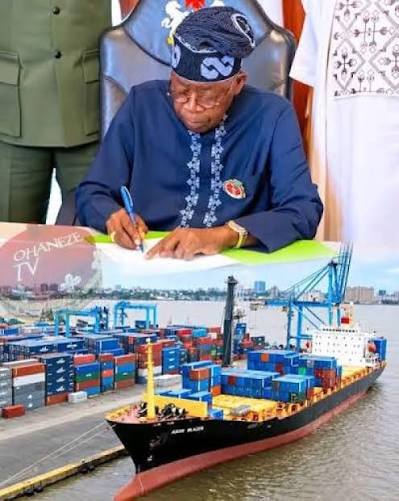
The Federal Executive Council (FEC) has approved four new channel management companies for seaports across the country in a move aimed at improving vessel navigation and port operations.
Speaking at the recently concluded Annual General Meeting of the Nigerian Association of Master Mariners (NAMM), former General Manager, Marine and Operations, Capt. Ebubeogu Ihenacho, disclosed that there would be changes in the ownership of the Lagos Channel Management Company Limited and the Bonny Channel Management Company.
According to Ihenacho, the four channels serving Nigeria’s major port clusters will have different channel management companies as approved by the FEC.
He said a new company had been approved to manage the Lagos port channel, with a change of name, while the Calabar Channel would be managed by the Calabar Channel Management Company.
He added that Bonny Channel Management Company had also undergone a change of ownership.
On the Warri Channel, Ihenacho said the Federal Government had approved China Harbour Engineering Company (CHEC) and two other companies to form a consortium to manage the Escravos Channel.
He said: “For Warri, it was approved for China Harbour Engineering Company, CHEC, and two other companies, who would now form a consortium.
That consortium will now form a Special Purpose Vehicle (SPV) with the Nigerian Ports Authority to manage the Escravos Channel.”
Recall that the management of the NPA had declined to renew the concessions of the Lagos Channel Management Company Limited and the Bonny Channel Management Company, opting instead for six-month extensions of the existing arrangements.
By; Enoch Epelle
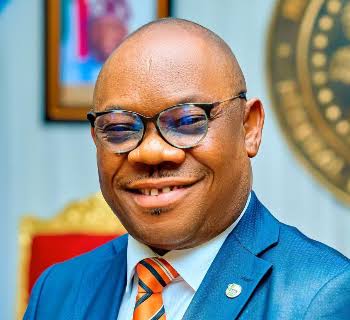
The Rivers State Internal Revenue Service (RIRS) has warned motorists, transport operators and business owners against paying taxes, levies or charges to Unauthorised persons and organisations, insisting that only the Service and its duly appointed agents are legally empowered to collect taxes on behalf of the state government.
The Service gave the warning in a public notice dated October 21, 2026, signed by its Executive Chairman, Sir Israel O. Egbunefu, FCTI, in which it clarified that the Rivers State Ministry of Transport was not authorised by the state government to collect road tax or any other tax, levy or charge from motorists and transport operators.
RIRS also specifically disowned Explore Strategic Alliance Ltd, located at No. 7 Rumuodaolu Market Road, Port Harcourt, declaring the company had not been appointed or authorised by either the state government or the Service to collect Motor Vehicle Transport (MOT) tickets or any other tax on its behalf.
The revenue agency consequently cautioned members of the public against making payments to the company or any of its staff, stressing that anyone who ignored the warning would do so at their own risk.
It reaffirmed that only the legally authorised agency responsible for tax collection in Rivers State and the appointed agents that would carry out such duties in accordance with the law.
The Service urged taxpayers to demand official identification from anyone claiming to be its tax agent and verify the person’s credentials directly with RIRS before making payments.
It further warned that individuals or groups found impersonating tax consultants, agents or their representatives to collect Unauthorised taxes would be arrested and prosecuted in accordance with the law.
RIRS also called on members of the public to report suspicious persons and activities relating to Unauthorised tax collection to the Service for appropriate action.
The agency advised taxpayers seeking clarification or assistance to visit any of its offices or contact it through its official email address, info@riversbirs.gov.ng.
The Service reiterated its commitment to protecting taxpayers, promoting voluntary compliance and safeguarding the integrity of tax administration in Rivers State.
By: King Onunwor
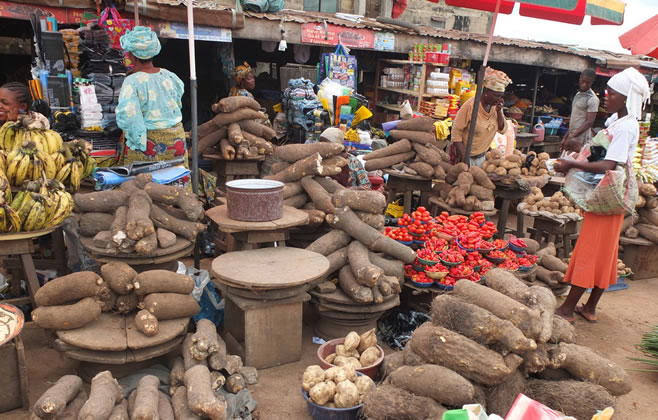
Consumers and traders at the Swali ultramodern market in Yenagoa, capital of Bayelsa State have continued to groan over high prices of commodities and poor Patronage due to cost-push inflation.
The Tide reports that in the past weeks prices of goods and services in Yenagoa metropolis has experienced increase.
Notable services like transportation have also increased lately due to increase in the pump price of fuel that has recently further exacerbated inflation in the prices of staple foods like rice, beans, garri and others.
Speaking with The Tide on a market survey, a trader, Mrs Tovie Barakabo said a bag of bean which sold between N120,000-N130, 000 now goes for N140,000-N145,000.
Mrs Barakabo also hinted that the only commodities whose price has not gone up was price of millet which sells N60,000, while big bag of garri now sells for N30,000.
The Tide further gathered from other inside Source that 25 litres of Kings cooking oil currently sells N75,000 as against the former price of N57,000.
Other commodities such as delicious vegetable oil now goes for N68,000, Pure vegetable oil currently goes for N66, 000, while spaghetti is now N18,800 per bag.
The market survey also discovered that Sonnia tomato mix sells N75,609, while a big and small basket of fresh tomatoes are sold for N30,000 and N6,500 respectively.
A disappointed custom, Mrs Juliet Domo who fielded questions from The Tide expressed her worries over the inflation, calling on government to take decisive stands against inflation.
By: Ariwera Ibibo-Howells, Yenagoa
-

 Education1 day ago
FCE Yola Graduates 3,555 Teachers , Seeks Upgrade to University
-

 Sports1 day ago
Nigerian Trio Target Titles At PFL Africa Finals
-

 Niger Delta1 day ago
Diri Restates Stance On Lagos-Calabar Coastal Highway
-

 Niger Delta1 day ago
C’River, NUJ Pay Tribute To Late Guardian Editor
-

 News1 day ago
NDLEA Recovers Tons Of Illicit Drug Consignments In Nine States
-

 Opinion1 day ago
Checking Voter Apathy In Nigeria’s Electoral Process
-

 Politics1 day ago
2027: DICKSON’S EX-ALLY VOWS TO WORK AGAINST NDC INTEREST IN BAYELSA
-

 Politics1 day ago
2027: GROUP PLEDGES 40,000 SUPPORTERS FOR COALITION CANDIDATES IN RIVERS