
Business
Discos Generate N3.95trn In Five years

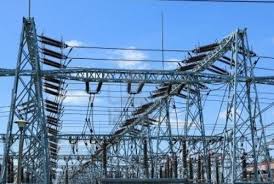
Nigeria’s electricity distribution companies collectively generated about N3.95trn revenue between 2019 and the first quarter of 2024.
This is according to data from the National Bureau of Statistics (NBS).
The NBS data revealed an upward trajectory in revenue generation over the past five years, as the power distributors made N482.6billion in 2019, N526.8billion in 2020, N761.2billion in 2021, N828.1billion in 2022, N1.07billion in 2023, and N291.6billion in the first quarter of 2024.
Experts attribute this consistent growth in revenue to several factors, including ongoing tariff adjustments moving towards cost-reflective pricing, which has allowed the Discos to align revenue with the cost of providing electricity.
Also, the National Mass Metering Programme has increased the number of metered customers, reducing estimated billing and improving the accuracy of revenue collection.
The programme has also contributed to reducing Aggregate Technical, Commercial, and Collection losses that have previously plagued the sector.
Also, the enhanced regulatory oversight and the adoption of modern technology in billing and collection have streamlined processes, minimised revenue leakages, and improved collection efficiency.
However, despite this revenue growth, the Discos face significant challenges, including high unpaid bills, electricity theft, infrastructure deficits, and energy losses.
These issues have hindered the Discos’ ability to fully capitalise on the potential of Nigeria’s electricity market.
While reacting to this, the President of the Nigeria Consumer Protection Network, Kunle Olubiyo, questioned the efficiency of the Discos and called for urgent reforms.
According to him, despite the pre-privatisation commitments of the Discos to meter customers and the improved collection and billing efficiency, the power distributors had largely failed to meet their obligations.
“We cannot score the Discos more than five per cent. In terms of complaints resolution, they lack the software to track issues and have failed woefully in conflict resolution”, he said.
Olubiyo further highlighted the inadequacies of the Discos despite significant investments in the firms by the government and the Central Bank of Nigeria aimed at network improvements.
He raised concerns about the implementation of the Federal Government’s National Mass Metering Programme, accusing some meter vendors and Discos of conspiracy.
“Many of the customers listed as metered were not metered. The idea was to attach GPS coordinates to every metered point as a precondition for metering, but this was not done”, the NCPN President stated.
According to Olubiyo, the government’s ongoing intervention, which includes funding the importation and installation of two million meters annually using public funds, raises questions about the essence of privatisation.
He highlighted instances where governance or liquidity issues led to Discos being placed under receivership, with interim management teams appointed by the Bureau of Public Enterprises.
He, however, noted that the effectiveness of these interventions was often undermined by internal politics and job insecurity among Disco management.
He said, “We’ve seen board chairmen abruptly remove MDs in Abuja, Port Harcourt, and several other Discos”.
Olubiyo welcomed the recent empowerment of states to regulate electricity within their jurisdictions under the Electricity Act, describing it as a positive development.
“The migration of electricity from the exclusive to the concurrent list is a good omen”, he said.
He urged the Federal Government to invest its 40 per cent equity in Discos and shift towards resource-driven energy solutions.
Reflecting on the power sector’s performance since privatisation, Olubiyo lamented the stagnation in electricity generation.
He noted that “In 2013, the peak generation on the grid was 5,800 megawatts. As we speak, from 2013 to now, we haven’t even been able to hit 6,000 megawatts of electricity evacuation on the grid”.
Describing the present situation as “a decline or backward growth, progressing in error”, Olubiyo, however, praised the recent licensing of companies such as MTN and Honeywell to engage in Nigeria’s bulk electricity trading or captive generation.
He argued that off-grid generation and independent power plants, etc, were steps in the right direction to stabilise power supply, particularly for industrial areas.
This came as the Transmission Company of Nigeria, a Federal Government-owned firm that transmits electricity from power generation companies to distribution firms, announced that it had been grappling with funding shortfalls.
It said this has stalled the completion of 129 critical projects. TCN’s Managing Director, Abdulaziz Sule, who revealed this recently in Abuja, said the company was facing a funding gap of N637.37bn, out of a total required amount of N1.79tn.
Sule appealed to the National Assembly for intervention to address these challenges and ensure the timely completion of the critical projects. The funding gap, he noted, is delaying project completion and hindering efficient service delivery.
He said the company is dealing with other challenges including inadequate modern tools, port clearance issues, lengthy procurement processes, lack of spinning reserve, delayed donor-funded projects due to unpaid counterpart funding, and recent VAT and levy charges on offshore equipment.



Business
Jonathan, Diri, Others Laud Firm’s Milestone in Bayelsa …Says Project Will Drive Industrialisation, Create Jobs



-

 News2 days ago
RSG Targets Nine Million Residents in Mosquito Net Distribution Campaign
-

 Oil & Energy2 days ago
Aiyedatiwa Signs New Electricity Bill
-

 Oil & Energy2 days ago
NLNG Commissions Research And Innovation Centre In RSU
-

 Maritime2 days ago
Marine Minister Commends President Tinubu On NPERA Bill Assent
-

 News2 days ago
KenPoly Holds Eight Convocations, August 29
-

 News2 days ago
RSG Begins Another Phase of Projects Commissioning Today
-

 News2 days ago
RMAFC Completes Revenue Sharing Review, Proposes New Pay
-

 Maritime2 days ago
NAGAFF Petitions IGP Over Alleged Maritime Police Harassment