Connect with us

Maritime

Customs Rakes In N4.49trn In One Year

Published

on

The Nigeria Customs Service (NCS) says it generated N4.49trillion in one year.
Comptroller-General, NCS, Adewale Adeniyi, disclosed this to newsmen recently while presenting his scorecard of one year in office.
He said NCS’s revenue increased by 74 per cent to N4.49trillion between June 2023 and May 2024, when compared to what the service collected during the same period in the previous year.
“Exactly one year ago, today, and approximately three weeks into the inauguration of President Bola Tinubu, I was appointed by Mr President as the Comptroller-General of this strategic agency, the NCS”, he recalled.
Outlining some of the key milestones recorded by the service under its core statutory responsibilities, Adeniyi said, “The NCS reported a remarkable 74 percent growth in revenue collection over the past year, recording a total revenue collection of N 4.49trillion between June 2023 and May 2024, compared to the N2.58trillion collected during the corresponding period of the previous year”.
This feat, according to him, was “underpinned by a sustained increase of 70.13 per cent in average monthly revenue collection compared to the previous year. NCS recorded an average monthly revenue collection of N343billion, compared to the N202billion monthly average.
“Notably, there was a substantial 122.35 per cent rise in revenue collection during the first quarter of 2024 compared to the same period in the previous year. These gains were attributed to various strategic initiatives”.
Adeniyi said the initiatives include the N15billion recovery by the Revenue Review Performance Recovery Exercise; N2.79billion recovered from the 90-day window for the regularisation of the documents of uncustomed vehicles and the N1.5billion recovered from the decongestion of 1,705 overtime containers and 981 vehicles from the port.
“Initially handling 317 Single Goods Declarations in transactions, the terminal now manages 7,464 SGDs, accounting for 19.49 per cent of the total 38,294 export transactions recorded in 2023.

“By the first quarter of 2024, the service has processed a total of 10,786 transactions, with 3,162 (29.32 per cent) of these processed through the dedicated export terminal”, Adeniyi stated.

Speaking on the protection of society, he said the agency’s anti-smuggling efforts in the past year were intensified, resulting in significant interceptions, high-value seizures, and numerous arrests.

“Notably, the service recorded 63 seizures related to animal and wildlife products valued at ¦ 566m. Additionally, seven seizures of arms and ammunition were made through our ports and borders.

“In terms of illicit drugs, a combined total of 127 cases involving narcotics and pharmaceutical products were seized, valued at over ¦ 6bn.

The service also recorded 724 seizures of 2.93 million litres of Premium Motor Spirit (petrol) that were attempted to be smuggled out of the country.

The illegal dealings in petroleum evacuation have garnered the interest of relevant stakeholders, and the ongoing Operation Whirlwind will continue to intercept and disrupt the activities of smugglers in this regard.

“In a bid to guarantee food security and suppress the smuggling of food in and out of the country, the service recorded 1,744 cases of rice and grain seizures valued at ¦ 4.4bn. These concerted efforts underscore the NCS’s commitment to protecting society and ensuring national security”, Adeniyi stated.

On exchange rate issues, he said, “With the support of the Minister of Finance, NCS is working in close collaboration with the Central Bank of Nigeria CBN to achieve a stable rate for import of goods to enable businesses to plan their activities.

“On compliance with Customs laws, the Service is constantly reviewing its processes in line with the Nigeria Customs Service Act 2024 to ensure that leakages are blocked and offenders of Customs laws are made to face the full penalty and the wrath of the law.

“On Customs modernisation, the NCS is engaging relevant stakeholders to ensure that the deliverable of the customs modernisations are met as the service continues to phase out manual processes with automation”.

As regards trade agreements, Adeniyi said the Service is working closely with relevant stakeholders to ensure that the implementation of trade agreements like the African Continental Free Trade Area yields the desired benefits to Nigerians.

“Moreover, the Service has signed a Memorandum of Understanding with strategic trade partners like China Customs and recently is working with the Benin Customs to facilitate the creation of a new joint border post along the Segbana-Tsamia border with the Republic of Benin at Kebbi”, he stated.

On National security, he said the Nigeria Customs Service would continue to work with relevant national and international agencies to share intelligence and develop structured frameworks to ensure that those seeking to disrupt the peace and stability of the nation do not go unpunished.

He also said the service would continue to work tirelessly to ensure that the business of food hoarders is unprofitable to tackle food inflation.


Continue Reading

Maritime

Oyetola Woos Investors With Nigeria’s Seabed Resources, Marine Biotechnology 

Published

on

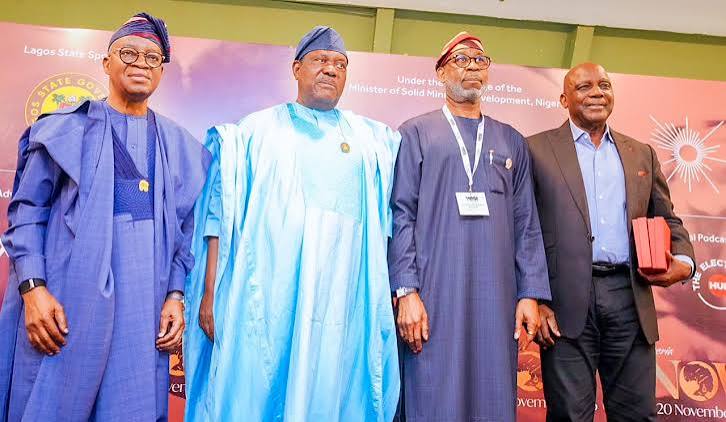
The Minister of Marine and Blue Economy, Dr Adegboyega Oyetola, has invited global investors to explore Nigeria’s largely untapped seabed mineral resources and emerging marine industries, including deep-sea mining, marine renewable energy, biotechnology and desalination.
Speaking at the “Nigeria Now” Global Investors Expo in Abuja on Thursday, Oyetola said Nigeria’s Exclusive Economic Zone (EEZ) holds significant deposits of polymetallic nodules, heavy mineral sands and rare earth elements, which are vital to global technology, manufacturing and clean-energy supply chains.
He urged investors to explore opportunities in oceanographic surveys, geological mapping, mineral exploration, processing and value addition, assuring them that the Federal Government was developing regulatory safeguards for responsible resource exploitation.
Oyetola disclosed that his ministry was collaborating with the Federal Ministry of Solid Minerals Development and other stakeholders to establish transparent regulatory frameworks for deep-sea and shelf-mineral exploitation in line with international ocean governance standards.
He said investors adopting low-impact extraction technologies could gain early-mover advantages through joint-venture exploration, refining and mineral-based industries.
Beyond seabed mining, the minister highlighted marine renewable energy, biotechnology and desalination as promising sectors for investment, with opportunities in offshore energy, pharmaceutical and industrial research, and alternative water supply systems for coastal communities and industries.
He said these opportunities were supported by ongoing reforms in port modernisation, maritime security, shipping, fisheries, aquaculture and coastal infrastructure.
Oyetola added that Nigeria’s 853-kilometre coastline, extensive inland waterways and strategic Gulf of Guinea location position the country to attract long-term investment and become a regional maritime hub.
He reaffirmed the Federal Government’s commitment to partnering with investors to convert marine resources into jobs, industrial growth, trade expansion and sustainable prosperity under President Bola Ahmed Tinubu’s Renewed Hope Agenda.
The expo was attended by the Secretary to the Government of the Federation, Senator George Akume; Minister of Solid Minerals Development, Dele Alake; and other dignitaries.
By: Nkpemenyie Mcdominic, Lagos
Continue Reading

Maritime

South-South Governors Urges To Shake Off Collective Lethargic To Embrace Blue Economy

Published

on

Governors of the South -South states of Nigeria are said to be too lethargic in their approach towards harnessing the blue economy potential in their respective states.
They are therefore urged to shake off their collective lethargic and embrace the kernel of the blue economy,which , is said , to bea sure path to regional economic growth and development
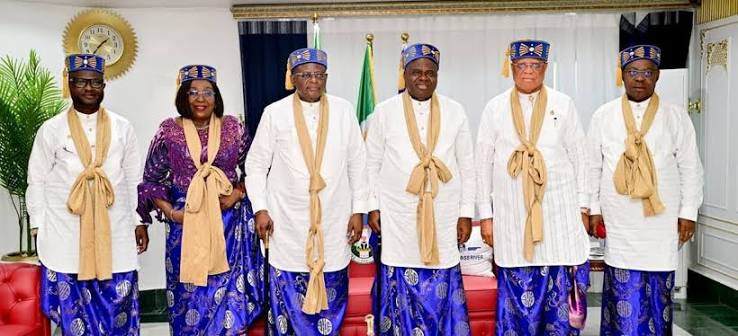
Dr.Charles Okerefe ,a former  lecturer at the Maritime University,Okerenkoko,Delta state, gave this advice in a lecture he delivered at the 20th anniversary of the South -South International (TSSI) Magazine in Lagos.
The topic of his lecture, which was one of the two lectures delivered at the anniversary chaired by Assistant Comptroller General of Customs Charles Edike (rtd), was Harnessing Marine and Blue Economy Potentials as New Catalyst for Developing the South-South Region of Nigeria.
Dr. Jide Johnson, a senior lecturer at the Nigerian Institute of Journalism, Ogba, delivered the second lecture entitled Leadership, Power & Service: The Leadership Conundrum of Nigeria’s 4th Republic.
Dr. Charles Okerefe, advised the South-South state governors to be proactive, pointing out to them that their states have no reason to be poor despite being naturally blessed with abundant Marine and Blue Economy potentials of fisheries and aquaculture, biotechnology, renewable energy, coastal tourism and hospitality, dredging, ship building and repair, etc, but for bad governance.
He listed challenges restricting the development of the Blue Economy in Nigeria and South-South Region as follows:
1. Inadequate Awareness about the Blue Economy concept.
2. Pollution and indiscriminate dumping of wastes.
3. Weak Policy frameworks and Governance.
4. Exclusion of local communities in decision making.
5. Inadequate funding and investment.
6. Over fishing and unsustainable ocean practices.
7. Phenomenon of climate change and rising sea levels.
8. Research limitations and Data gaps.
According to him, “despite the very robust potentials that are inherent in the Blue Economy, a myriad of challenges still abound. Such challenges need to be promptly addressed in order to achieve the threshold of acceptable success,” said Okerefe.
To address these challenges, Okerefe called on the South-South governors to do the followings:
1. Develop a coordinated regional investment Blueprint for the Blue Economy-
2. Invest in human capital development on Blue Economy.
3. Create an enabling policy climate for private investors/entrepreneurs to thrive in the marine business.
4. Issuance of Blue Bonds- Restoration of coral reefs, mangroves and Marine Protected Areas (MPAs). E.g. of Seychelles’ $15M Blue Bond.
5. Develop regional clusters for Aquaculture and Fish Ports.
6. Develop a regional strategy to tackle climate change.
7. Utilize marine resources to drive power and energy- use of turbines, ocean and tidal waves.
8. Create a blueprint for Integrated transport, road, rail, inland waterways and Pipelines.
According to him, “without any doubt whatsoever, the South-South region of Nigeria has for centuries borne the brunt of inhuman mercantile activities, beginning from the era of slave trade to the current spectacle of oil exploitation and environmental degradation.Yet, that same region holds enormous potentials for economic growth and development within the ambits of the Blue Economy.
By: Nkpemenyie Mcdominic, Lagos
Continue Reading

Maritime

Nigeria, Russia Customs Sign MOU To Trade Facilitations

Published

on

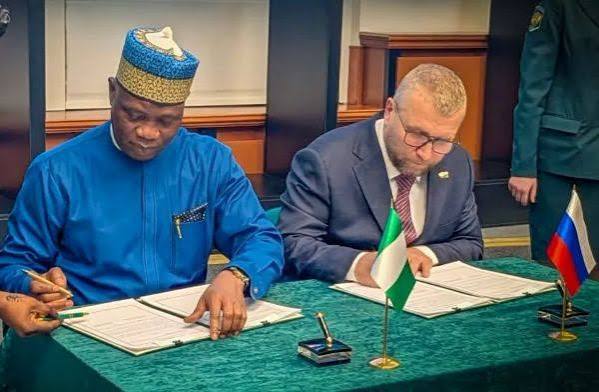
The Nigeria Customs Service (NCS) and the Federal Customs Service of the Russian Federation have taken a significant step toward strengthening bilateral customs cooperation after signing an Agreement on Cooperation and Mutual Assistance in Customs Matters (CMAA) in Moscow.
The agreement establishes a framework for closer collaboration in trade facilitation, information exchange, customs enforcement, financial integrity and capacity development, while opening new opportunities for the two administrations to deepen operational cooperation.
The Comptroller-General of Customs, Adewale Adeniyi, who led the Nigerian delegation, described the agreement as a strategic instrument to safeguard economic integrity, secure supply chains and strengthen trade governance.
He said the engagement marked the culmination of months of technical consultations, legal reviews, and constructive discussions between both administrations, reflecting a shared commitment to modernising customs operations and responding more effectively to emerging challenges in international trade.
CGC Adeniyi explained that the new legislative framework has accelerated the Service’s transformation, particularly through the adoption of digital systems that have significantly automated customs processes.
 According to him, declarations, payments and the submission of supporting documents are increasingly conducted electronically, enabling the Service to improve operational efficiency while facilitating legitimate trade.
He emphasised that revenue generation and trade facilitation are not competing objectives, noting that a NCS approach aligns with the World Customs Organisation’s SAFE Framework of Standards.
On implementing the agreement, CGC Adeniyi identified exchanging experience between the two countries’ Authorised Economic Operator (AEO) programmes as an important area of cooperation.
He explained that both administrations had been encouraged to undertake structured exchanges to understand their respective programme frameworks, operational procedures and implementation experiences, with the longer-term objective of advancing mutual recognition and acceptance.
 Such an arrangement, when developed, would strengthen the confidence accorded to traders compliant  and potentially improve the efficiency of cargo movement between the two countries.
During bilateral discussions with the Head of the Federal Customs Service of Russia, Mr Valery Pikalyov, CGC Adeniyi highlighted the similarities in the reform journeys of both administrations, explaining that the Service had evolved considerably from its colonial origins into a modern customs administration.
He recalled that the Service’s law remained largely unchanged for several years, until the introduction of the Nigeria Customs Service Act 2023, which provided a stronger legal foundation for institutional reforms, technological advancement and private-sector partnerships.
The discussions also examined the prospect of sharing customs statistics and trade data for analytical purposes. CGC Adeniyi highlighted Nigeria’s participation in the World Customs Organisation’s data initiative, stating that the NCS was the only customs administration to submit its trade data to the WCO data project.
He noted that access to reliable customs data and structured information exchange would support comparative analysis, improve understanding of bilateral trade patterns and strengthen evidence-based customs administration.
In his response, Mr Pikalyov explained that the Federal Customs Service of Russia is statutorily authorised to collect, process, compile and provide customs statistics derived from customs declarations.
 He noted that Russia already exchanges customs statistics with foreign customs administrations under existing agreements, allowing both sides to analyse trade flows, identify discrepancies and monitor developments in bilateral commerce.
He indicated that the Russian side was prepared to explore a dedicated arrangement with the NCS to exchange statistical data, subject to the relevant framework and procedures.
The Russian side further noted that Nigeria had become one of the first sub-Saharan African countries, alongside Ethiopia and Namibia, to conclude a customs cooperation agreement with the Federal Customs Service.
The engagement took place within the framework of the Third Russia–Africa Summit, providing an opportunity to advance customs collaboration as part of the broader relationship between the two countries.
With the agreement now signed, the NCS is positioned to deepen institutional cooperation with its Russian counterpart, strengthen customs intelligence and information exchange, promote compliant trade and contribute to more secure and efficient international supply chains.
The CMAA provides for four principal areas of cooperation: streamlined customs procedures to facilitate legitimate trade; secure information exchange to prevent, detect, investigate and suppress customs offences; financial integrity measures targeting illicit financial flows, grey-market importations and tax evasion; and stronger border security through cooperation against counterfeit goods, narcotic drugs, psychotropic substances and other prohibited or hazardous materials.
By: Nkpemenyie Mcdominic, Lagos
Continue Reading

Trending