Connect with us

Opinion

ONELGA Dev Centres: Facts And Fiction

Published

on

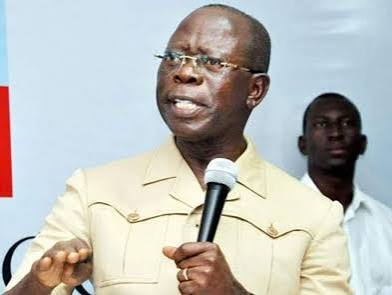
I am writing as the authentic voice of Ndoni District in Ogba/Egbema/Ndoni Local Government Area (the other District being Ogba/Egbema) to refute the malicious, fictitious and provocative piece published in your edition of Monday, 7th November, 2011, page 9, titled “ONELGA and Proposed Development Centres” in the pseudo name of one Gaddy Ominyanwa, said to be a public affairs analyst.

Whoever sponsored the thrash of a write-up is doing a great disservice to the cause of ONELGA. Well-meaning and true patriotic sons and daughters of Ogba ethnic nationality should rise up to condemn this nefarious piece, thrown in to cause disaffection and disunity in the local government.  In the same vein, we shall congratulate his Excellency, Rt. Hon Chibuike Amaechi for this laudable project, and ask him to ignore the distraction of un-informed detractors while concentrating on the establishment of the 40 proposed new Development Centres in the state.

The writer of the aforementioned destructive piece had the temerity to say inter alia that “on the geographical distribution of Ogba/Egbema/Ndoni Local Government Area, without reservation ONLEGA is the largest in the entire Niger Delta and Nigeria in general, comprising three (3) distinct nationalities viz: Ogba ethnic nationality which is made up of Omoku urban, Egi, Igburu and Usomini, autonomous clans. Ogba ethnic nationality has over 40 autonomous communities, excluding hamlets and fishing ports along coastal area”. Then he went on “Egbema ethnic nationality consists of 3 autonomous communities while Ndoni Ethnic Nationality is made up of mainly Ndoni Community and about 6 hamlets along the coastline. “How vicious, how uninformed, and how irresponsible can this be?

Let me not speak for Egbema people as they have sons and daughters capable of stating their case.

Let me also say that I am thankful to God to be alive to speak about Ndoni because I was A MAJOR Player in the process of Ndoni joining the Rivers State in December, 1976, as a District in the old Ahoada Local Government Area.

Before that, Ndoni area was a Division in the then Warri province of the Bendel State. My humble self and late Amadi Emina were two of first officers to be transferred from Ibadan to Benin after the creation of Midwest Region.

After the civil war (1967-70), Ndoni remained a part of Bendel State, and in 1973, Governor Ogbemudia visited Ndoni, thereafter, he made Ndoni area a Division, with Ndoni as headquarters.

After the lrifeke Commission of enquiry in 1975 (appointed by the then Head of State, Late Murtala Muhammed), Ndoni was transferred to the East by the Murtala Mohammed Administration. The transfer did not take effect until after the Mamman Nasir Commission of Enquiry in 1976, which sat for about a week at Ndoni, and in the end recommended that Ndoni Area, East of the Niger should be merged with Rivers State. This merger took effect in December, 1976. I was one of the leaders of the team that represented Ndoni at the Commission.  According to the statistics at the time Ndoni Area east of the Niger had 69 towns and villages, settlements, etc. divided into four clans, namely; Ndoni clan, Aboh clan, Onya clan, and Adiai clan. How then could any one in his right mind, with any sense of propriety and decency say that “Ndoni ethnic nationality was made up of Ndoni Community and 6 hamlets along the coastline”.

Ahoada LGA was then very unwieldy. At the stakeholders meeting attended by representatives of all communities and traditional rulers in the then Ahoada LGA held in Omoku before the break-up of the LGA, it was agreed that the best arrangement was to accord a local government status to each of the then four districts namely, Ekpeye-Engeni District, Abual-Odual District, Ogba-Egbema District and Ndoni District. This was the recommendation that was forwarded to the then military government. I was part of the stakeholders meeting. The Eze Ekpeye Logbo, Eze Robinson O. Robinson, chaired the meeting.

How it then turned out that all, except Ndoni was not made a local government of its own had remained a mystery.

For more enlightenment, let it be said that Ndoni District is the only window the Rivers State now has to the lordly River Niger which is the main artery of trade between the Niger Delta and the rest of the country, right from the colonial days when trading companies like John Holt and UAC used flat-bottom ships to ply the water ways of the River Niger from Warri, Burutu, Forcados, to the hinterlands up to Onitsha, Lokoja, Markurdi, Gongola, and even Garua in the Cameroons.

Ndoni District, apart from being a major oil and gas producer from wells in the district, especially Obiofu, Utuechi in Adiai clan in the South (wells which are the main suppliers of gas to the Agip Gas plant at Obrikom) to wells at Agwe, Ishukwa, Ase Azaga in the North (wells which some other states had tried unsuccessfully to corner) is very rich and productive in many other respects.

With the beautiful river sand beaches, Ndoni District is a first class tourist attraction, begging to be developed to world class standards.

And for the building industry, Ndoni District has some of the best river sand and gravels. Or shall we talk of the timber, lumbered at almost every part of the District. Indeed, Ndoni District is really an enviable economic asset to Rivers State, nay to our great country, Nigeria.

Finally, I wish to use this opportunity to appeal to His Excellency, the one and only Rt. Hon. Chibuike Amaechi, the Executive Governor of Rivers State to graciously come to the rescue of Ndoni people and complete the new Bridge across the Onite Creek, which is about 80% completed, but now abandoned.

Chief Abulokwe was former chairman, Rivers State Civil Service Commission

Joseph Abulokwe

Continue Reading

Opinion

Agony In  Ivory Tower 

Published

on

Quote: A university that tolerates missing scripts, result manipulation and ‘sorting’ is not merely failing students—it is quietly destroying the moral foundation of education itself.”
The sad cases of missing scripts, compulsory Sorting, inputting of wrong results and other obnoxious practices in some public universities, leave much to be desired. One cannot imagine how a student will be compelled to suffer consequences of the flagrant negligence of a Head of Department, a lecturer, Department staff or an ICT staff.Many academic and non academic staff in several public universities seem to be performing far below standard, thus unproductive to the university system. The unacceptable cases of sorting, missing scripts, missing results, inputting of wrong grades to students, should not be mentioned in a university, not even in any academic community. This is because people who are employed to work in various positions should have cognate work experience and unquestionable competence. They should not be seen as  certificate welding illiterates but people who have been proven to be worthy in learning and character, diligent and competent to carry out assigned responsibilities with minimal or no supervision.
The university as a citadel of learning should boast of men of integrity, people  who are repositories of applied knowledge and competence to drive the much desired holistic development in a nation that functions on quality teaching and learning. A situation where a student having gone through the crucibles of learning and written a prescribed semester examination or class-based evaluation test, is told that his or her script is missing or that he or she did not participate in that academic exercise, or must sort to pass, is an unpardonable error and a height of callousness. In fact some lecturers and staff of Departments are using the seeming systemic defect (which is their architecture) as an opportunity to extort  students. Sometimes it is discovered much to students chagrin that the supposed missing script was later discovered when a ransom was paid.
Since a lecturer, or Head of Department has in their disposal both Yam and the knife and determines who takes what (if they wish to give without strings), students have no alternative but to submit to their importunate demands in order to graduate at record time.Such practices should be unheard of in an institution that should be a vanguard of moral and ethical values and conduct. What people learn in school constitute their behavioural patterns in the society. Where the school as an agency of socialisation cannot drive positive change first in its immediate environment, then the objective of education as a bedrock for the development of society, is inevitably compromised and counter-productive. The German Reformer, Dr. Martins Luther was quoted as saying, “I advise parents not to put their wards or children in any school where the Bible is not being used as a rule of life because such institutions will unnecessarily be corrupt”.
 Gleaning from Luther’s sentiment one can deduce that the lack of respect and regard for values as well as the absence of the fear of God is the greatest undoing of most public schools. Another major challenge is that lack of Information, Communication and Technology literacy or compliance on the part of some lecturers and heads of department, may have informed the decision to give students’ scripts to secretaries to compile and input students results thereby making the secretaries the determinants of students’ fate. It is not saying a new thing that some of the secretaries in the process of compiling results have inputted wrong results, omitted names or down graded some students or given unmerited grades to others.Society today is ICT-driven and ICT-literacy enhances efficiency, speed and a reasonable degree of accuracy if the person behind the computer is level headed, articulate, competent, alive to responsibilities and is aware that negligence on his or her part is not only tantamount to a disservice to the university but to the students who may not graduate at record time because of his or her (computer operator’s) gross ineptitude or carelessness.
The ICT era makes the carrying of hard copy of results obsolete as lecturers through the  Heads of Department  can log on to the central server of the Exams and Records (if any) or ICT unit and input students’ results directly. By so doing the incessant cases where result on spread sheet is different from the one published online, more often than not, caused by abject negligence, will be avoided. The process will also end the intermediary services of some staff in the universities’ Information, Communication and Technology Department which has become a money spinner-a lucrative source of income to many of them. In fact some ICT staff reserved the power to award grades to students depending on students’ degree of compliance to terms and conditions. They can dubiously make or unmake a student. The university community should be considered too lofty to have careless, negligent, immoral  and academic or professionally deficient people as academic or non-academic staff.
The Governing  Councils and Senates of universities should be proactive in addressing the menace of missing Script,  inputting of wrong results and sorting.  This is  necessary to end the slogan “Education is scam” so the system can produce quality students who are truly found worthy in learning and in character by operators who exemplify diligence, moral and ethical values. The much-needed reform must begin within the institutions themselves, because the future of any society is shaped in its classrooms.
By: Igbiki Benibo
Continue Reading

Opinion

Strength of Emotional Equality

Published

on

Quote: “Love thrives not when one gives more, but when both give fully — not in competition, not in performance, but in partnership.”
In every healthy relationship, there exists an invisible balance. It is not measured in grand gestures, expensive gifts, or public displays of affection. It is measured in something quieter and far more significant: emotional equality. When couples stand on equal emotional grounds, love becomes less of a negotiation and more of a partnership. Emotional equality does not mean both individuals express love in identical ways. It does not require matching personalities or mirroring temperaments. Rather, it speaks to balance — a shared willingness to invest, to communicate, to be vulnerable, and to grow. It is the difference between two people walking side by side and one person constantly trying to catch up.
 In many relationships, imbalance begins subtly. One partner initiates most conversations. One apologizes more frequently. One carries the emotional labor — remembering important dates, managing conflicts, sensing tension, and attempting reconciliation. Over time, this uneven distribution of emotional effort breeds exhaustion. The partner who gives more begins to feel unseen. The one who gives less may grow comfortable in emotional passivity. Love, in such a space, starts to tilt — slowly at first, then significantly. Resentment can creep in quietly, disguising itself as patience. Silence may replace honest dialogue. What once felt effortless begins to feel heavy.
When couples stand on equal emotional grounds, responsibility is shared. Both people are accountable for the health of the relationship. If conflict arises, neither hides behind silence nor dominates through control. Instead, they engage. They listen. They speak honestly without weaponizing words. Equality creates safety — and safety strengthens intimacy. It allows both individuals to express needs without fear of ridicule or rejection. One of the most overlooked aspects of emotional equality is vulnerability. True connection requires courage. It demands that both partners risk being misunderstood. But when vulnerability is one-sided, it becomes exposure rather than intimacy. If one person consistently opens up while the other remains guarded, trust cannot fully deepen.
Equality ensures that emotional risks are mutual. Where one shares fears, the other shares too. Where one admits weakness, the other responds with openness rather than judgment. In such a space, authenticity flourishes. Another crucial element is validation. In emotionally balanced relationships, both partners feel heard. Their concerns are not dismissed as “overreactions.” Their feelings are not minimized or compared. When couples operate on equal emotional ground, they acknowledge each other’s experiences as legitimate. They may not always agree, but they always respect. Validation does not mean surrendering one’s viewpoint; it means recognizing that another’s emotional reality matters.
Equality also protects individuality. Contrary to popular belief, healthy love does not erase personal identity — it enhances it. When both partners are emotionally secure, they do not feel threatened by each other’s independence. Personal ambitions are encouraged, not resented. Friendships are respected, not restricted. Growth is celebrated, not feared. Standing on equal emotional grounds means neither person shrinks to accommodate the other. Instead, both expand, knowing the relationship is strong enough to hold their evolution. Power dynamics often expose emotional inequality. When one partner controls communication — appearing and disappearing unpredictably, withholding affection, or using silence as leverage — imbalance emerges.
 Emotional dominance weakens intimacy. It creates anxiety instead of assurance. But when couples share emotional power, there is consistency. There is clarity. There is no need to decode affection because it is offered freely and intentionally. It is important to understand that equality does not imply perfection. Couples will still disagree. They will face stress, miscommunication, and moments of frustration. However, when emotional footing is equal, conflict does not threaten the foundation. Instead, it becomes an opportunity for understanding. Both partners approach challenges as teammates rather than opponents. They choose resolution over ego and repair over pride.
Time often reveals whether emotional equality truly exists. In the early stages of love, intensity can disguise imbalance. Enthusiasm feels mutual. Effort appears equal. But as routine settles in and novelty fades, the structure of the relationship becomes clearer. Who still initiates? Who still invests? Who still shows up consistently? Sustainable love requires sustained balance. It is built not merely on attraction, but on deliberate reciprocity. Standing on equal emotional grounds requires intentionality. It demands honest conversations about needs and expectations. It requires both partners to examine their habits — whether they withdraw during tension, avoid accountability, or rely on the other to carry the emotional weight. Emotional maturity is not about avoiding conflict; it is about handling it responsibly and returning, again and again, to shared ground.
Perhaps the greatest benefit of emotional equality is peace. There is no constant anxiety about where one stands. No guessing games about commitment. No fear that affection may suddenly disappear. Instead, there is stability. There is reassurance. There is mutual effort. In a world where relationships often blur the lines between attention and commitment, equality offers clarity. It reminds us that love should not feel like competition or performance. It should feel like partnership. When couples stand on equal emotional grounds, they build something resilient. They build trust that does not fracture easily. They build respect that does not depend on mood. They build a connection rooted not only in passion but in balance. And in that balance, love finds its strength — not in who gives more, but in how both give fully.
By: Sylvia ThankGod-Amadi
Continue Reading

Opinion

NDDC: Time To Illuminate Homes 

Published

on

Quote:“Twenty-five years on, the Niger Delta cannot celebrate illuminated streets while families sit in darkness. Development must begin inside the home — where children study, businesses grow, and lives are built — before it glows on the roadside.”
The Niger Delta Development Commission (NDDC) was established in 2000 with a clear and urgent mandate: to facilitate the rapid, even, and sustainable development of Nigeria’s oil-producing Niger Delta region. The creation of the Commission followed decades of agitation over environmental degradation, infrastructural neglect, and socio-economic marginalization in the region. Its core mandate included the development of roads, bridges, electricity, water supply, health facilities, education, housing, environmental remediation, and economic empowerment initiatives. At inception, expectations were high that the Commission would transform the Niger Delta into a model of regional development. Over the years, the NDDC has indeed implemented numerous projects across the nine Niger Delta states. Roads have been constructed and rehabilitated in several communities, easing transportation challenges.
Schools have been renovated, and new classroom blocks have been provided in underserved areas. Health centres have been built or upgraded, improving access to primary healthcare services. The Commission has also awarded scholarships to students, including foreign postgraduate scholarships, empowering thousands of youths academically.Skills acquisition and youth empowerment programmes have helped many young people gain vocational competencies.Through various interventions, the NDDC has contributed to job creation and local economic stimulation.Solar-powered street lighting projects have been widely implemented in urban and semi-urban communities. These streetlights have improved visibility at night and contributed to enhanced security in some areas. Markets, highways, and public spaces illuminated by solar lights have experienced extended business hours.
For these efforts, the Commission deserves acknowledgment and commendation. However, development must always align with foundational mandates and pressing grassroots realities. A growing concern among residents is that while streets are illuminated, many homes remain in darkness. Rural electrification and household power access remain inconsistent and inadequate across large parts of the region. In riverine and remote communities, families still rely on generators, kerosene lamps, or complete darkness after sunset. The irony of brightly lit streets juxtaposed with powerless homes cannot be ignored. Electricity at the household level directly impacts education, health, and small-scale enterprise. Students cannot effectively study at night without reliable indoor lighting.Families cannot preserve food or power essential appliances without stable electricity.
Micro and small businesses struggle to grow without dependable energy access. While street lighting enhances public aesthetics and security, it does not substitute for domestic electrification. The proverb “charity begins at home” is especially relevant in this context. True community development must first empower households before beautifying public spaces. The Commission’s original mandate emphasizes integrated and sustainable development, not isolated infrastructural gestures. Balanced development requires that energy interventions prioritize homes alongside streets. Solar technology presents a unique opportunity for decentralized household electrification in off-grid communities. Extending solar solutions to individual homes would have a transformative social impact. Home-based solar systems could power lights, fans, small appliances, and communication devices.
Such interventions would reduce poverty, improve living standards, and stimulate grassroots productivity. By broadening its energy focus, the Commission would better reflect the spirit of its founding legislation. This is not a call to abandon street lighting projects, which have their merits. Rather, it is an appeal for balance, inclusivity, and alignment with core developmental objectives. Strategic planning should ensure that rural electrification and household access form a central pillar of ongoing interventions. Community engagement and needs assessments can help determine priority areas for household solar deployment. Twenty-five years after its establishment, the NDDC stands at a reflective moment in its institutional journey. The people of the Niger Delta say: thank you for the efforts so far—but not very much—because true appreciation will come when development begins at home and radiates outward, not merely when streets shine while houses remain in darkness.
By: King Onunwor
Continue Reading

Trending