
Editorial
NYSC Is 50 Today

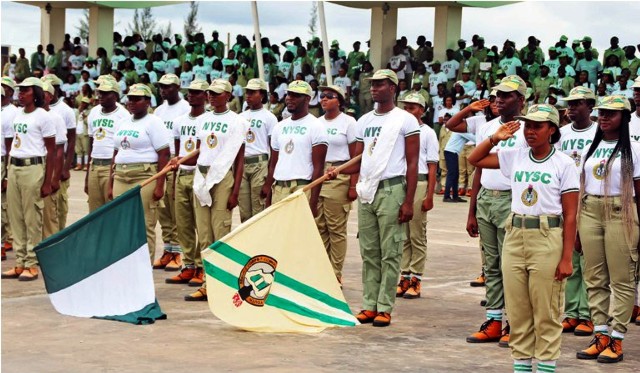
The National Youth Service Corps (NYSC) was established in May, 1973 by General Yakubu Gowon (rtd) to promote national integration after the civil war. Today marks its 50-year anniversary, and we congratulate its administration, staff, and all Nigerians who have participated in the one-year mandatory programme for graduates of tertiary institutions. Over the past five decades, the scheme has remained committed and become a vital agency of national integration among our institutions.
The NYSC has played a crucial role in our country’s development by providing quality manpower to less privileged states. This has been achieved through various partnerships with other organisations. These partnerships include using corps members for enumeration work during the national population census. They also include presiding officers during national elections, and deployment for routine immunisation. These contributions have positively impacted the country’s development.
Also, the health sector has benefited greatly from the scheme. This has successfully reversed the spread of HIV/AIDS, Ebola, and COVID-19 through awareness campaigns and public education on prevention and care. The service has also made vital impacts in other areas such as education, legal aid services, anti-corruption efforts, road safety awareness, and campaigns against drug abuse and human trafficking.
Gowon’s administration established a quasi-military plan for Nigerian university graduates to learn about their country’s people, history, culture, and geography. The scheme was initially opened to graduates under 30 with degrees from universities, polytechnics, and colleges of education. Specifically, those with BA/BSc, HND, and NCE were mobilised. Prospective corps members were assigned to states other than their origin.
The orientation included military and citizenship training, as well as lectures on Nigerian culture. Entrepreneurship training was added later. Following the one-month orientation, participants were assigned to their primary postings based on their qualifications. Medical doctors assigned to hospitals and other health facilities, engineers to construction firms and the Ministry of Works, and teachers to schools.
Corps members were assigned to universities, polytechnics, and education colleges. University and polytechnic graduates received N200 monthly allowance, while college of education graduates received N160. However, after NCE holders expressed their grievances over the discrimination, they were no longer eligible for the scheme after the 1984/85 service year. Hence, only HND and university graduates were recruited for the mandatory one-year service.
The programme facilitated the cohabitation of Nigerian youths from varying tribes and ethnicities, effectively eradicating prejudices and stereotypes towards different regions of the country. The NYSC initiative played a part in mitigating the war aftermath and fostering national unity among Nigerians. In addition to intertwining inter-ethnic relationships, it also brought about several inter-ethnic marriages and novel friendships.
It facilitates a sense of national identity among Nigerian citizens, transcending their ethnic and religious backgrounds. Prospective corps members expressed satisfaction at being appointed to serve in any given state. They similarly demonstrated patriotism by embracing their designated primary assignment place.
However, since the NYSC has been around for 50 years, it is essential to evaluate its implementation to determine its future. As with any intervention initiative, scheme or programme, the agency’s continued existence, modification, or outright scrapping should be considered. A thorough appraisal of the NYSC’s impact, benefits, and challenges will provide insight into its effectiveness and relevance in today’s society.
It is pertinent to recognise recent obstacles that have hindered the service, diminished its attractiveness, and undermined its purpose. Only 5.7 million Nigerians have participated so far, which highlights individuals evading responsibilities in a country where many graduate from tertiary institutions yearly. Some continue to question the programme’s value, and a bill proposed two years ago to terminate the initiative passed its second reading in the House of Representatives.
While we support the NYSC ideals, we believe reform is necessary to align with current requirements. Our proposed reform focuses on security, funding, branding, content, and structure. It also focuses on major milestones in corps members’ lives such as mobilisation, orientation, primary assignments, community development, and passing out.
Management should prioritise sorting out deployment issues to assist urgent national needs. This will lead to better manpower deployment, enhanced contribution to national development, improved self-esteem of corps members, no rejecting or underutilisation, and ultimately restore the spirit of public service.
It is a fact that corps members are sometimes discriminated against in postings to states and places of primary assignment. This discrimination is often based on their tribe and religion. That must be checked. Furthermore, the remuneration of N33,000 provided to a corpes member is inadequate when converted into its US dollar equivalent. This is therefore insufficient to meet the monthly expenses of a ‘corper’. It is recommended that President Muhammadu Buhari endorse the reviewed allowance awaiting his approval before leaving office.
Fifty years after its inception, Nigerian unity has diminished. The country is now more divided than when the scheme was launched. In the 2023 general election, individuals were openly disenfranchised in some states because of their ethnic identities. Without immediate action to prevent further division, Nigeria’s political landscape will only become more divisive.
As the NYSC celebrates its 50th anniversary, it is necessary to remember corps members who have lost their lives or suffered permanent injuries during their service. Despite challenges, the programme has been a huge success in Nigeria. To address financial hurdles, the trust fund bill has been approved by both the Senate and House of Representatives. Swift endorsement of the bill will promote youth empowerment and bridge the deficit.



There are moments in the life of a legislature when plain speaking becomes a public service. Senator Adams Oshiomhole provided such a moment on the floor of the Senate when he accused the Minister of Works, Senator David Umahi, of manifestly neglecting critical federal arteries in Edo and Delta States, and implored his colleagues to prevail on the Minister to adopt a more equitable and genuinely national approach to road infrastructure delivery. It was blunt, it was uncomfortable, and it was necessary.
The specifics of his complaint deserve restating. Drawing attention to the recent approval of some 20 new road projects despite the parlous state of existing ones, the former Edo State governor lamented that Nigerians cannot travel from Benin to Warri, Benin to Asaba, Benin to Auchi, or Auchi to Okene without encountering severe distress. He alleged a deliberate omission of these corridors from the national budget in the last three years, save for palliative interventions directed by President Bola Tinubu through tax credit arrangements. His question — “What have we done wrong?” — resonates far beyond the chambers of the National Assembly.
We lend our full and unequivocal support to that call. The Auchi-Benin Road, for instance, has been in a deplorable and near-impassable condition for several years, turning what should be a two-hour journey into an all-day ordeal of broken axles, extortionate fares, and despondent commuters. The media have, on multiple occasions, chronicled the suffering of motorists, traders, and students who ply that route. To describe it as a federal road today is to stretch the meaning of the term beyond recognition.
This pattern of sidelining is not confined to Edo or Delta. Even here in Rivers State, the disposition of the Federal Ministry of Works has left much to be desired, particularly along the Eleme axis of the East-West Road. That road, which ought to be a flagship of federal presence in the Niger Delta, has remained in a wretched state for long. Those who use it daily — workers at the Eleme Petrochemical Complex, the two refineries, Onne Port, and the countless ancillary industries — can attest to its deterioration. Work has proceeded in fits and starts without the sustained urgency such a strategic road demands.
The Eleme stretch is not a mere intra-state byway. It is the gateway to the nation’s economic jugular. According to the Federal Ministry of Works and Housing’s 2023 Highway Condition Survey, only about 35 per cent of the country’s 36,000 kilometres of federal roads are rated as being in good or fair condition, with the remainder classified as poor or very poor. The East-West Road, conceived in the 1970s to bind the entire Niger Delta, remains unfinished in critical sections more than four decades after. If it had been treated as a priority, the perennial gridlock, carnage, and economic loss on the Eleme-Refinery junction would have long been consigned to history.
The irony is as painful as it is glaring. The Niger Delta remains the goose that lays the golden eggs. Data from the Nigeria Extractive Industries Transparency Initiative [NEITI 2023 Oil and Gas Audit] show that the region still accounts for over 78 per cent of Nigeria’s federally collected export earnings and about 65 per cent of total government revenue. The National Bureau of Statistics [NBS Foreign Trade Report Q4 2024] similarly confirms that crude oil continues to dominate export receipts. By every metric of equity and economic logic, a region that sustains the national purse deserves first-rate consideration in the allocation of infrastructure, not afterthoughts and tokenism.
Road infrastructure is not largesse to be dispensed by favour; it is the skeleton upon which commerce, cohesion, and citizenship hang. When contracts are concentrated in one geopolitical zone while other zones are left to contend with craters, it erodes trust in the federation itself. The World Bank’s Nigeria Development Update [June 2023] estimated that poor transport connectivity inflates the cost of moving goods by up to 40 per cent and costs the Nigerian economy an estimated $1.5 billion annually in lost man-hours and vehicle maintenance. If we profess to be one country, then equity must be the compass that guides key institutions before any project is executed. Development must spread round, not pool in one place as though other regions do not matter.
There is also a grave security dimension that can no longer be ignored. The deplorable condition of federal roads has become a veritable enabler of criminality. The NBS Crime Experience and Security Perception Survey reported over 2.5 million incidents of kidnapping-related occurrences nationally, with transport workers identifying bad road spots as prime ambush points. When vehicles are forced to crawl at 10 kilometres per hour through failed sections at Auchi, Sapele Road, or Eleme, they become sitting ducks for armed gangs. Fixing bad roads, therefore, is not merely about convenience; it is about safeguarding lives.
By his intervention, Senator Oshiomhole has hit the nail on the head and reminded Minister Umahi of a fundamental constitutional truth: public office is held in trust. The Ministry of Works is not a personal estate where contracts are awarded according to whim or political convenience. It is a national institution funded by the collective resources of Nigerians, including the oil and gas rents from the very communities whose roads are now neglected. The Minister must demonstrate balance, transparency, and a pan-Nigerian outlook in the distribution of projects that impact the daily existence of citizens. Selective neglect breeds suspicion, and suspicion is corrosive at a time when the nation is preaching unity, oneness, equity, and justice.
Consequently, the National Assembly must go beyond rhetoric and assert its oversight powers with vigour. Sections 88 and 89 of the 1999 Constitution [as amended] empower the legislature to investigate and expose any maladministration in the execution of federal projects. If an office holder is not acting rightly, it is the duty of the Senate and the House of Representatives to call him to order. Oversight must not be reduced to budget approval ceremonies; it must translate to field verification, public hearings, and insistence that the Federal Character principle, as enshrined in Section 14(3) of the Constitution, reflects in road awards.
Let the Auchi-Okene, Benin-Warri, Benin-Asaba, and Eleme East-West gangways be restored to motorable dignity. Let priority be given to completing existing, economically vital roads before embarking on new ones. If those who, through their resources, sustain the federation are sidelined in the distribution of tangible dividends, it tells poorly of our nationhood. Bad roads must be fixed, and they must be fixed now, with fairness as the guiding standard.
-

 News2 days ago
RSG Targets Nine Million Residents in Mosquito Net Distribution Campaign
-

 Oil & Energy2 days ago
Aiyedatiwa Signs New Electricity Bill
-

 Oil & Energy2 days ago
NLNG Commissions Research And Innovation Centre In RSU
-

 Maritime2 days ago
Marine Minister Commends President Tinubu On NPERA Bill Assent
-

 News2 days ago
KenPoly Holds Eight Convocations, August 29
-

 News2 days ago
RSG Begins Another Phase of Projects Commissioning Today
-

 News2 days ago
RMAFC Completes Revenue Sharing Review, Proposes New Pay
-

 Maritime2 days ago
NAGAFF Petitions IGP Over Alleged Maritime Police Harassment