
Editorial
As Nigerians Vote Again, ’Morrow…

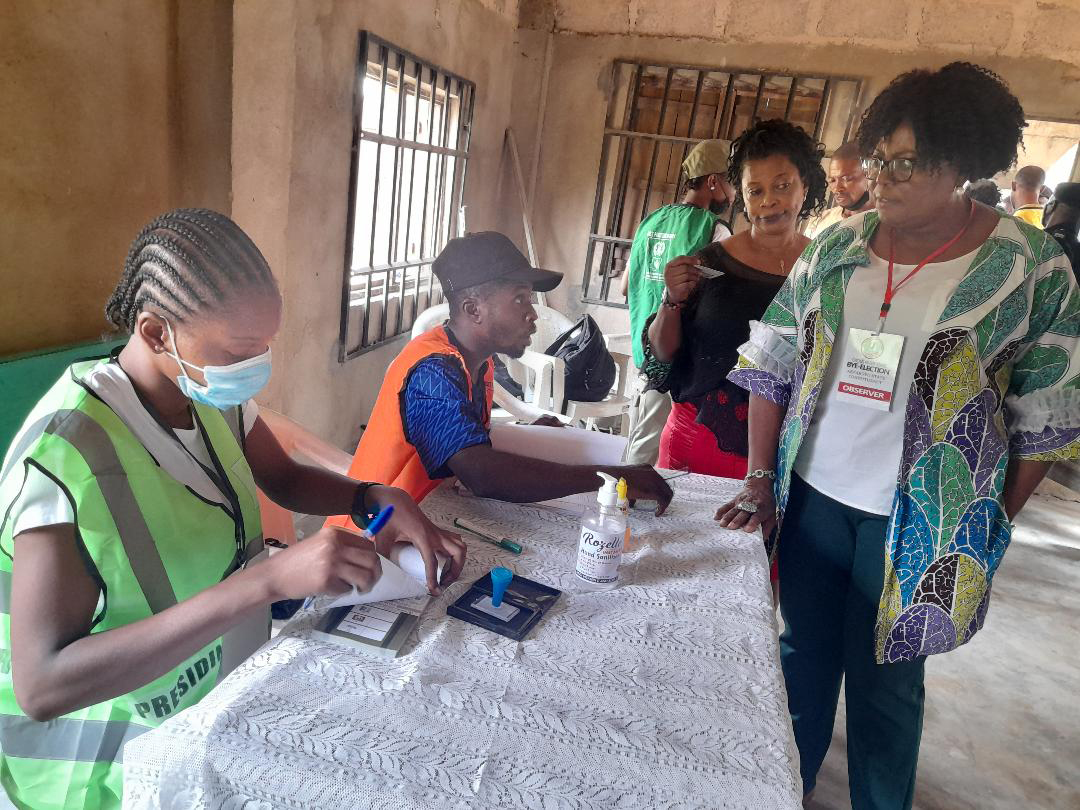
Tomorrow, March 18, Nigerians of voting age would again file out to cast their votes for governors and
House of Assembly members of the various states in the country. Those who deeply understand the dynamics of political power have since projected that the gubernatorial election may be much more tougher than the presidential poll of February 25 because, as they say, every politics is local.
Expectedly, new governors will be elected for 28 of Nigeria’s 36 states and lawmakers will also be elected for 993 Houses of Assembly seats in the 36 states of the federation. Governorship elections will not hold this time in Anambra, Bayelsa, Edo, Ekiti, Imo, Kogi, Osun, and Ondo, as polls to the offices of governors of the states are held off-cycle and not part of the general election.
Since the February 25 election was conducted, the Independent National Electoral Commission (INEC) has come under fire from election observers – both national and international, Chatham House, the United States, political parties, as well as political commentators who observed that the conduct of the ballot fell short, especially with the inability of INEC to transmit results from polling units to the results viewing (IReV) portal.
It is alleged that there was a deliberate attempt or outright refusal to upload and transmit the election results to the INEC server after declarations at the polling units as stipulated by the 2022 Electoral Act, among numerous other electoral malfeasances. But this is even as some people, particularly those whose candidates won, believe the results were a true reflection of the people’s wish, considering the victory of some new political parties in the strongholds of the ruling party across the country.
Customarily, the country will be shut down tomorrow as politicians of various parties take on one another in what promises to be “tough battles” in the respective states. Many believe that Saturday’s poll would be different because unlike in the past when the contest was usually a two-horse race, the battle would be among three or more dominant parties depending on the state.
While the stakes are high, we urge INEC to use the opportunity of the March 18 governorship elections to redeem its image, by correcting all observed loopholes in the February 25 election. This time around, we call for the sustenance and advancement of the Bimodal Voter Accreditation System (BVAS) because its use has been seen to reduce the level of rigging by curtailing overvoting. Results should be uploaded directly from the polling units to the IRev portal for real time viewing.
Besides the glitches in the BVAS, the late arrival of voting materials to polling units was a major hiccup that characterised the last presidential election. Hence, INEC must ensure that voting materials arrive at the polling units on time and clear “all obstacles” that might hinder the free and fair conduct of the governorship election. This is one of the ways the electoral umpire can prove to the world that it has learned from its mistakes.
Of immediate concern to the commission should be how the identified challenges could be addressed ahead of the concluding phase of the general election involving the largest number of constituencies. Issues of logistics, election technology, the behaviour of some election personnel at different levels, and the attitude of some party agents and supporters must not be ignored.
Some Resident Electoral Commissioners (RECs) in the last presidential poll should be investigated for their alleged partisanship and connivance with politicians to sabotage and derail the due process. Similarly, INEC should investigate its staff accused of involvement in election fraud, especially electoral officers at the councils, supervisory presiding officers, and dubious ad-hoc staff, while all those involved in malpractice should be arrested, prosecuted, and punished adequately, to serve as a deterrent to others.
One of the issues that give most Nigerians real cause for concern as the nation picks its way through the delicate democratic pathway is the perceived complicity of security operatives in allegations of manipulating the elections to achieve pre-conceived results. It is a fact that the integrity of any election can be determined by the security situation at any given time as the electorate goes about choosing their leaders freely without let or hindrance.
We demand improved performances from the various security operatives participating in tomorrow’s governorship and State Assembly election. Many of them had put up shabby performances during the February 25 presidential poll. They aided and abetted some thugs to snatch ballot boxes. Though we commend some for showing professionalism, Nigerians request remarkable improvement.
Security agents who should participate in the conduct of elections must be professionals who are willing to discharge their duties without minding whose ox is gored. If Nigeria has to grow and this democracy has to survive, we must, as a nation, take a stand on what to do about the involvement of security agencies in elections. This is pertinent because their role, positive or negative, can make all the difference.
Political parties and their candidates should speak to their agents and supporters to see the elections as a contest and not war. They should refrain from acts of violence that may mar the exercise or compromise the security of our personnel, observers, the media, and service providers. The directive to State Commands by the Inspector-General of Police to handle all cases of electoral offences expeditiously is indeed heart-warming.
In Rivers State, the journey has been good so far. No one envisages any terrible or apocalyptic situation in terms of the election. However, we must all be vigilant. Every eligible person should vote. We must comply with the rules and let each one exercise their franchise. No one should exhibit lawlessness. Political bigwigs and their gladiators must call their lieutenants to order. Anyone itching to undermine the process in the state should please think again.



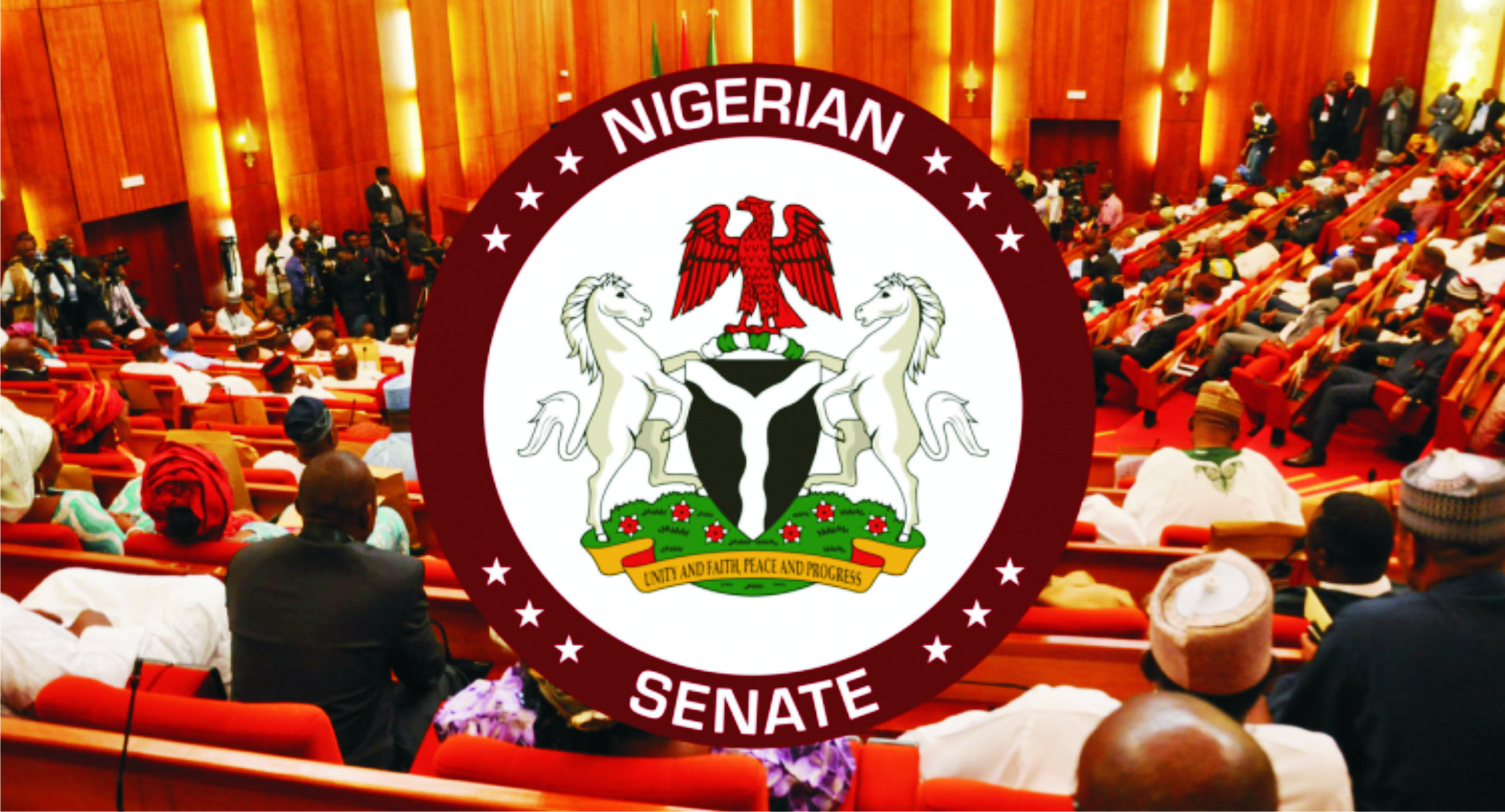
There are moments in the life of a legislature when plain speaking becomes a public service. Senator Adams Oshiomhole provided such a moment on the floor of the Senate when he accused the Minister of Works, Senator David Umahi, of manifestly neglecting critical federal arteries in Edo and Delta States, and implored his colleagues to prevail on the Minister to adopt a more equitable and genuinely national approach to road infrastructure delivery. It was blunt, it was uncomfortable, and it was necessary.
The specifics of his complaint deserve restating. Drawing attention to the recent approval of some 20 new road projects despite the parlous state of existing ones, the former Edo State governor lamented that Nigerians cannot travel from Benin to Warri, Benin to Asaba, Benin to Auchi, or Auchi to Okene without encountering severe distress. He alleged a deliberate omission of these corridors from the national budget in the last three years, save for palliative interventions directed by President Bola Tinubu through tax credit arrangements. His question — “What have we done wrong?” — resonates far beyond the chambers of the National Assembly.
We lend our full and unequivocal support to that call. The Auchi-Benin Road, for instance, has been in a deplorable and near-impassable condition for several years, turning what should be a two-hour journey into an all-day ordeal of broken axles, extortionate fares, and despondent commuters. The media have, on multiple occasions, chronicled the suffering of motorists, traders, and students who ply that route. To describe it as a federal road today is to stretch the meaning of the term beyond recognition.
This pattern of sidelining is not confined to Edo or Delta. Even here in Rivers State, the disposition of the Federal Ministry of Works has left much to be desired, particularly along the Eleme axis of the East-West Road. That road, which ought to be a flagship of federal presence in the Niger Delta, has remained in a wretched state for long. Those who use it daily — workers at the Eleme Petrochemical Complex, the two refineries, Onne Port, and the countless ancillary industries — can attest to its deterioration. Work has proceeded in fits and starts without the sustained urgency such a strategic road demands.
The Eleme stretch is not a mere intra-state byway. It is the gateway to the nation’s economic jugular. According to the Federal Ministry of Works and Housing’s 2023 Highway Condition Survey, only about 35 per cent of the country’s 36,000 kilometres of federal roads are rated as being in good or fair condition, with the remainder classified as poor or very poor. The East-West Road, conceived in the 1970s to bind the entire Niger Delta, remains unfinished in critical sections more than four decades after. If it had been treated as a priority, the perennial gridlock, carnage, and economic loss on the Eleme-Refinery junction would have long been consigned to history.
The irony is as painful as it is glaring. The Niger Delta remains the goose that lays the golden eggs. Data from the Nigeria Extractive Industries Transparency Initiative [NEITI 2023 Oil and Gas Audit] show that the region still accounts for over 78 per cent of Nigeria’s federally collected export earnings and about 65 per cent of total government revenue. The National Bureau of Statistics [NBS Foreign Trade Report Q4 2024] similarly confirms that crude oil continues to dominate export receipts. By every metric of equity and economic logic, a region that sustains the national purse deserves first-rate consideration in the allocation of infrastructure, not afterthoughts and tokenism.
Road infrastructure is not largesse to be dispensed by favour; it is the skeleton upon which commerce, cohesion, and citizenship hang. When contracts are concentrated in one geopolitical zone while other zones are left to contend with craters, it erodes trust in the federation itself. The World Bank’s Nigeria Development Update [June 2023] estimated that poor transport connectivity inflates the cost of moving goods by up to 40 per cent and costs the Nigerian economy an estimated $1.5 billion annually in lost man-hours and vehicle maintenance. If we profess to be one country, then equity must be the compass that guides key institutions before any project is executed. Development must spread round, not pool in one place as though other regions do not matter.
There is also a grave security dimension that can no longer be ignored. The deplorable condition of federal roads has become a veritable enabler of criminality. The NBS Crime Experience and Security Perception Survey reported over 2.5 million incidents of kidnapping-related occurrences nationally, with transport workers identifying bad road spots as prime ambush points. When vehicles are forced to crawl at 10 kilometres per hour through failed sections at Auchi, Sapele Road, or Eleme, they become sitting ducks for armed gangs. Fixing bad roads, therefore, is not merely about convenience; it is about safeguarding lives.
By his intervention, Senator Oshiomhole has hit the nail on the head and reminded Minister Umahi of a fundamental constitutional truth: public office is held in trust. The Ministry of Works is not a personal estate where contracts are awarded according to whim or political convenience. It is a national institution funded by the collective resources of Nigerians, including the oil and gas rents from the very communities whose roads are now neglected. The Minister must demonstrate balance, transparency, and a pan-Nigerian outlook in the distribution of projects that impact the daily existence of citizens. Selective neglect breeds suspicion, and suspicion is corrosive at a time when the nation is preaching unity, oneness, equity, and justice.
Consequently, the National Assembly must go beyond rhetoric and assert its oversight powers with vigour. Sections 88 and 89 of the 1999 Constitution [as amended] empower the legislature to investigate and expose any maladministration in the execution of federal projects. If an office holder is not acting rightly, it is the duty of the Senate and the House of Representatives to call him to order. Oversight must not be reduced to budget approval ceremonies; it must translate to field verification, public hearings, and insistence that the Federal Character principle, as enshrined in Section 14(3) of the Constitution, reflects in road awards.
Let the Auchi-Okene, Benin-Warri, Benin-Asaba, and Eleme East-West gangways be restored to motorable dignity. Let priority be given to completing existing, economically vital roads before embarking on new ones. If those who, through their resources, sustain the federation are sidelined in the distribution of tangible dividends, it tells poorly of our nationhood. Bad roads must be fixed, and they must be fixed now, with fairness as the guiding standard.
-

 News2 days ago
RSG Targets Nine Million Residents in Mosquito Net Distribution Campaign
-

 Oil & Energy2 days ago
Aiyedatiwa Signs New Electricity Bill
-

 Oil & Energy2 days ago
NLNG Commissions Research And Innovation Centre In RSU
-

 Maritime2 days ago
Marine Minister Commends President Tinubu On NPERA Bill Assent
-

 News2 days ago
KenPoly Holds Eight Convocations, August 29
-

 News2 days ago
RSG Begins Another Phase of Projects Commissioning Today
-

 News2 days ago
RMAFC Completes Revenue Sharing Review, Proposes New Pay
-

 Maritime2 days ago
NAGAFF Petitions IGP Over Alleged Maritime Police Harassment