
Editorial
Beyond Illegal Pipelines Discovery

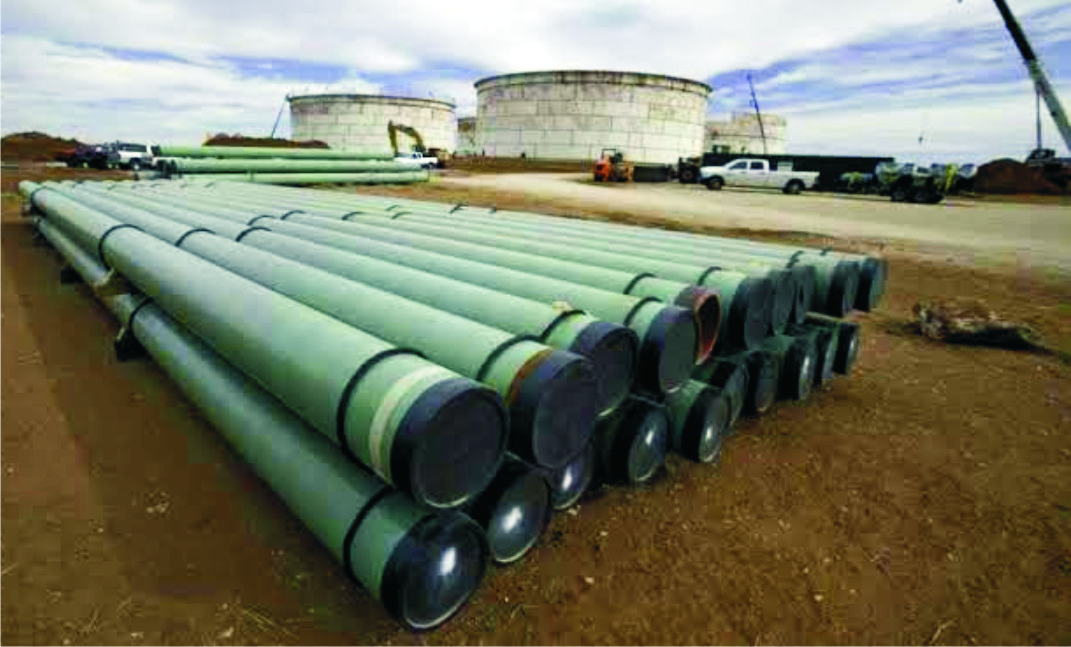
Barely two months ago when High Chief Government Oweizide Ekpomupolo aka Tompolo was
awarded the Pipeline Surveillance Contract through his company, Tantita Security Services Nigeria Limited, the ex-militant chief uncovered many illegal crude oil pipelines utilised by thieves to siphon crude oil for export in different parts of the Niger Delta. This brings those who initially opposed the idea of entrusting such a mission to a former warlord to reconsider their stance.
Since Tompolo and his men accepted the formidable task, it has not been business as usual for the criminals as he strides across the creeks and shores, searching for oil burglars. On October 7, 2022, his security firm arrested a crude oil tanker, MT Deinmo, with International Maritime Organisation (IMO), loaded with an unspecified quantity of crude oil at the Escravos River in Warri South West Local Government Area of Delta State.
Similarly, a pipeline measuring one kilometre to the shore and another four kilometres to the loading bay, which was abandoned by ExxonMobil at Ogulagha in Burutu Local Government Area of Delta, was allegedly reconnected by oil thieves to load stolen crude oil into export tankers. The illegal pipeline was connected to the 48-inch Trans Forcados Export Trunkline. It is conjectured to be directly situated behind a military security post, less than one kilometre from the Forcados Export Terminal in the Ogulagha community. The discoveries are endless.
Recall that the Federal Government, in August 2022, awarded the pipeline surveillance contract reportedly worth N48 billion annually, at N4 billion per month, to stem ponderous oil theft in the Niger Delta. The contract had educed intense public critique of the government’s decision to engage a non-state actor for such a critical operation. The endeavour set Tompolo and some ex-militant leaders, especially Asari Dokubo, against themselves.
Previous attempts by the Federal Government, Nigeria National Petroleum Corporation Limited (NNPCL) and other relevant stakeholders who were unfamiliar with the area where the pipelines are entombed, failed to achieve the desired results because they were unable to extrapolate the terrain. Accordingly, Tompolo deserves support to achieve notable successes in the nation’s interest and for the empowerment of host communities.
Crude oil cabals all over the Niger Delta region are milking our economy dry. We cannot dispute the NNPCL’s claim that Nigeria is losing more than 600,000 barrels of crude oil daily to economic desecraters. But with the successful stunts of Tompolo and his team, the Corporation has attained a feat it has been unable to carry off for the past 22 years, fighting crude oil theft.
While we highly commend Tantita Security Services Nigeria Limited for the feat achieved so far in the fray against crude oil stealing, we fault the Nigerian military for setting aflame a vessel laden with stolen oil intercepted by Tompolo’s security operatives. The military lack legal rights to set ablaze an intercepted crude-laden vessel. Rather than resort to setting the vessel afire, the military should have discharged the crude oil contents to NNPCL and inquired into the matter.
We are awestriken that the security agents destroyed the evidence of the alleged crime. Those who razed the ship instead of using legal means to enforce the law must have something they know. They may be complicit in the crime, after all. How can the security agents effectively put through their investigation into the vessel to prosecute those found wanting when the very sensitive and overwhelming evidence has been destroyed? It is condemnable.
One of the reasons why NNPCL chose to engage private firms to secure the pipelines is to avert environmental despoliation by the economic saboteurs. By destroying the vessel, security operatives committed grave environmental degradation, an offence they were engaged to prevent. NNPCL and the Defence Headquarters should call the military to order before they further abuse the environment with impunity. Those security agents involved in combusting the arrested vessel should be examined and prosecuted.
Efforts should be made by military heads and security agencies to determine the destinations of stolen crude oil and prosecute suspected members of the public who are involved in the larceny. The judiciary should grant an accelerated hearing to matters of oil theft and other forms of economic sabotage. It is not enough to take away whatever supposed thieves have stolen and discharge them. It must be understood that the large-scale theft of our oil is among the issues militating against Nigeria’s stability.
Furthermore, it is not enough for illegal crude oil pipelines to be discovered or destroyed, as that may not be sufficient deterrent for the criminals. The Federal Government should divulge the identities of the high-profile individuals behind the oil theft. The nation needs to know the big people or players who are promoters of this kind of business, as they are being caught. It is of irritated concern for Nigeria to be unable to meet with the quota allotted to it by the Organisation of Petroleum Exporting Countries (OPEC).
To complement Tompolo’s task, the NNPCL must install a monitoring capacity to detect or advise immediately sabotage of oil pipelines happens. The activities of these vandals must be brought to a halt. We must not allow a few criminals to have unleashed access to the nation’s crude oil supply. There should be no hiding place for such felons, and our cooperation with neighbouring countries in halting these crimes should be toughened and tautened.
It is trite knowledge that Nigeria’s oil is being pilfered in a massive proportion. But for oil to be filched, a ship has to be cleared by the Navy to access the nation’s waters. Who approves the ship that comes in, and who steals the oil? Curiously, N1.3 trillion is assumed to be involved in these shady deals. Apart from Venezuela, which is under sanctions, Nigeria is the only OPEC country that has consistently failed to meet its quota. Meanwhile, other countries are asking to produce more. This is the shame of a nation!



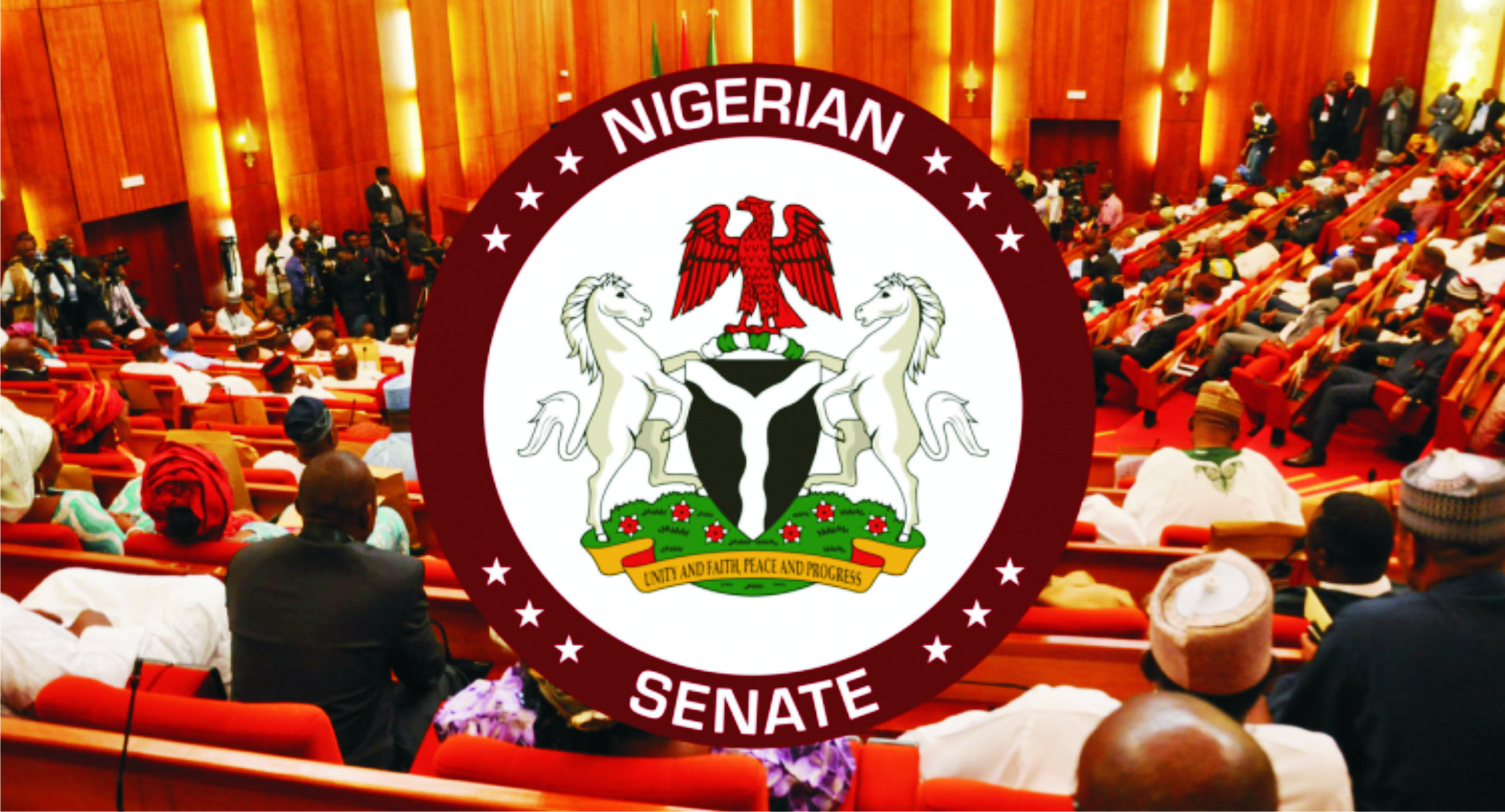
There are moments in the life of a legislature when plain speaking becomes a public service. Senator Adams Oshiomhole provided such a moment on the floor of the Senate when he accused the Minister of Works, Senator David Umahi, of manifestly neglecting critical federal arteries in Edo and Delta States, and implored his colleagues to prevail on the Minister to adopt a more equitable and genuinely national approach to road infrastructure delivery. It was blunt, it was uncomfortable, and it was necessary.
The specifics of his complaint deserve restating. Drawing attention to the recent approval of some 20 new road projects despite the parlous state of existing ones, the former Edo State governor lamented that Nigerians cannot travel from Benin to Warri, Benin to Asaba, Benin to Auchi, or Auchi to Okene without encountering severe distress. He alleged a deliberate omission of these corridors from the national budget in the last three years, save for palliative interventions directed by President Bola Tinubu through tax credit arrangements. His question — “What have we done wrong?” — resonates far beyond the chambers of the National Assembly.
We lend our full and unequivocal support to that call. The Auchi-Benin Road, for instance, has been in a deplorable and near-impassable condition for several years, turning what should be a two-hour journey into an all-day ordeal of broken axles, extortionate fares, and despondent commuters. The media have, on multiple occasions, chronicled the suffering of motorists, traders, and students who ply that route. To describe it as a federal road today is to stretch the meaning of the term beyond recognition.
This pattern of sidelining is not confined to Edo or Delta. Even here in Rivers State, the disposition of the Federal Ministry of Works has left much to be desired, particularly along the Eleme axis of the East-West Road. That road, which ought to be a flagship of federal presence in the Niger Delta, has remained in a wretched state for long. Those who use it daily — workers at the Eleme Petrochemical Complex, the two refineries, Onne Port, and the countless ancillary industries — can attest to its deterioration. Work has proceeded in fits and starts without the sustained urgency such a strategic road demands.
The Eleme stretch is not a mere intra-state byway. It is the gateway to the nation’s economic jugular. According to the Federal Ministry of Works and Housing’s 2023 Highway Condition Survey, only about 35 per cent of the country’s 36,000 kilometres of federal roads are rated as being in good or fair condition, with the remainder classified as poor or very poor. The East-West Road, conceived in the 1970s to bind the entire Niger Delta, remains unfinished in critical sections more than four decades after. If it had been treated as a priority, the perennial gridlock, carnage, and economic loss on the Eleme-Refinery junction would have long been consigned to history.
The irony is as painful as it is glaring. The Niger Delta remains the goose that lays the golden eggs. Data from the Nigeria Extractive Industries Transparency Initiative [NEITI 2023 Oil and Gas Audit] show that the region still accounts for over 78 per cent of Nigeria’s federally collected export earnings and about 65 per cent of total government revenue. The National Bureau of Statistics [NBS Foreign Trade Report Q4 2024] similarly confirms that crude oil continues to dominate export receipts. By every metric of equity and economic logic, a region that sustains the national purse deserves first-rate consideration in the allocation of infrastructure, not afterthoughts and tokenism.
Road infrastructure is not largesse to be dispensed by favour; it is the skeleton upon which commerce, cohesion, and citizenship hang. When contracts are concentrated in one geopolitical zone while other zones are left to contend with craters, it erodes trust in the federation itself. The World Bank’s Nigeria Development Update [June 2023] estimated that poor transport connectivity inflates the cost of moving goods by up to 40 per cent and costs the Nigerian economy an estimated $1.5 billion annually in lost man-hours and vehicle maintenance. If we profess to be one country, then equity must be the compass that guides key institutions before any project is executed. Development must spread round, not pool in one place as though other regions do not matter.
There is also a grave security dimension that can no longer be ignored. The deplorable condition of federal roads has become a veritable enabler of criminality. The NBS Crime Experience and Security Perception Survey reported over 2.5 million incidents of kidnapping-related occurrences nationally, with transport workers identifying bad road spots as prime ambush points. When vehicles are forced to crawl at 10 kilometres per hour through failed sections at Auchi, Sapele Road, or Eleme, they become sitting ducks for armed gangs. Fixing bad roads, therefore, is not merely about convenience; it is about safeguarding lives.
By his intervention, Senator Oshiomhole has hit the nail on the head and reminded Minister Umahi of a fundamental constitutional truth: public office is held in trust. The Ministry of Works is not a personal estate where contracts are awarded according to whim or political convenience. It is a national institution funded by the collective resources of Nigerians, including the oil and gas rents from the very communities whose roads are now neglected. The Minister must demonstrate balance, transparency, and a pan-Nigerian outlook in the distribution of projects that impact the daily existence of citizens. Selective neglect breeds suspicion, and suspicion is corrosive at a time when the nation is preaching unity, oneness, equity, and justice.
Consequently, the National Assembly must go beyond rhetoric and assert its oversight powers with vigour. Sections 88 and 89 of the 1999 Constitution [as amended] empower the legislature to investigate and expose any maladministration in the execution of federal projects. If an office holder is not acting rightly, it is the duty of the Senate and the House of Representatives to call him to order. Oversight must not be reduced to budget approval ceremonies; it must translate to field verification, public hearings, and insistence that the Federal Character principle, as enshrined in Section 14(3) of the Constitution, reflects in road awards.
Let the Auchi-Okene, Benin-Warri, Benin-Asaba, and Eleme East-West gangways be restored to motorable dignity. Let priority be given to completing existing, economically vital roads before embarking on new ones. If those who, through their resources, sustain the federation are sidelined in the distribution of tangible dividends, it tells poorly of our nationhood. Bad roads must be fixed, and they must be fixed now, with fairness as the guiding standard.
-

 News2 days ago
RSG Targets Nine Million Residents in Mosquito Net Distribution Campaign
-

 Oil & Energy2 days ago
Aiyedatiwa Signs New Electricity Bill
-

 Maritime2 days ago
Marine Minister Commends President Tinubu On NPERA Bill Assent
-

 Oil & Energy2 days ago
NLNG Commissions Research And Innovation Centre In RSU
-

 News2 days ago
KenPoly Holds Eight Convocations, August 29
-

 News2 days ago
RSG Begins Another Phase of Projects Commissioning Today
-

 News2 days ago
RMAFC Completes Revenue Sharing Review, Proposes New Pay
-

 Maritime2 days ago
NAGAFF Petitions IGP Over Alleged Maritime Police Harassment