
Nation
THE STATES

Adamawa
Members of People’s Democratic Party (PDP) in the Adamawa House of Assembly have assured Governor Murtala Nyako of their block votes ahead of the party’s primaries for the state governorship election in 2012.
The development was sequel to a motion moved by Alhaji Umaru Ahmadu, the Majority Leader of the House and member representing Madagali Constituency.
The motion was seconded by Mrs Wilbina Jackson (PDP-Guyuk).
Moving the motion, Ahmadu said all the 20 PDP members in the Assembly had mandated him as their leader to present their position and resolved to give Nyako full support at the party’s governorship primaries and main election.
He said the governor had delivered in all sectors of the economy in his first tenure and deserved to continue in office for a second term.
The lawmakers passed the motion at their session presided over by Speaker Ibrahim Sadiq,
Nyako and a former lecturer, Dr Umar Ardo, have been cleared by PDP for its primaries scheduled for October 24.
Benue
Prof. Chukwudi Obinne of the University of Agriculture, Makurdi, has stressed the need for adequate sensitisation of farmers on various aspects of agriculture to ensure food security in the the world.
Obinne, who made the call in an interview with newsmen in Makurdi, said that farmers in developing countries did not receive the relevant training in farming.
The professor also said that if farmers were encouraged to venture into mechanised farming through necessary incentives, the level of food production would drastically improve.
He said that adult farmers got weaker because of the manual labour associated with agriculture and because they had little understanding of new technologies available to them to improve production.
FCT
The Senate Committee Chairman on Science and Technology, Sen. Robert Boroffice, has assured the Ministry of Science and Technology of the Senate’s cooperation to boost its programmes.
Boroffice gave the assurance on Monday, in Abuja, in an interview with newsmen at the opening of a workshop on the International Space Weather Initiative.
He said that the committee, which was made up of committed members, would do its best to address the challenges facing the sector.
“Working with the Ministry of Science and Technology, we are sure that we would be able to ensure that adequate funding is provided for the sector. ’’
He said that the committee would equally collaborate with the Executive arm of government to develop the sector.
Jigawa
The United Nations Development Programme (UNDP) has indicated interest to partner with Jigawa government on job creation.
The UNDP Resident Representative, Mr Douda Toure, gave the indication when he paid a visit to Gov. Sule Lamido in Dutse on Monday.
Toure said the organisation would collaborate with the state government on job creation for the youth and women.
He said that UNDP was also willing to cooperate with the government in other areas to enhance development in the state.
In his response, Lamido said the state government would partner with UNDP and other interested organisations in its drive to boost development in the state.
Kaduna
The Kaduna State Chapter of the NLC and the Trade Union Congress (TUC) in Kaduna have suspended their planned strike over the non-implementation of the N18,000 minimum wage in the state.
Addressing newsmen, the Chairman of the NLC in the state, Mr Adamu Ango, said the strike was suspended because of the agreement between labour and the government over the new table which covered grade levels nine to 17 that were excluded from the previous chart.
Ango said the two unions had agreed and adopted the new table after studying it and decided on the suspension of the proposed strike.
Kano
The Parent-Teacher Association of Gwammaja Model Primary School in Dala Local Government Area of Kano State has donated 50 chairs and two sets of computer to the school.
Presenting the items, the Chairman of the association, Alhaji Isa Salihu, said similar donations of books and other teaching materials had been made to the school in the past.
He advised the Education Department of the local government to deploy additional teaching staff and strive to provide a conducive atmosphere for learning in the school.
Receiving the chairs and computers on behalf of the school, the Chairman of the State Universal Basic Education Board, Alhaji Yakubu Adamu, reiterated the commitment of the state government to raise educational standards.
Kogi
The Chief Judge of Kogi, Justice Nasir Ajanah, has decried the poor performance of lower courts in the determination of cases brought before them.
Speaking at a special court session to herald the commencement of the 2011/2012 Legal Year in Lokoja, he said that courts in the state received 29,096 cases in the out-going year, out of which 15,150 were disposed of.
The remaining 13,919 cases, he added, were allowed to spill over to the new legal year, noting that a great percentage of the carry-over were from the lower courts.
Ajanah said that of the 1,845 cases pending in the state High Courts in the out-going year, 1,210 were fully determined, leaving 635, while the 38 magistrates’ courts received 3,768 cases, and disposed of 1,920.
Lagos
The Lagos State House of Assembly (LSHA) has passed a resolution to organise a public hearing on the planned removal of fuel subsidy by the Federal Government
To this end, the House has raised a seven-man committee to organise the hearing, scheduled for October 27.
In a motion moved on the floor of the House by Mr Sanai Agunbiade (ACN-Ikorodu I), the lawmakers expressed concern over moves to remove fuel subsidy in 2012.
The committee chaired by Agunbiade, includes Mr Rotimi Olowo (Somolu I), Mr Yishawu Gbolahan (Eti-Osa), Mr Hodewu Avoseh (Badagry II) and Mr Hakeem Masha (Lagos Island).
Others are Mr Sultan Adeniji-Adele (Amuwo-Odofin) and Mr Abiodun Tobun (Epe II).
Niger
Governor. Babangida Aliyu of Niger State has said the State Government had so far spent about three billion naira on Millennium Development Goals MDGs projects between 2008 and 2009.
Aliyu made the remark while receiving an award of‘“The International Millennium Development Ambassador” by Global Educator for All Initiative at Government House, Minna, saying the money was expended on quick-win projects and conditional cash transfer.
He cited some constraints militating against the country in meeting its MDGs’ targets by 2015, expressing the hope that the country could meet the target five years after the deadline.
Ogun
Small-scale farmers under the aegis of Association of Small-scale Agro-Producers in Nigeria (ASSAPIN), Ogun State Chapter has decried poor funding of agriculture by the three-tiers of government in the country.
They, however, urged governments at all levels to increase budgetary allocation to agriculture to avert food crisis in the country.
The farmers were gathered in Ijebu-Ode, Ogun yesterday to examine the theme for the 2011 World Food Day: “Food Crisis: From Crisis to Stability”.
They said that there was an urgent need for government at all levels to invest more in agriculture to avert looming food crisis.
Mrs Ireti Disu, the Assistant Director of Justice, Development and Peace Commission (JDPC), Ijebu-Ode Catholic Diocese, said that the poor funding of agriculture had resulted in increased prices of food.
Plateau
A Federal High Court sitting in Jos yesterday discharged and acquitted six suspects accused of participating in the January 20 crisis in the Plateau capital.
The suspects are Alhassan Mohammed, Abubakar Samaila, Abubakar Shuaibu, Buhari Dahiru, Ibrahim Musa and Nasiru Idris.
They were charged with terrorism after allegedly participating in the crisis in which many lives were lost and property worth millions of naira destroyed.
A federal Prosecution Counsel, Mr Gbenga Walington, had earlier told the court, presided over by Justice Ambrose Allagoah, that he could not press charges against the accused.
He said that he was in a “precarious situation,’’ having failed to trace the military officers who arrested the suspects on the day the violence erupted.
Yobe
More than 8,000 youths in Yobe are beneficiaries of the World Bank credit facility under FADAMA III programme, Governor Ibrahim Gaidam has said.
The governor made this known when participants of the National Defence Course 20 visited him at the Government House, Damaturu.
He said that the programme, geared toward dry season farming, had been part of the measures taken by his administration to improve the economic status of people at the grass roots.
He pointed out that the scheme, designed to to encourage self-reliance, was also a source of revenue for the state government.
Gaidam said the government was also developing a Gum Arabic plantation to check desert encroachment and that there were youth empowerment farms in the 17 local government areas of the state.
On measures to boost the state’s internal revenue, he said government had constructed a 3-Star Hotel in Damaturu apart from organising local festivals.



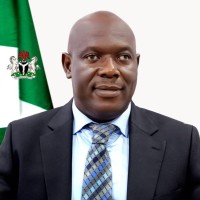
The Hydrocarbon Pollution Remediation Project (HYPREP) has commemorated the 15th anniversary of the release of the United Nations Environment Programme (UNEP) Environmental Assessment Report on Ogoniland, reaffirming its commitment to restoring the environment and improving the livelihoods of affected communities.
In a statement signed by the Project Coordinator, Prof Nenibarini Zabbey, to commemorate the anniversary, HYPREP described the anniversary as a significant milestone in Nigeria’s environmental restoration efforts, noting that the project has made remarkable progress in implementing the recommendations of the landmark UNEP report released on August 4, 2011.
The UNEP report had revealed extensive oil pollution across Ogoniland, severe environmental degradation, and serious public health risks resulting from decades of petroleum operations. It also recommended an initial $1 billion fund to commence the cleanup of the affected communities.
According to HYPREP, the Federal Government formally launched the Ogoni clean-up in 2016, while the Project Coordination Office was established in 2017 to drive the implementation of UNEP’s recommendations.
Zabbey said the current administration has continued to prioritise the project under the Renewed Hope Agenda.
Providing an update on the cleanup, the Project Coordinator disclosed that 30 of the 65 contaminated sites identified by UNEP have been fully remediated, while work is ongoing at several medium- and high-risk locations. It also stated that more than 1.5 million mangrove seedlings have been planted as part of what it described as the world’s largest restoration of oil-degraded mangroves, with over 1,000 hectares of shoreline already rehabilitated.
Zabbey further revealed that 49 Ogoni communities have been connected to potable water schemes through multiple water projects and booster stations aimed at providing safe drinking water across the region.
In the health sector, he said the 100-bed Ogoni Specialist Hospital in Kpite and the 43-bed Cottage Hospital in Buan are nearing completion, adding that several existing health facilities have been upgraded with modern medical equipment, while five ambulances have been donated to improve emergency healthcare services. The Project Coordinator also disclosed that a three-year human health biomonitoring study is being conducted in collaboration with the World Health Organization’s International Agency for Research on Cancer (IARC).
On economic empowerment, Zabbey stated that the Project has created more than 8,000 direct jobs and trained thousands of Ogoni youths and women in various vocational and technical skills, including software development, cybersecurity, aviation, commercial diving, seafaring, mechatronics, and creative arts. The project also reported awarding scholarships to more than 1,000 students, providing grants to small businesses, and supporting persons living with special needs through skills acquisition programmes.
The statement further highlighted ongoing legacy projects, including the Ogoni Power Project and the Centre of Excellence for Environmental Restoration, which it said is about 96 per cent complete. HYPREP also welcomed the recent designation of the Ogoni Wetland as a Ramsar Site of International Importance and pledged to continue promoting biodiversity conservation and sustainable management of the ecosystem.
Marking the anniversary, Zabbey said the progress achieved over the past 15 years demonstrates the collective commitment of government, development partners, stakeholders, and local communities to restoring Ogoniland. He called for renewed collaboration to sustain the cleanup effort, promote environmental sustainability, and support the long-term development of the region. 3
-

 News1 day ago
RSG Targets Nine Million Residents in Mosquito Net Distribution Campaign
-

 Oil & Energy1 day ago
Aiyedatiwa Signs New Electricity Bill
-

 Oil & Energy1 day ago
NLNG Commissions Research And Innovation Centre In RSU
-

 Maritime1 day ago
Marine Minister Commends President Tinubu On NPERA Bill Assent
-

 News1 day ago
KenPoly Holds Eight Convocations, August 29
-

 News1 day ago
RSG Begins Another Phase of Projects Commissioning Today
-

 News1 day ago
RMAFC Completes Revenue Sharing Review, Proposes New Pay
-

 Maritime1 day ago
NAGAFF Petitions IGP Over Alleged Maritime Police Harassment