
Nation
THE STATES

Adamawa
Sick persons in Mubi, Adamawa, now patronise private clinics as the strike embarked upon by medical and health workers has grounded services in public hospitals in the area.
Junior health workers had in June embarked on an indefinite strike following disagreement with the state government over wages and improved working conditions.
The situation was further compounded in the last five weeks when the NLC went on a similar strike over the implementation of the N18,000 minimum wage, forcing all health care facilities to close down.
Our correspondent who went round some of the health centres in Mubi on Tuesday reports that they remained locked.
At the General Hospital, Mubi, only a handful of staff offered skeletal services at the Out-Patients Department, Emergency Unit and medical wards, while some of the patients on admission had left the wards.
Borno
The Caretaker Chairman of Kaga Local Government Area of Borno, Mr Kawu Ngamdu, has appealed to Muslims and Christians to pray and fast to end the frequent armed robberies along the Maiduguri-Kaga Road.
Ngamdu made the appeal in an interview with newsmen in Maiduguri, saying that armed robbers had intercepted and stolen the salaries of local government workers running to about N20 million at two different occasions on the road.
According to him, the people have to assist with their prayers and fasting so as to curb the situation.
He noted that if the trend was not brought under control it would affect some developmental programmes geared towards improving the living standard of people in the Local Government Area.
The chairman advised people to watch out for persons with questionable characters and report their activities to the security agencies.
“I will strive as much as possible to improve the living standard of the masses by providing them with good drinking water, boost agriculture and health delivery,” he said.
FCT
Brig-Gen. Okore-Affia, the Director-General, National Youth Service Corps (NYSC), says the commission is reconsidering the participation of youth corps members in future elections.
Speaking when the Chairman of INEC, Prof. Atahiru Jega, paid him a courtesy visit in Abuja on Tuesday, Okore-Affia called for an urgent review of the Memorandum of Understanding (MOU) between INEC and NYSC.
“ You will agree with me that there is an urgent need to review the MOU between INEC and NYSC, because as far as I am concerned, it is one-sided, because it did not cater for the interest and wellbeing of corps members deployed on electoral duties.
“The NYSC wants to ask for a verifiable proof of the preparedness of INEC to put in place measures that will ensure both the safety and wellbeing of corps members.”
Okore-Affia said that if verifiable proof of the safety of corps members was not given by INEC, the NYSC would scale down on the involvement of corps members in future elections.
Gombe
A Federal High Court in Gombe, presided over by Justice Babatunde Quadri on Tuesday granted bail to the former Governor of Gombe State, Alhaji Danjuma Goje, and three others standing trial before it.
Goje and three others were arraigned before the court by the EFCC on an 18-count charge of laundering more than N25 billion public fund between May 2003 and May 2011.
Goje was arraigned along with Alhaji Aliyu El-Nafaty, former Executive Chairman of Gombe State Universal basic Education Board (SUBEB) and two contractors, S.M. Dokoro and Alhaji Sabo Tumu.
S. M. Dokoro Company Ltd, Gombe was also joined in the suit filed by the EFCC.
Quadri while granting the bail, following an earlier application file before it by Adeniyi Akintola (SAN), counsel to Goje, said that it was the constitutional right of the suspects to be granted bail.
Jigawa
Mr Ntufam Ogbu, the Secretary of the National Planning Commission (NPC), has called on state governments to compute their Gross Domestic Product (GDP) in order to enhance investment.
Ogbu made the call at a meeting of the Joint Planning Board and the National Council on Development Planning in Dutse.
“We are saying that state governments should generate their GDP because we are operating a federal system of government.
“ We can not go from federal level to compute GDP for a state,’’ Ogbu said.
He said if state governments generated their GDP, it would help the Federal Government to put together the National Gross Domestic Product.
Ogbu also urged state governments to initiate and ensure the passage of a Project Continuity Bill to enhance continuity of government’s projects and programmes.
Kano
The police in Kano have arrested three persons for allegedly raping four minors aged between six years and eight years.
The Public Relations Officer of the state command, Malam Magaji Majiya, told newsmen in Kano recently that the suspects were arrested on October 15, in the metropolis.
According to Majiya, two of the accused persons lured three girls, children of their neighbours, into a room at about 8.15 a.m. and sexually assaulted them.
He said the other suspect was also apprehended for allegedly luring a seven-year-old girl into his room and had illegal canal knowledge of her.
Majiya said all the three suspects had made confessional statements that were further corroborated by the medical examination reports.
Lagos
The Lagos State Waste Management Authority (LAWMA) on Tuesday urged Lagos residents to monitor activities of Private Sector Partnership (PSP) operators engaged in waste collection in the state.
The Authority’s Public Relations Officer, Mrs Folashade Kadiri, said this in an interview with newsmen in Lagos.
Kadiri said that activities and operations of the operators should be “measured, criticised and appreciated” by the residents to know how effective such operators are in areas assigned to them by LAWMA.
According to her, the various levels of monitoring are the management and employees of LAWMA, Community Development Areas, and officials of the Ministry of Environment, and the residents.
Oyo
Sunday Oladeji, a professor of Economics at the Obafemi Awolowo University (OAU), Ile-Ife, has called on the Federal Government to make the National Manpower Board (NMB) more functional.
He told newsmen in Ibadan that the board had not been effective lately in the discharge of its mandate.
Oladeji, who is also the Provost of the institution’s Postgraduate School, recalled that the NMB became a body under the supervision of the Nigerian Institute of Social and Economic Research (NISER), Ibadan.
The NMB, he said, was a product of the Ashby Commission which recommended its formation.
“The mandate of the board includes research and data collection on the manpower situation in the country as well as employment situation.
Plateau
Some residents of Plateau have voiced their opposition to the planned removal of petroleum subsidy by the Federal Government, saying the action will inflict more hardship on the average Nigerians.
In separate interviews that the spiral effects would result in hikes in prices of essential commodities and make life more difficult for Nigerians.
“Nigerians should be allowed to enjoy the subsidy on oil to be able to cope with the current hard times. There is no need to worsen the situation for the poor,” Miss Dorcas James, a student of the University of Jos, said.
She cautioned that the action would have debilitating effect
Taraba
Hundreds of primary school teachers and pupils in Jalingo took to the streets, protesting non-payment of the salaries of teachers and other welfare issues.
Addressing the gathering, the Taraba State Chairman of the NUT, Mr Aliyu Mafindi, said that the refusal of the State Government to pay teachers’ salaries was becoming a source of worry and unfortunate for a state that was already performing well in WAEC and NECO.
Mafindi said: “teachers will no longer fold their hands and watch bad governance continue to deny them their rights.
Zamfara
Farmers in Zamfara who benefitted from fertiliser/agriculture inputs loan are owing the government N5.5 billiion, says Sen. Saidu Dansadau, the Chairman, Debt Verification Committee.
The loan was disbursed by the Zamfara Comprehensive Agricultural Revolution Programme (ZACAREP).
Dansadau disclosed this in Gusau while presenting the committee’s report to Gov. Abdulaziz Yari.
He accused the beneficiaries of abusing the opportunity offered them by ZACAREP to buy fertilisers and other inputs at subsidised rates and pay back after harvest.
“It is unfortunate that while the government introduced the programme to encourage massive agricultural production in the state, both the subsidy and loans payable after harvest were abused.
“As at the moment, our findings revealed that the target farmers, through their emirate councils, who stood as guarantors for the loans, owe Zamfara State Government as much as N5.5 billion from unpaid fertiliser loans.“
According to him, said some privileged farmers had over the years, cornered subsidised fertilisers/loan for inputs at the expense of small and medium-scale farmers who produced the greater percentage of food crops consumed by the people.
He urged the government to review the activities of ZACAREP by taking into consideration the needs of peasant farmers.
The committee chairman noted that small and medium-scale farmers had prominent roles to play to realise the government’s food security and poverty eradication agenda.
Responding, Yari commended the committee for doing a thorough job and pledged to implement its recommendations.



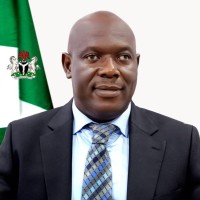
The Hydrocarbon Pollution Remediation Project (HYPREP) has commemorated the 15th anniversary of the release of the United Nations Environment Programme (UNEP) Environmental Assessment Report on Ogoniland, reaffirming its commitment to restoring the environment and improving the livelihoods of affected communities.
In a statement signed by the Project Coordinator, Prof Nenibarini Zabbey, to commemorate the anniversary, HYPREP described the anniversary as a significant milestone in Nigeria’s environmental restoration efforts, noting that the project has made remarkable progress in implementing the recommendations of the landmark UNEP report released on August 4, 2011.
The UNEP report had revealed extensive oil pollution across Ogoniland, severe environmental degradation, and serious public health risks resulting from decades of petroleum operations. It also recommended an initial $1 billion fund to commence the cleanup of the affected communities.
According to HYPREP, the Federal Government formally launched the Ogoni clean-up in 2016, while the Project Coordination Office was established in 2017 to drive the implementation of UNEP’s recommendations.
Zabbey said the current administration has continued to prioritise the project under the Renewed Hope Agenda.
Providing an update on the cleanup, the Project Coordinator disclosed that 30 of the 65 contaminated sites identified by UNEP have been fully remediated, while work is ongoing at several medium- and high-risk locations. It also stated that more than 1.5 million mangrove seedlings have been planted as part of what it described as the world’s largest restoration of oil-degraded mangroves, with over 1,000 hectares of shoreline already rehabilitated.
Zabbey further revealed that 49 Ogoni communities have been connected to potable water schemes through multiple water projects and booster stations aimed at providing safe drinking water across the region.
In the health sector, he said the 100-bed Ogoni Specialist Hospital in Kpite and the 43-bed Cottage Hospital in Buan are nearing completion, adding that several existing health facilities have been upgraded with modern medical equipment, while five ambulances have been donated to improve emergency healthcare services. The Project Coordinator also disclosed that a three-year human health biomonitoring study is being conducted in collaboration with the World Health Organization’s International Agency for Research on Cancer (IARC).
On economic empowerment, Zabbey stated that the Project has created more than 8,000 direct jobs and trained thousands of Ogoni youths and women in various vocational and technical skills, including software development, cybersecurity, aviation, commercial diving, seafaring, mechatronics, and creative arts. The project also reported awarding scholarships to more than 1,000 students, providing grants to small businesses, and supporting persons living with special needs through skills acquisition programmes.
The statement further highlighted ongoing legacy projects, including the Ogoni Power Project and the Centre of Excellence for Environmental Restoration, which it said is about 96 per cent complete. HYPREP also welcomed the recent designation of the Ogoni Wetland as a Ramsar Site of International Importance and pledged to continue promoting biodiversity conservation and sustainable management of the ecosystem.
Marking the anniversary, Zabbey said the progress achieved over the past 15 years demonstrates the collective commitment of government, development partners, stakeholders, and local communities to restoring Ogoniland. He called for renewed collaboration to sustain the cleanup effort, promote environmental sustainability, and support the long-term development of the region. 3
-

 News2 days ago
RSG Targets Nine Million Residents in Mosquito Net Distribution Campaign
-

 Oil & Energy2 days ago
Aiyedatiwa Signs New Electricity Bill
-

 Maritime2 days ago
Marine Minister Commends President Tinubu On NPERA Bill Assent
-

 Oil & Energy2 days ago
NLNG Commissions Research And Innovation Centre In RSU
-

 News2 days ago
KenPoly Holds Eight Convocations, August 29
-

 News2 days ago
RSG Begins Another Phase of Projects Commissioning Today
-

 News2 days ago
RMAFC Completes Revenue Sharing Review, Proposes New Pay
-

 Maritime2 days ago
NAGAFF Petitions IGP Over Alleged Maritime Police Harassment