
Oil & Energy
‘Why Europe’s Dependence On US LNG Is Risky’

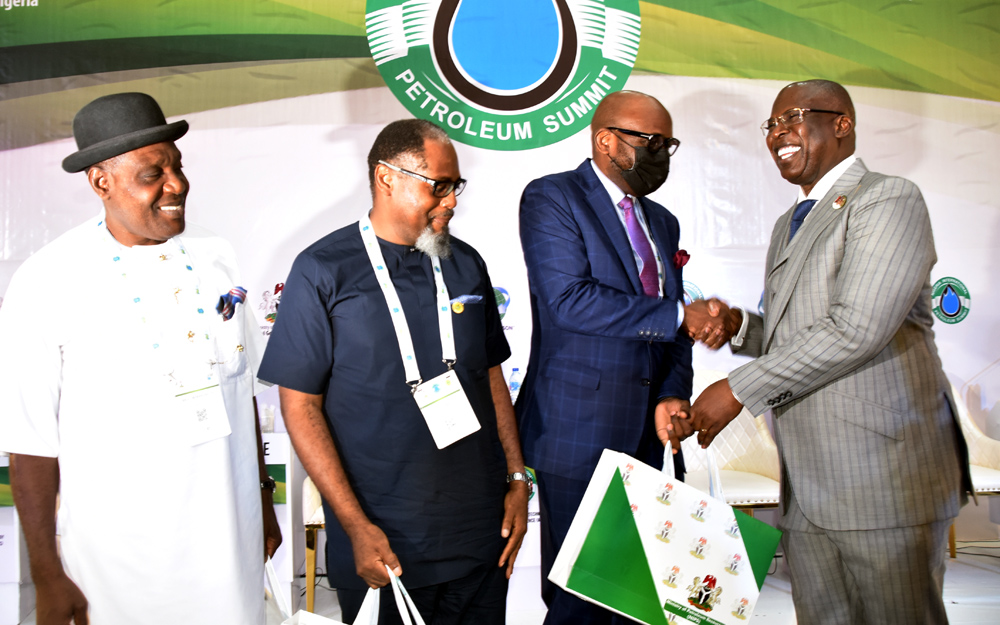
In the current year, the United States boasts status as the world’s biggest liquefied natural gas (LNG) exporter as deliveries to both Europe, in the throes of a severe energy crisis, and Asia surge.
So far in 2022, five developers have signed over 20 long-term deals to supply more than 30 million metric tons/year of LNG or roughly 4 Bcf/d, to energy-starved buyers in Europe and Asia.
Europe’s desperate attempt to rid itself of Russian gas became even more urgent this week, as Moscow announced that flows through Nord Stream 1 to Germany would remain cut off until the West lifted sanctions.
That desperation has resulted in Europe displacing Asia as the top destination for U.S. LNG. In fact, Europe now receives 65% of total U.S. LNG exports.
But there are growing concerns that trading one dependency for another carries another kind of risk: Putting all your eggs in the U.S. LNG basket means banking on Mother Nature.
U.S. LNG supplies might not be vulnerable to Russia, but they are vulnerable to extreme weather and harrowing hurricane seasons that disrupt output and exports. Europe cannot afford any more disruptions.
Vulnerability in the Gulf of Mexico
The bulk of LNG export facilities in the United States, including proposed facilities, are housed along the Gulf Coast, and much of the gas that feeds those facilities comes from nearby inland reserves, from New Mexico and Texas to Louisiana, and beyond.
This is a region prone to hurricanes, meaning that when hurricanes come roaring inbound, everything from liquefaction to shipping and extraction to processing is at risk of disruption. It has happened before, and recently.
In recent years, multiple hurricanes have resulted in varying degrees of disruption for the LNG market, with impacts stretching across the supply chain from brief outages to long layoffs of processing and shipping.
Hurricane Laura in 2020 resulted in a two-week disruption at the Sabine Pass LNG export facility and well over a month at Cameron LNG.
Last year, Hurricane Ida resulted in a major and long-lasting curtailment of offshore gas production.
This year, a June explosion at the Texas-based Freeport LNG facility knocked nearly 20% of US LNG export capacity offline, sending LNG markets into a tailspin.
Scientists say the Gulf coast hurricanes are becoming increasingly severe, causing record-breaking compound flooding and placing critical infrastructure at risk.
Meanwhile, whereas the United States has the world’s largest lineup of new LNG projects in the works, there are also limits to how far this can go without more pipeline capacity to accommodate this wildly expanding energy segment.
In the Appalachian Basin, the country’s largest gas-producing region churning out more than 35 Bcf/d, environmental groups have repeatedly stopped or slowed down pipeline projects and limited further growth in the Northeast.
This leaves the Permian Basin and Haynesville Shale to shoulder much of the growth forecast for LNG exports. Indeed, EQT Corp. (NYSE: EQT) CEO Toby Rice recently acknowledged that Appalachian pipeline capacity has “hit a wall.”
Analysts at East Daley Capital Inc. have projected that U.S. LNG exports will grow to 26.3 Bcf/d by 2030 from their current level of nearly 13 Bcf/d.
For this to happen, the analysts say another 2-4 Bcf/d of takeaway capacity would need to come online between 2026 and 2030 in the Haynesville.
“This assumes significant gas growth from the Permian and other associated gas plays. Any view where oil prices take enough of a dip to slow that activity in the Permian and you’re going to have even more of a call for gas from gassier basins,” the analysts have said.
Mozambique To The Rescue Though it may be rather late in the game, Europe is beginning to seriously consider Africa for its future energy supplies. Most notably, Mozambique is poised to ship its first cargo of liquefied natural gas (LNG) to Europe at this critical time.
This, too, is fraught with vulnerabilities in the form of political instability and insurgency.
French TotalEnergies’ Mozambique LNG project has been sidelined by insurgency. Italian Eni’s Coral-Sul FLNG is safe from the violent flashpoint and on track to help serve Europe, with BP already having inked a deal to buy all of the output for 20 years from the $7-billion Coral-Sul project, designed to produce 3.4 million metric tons of LNG.
The Italian company is already planning a second floating export platform in the southern African country that could be completed in less than four years. But nothing is certain here.
In the heart of the insurgency, TotalEnergies has announced plans to resume its massive $20 billion project toward the end of the year, with the terminal expected to churn out 13.1 million tons of LNG annually.
That is, if it ever gets past the insurgency that led to a declaration of force majeure. The project hopes to restart in the first half of next year.
Optimism runs high, despite all. ExxonMobil says it will make a final decision for an even larger project in the near future.
Meanwhile, the European Union has planned a five-fold increase in financial support to $15 million to fight militants near Mozambique’s gas projects.
The EU has already pledged to provide the country’s army with an additional 45 million euros ($45 million) of financial support, and has so far given a SADC mission in the country 2.9 million euros of funding.
Over the short-term, Europe is making headway in filling up its gas storage, and is now nine weeks ahead of where it was this time last year, even if it has come at a hefty premium.
European gas storage levels are above 70%, and have even surpassed the 5-year average, according to data from Gas Infrastructure Europe (GIE).
By November 1st, the EU will likely hit 80% natural gas storage capacity, just in time for peak winter demand. Germany is even aiming for 95% capacity, and is already at 85%.
“The EU already surpassed its September 1 interim filling target in early July and is still on pace to reach the November 1 target,” Jacob Mandel, senior associate for commodities at Aurora Energy Research, has told Reuters.
Indeed, analysts at Standard Chartered Plc are saying that President Vladimir Putin’s gas weapon will be effectively blunted by the inventory build, with Europe set to go through winter “comfortably” without Russian gas.
This, however, poses two different problems: First, Europe will have to pay a heavy price, the cost of replenishing natural gas stocks is estimated at over 50 billion euros ($51 billion), 10 times more than the historical average for filling up tanks ahead of winter; Second, the bloc can’t survive on storage alone unless it severely reduces consumption for the winter.
Europe, as it stands, is vulnerable on every energy front, and if it’s not geopolitics and insurgency, it’s Mother Nature at her wildest.
Kimani reports for Oilprice.com



By Felicity Bradstock for Oilprice.com 16
The State Commissioner for Works (Rural Roads) and Public Information, Charles Aniagwu, disclosed this at a press conference in Asaba, weekend, noting that the initiative was part of wider reforms aimed at opening up the power sector to private investors.
Aniagwu, who was accompanied by the Executive Assistant to the Governor on New Media, Felix Ofou, said the state was exploring alternative sources of electricity to support businesses, households and communities while reducing pressure on the national grid.
He said the government was particularly interested in exploiting Delta’s abundant natural gas resources for power generation, pointing to the Kwale Free Trade Zone, which is part of the state’s special economic zone, as a major opportunity for investors.
According to him, prospective investors were taken to the zone during the state’s recent economic summit to enable them to assess the availability of gas as a key raw material for electricity generation. ComparePower Rates
The commissioner explained that generating more electricity locally would not only increase supply in Delta but also free up power on the national grid for use by other consumers.
Aniagwu cited the 8.5MW Independent Power Plant located behind the state secretariat in Asaba as an example of what could be achieved through alternative power sources.
He said the facility had enabled the secretariat complex to operate independently of the national grid, thereby making the electricity that would otherwise have been consumed there available to other users.
He added that the planned 120MW partnership with Supply Power would further strengthen the state’s electricity supply capacity and provide a more reliable power base for small and medium-sized enterprises.
Aniagwu said the state government was also intervening in areas traditionally regarded as the responsibility of electricity distribution companies because inadequate power supply could no longer be allowed to constrain economic development. LearnQuantum Physics
He identified the extension of the electricity grid from Abraka towards the Ndokwa axis as one of the interventions being undertaken to connect more communities to electricity.
The commissioner, however, raised concerns over the burden placed on communities that are often required to provide transformers and other electricity infrastructure, only for distribution companies to take over the facilities and subsequently collect electricity bills without adequately accounting for the investments made by the communities.
He said the state would continue to support efforts aimed at energising communities, noting that improved electricity supply would stimulate businesses, create jobs and help tackle social problems associated with unemployment and idleness.
On regulation, Aniagwu said the government was working with the Ministry of Energy and a committee set up to develop an appropriate regulatory framework for the state’s emerging power sector. SwitchEnergy Plans
He said the proposed energy commission would be responsible for regulating new electricity producers, determining appropriate tariffs and overseeing distribution networks.
The commissioner stressed that liberalising the sector required effective regulation to protect consumers and investors, adding that decisions on power distribution infrastructure, including the use of overhead or underground lines, must take into account the peculiarities and safety requirements of each location.
He warned that power expansion without adequate regulation could expose residents to electrocution and other hazards, stressing the need to protect electricity infrastructure while ensuring consumers were not subjected to unfair pricing.
Aniagwu said the state government’s broader objective was to build an efficient and sustainable electricity market driven by private investment and capable of powering businesses, households and communities across Delta State.
-

 Education2 days ago
FCE Yola Graduates 3,555 Teachers , Seeks Upgrade to University
-

 Sports1 day ago
Nigerian Trio Target Titles At PFL Africa Finals
-
 Niger Delta2 days ago
Diri Restates Stance On Lagos-Calabar Coastal Highway
-

 Niger Delta2 days ago
C’River, NUJ Pay Tribute To Late Guardian Editor
-

 News2 days ago
NDLEA Recovers Tons Of Illicit Drug Consignments In Nine States
-
 Opinion2 days ago
Checking Voter Apathy In Nigeria’s Electoral Process
-

 Politics2 days ago
2027: DICKSON’S EX-ALLY VOWS TO WORK AGAINST NDC INTEREST IN BAYELSA
-

 Politics2 days ago
2027: GROUP PLEDGES 40,000 SUPPORTERS FOR COALITION CANDIDATES IN RIVERS