
Nation
FG Expresses Commitment To Acceding Water Convention

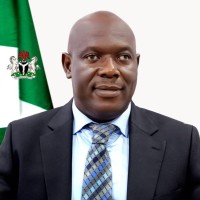
The Federal Government through the Minister of Water Resources, Engr Suleiman Adamu, expressed commitment to acceding Water Convention.
Adamu stated this in his opening address while declaring a 3-Day National Advocacy/Sensitisation Workshop on Nigeria’s Accession to the ‘Convention on the Protection and Use of Trans-boundary Watercourses and International Lakes’ for Key Stakeholders open in Abuja.
He said acceding to the convention provides an additional legal and institutional cooperation framework essential in the management of these trans-boundary waters.
He said: “Acceding to the Water Convention is important to us as a country because the two main surface water bodies in Nigeria, namely, rivers Niger and Benue are trans-boundary in nature.
“Another trans-boundary water body is the Lake Chad which is shared by four countries including Nigeria. This is not peculiar to Nigeria as more than 40percent of the universal populations depend on trans-boundary waters for their livelihoods.
“Therefore, acceding to this convention provides an additional legal and institutional cooperation framework which is essential in the management of these trans-boundary waters to ensure environmental sustainability, economic growth, and conflict prevention.”
He also maintained that the Federal Ministry of Water Resources is desirous of contributing to the achievement of Sustainable Development Goal 6 which seeks to – “Ensure Availability and Sustainable management of water and Sanitation for all”.
“Target 6.5 focuses on trans-boundary cooperation to implement integrated water resources management and the Water Convention is an excellent tool to achieve this target.
“Be rest assured that the ministry will do all in its power to facilitate Nigeria’s accession to the UN Water Convention.
“I urge you to give this workshop the attention it deserves and look forward to the integrated Accession Roadmap that will be developed during the course of this workshop”, he added.
In a remark, the Chair of the Bureau of the Water Convention, Harry Livv, asserted that, “International practise during last decades show, that principles and obligations of the Water Convention improves water resources management and water governance. So, in large extent there are many positive examples about that.
“During last decade many studies showed, that we all need to pay more attention to ecosystem and water resources as a whole, both for surface and for groundwater.
“Here, enhanced systems for trans-boundary water resource management and implementation of relevant plans are effective and can help.
“Work in frame of Water Convention can also strengthen cooperation in the basins they share; cooperation between countries also. That is very important to have peaceful and constructive management in practice.
“Political will is important factor, as we see in many places.Participation in the Water Convention and compliance with its provisions serve a clear evidence of the willingness of riparian countries to cooperate and thus enhance the eligibility of international funding.
“Funding is key factor to improve real environmental situation in basin. So, I hope, that during this workshop we are able to discuss over several important topics, with the idea speed up accession to the Water Convention.”
In another goodwill message, the Secretary of the Water Convention, Dr Sonja Koeppel, pointed that effective global legal and intergovernmental framework needed for shared waters, including groundwaters.
Koeppel also explained that the Water Convention workshop represents an important milestone and unique opportunity for thoroughly analysing the obligations of the convention, the practical tools it offers to support countries’ efforts, and the benefits associated with its accession.
She said: “At the global level, Nigeria is already a party to the United Nations Convention on the Law of the Non-Navigational Uses of International Watercourses, commonly referred to as the 1997 Watercourses Convention.
“However, Nigeria, like many other countries worldwide, still faces significant challenges in trans-boundary water cooperation and national water management, such as increasing water scarcity due to economic development and population growth, but also climate change impacts, floods, increasing pollution, and others.
“This leads partly to conflicts and competition over water resources.For this reason, an effective global legal and intergovernmental framework for cooperation and sustainable management of shared waters, including groundwaters, is needed: such a unique platform is provided by the Convention on the Protection and Use of Transboundary watercourses and International Lakes (Water Convention).”
According to her, the Water Convention comes with a lot of benefits; which helps countries to address challenges.
“Accession can enable support by the community of parties, experience-sharing with basins and countries worldwide, facilitate access to financing and raising the country profile at the international level.
“It also strengthens national water management and trans-boundary cooperation. It offers a global platform where to bring forward your concerns, challenges and good practices”, she pointed.



The Hydrocarbon Pollution Remediation Project (HYPREP) has commemorated the 15th anniversary of the release of the United Nations Environment Programme (UNEP) Environmental Assessment Report on Ogoniland, reaffirming its commitment to restoring the environment and improving the livelihoods of affected communities.
In a statement signed by the Project Coordinator, Prof Nenibarini Zabbey, to commemorate the anniversary, HYPREP described the anniversary as a significant milestone in Nigeria’s environmental restoration efforts, noting that the project has made remarkable progress in implementing the recommendations of the landmark UNEP report released on August 4, 2011.
The UNEP report had revealed extensive oil pollution across Ogoniland, severe environmental degradation, and serious public health risks resulting from decades of petroleum operations. It also recommended an initial $1 billion fund to commence the cleanup of the affected communities.
According to HYPREP, the Federal Government formally launched the Ogoni clean-up in 2016, while the Project Coordination Office was established in 2017 to drive the implementation of UNEP’s recommendations.
Zabbey said the current administration has continued to prioritise the project under the Renewed Hope Agenda.
Providing an update on the cleanup, the Project Coordinator disclosed that 30 of the 65 contaminated sites identified by UNEP have been fully remediated, while work is ongoing at several medium- and high-risk locations. It also stated that more than 1.5 million mangrove seedlings have been planted as part of what it described as the world’s largest restoration of oil-degraded mangroves, with over 1,000 hectares of shoreline already rehabilitated.
Zabbey further revealed that 49 Ogoni communities have been connected to potable water schemes through multiple water projects and booster stations aimed at providing safe drinking water across the region.
In the health sector, he said the 100-bed Ogoni Specialist Hospital in Kpite and the 43-bed Cottage Hospital in Buan are nearing completion, adding that several existing health facilities have been upgraded with modern medical equipment, while five ambulances have been donated to improve emergency healthcare services. The Project Coordinator also disclosed that a three-year human health biomonitoring study is being conducted in collaboration with the World Health Organization’s International Agency for Research on Cancer (IARC).
On economic empowerment, Zabbey stated that the Project has created more than 8,000 direct jobs and trained thousands of Ogoni youths and women in various vocational and technical skills, including software development, cybersecurity, aviation, commercial diving, seafaring, mechatronics, and creative arts. The project also reported awarding scholarships to more than 1,000 students, providing grants to small businesses, and supporting persons living with special needs through skills acquisition programmes.
The statement further highlighted ongoing legacy projects, including the Ogoni Power Project and the Centre of Excellence for Environmental Restoration, which it said is about 96 per cent complete. HYPREP also welcomed the recent designation of the Ogoni Wetland as a Ramsar Site of International Importance and pledged to continue promoting biodiversity conservation and sustainable management of the ecosystem.
Marking the anniversary, Zabbey said the progress achieved over the past 15 years demonstrates the collective commitment of government, development partners, stakeholders, and local communities to restoring Ogoniland. He called for renewed collaboration to sustain the cleanup effort, promote environmental sustainability, and support the long-term development of the region. 3
-

 News2 days ago
RSG Targets Nine Million Residents in Mosquito Net Distribution Campaign
-

 Oil & Energy2 days ago
Aiyedatiwa Signs New Electricity Bill
-

 Maritime2 days ago
Marine Minister Commends President Tinubu On NPERA Bill Assent
-

 Oil & Energy2 days ago
NLNG Commissions Research And Innovation Centre In RSU
-

 News2 days ago
KenPoly Holds Eight Convocations, August 29
-

 News2 days ago
RSG Begins Another Phase of Projects Commissioning Today
-

 News2 days ago
RMAFC Completes Revenue Sharing Review, Proposes New Pay
-

 Maritime2 days ago
NAGAFF Petitions IGP Over Alleged Maritime Police Harassment