
Editorial
Learning From PH Stampede

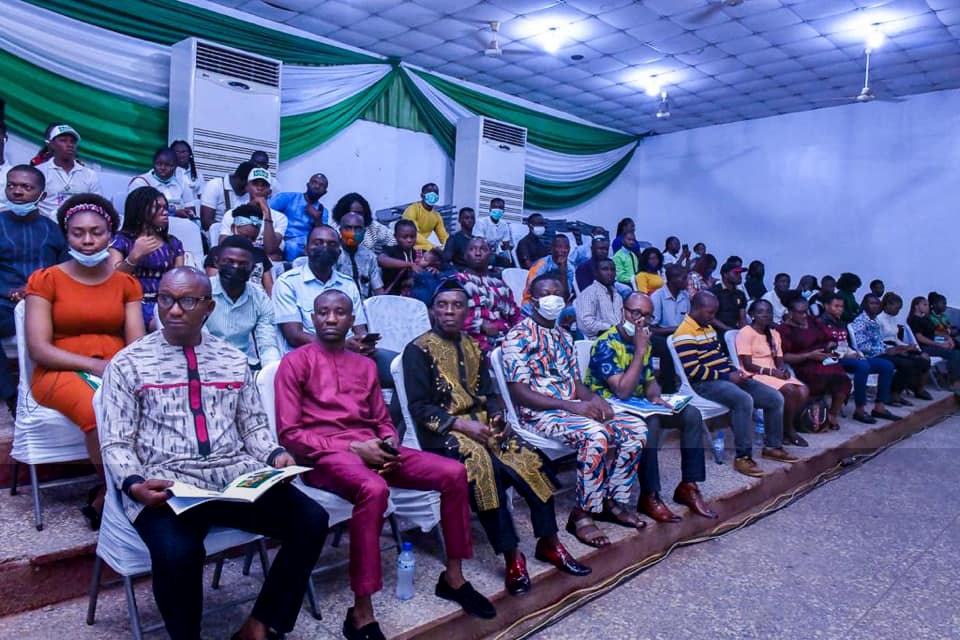
Evidence that Nigerians are yet to imbibe the critical culture of crowd management as an essential part of everyday living emerged at a recent stampede at the Port Harcourt Polo Club where 31 people reportedly died with several others sustaining life-threatening injuries. This was an unfortunate incident that could have been prevented if the organisers had been well grounded in crowd control skills and cared about safety measures.
The event occurred at a church charity exhibition on Saturday, May 28, 2022. The programme, organised by the Kings Assembly Pentecostal Church, involved many people who were seeking assistance and so attended the annual “Shop for Free” charity programme coordinated by the church. Such events are common in Nigeria, Africa’s largest economy, where more than 80 million people live in abject poverty, according to government statistics.
The charity activity was to commence at 9 a. m., but dozens of people arrived as early as 3 a.m. to secure their places in queues. Somehow they broke open the locked and secured gates, resulting in the painful incident. Videos from the scene displayed the clothes, shoes and other paraphernalia meant for the beneficiaries, including the lifeless bodies of some victims.
The 31 persons may have died due to stampede but the real cause of the deaths is hunger and poverty in the land, nothing more, nothing else. It is only hunger that can push people to deprive themselves of their precious sleep and go out to queue up for food at 3 a.m., a clear six hours before the event was billed to start.
The government owes the citizens a duty to provide jobs for the youths and pull them out of the poverty bracket. It is also the responsibility of the Nigerian government to check the rising inflation, which is the reason the masses can no longer afford to buy basic food items and have to resort to free food to feed their families.
This episode is highly regrettable. Nevertheless, the question is, how was the church unable to anticipate the number of people that would show up at the venue? We are asking because offering indigent Nigerians free items like foodstuffs indicated that there was going to be a very large crowd turnout, especially with the horrifying figures of high unemployment and hunger in the country.
While we appreciate churches and other voluntary organisations that strive to fill in the gap that exists in the living conditions of the poor in the society, we make bold to insist that such organisations should entrench safety considerations into whatever they do. Organisers of such tremendous events should plan well and possibly involve the police to avert similar calamitous deaths and injuries.
Despite past occurrences that claimed lives, the trend has persisted, either during sporting events, religious gatherings or political rallies. People are often encouraged to leave the comfort of their homes for an event potentially capable of attracting gigantic crowds without adequate consideration for their safety. Worse still, after tragedy must have struck, everybody goes home to await a future re-enactment of the calamity; essentially, no lesson is learned.
At a campaign rally of President Muhammadu Buhari in Port Harcourt towards the 2019 general elections, 14 people reportedly died. Also in 2019, a rally at the Jolly Nyame Stadium in Jalingo, Taraba State, was recounted to have left five people dead, following a stampede. In Kano, when the presidential candidate of the Peoples Democratic Party (PDP), Atiku Abubakar, visited, it was by sheer providence that death was averted after nine people slumped, following another uncontrollable crowd turnout.
As can be seen, many religious groups have not fared better, as a few incidents would confirm. In November 2013, no fewer than 28 people were recorded dead after crowd trouble that occurred at a crusade ground of the Holy Ghost Adoration Ministry, Uke, in Idemili Local Government Area of Anambra State. The event, attended by the then governor, Peter Obi, allegedly attracted a larger crowd than usual, leaving organisers at their wits’ end.
A similar situation happened in Benin City, back in 1999, when renowned evangelist, late Reinhard Bonnke, came calling. No fewer than 14 persons were feared dead as people came to listen to the fiery German preacher speak at a crusade held at a sports facility in the Edo State capital. Despite the number of casualties, more people were said to have turned up again the next day, even when the preacher decided not to attend.
Perhaps, the most contemptible of all was the Immigration interview organised by the then Internal Affairs Minister, Abba Moro, in which about 19 Nigerian job seekers lost their lives. In one of the most audacious and exploitative ventures, no fewer than 520,000 applicants from all over the country were corralled into stadia nationwide for a job interview for only 4,556 slots, after each of them was charged N1,000. The deaths occurred following stampedes.
While the tragedies mount, and valuable lives are lost, nobody seems to mind about asking individuals to defend their roles in what, in other climes, amount to national calamities. No one is punished. This is where the situation in Nigeria differs from what obtains in other locales. In the United Kingdom, for instance, which also used to have a lot of crowd trouble, especially during football matches, measures were introduced that reduced it drastically.
Though the Kings Assembly had good and noble intentions, and it is strongly recommended that such a gesture should continue regardless of the incident; however, the truth is people died, precious lives were lost all due to some fatal errors emanating from improper planning. Hence, the fundamental question to ask is, as fantastic and kind as the programme might be, does it absolve the church from liability? Certainly not.
Therefore, Governor Nyesom Wike should inaugurate a probe panel forthwith as he rightly indicated in his response to the disaster. Such inquiry should specify the direct causes of the rush and whether there was criminal negligence. Police Commissioner, Eboka Friday, should act likewise by compelling his men to conduct a thorough investigation into the matter. Those found to be culpable must be prosecuted.
The way out is to ensure that people are not admitted beyond the capacity of an event arena. Once the venue of an occasion is full, entry should be disallowed. Again, there should be crucial measures to guarantee that entrances and exits are flung open before and after an event, so that a stadium, no matter how crowded, could be emptied of its occupants within a few minutes of a critical event. Since political rallies and church programmes are now held in stadiums, these crowd control measures should apply.
Our heartfelt condolences to the families of the victims. And may God grant the souls of the departed eternal rest!



There are moments in the life of a legislature when plain speaking becomes a public service. Senator Adams Oshiomhole provided such a moment on the floor of the Senate when he accused the Minister of Works, Senator David Umahi, of manifestly neglecting critical federal arteries in Edo and Delta States, and implored his colleagues to prevail on the Minister to adopt a more equitable and genuinely national approach to road infrastructure delivery. It was blunt, it was uncomfortable, and it was necessary.
The specifics of his complaint deserve restating. Drawing attention to the recent approval of some 20 new road projects despite the parlous state of existing ones, the former Edo State governor lamented that Nigerians cannot travel from Benin to Warri, Benin to Asaba, Benin to Auchi, or Auchi to Okene without encountering severe distress. He alleged a deliberate omission of these corridors from the national budget in the last three years, save for palliative interventions directed by President Bola Tinubu through tax credit arrangements. His question — “What have we done wrong?” — resonates far beyond the chambers of the National Assembly.
We lend our full and unequivocal support to that call. The Auchi-Benin Road, for instance, has been in a deplorable and near-impassable condition for several years, turning what should be a two-hour journey into an all-day ordeal of broken axles, extortionate fares, and despondent commuters. The media have, on multiple occasions, chronicled the suffering of motorists, traders, and students who ply that route. To describe it as a federal road today is to stretch the meaning of the term beyond recognition.
This pattern of sidelining is not confined to Edo or Delta. Even here in Rivers State, the disposition of the Federal Ministry of Works has left much to be desired, particularly along the Eleme axis of the East-West Road. That road, which ought to be a flagship of federal presence in the Niger Delta, has remained in a wretched state for long. Those who use it daily — workers at the Eleme Petrochemical Complex, the two refineries, Onne Port, and the countless ancillary industries — can attest to its deterioration. Work has proceeded in fits and starts without the sustained urgency such a strategic road demands.
The Eleme stretch is not a mere intra-state byway. It is the gateway to the nation’s economic jugular. According to the Federal Ministry of Works and Housing’s 2023 Highway Condition Survey, only about 35 per cent of the country’s 36,000 kilometres of federal roads are rated as being in good or fair condition, with the remainder classified as poor or very poor. The East-West Road, conceived in the 1970s to bind the entire Niger Delta, remains unfinished in critical sections more than four decades after. If it had been treated as a priority, the perennial gridlock, carnage, and economic loss on the Eleme-Refinery junction would have long been consigned to history.
The irony is as painful as it is glaring. The Niger Delta remains the goose that lays the golden eggs. Data from the Nigeria Extractive Industries Transparency Initiative [NEITI 2023 Oil and Gas Audit] show that the region still accounts for over 78 per cent of Nigeria’s federally collected export earnings and about 65 per cent of total government revenue. The National Bureau of Statistics [NBS Foreign Trade Report Q4 2024] similarly confirms that crude oil continues to dominate export receipts. By every metric of equity and economic logic, a region that sustains the national purse deserves first-rate consideration in the allocation of infrastructure, not afterthoughts and tokenism.
Road infrastructure is not largesse to be dispensed by favour; it is the skeleton upon which commerce, cohesion, and citizenship hang. When contracts are concentrated in one geopolitical zone while other zones are left to contend with craters, it erodes trust in the federation itself. The World Bank’s Nigeria Development Update [June 2023] estimated that poor transport connectivity inflates the cost of moving goods by up to 40 per cent and costs the Nigerian economy an estimated $1.5 billion annually in lost man-hours and vehicle maintenance. If we profess to be one country, then equity must be the compass that guides key institutions before any project is executed. Development must spread round, not pool in one place as though other regions do not matter.
There is also a grave security dimension that can no longer be ignored. The deplorable condition of federal roads has become a veritable enabler of criminality. The NBS Crime Experience and Security Perception Survey reported over 2.5 million incidents of kidnapping-related occurrences nationally, with transport workers identifying bad road spots as prime ambush points. When vehicles are forced to crawl at 10 kilometres per hour through failed sections at Auchi, Sapele Road, or Eleme, they become sitting ducks for armed gangs. Fixing bad roads, therefore, is not merely about convenience; it is about safeguarding lives.
By his intervention, Senator Oshiomhole has hit the nail on the head and reminded Minister Umahi of a fundamental constitutional truth: public office is held in trust. The Ministry of Works is not a personal estate where contracts are awarded according to whim or political convenience. It is a national institution funded by the collective resources of Nigerians, including the oil and gas rents from the very communities whose roads are now neglected. The Minister must demonstrate balance, transparency, and a pan-Nigerian outlook in the distribution of projects that impact the daily existence of citizens. Selective neglect breeds suspicion, and suspicion is corrosive at a time when the nation is preaching unity, oneness, equity, and justice.
Consequently, the National Assembly must go beyond rhetoric and assert its oversight powers with vigour. Sections 88 and 89 of the 1999 Constitution [as amended] empower the legislature to investigate and expose any maladministration in the execution of federal projects. If an office holder is not acting rightly, it is the duty of the Senate and the House of Representatives to call him to order. Oversight must not be reduced to budget approval ceremonies; it must translate to field verification, public hearings, and insistence that the Federal Character principle, as enshrined in Section 14(3) of the Constitution, reflects in road awards.
Let the Auchi-Okene, Benin-Warri, Benin-Asaba, and Eleme East-West gangways be restored to motorable dignity. Let priority be given to completing existing, economically vital roads before embarking on new ones. If those who, through their resources, sustain the federation are sidelined in the distribution of tangible dividends, it tells poorly of our nationhood. Bad roads must be fixed, and they must be fixed now, with fairness as the guiding standard.
-

 News2 days ago
RSG Targets Nine Million Residents in Mosquito Net Distribution Campaign
-

 Oil & Energy2 days ago
Aiyedatiwa Signs New Electricity Bill
-

 Oil & Energy2 days ago
NLNG Commissions Research And Innovation Centre In RSU
-

 Maritime2 days ago
Marine Minister Commends President Tinubu On NPERA Bill Assent
-

 News2 days ago
KenPoly Holds Eight Convocations, August 29
-

 News2 days ago
RSG Begins Another Phase of Projects Commissioning Today
-

 News2 days ago
RMAFC Completes Revenue Sharing Review, Proposes New Pay
-

 Maritime2 days ago
NAGAFF Petitions IGP Over Alleged Maritime Police Harassment